
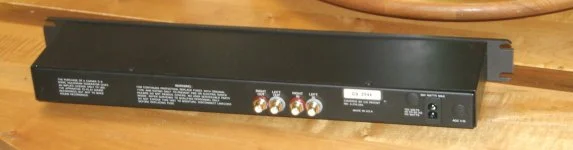
In the high-fidelity audio community, few names evoke as much nostalgia and technical curiosity as Bob Carver. Among his most iconic, if niche, contributions to the home audio landscape is the Carver C-9—a standalone Sonic Holography processor that promised to expand the soundstage beyond the physical limitations of stereo speakers. Recently, renewed interest in these vintage units has sparked a wave of professional-grade restorations, as enthusiasts and technicians work to preserve the legacy of this unique signal-processing technology.
Main Facts: The Carver C-9 Legacy
The Carver C-9 is not a traditional preamplifier or amplifier; it is a specialized analog signal processor. Its primary function is to employ "Sonic Holography," a proprietary method developed by Bob Carver in the late 1970s and early 1980s. By manipulating the crosstalk between the left and right audio channels—accounting for the time delay and phase differences inherent in human binaural hearing—the C-9 creates a three-dimensional sound field.

For modern audiophiles, the C-9 represents a bridge between the analog experiments of the past and the sophisticated DSP (Digital Signal Processing) techniques of the present. Because these units rely on aged internal components, their performance is heavily dependent on the quality of their restoration. A properly rebuilt C-9 is now highly sought after, with market prices fluctuating based on the depth of the servicing performed.
Chronology: A Restoration in Real-Time
The recent buzz surrounding the C-9 began in July 2026, when an experienced restorer and technician known as "Ixnay" announced the completion of a comprehensive rebuild of a C-9 unit. This restoration was not merely cosmetic; it involved a deep-tissue overhaul of the unit’s aging electrical infrastructure.

The Restoration Process
According to the technical logs provided by the restorer, the project included several critical upgrades:
- Capacitor Replacement: All original electrolytic capacitors were removed and replaced with modern, high-grade alternatives. Over time, original capacitors dry out and fail, leading to signal degradation, increased noise floors, and potential failure of the power supply.
- Power Supply Overhaul: Recognizing the importance of a clean power rail for analog processors, the technician installed an entirely new power supply board.
- Physical and Aesthetic Enhancements: Beyond the circuitry, the unit received new RCA jacks to ensure optimal signal connectivity, modern soft silicone footers to dampen mechanical vibrations, and internal damping materials to mitigate microphonics. The faceplate edges were also touched up to restore the unit to a "near-mint" appearance.
This specific unit was offered to the enthusiast community for $180 plus shipping, a price point the seller noted as being highly competitive compared to the "untouched" units currently circulating on the second-hand market, which often command similar or higher prices despite being in original, degraded condition.

Supporting Data: Technical Insights from the Field
The discussion following the announcement of this restored C-9 attracted the attention of industry veterans, including the well-known technician "anatech." The ensuing dialogue provided a wealth of information regarding the reliability and performance of Carver equipment.
Reliability and Serviceability
Anatech, who has spent decades servicing high-end audio equipment, noted that the Carver C-9 was remarkably well-engineered for its time. "Repaired many under warranty and afterwards," the technician noted, emphasizing that the C-9s were generally "problem-free" units. This longevity is a testament to Bob Carver’s design philosophy, which balanced cutting-edge innovation with practical component selection.

Comparison to Other Carver Models
The conversation also highlighted the broader Carver ecosystem. A common point of confusion among casual enthusiasts is distinguishing between the C-9 processor and the C-19 tube preamplifier.
- The C-19: A vacuum tube-based preamplifier that gained a cult following for its warmth and harmonic richness.
- The C-9: A solid-state standalone processor. While it lacks the "tube magic" of the C-19, it excels in its intended purpose—the manipulation of spatial cues.
Industry experts noted that while the C-19 is an excellent piece of hardware, it is often more complex to maintain due to the nature of vacuum tubes and the associated high-voltage circuitry. In contrast, the C-9 remains an accessible "entry point" for those looking to experience Carver’s unique approach to soundstage reconstruction without the complexities of tube maintenance.

Official Responses and Expert Perspectives
The discourse within the DIY Audio community underscores a vital truth: the value of vintage audio equipment lies not just in the brand name, but in the maintenance history.
On the Nature of Sonic Holography
The question of "what the C-9 actually does" remains a topic of frequent debate. As user "norman bates" pointed out, the device acts as a "speaker cross-feed (head-related transfer function) reducer." By removing the physical limitations of the speakers, the C-9 attempts to trick the brain into hearing a wider, deeper image than what is traditionally possible in a standard stereo triangle.

Expert Sentiment
The consensus among seasoned technicians is that the C-9 is a "nifty" piece of equipment. Even those who have moved on to more modern or expensive setups, such as the Marantz 3650 or the Carver SC-9, acknowledge the historical significance of the C-9. The sentiment expressed by anatech—that one can only keep "so much stuff"—reflects the reality of the hobby, where collectors must eventually choose between hoarding gear and curating a highly functional, well-serviced system.
Implications for the Future of Vintage Audio
The restoration of this particular C-9 unit serves as a blueprint for the future of the vintage audio market. As these units approach their 40th and 50th anniversaries, they are reaching a critical tipping point.

The Rise of "Pro-Restored" Equipment
We are currently witnessing a shift where "unrestored" vintage equipment is becoming less desirable than equipment that has undergone a professional, documented rebuild. For potential buyers, the implications are clear:
- Safety First: Original power supplies from the 1980s are potential fire hazards. A modern rebuild is a necessity, not an optional upgrade.
- Market Value: Units that have been serviced by reputable technicians are establishing a "premium" floor in the market. Buyers are increasingly willing to pay for the expertise required to source, install, and calibrate modern capacitors and components.
- Preservation: The efforts of individuals like "Ixnay" ensure that these unique signal-processing devices do not end up in landfills, but rather continue to provide an immersive listening experience for a new generation of audiophiles.
Sustainability and Craftsmanship
The move toward rebuilding, rather than replacing, is fundamentally a sustainable practice. By investing in the longevity of the Carver C-9, the community is honoring the original craftsmanship while leveraging modern advancements in component reliability. The C-9, once a symbol of the "futuristic" audio experiments of the 80s, is now a symbol of the enduring quality of well-engineered analog hardware.

Conclusion
The story of this $180 Carver C-9 is more than a simple classified ad; it is a narrative of community, expertise, and technical preservation. Whether it is the fascination with vacuum tubes in the C-19 or the spatial wizardry of the C-9’s solid-state circuitry, the legacy of Bob Carver remains vibrant and relevant. For those interested in the history of stereo imaging, the C-9 remains one of the most accessible and effective tools available. As long as there are enthusiasts willing to open these chassis and replace the capacitors of yesteryear, the "Sonic Hologram" will continue to live on, bridging the gap between our speakers and our ears.


