Introduction & Main Facts
For audiophiles who have spent decades chasing the elusive holy grail of absolute transparency, the name "Quad" carries almost mythic weight. Since the introduction of the legendary ESL-57, Peter Walker’s electrostatic masterpieces have set the benchmark for low distortion, phase linearity, and midrange purity. Yet, despite their breathtaking imaging and lifelike vocal reproduction, historical electrostatic designs have long grappled with inherent limitations: fragile panels prone to arcing under high power, restricted dynamic range, rolled-off frequency extremes, and a reputation for being aggressively "polite."
Enter the new Quad 2912X, a loudspeaker designed to shatter these historical compromises once and for all.
Unveiled recently at an exclusive listening session at Upscale Audio, the Quad 2912X represents a monumental evolutionary leap for the storied British manufacturer. Priced at approximately $18,000 per pair and distributed domestically via MoFi Distribution (with regional amplification synergy courtesy of Harmonia Distribution), these flagship electrostatic panels promise to marry the ethereal, haunting midrange magic of the original ESL-57 with modern engineering rigor.
According to early critical evaluations, the 2912X retains a staggering 92% of the original ’57’s inner beauty while delivering vastly expanded frequency extension at both ends of the spectrum, massively improved dynamic swing, and—crucially—the capability to play demanding rock music at realistic, engaging volumes without fear of catastrophic panel failure.
Chronology of an Exclusive Listening Session
To truly understand the impact of the Quad 2912X, one must examine how the experience unfolds in real time. The narrative below captures the exclusive after-hours demonstration that took place in the Upscale Audio exhibition rooms.
The After-Hours Reveal
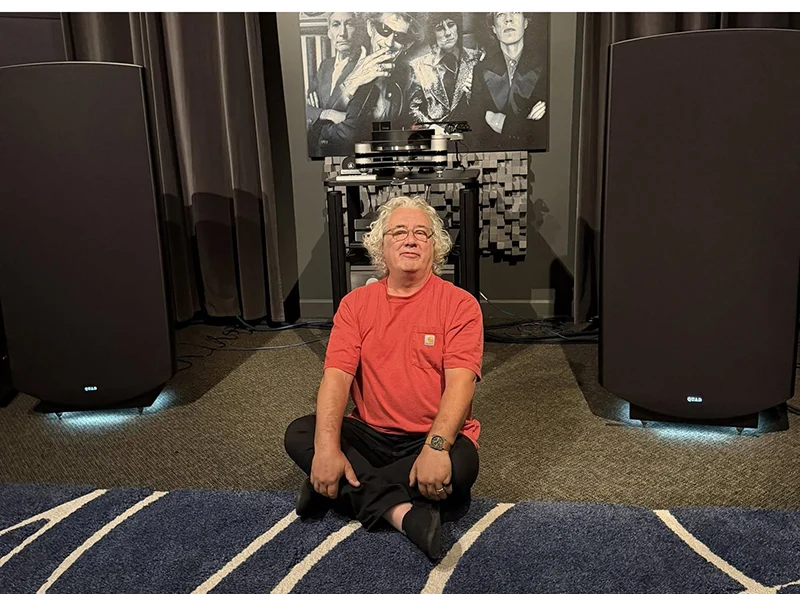
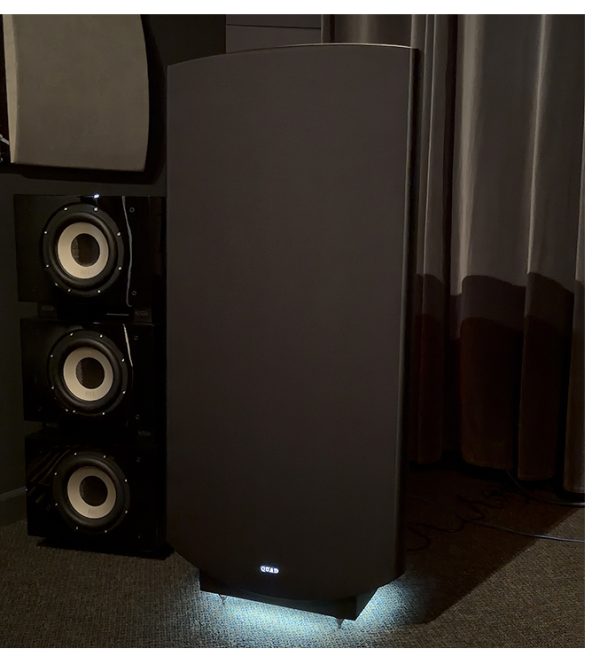
As the bustling crowds of the high-end audio exhibition finally filtered out into the evening, a rare opportunity presented itself: a quiet, uninterrupted hour alone with the Quad 2912X panels. Positioned squarely between a striking, oversized portrait of The Rolling Stones and powered by high-current electronics, the speakers cut an imposing yet elegant silhouette against the room.
For a seasoned listener intimately familiar with both the original ESL-57s and the subsequent 63 models—where the signature "Quad sound" is permanently etched into memory—anticipation was high. The question on the table was simple: Could a modern iteration of a classic design genuinely bridge the gap between vintage electrostatic purity and contemporary high-energy dynamics?
Dialing in the Reference Tracks
The listening session commenced immediately with a curated selection of reference-grade material, starting appropriately with Keith Richards’ gritty solo track, "Wicked as it Seems."
Historically, playing raw rock-and-roll through delicate electrostatic speakers was a high-stakes gamble. Early models would frequently shut down, spit sparks, or distort heavily when subjected to the rapid transients and high-amplitude bass demands of modern rock recordings. However, driven here by the muscular Musical Fidelity M8XI integrated amplifier (retailing around $7,999), the 2912X panels exhibited an entirely uncharacteristic composure.
The Passage of Time
As the listening session progressed through roughly a dozen rigorous reference tracks spanning acoustic jazz, complex orchestral arrangements, and driving classic rock, an hour vanished with the disorienting speed of hitting the snooze button on a morning alarm.
The defining takeaway from this chronologically brief yet dense listening window was simple: these are speakers designed not merely to dissect a recording in an analytical vacuum, but to compel the listener to dive deeper into the catalog. Long after standard exhibition fatigue would have set in, the desire remained not to pack up and leave, but simply to queue up the next album.
Supporting Data and Technical Synergy
To appreciate why the Quad 2912X performs the way it does, one must look closely at the supporting hardware ecosystem and the underlying physics of modern electrostatic panel design.
Breaking the Rules of Amplification Matchmaking
Conventional audiophile wisdom has long dictated that electrostatic loudspeakers require delicate, low-wattage tube amplifiers or high-impedance triode designs to prevent panel damage. High-current solid-state power was historically viewed as a fast track to destroying vintage stats.
The 2912X rewrites this rulebook entirely. Benefiting significantly from high current delivery and a robust damping factor, these speakers thrive when paired with muscular, authoritative amplification. While previous generations—such as the non-X iterations—could occasionally sound overly restrained or "polite" when under-driven, pairing them with heavy-hitting amplification unlocks their true potential.
During the Upscale Audio demonstration, the Musical Fidelity M8XI integrated amplifier provided exceptional bass grip and authority. Industry veterans note historical precedents for this type of synergy; past models like the Quad 2812 reached legendary status when paired with elite reference monoblocks like the Pass Laboratories XS300. The M8XI proves that this level of grand-scale performance is now accessible at a far more rational price point.
Financial and System Architecture
Building a world-class reference system around the Quad 2912X no longer requires remortgaging a home. Consider the following cost breakdown for a complete, uncompromising analog-and-digital front-end chain:
- Loudspeakers: Quad 2912X (~$18,000 / pair)
- Amplification: Musical Fidelity M8XI Integrated ($7,999 via Harmonia Distribution)
- Source Components (Analog/Digital Front End): $5,000 – $10,000
- Total System Investment: Roughly equivalent to the price of a Certified Pre-Owned (CPO) BMW 3-Series.
For this financial commitment, the listener secures a level of transparency, phase coherence, and timbral accuracy that routinely humbles traditional box speakers costing two to three times as much.
Official Responses and Comparative Analysis
In the competitive landscape of high-end audio transducers, direct comparisons are inevitable. When evaluating high-end dipoles and planar speakers, two major names inevitably surface: MartinLogan and Magnepan.
Industry Feedback and Critical Reception
Reviewers and manufacturers alike have long wrestled with the compromises inherent in dipole speaker design. Planar-magnetic panels (like those from Magnepan) offer sprawling scale and a seamless ribbon-like presentation, but often lack the pinpoint imaging focus and absolute transparency of a true electrostatic membrane. Conversely, hybrid electrostatic designs (such as those from MartinLogan) successfully mate electrostatic panels with dynamic dynamic woofers for visceral low-end impact, but can occasionally suffer from an audible discontinuity or "hand-off" blur between the fast electrostatic panel and the heavier cone woofer.
The Quad 2912X avoids hybrid compromises by maintaining a full-range electrostatic philosophy scaled across massive, highly rigid structural frames.
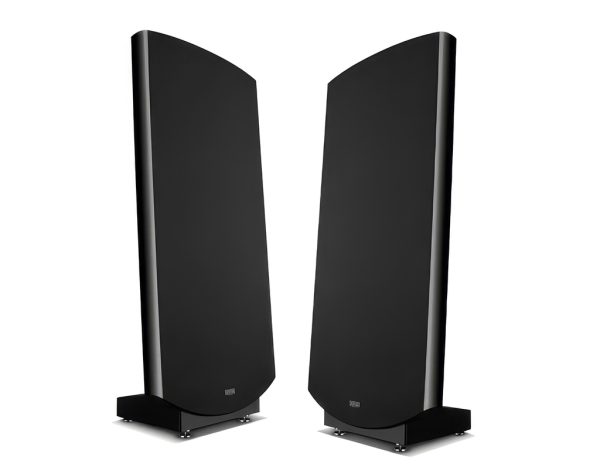
"As with all prior Quads, there’s a certain level of tonal purity you just won’t get from a pair of MartinLogans, and transparency that Magnepans don’t even begin to approach." — Jeff Dorgay, TONE
By eliminating cabinet colorations entirely and upgrading the stator rigidity and damping materials within the 2912X chassis, Quad has managed to preserve the seamless, single-source acoustic illusion that made the original ESL series world-famous, while injecting the visceral punch required by contemporary music lovers.
Implications for the High-End Audio Market
The arrival of the Quad 2912X sends several powerful ripples through the high-end loudspeaker market, altering expectations for what planar and electrostatic designs can achieve.
1. The Redefinition of "Polite" Hi-Fi
For decades, electrostatic speakers suffered from a pigeonholed reputation: sublime for female vocalists, chamber music, and acoustic guitar, but utterly useless for heavy rock, EDM, or large-scale symphonic works requiring brute-force dynamic impact. The 2912X proves that electrostatic technology can evolve. By safely handling high current, delivering authoritative bass grip, and scaling dynamically without panel distortion, the 2912X broadens the demographic appeal of electrostatic sound. It invites rock and roll fans back into the fold without asking them to sacrifice nuance.
2. Shifting Paradigms in Cost-to-Performance Ratios
At an MSRP of roughly $18,000, the 2912X occupies a fiercely contested segment of the audiophile market—one heavily populated by massive, multi-driver box speakers enclosed in heavy aluminum or composite resin cabinets. While traditional box designs rely on complex multi-way crossovers and heavy internal bracing to combat cabinet resonance, the Quad design achieves its purity by having no cabinet at all. The implications for soundstage width, depth, and lack of box-induced coloration present a stark challenge to conventional box speaker manufacturers: match this level of transparency, or justify your price tags.
3. Future-Proofing a British Legend
Quad has walked a careful tightrope between honoring its storied 1950s heritage and embracing 21st-century engineering standards. The 2912X proves that heritage brands do not need to abandon their core acoustic philosophies to remain relevant. By optimizing modern materials science, improving structural rigidity, and welcoming high-current solid-state amplification partners, Quad has ensured that the electrostatic loudspeaker remains not just a nostalgic artifact for museum curators, but a cutting-edge tool for active, modern music enthusiasts.
Conclusion
Are the Quad 2912X speakers the ultimate dream components for the dedicated audiophile? For anyone who values absolute tonal purity, holographic soundstaging, and a direct, unadulterated emotional connection to their music, the answer leans heavily toward the affirmative.
While comprehensive, long-term reviews in dedicated listening environments will continue to flesh out their performance parameters, early impressions point to an undeniable triumph. The "Quad thing" is back—louder, deeper, dynamically bolder, and more musically engaging than ever before.