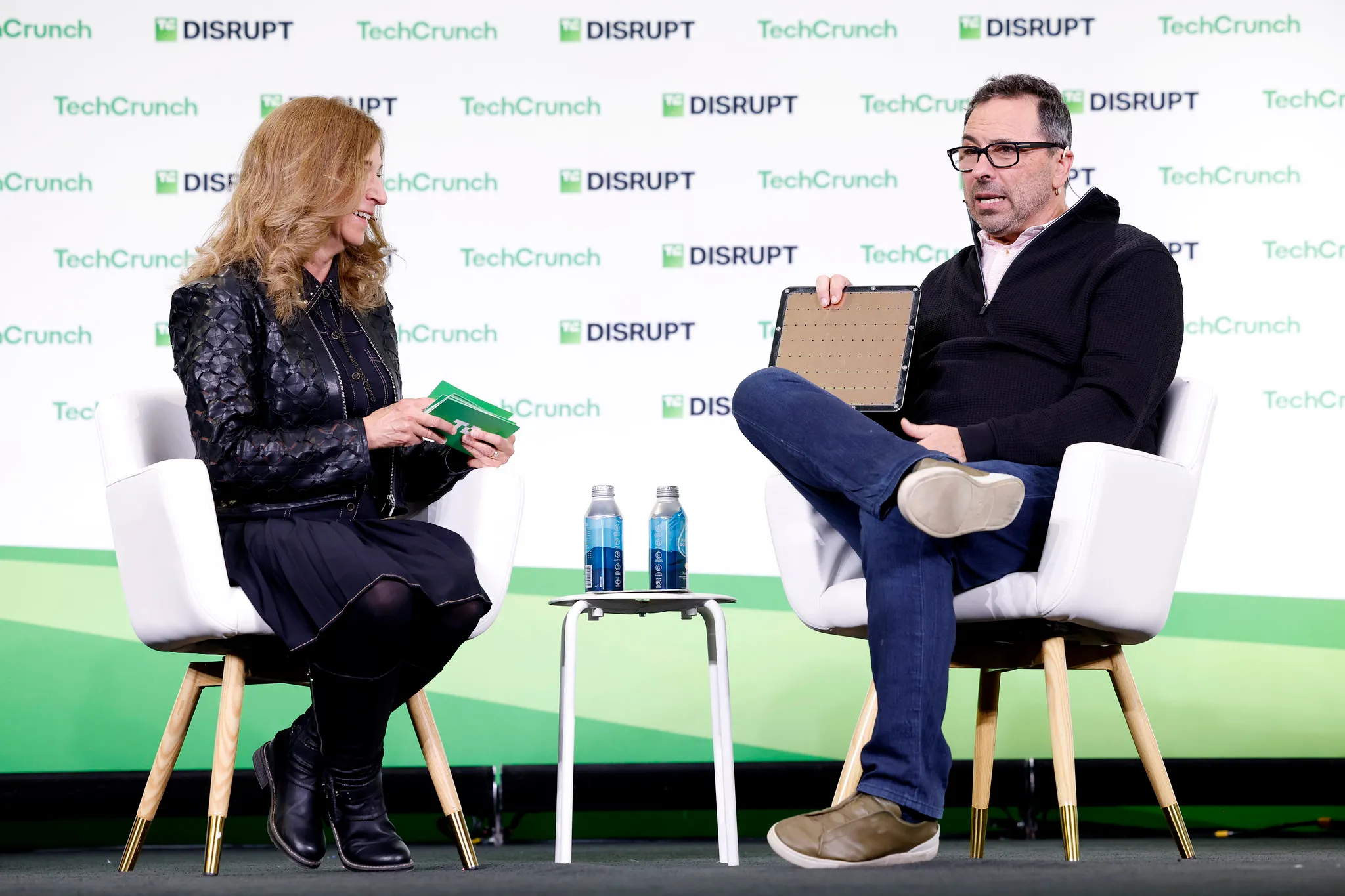
The landscape of personal technology is on the precipice of a radical transformation. While the past decade was defined by the transition from desktop computing to the ubiquity of the smartphone, the next era is poised to be defined by "agentic" artificial intelligence. During a keynote session at TechCrunch Disrupt 2026, Andrew Feldman, CEO and co-founder of Cerebras Systems, articulated a vision that shifts the focus of AI from remote, server-side interactions to a local, personalized presence: the rise of the AI home appliance.
For Feldman, whose company specializes in the massive, high-performance chips required to train and run large-scale AI models, the move toward localized, consumer-grade AI is not merely a hypothetical trend—it is an imminent reality.
Main Facts: The Emergence of the AI Appliance
Feldman’s core thesis is simple: we are approaching a future where specialized AI hardware becomes as essential to the modern household as the refrigerator or the microwave. These would not be the passive, voice-activated speakers of the early 2020s, but rather autonomous agents capable of managing complex logistics, executing tasks, and understanding the nuances of an individual’s life.
The defining characteristic of this technology, according to Feldman, is the hybrid architecture. Much like modern smartphones, these AI appliances will balance "on-device" processing with cloud-based computational power. This dual approach ensures that sensitive personal data remains within a secure "perimeter," while the heavy lifting of complex reasoning is offloaded to the cloud when necessary.
Feldman highlighted that the market is already seeing the early seeds of this transition. Companies like Meta and high-valuation startups such as Instinct are already demonstrating how consumer-facing AI agents can integrate into daily workflows. These agents are moving beyond simple chatbot interactions to become proactive organizers, capable of handling schedules, research, and—most significantly—financial transactions on behalf of the user.
Chronology: From LLMs to Autonomous Agents
To understand the shift Feldman describes, one must look at the rapid evolution of the AI sector over the last several years:
- 2022–2023 (The Generative Explosion): The industry was dominated by the emergence of Large Language Models (LLMs). The focus was on "prompting"—users asking questions and receiving text-based outputs.
- 2024 (The Integration Phase): AI began to be baked into operating systems and software suites. We saw the rise of co-pilots in word processors and coding environments, but these tools remained largely reactive.
- 2025 (The Rise of Agentic AI): The industry began to pivot toward "agents"—software capable of performing sequences of actions across different applications.
- 2026 (The Hardware Pivot): As seen at TechCrunch Disrupt, the conversation has shifted from the software layer to the physical delivery of these capabilities. The industry is now asking how to house this intelligence in dedicated consumer devices that offer the low latency and high privacy that cloud-only solutions cannot provide.
Supporting Data: Why Localized AI is the Next Big Step
The push for local AI hardware is driven by three critical factors: latency, privacy, and sovereignty.
1. Latency and Connectivity
For an AI to act as a personal assistant—adjusting the thermostat, managing a calendar, or helping with a real-time domestic task—it cannot rely solely on the erratic speeds of a home Wi-Fi connection to a distant data center. Local processing allows for "instant" response times, which is essential for natural, human-like interaction.
2. The Security Perimeter
Feldman’s emphasis on a "security perimeter" addresses the growing public anxiety surrounding data privacy. If an AI agent has access to credit cards and personal communication, users are naturally wary of that data residing in a third-party cloud. A home appliance that processes the bulk of its logic locally creates a "black box" that protects user identity.
3. Economic Scalability
As Cerebras Systems has demonstrated with its "Wafer-Scale Engine" technology, the efficiency of AI chips is increasing at an exponential rate. The hardware that once required a rack of servers can now be condensed into smaller, power-efficient form factors suitable for a home environment.
Official Responses and Industry Context
Feldman’s outlook is shared by a growing cadre of silicon valley executives who view the "agentic" future as the final hurdle for AI adoption. By focusing on infrastructure, Cerebras Systems positions itself as the "picks and shovels" provider for this gold rush.
"One of the reasons I love being in infrastructure is because I don’t need the consumer-facing idea," Feldman noted during his keynote. "I like building the platforms that other people’s ideas take flight on."
This stance is significant. While companies like Apple, Google, and Amazon are fighting for the consumer-facing "face" of the AI assistant, Cerebras is focusing on the compute power required to make those assistants intelligent enough to be useful. By providing the underlying architecture, Cerebras effectively hedges its bets—it doesn’t matter which company wins the consumer market, provided they are all using the high-performance hardware that makes advanced local AI possible.
Implications: A New Way of Living
The implications of widespread AI home appliances are profound, touching on ethics, economy, and the very nature of human productivity.
The "Assistant" Economy
Feldman himself is a "power user" of these technologies. He describes using a "collection of agents" to manage his professional life—sweeping his calendar, preparing dossiers on meeting participants, and streamlining communications. This is a glimpse into a future where the average person’s efficiency is boosted by an order of magnitude. If an AI can handle the "drudgery" of life—booking flights, paying bills, and organizing schedules—the nature of human work will shift toward higher-level creative and strategic thinking.
The Financial Perimeter
Perhaps the most ambitious part of Feldman’s vision is the AI that manages money. "They will certainly have access to credit cards and be able to buy things for you," he noted. This implies a future where AI agents act as fiduciary intermediaries, comparing prices, checking inventory, and executing purchases without human intervention. While this promises massive convenience, it also necessitates a new framework for digital accountability and cybersecurity.
The Shift from "Possibility" to "Utility"
The most exciting aspect of this development, according to Feldman, is that we are moving past the "novelty" phase. We are no longer amazed that an AI can write a poem or create an image; we are now looking for the AI to do things that were previously impossible.
"I think they will make a meaningful impact in making our lives better," Feldman said. This impact will likely manifest in areas like personalized health monitoring, automated home management, and education.
Conclusion: The Road Ahead
As the industry moves toward 2027 and beyond, the competition will not just be about which AI model is "smartest," but which AI can be most effectively integrated into the home. Cerebras Systems and Andrew Feldman have provided a clear roadmap: the future of AI is local, it is autonomous, and it is coming to your living room.
While the technical challenges of power consumption, localized memory, and reliable autonomous logic remain, the trajectory is clear. The era of the "smart home" is being supplanted by the era of the "intelligent home." In this new world, the primary interface between the user and the digital world will not be a keyboard or a screen, but an agent—a digital steward residing in a physical appliance, working tirelessly to make our lives a little more manageable, and a little more efficient.
For founders, engineers, and consumers alike, the challenge now is to define exactly what these agents should do with the unprecedented agency they are being granted. As Feldman suggests, the infrastructure is being built; the rest is up to the innovators who will fill the space.