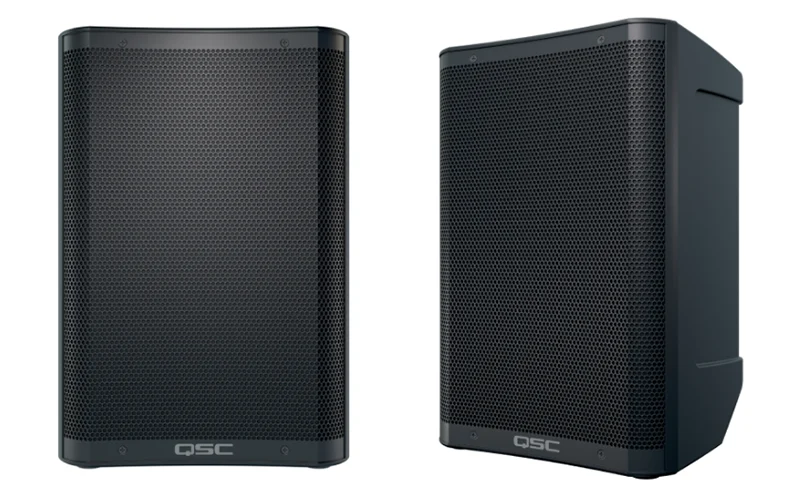
In the rapidly evolving landscape of portable professional audio, the demand for high-output, cable-free solutions has never been greater. As musicians, DJs, and event production specialists increasingly move toward "grab-and-go" setups, the reliance on AC power infrastructure has become a logistical bottleneck. Enter the QSC CB10, a battery-powered point source loudspeaker that promises to bridge the gap between studio-grade sonic performance and total mobile freedom. By integrating a 10-inch woofer with a 1-inch compression driver into a robust, sub-30-pound package, QSC is targeting a versatile demographic that refuses to compromise on audio fidelity in the field.
Main Facts: Redefining Portable Performance
The QSC CB10 is more than just a powered speaker with a battery pack; it is a sophisticated, digitally managed point source system designed for a wide variety of acoustic environments. At its core, the unit features a 10-inch low-frequency driver paired with a 1-inch high-frequency compression driver, delivering a consistent 90-degree conical coverage pattern. This dispersion characteristic is vital for smaller events and intimate venues where consistent sound pressure levels (SPL) across the audience area are paramount.
One of the most impressive aspects of the CB10 is its physical footprint. Despite housing a high-capacity Lithium-Ion battery capable of delivering up to 12 hours of continuous playback, the speaker maintains a profile slightly smaller than its non-battery-powered sibling, the K10.2. Weighing in at just over 25 pounds, the unit remains exceptionally manageable, thanks in part to an oversized, ergonomic top handle that facilitates one-handed transport. Whether deployed on a standard speaker pole, placed vertically on a stage, or tilted back at a 30-degree angle to function as a floor monitor, the CB10’s mechanical design reflects a deep understanding of real-world deployment challenges.
A Chronology of the CB10 Ecosystem
The development of the CB10 follows a lineage of innovation within the QSC portable PA catalog. The design philosophy mirrors the success of the KC12 column loudspeaker, particularly regarding the integration of the "Loudspeaker Control" app ecosystem.

Upon initial setup, users are greeted by a rear panel that avoids the clutter typical of modern DSP-heavy speakers. It offers two combo XLR/TRS inputs, a dedicated stereo auxiliary input, and Bluetooth streaming capabilities. A notable inclusion for solo performers is the 1/4-inch footswitch port, which allows for hands-free control during live sets. The system’s digital backbone is managed through the aforementioned app, which acts as the command center for fine-tuning input gain, EQ curves, and global system parameters. By utilizing a shared software platform with existing QSC products, the manufacturer has ensured that users who are already familiar with the QSC workflow can transition to the CB10 with zero friction.
Technical Specifications and Supporting Data
The acoustic performance of the CB10 is characterized by a "vocal-forward" sound signature, with a noticeable presence boost in the 6 kHz to 8 kHz range that ensures intelligibility even in noisy environments. The low-frequency response is robust, with a natural rise starting at 250 Hz that provides a sense of fullness often missing in battery-operated gear.
DSP and Contour Tuning
The onboard DSP provides three primary contour settings that allow the user to tailor the speaker to specific applications:
- Default: A balanced, relatively flat response suitable for general-purpose use.
- Live: A flattened response designed to maximize headroom and clarity for vocalists and live instruments.
- Dance: A scooped-mid profile that emphasizes the low-end and high-end, catering to the rhythmic requirements of DJs and recorded playback.
The inclusion of a 3-band user-controllable EQ via the app provides further granularity. Furthermore, for users tasked with multi-source management, the "Ducker" feature—which automatically lowers the volume of auxiliary inputs when a signal is detected on Input A—is a transformative tool for announcers and emcees.

Advanced Connectivity
Beyond basic playback, the CB10 supports up to 200 milliseconds of delay, allowing for complex, multi-speaker setups in larger event spaces. The footswitch functionality is particularly flexible, configurable through the app to mute effects, kill specific inputs, or provide a volume boost for guitar solos or dramatic speeches. The physical assembly is equally refined; the use of tool-free thumb screws for adjustments reflects a "no-nonsense" design language meant to save time during quick-turnaround load-ins.
Official Perspectives: The Engineering Logic
QSC’s design team has emphasized that the CB10 was not merely intended to be a "convenience speaker," but a professional tool that happens to run on a battery. In discussions surrounding the product’s release, the focus was placed on the "impulse response" of the 10-inch driver. By optimizing the cabinet tuning and the digital crossover, QSC has managed to achieve a tight, percussive sound that belies the speaker’s compact size.
The decision to limit the woofer size to 10 inches was a deliberate trade-off. By avoiding the weight of a 12- or 15-inch magnet assembly, the engineers were able to keep the total weight low while maintaining enough SPL to fill medium-sized rooms. The engineering team notes that for most of the target applications—musicians in coffee shops, outdoor race announcers, or small wedding receptions—the 10-inch driver provides the optimal balance of efficiency and weight.
Implications for the Portable PA Market
The release of the CB10 signals a wider shift in the professional audio industry. As battery technology improves in energy density and reliability, the "cordless" PA is rapidly evolving from a niche toy to a primary performance tool.

Operational Efficiency
For the independent contractor or solo performer, the implications are significant. The ability to set up a full-range system without scouting for AC power outlets reduces setup time by 50% or more. The "Ducker" function, while seemingly minor, represents a major step forward in usability for solo acts who double as their own sound engineers. By automating the mix, the performer can focus on their art rather than managing a mixing console.
The "All-in-One" Standard
The success of the CB10 suggests that future portable loudspeakers will be judged less by their raw wattage and more by their "ecosystem integration." The fact that this speaker shares its app interface with larger, stationary columns suggests that QSC is building a modular ecosystem. Users can start with a CB10 for small gigs and eventually expand into a larger system without needing to learn new software or workflows.
Conclusion: A New Benchmark
After rigorous evaluation, it is clear that the QSC CB10 succeeds in its primary objective: providing a high-quality, professional audio experience in a form factor that is genuinely portable. The sound quality is impressive, the battery life is more than sufficient for the average event, and the digital feature set is both intuitive and powerful.
Whether you are a professional musician needing a versatile monitor, a DJ working remote beach events, or a corporate AV technician needing a reliable fill speaker for areas where cables are a tripping hazard, the CB10 represents a compelling value proposition. It is a testament to how far portable audio has come, and a clear indicator of where the industry is heading: toward a future where power is no longer a tether, but a built-in feature of the performance itself. With its combination of robust output, intelligent DSP, and ergonomic design, the CB10 is poised to become a staple of the mobile audio market for years to come.