The race to define the next generation of personal computing has shifted from raw intelligence to practical agency. While industry titans like OpenAI and Meta continue to push the boundaries of Large Language Models (LLMs), a new crop of startups is pivoting toward a more utilitarian goal: the "AI-native" operating system.
Hark, a startup founded less than a year ago by serial entrepreneur Brett Adcock, is the latest entrant in this crowded field. Today, the company officially announced the wide release of Hark Pro. Positioned as an AI agent designed to perform tasks rather than just generate text, Hark Pro aims to transform the computer from a tool we operate into an assistant that operates on our behalf.
The Evolution of the AI Assistant: From Chatbots to Operatives
The history of AI interaction has been defined by the "terminal" paradigm. Since the inception of the personal computer, we have communicated with our machines through text input—a method that has remained largely stagnant for half a century.
"It’s so hilarious to me that you have AI now, you have a chatbot, and you type stuff in with a keyboard," says Abidur Chowdhury, head of design at Hark and a former Apple staffer. "Fifty years later and the future of computing is still a terminal."
Hark seeks to break this cycle. Unlike general-purpose chatbots that exist as conversational overlays, Hark Pro is designed to be a full-screen experience. It functions as an operating system layer that bridges the gap between the user’s intent and the digital infrastructure of their life—email, calendars, hard drives, and financial portals.
Chronology of the Development
The development of Hark Pro has been rapid, reflecting the hyper-accelerated pace of the AI sector:
- Early 2024: Hark is incorporated by Brett Adcock, focusing on the premise that AI utility should be measured by task completion rather than parameter count.
- Mid-2024: The company shifts focus from experimental research to building a model specifically tuned for computer use, prioritizing reliability over broad-spectrum knowledge.
- Late 2024: Internal testing commences, focusing on proactive task management (e.g., travel bookings, expense reporting, and web navigation).
- Present Day: Hark Pro is released to the public with a "freemium" model, featuring a subscription tier for high-volume users.
Anatomy of Hark Pro: A New User Experience
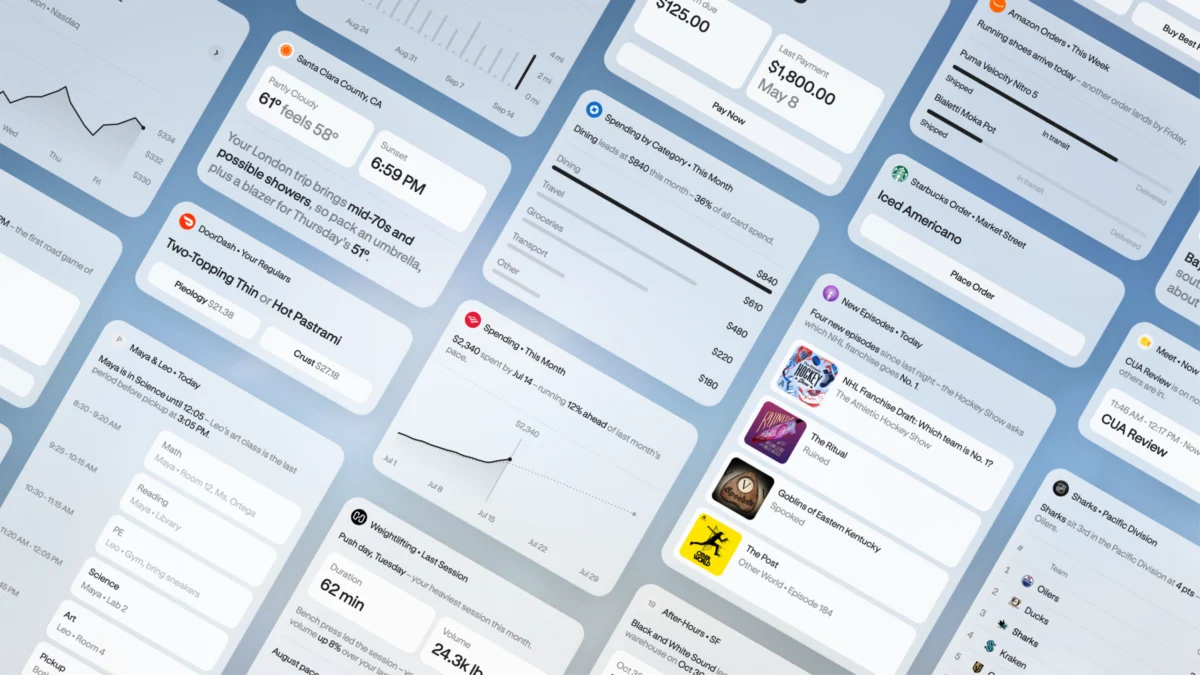
Hark Pro’s design philosophy departs from the current standard of minimalist, chat-only interfaces. The platform features a central dialog box, but it is supported by a dynamic feed that suggests actionable items based on the user’s context.
"Panels"—mini-dashboards that offer real-time insights into user-specific data—provide a visual layer that makes the AI’s thought process transparent. This is a deliberate design choice aimed at solving the "black box" problem prevalent in many current AI agents.
Perhaps most striking is the inclusion of a "viewing window" that shows the AI navigating the web in real-time. Where other models perform actions in the background, leaving the user to wonder if a task was completed correctly, Hark forces the AI to show its work. This transparency is intended to build the necessary trust for users to grant the agent access to sensitive accounts and personal workflows.
The Trust Imperative: Privacy vs. Utility
The most significant hurdle for any AI agent is the "permission barrier." For an agent to be truly useful, it must have access to the most intimate details of a user’s digital life. This creates a friction point between the desire for convenience and the fear of data exploitation.
Hark is attempting to differentiate itself from the "Big Tech" approach. "We’re not here to sell you ads and steal your data," Chowdhury says. While Meta and other competitors face scrutiny for using AI to build deep profiles of users and their social networks, Hark claims its focus is strictly on "task-related" intelligence.
However, the industry faces a broader dilemma. As users begin to rely on agents for everything from renewing DMV registrations to managing professional correspondence, the potential for cybersecurity risks grows exponentially. Apple, for instance, has recently moved to tighten macOS full-disk access controls in anticipation of the risks posed by autonomous agents. Hark must navigate these tightening regulations while maintaining the deep integration required to be truly "proactive."
Implications: The Quest for the "Post-App" Era
The long-term vision for Hark goes beyond software. The company has hinted at an AI-native hardware device scheduled for release in 2027. While details remain sparse, the company is positioning itself to be more than just a competitor to OpenAI or Anthropic; it wants to be the hardware-software interface for the next generation of computing.
The "Creep Factor" and Future Form Factors
Chowdhury, who brings a distinct Apple-esque design sensibility to the project, is acutely aware of the failures of previous "AI hardware" attempts, such as the Humane Pin or the Rabbit R1. He speaks openly about the "creep factor" associated with wearable cameras and biometric sensors.
"The first product that we’re building is a product that’s never ever existed before," he claims. Whether this is true innovation or marketing hype remains to be seen. The skepticism in the market is high; many consumers are weary of devices that promise a revolution only to deliver a buggy, limited-functionality gimmick.
The Technical Bet: Specialized vs. General Intelligence
Hark’s technical strategy is a calculated gamble. By using a model explicitly trained for computer use, the company hopes to achieve higher accuracy and faster execution speeds than the "jack-of-all-trades" frontier models.
The downside, however, is the potential loss of "world knowledge." If a user asks the AI a question that requires deep, philosophical reasoning or creative synthesis, will a model optimized for clicking buttons and filling out forms hold up? Hark believes the tradeoff is worth it. They argue that users don’t need a philosopher-AI; they need an administrative assistant that works end-to-end without needing a human to take over the keyboard midway through a task.
Conclusion: The Path Ahead
Hark Pro arrives at a moment of transition. The initial excitement over text-based LLMs is cooling, replaced by a growing demand for reliability and agency. By focusing on the "operating system" experience, Hark is betting that the winning product won’t be the one that knows the most, but the one that does the most.
As the company moves toward its 2027 hardware launch, the coming months will be a critical test. Can a startup, without the massive data silos of Google or Meta, build enough trust to handle the most private aspects of our digital lives?
For now, the team at Hark is inviting the public to be the judge. As Chowdhury puts it, "Please compare it to the others, be critical." In an industry defined by hyperbole, that invitation to be critical may be the most refreshing part of Hark’s pitch. Whether it can deliver on its promise to end the era of the "terminal" remains the multi-billion dollar question.