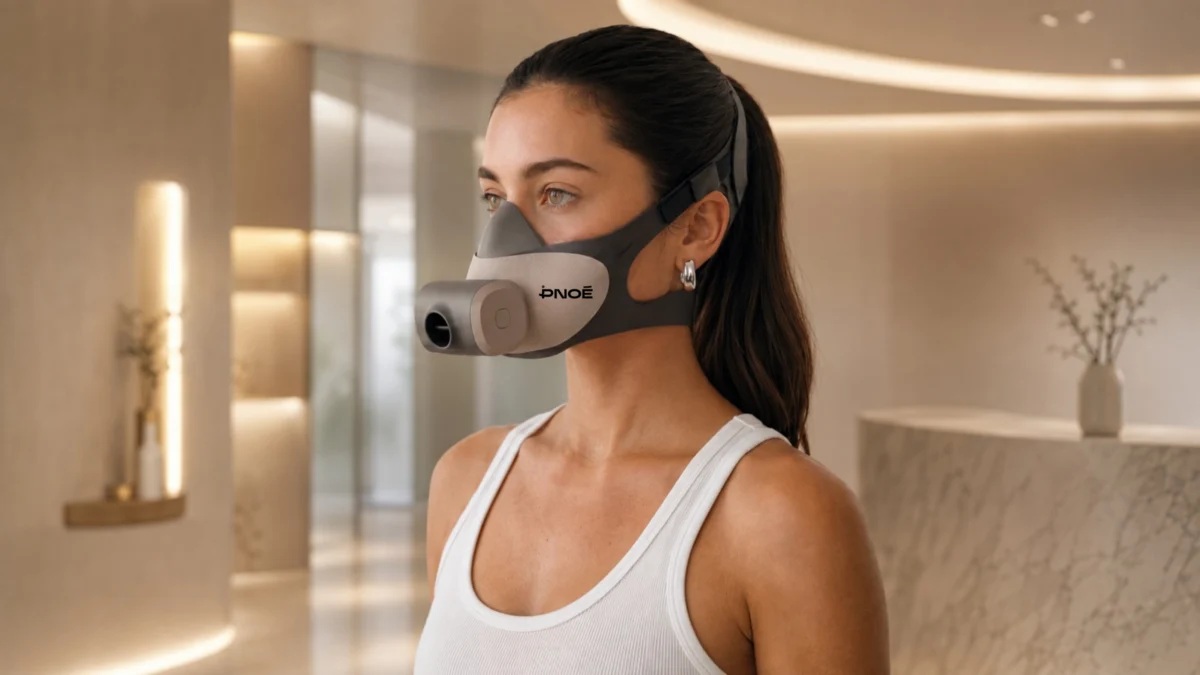
At first glance, the newest device from the Massachusetts-based startup PNOĒ looks like a relic from a dystopian graphic novel. The sleek, clinical mask, which straps firmly around the back of the head to seal over the nose and mouth, bears a striking resemblance to the intimidating gear worn by Bane, the hulking nemesis of Batman. However, beneath this utilitarian, sci-fi aesthetic lies a mission of profound wellness: the device is designed to measure the invisible chemical signature of human life—oxygen consumption and carbon dioxide exhalation—and translate that data into a roadmap for nutrition, training, and, ultimately, human longevity.
As the health and wellness industry pivots from simple activity tracking to deep-dive biological optimization, PNOĒ is preparing to launch its latest iteration, the PNOĒ 2.0, on October 1. This launch represents a significant technological and logistical shift for the company, moving the gold standard of metabolic testing from the exclusive, sterile environments of elite sports labs into the mainstream fitness ecosystem.
Main Facts: The "Business in a Box" Revolution
The fundamental challenge of metabolic testing has always been its barrier to entry. For over a century, metabolic carts—bulky, expensive, and temperamental machines—have served as the gold standard for measuring VO2 max (the maximum oxygen a body can utilize during exercise). Traditionally, these tests required a clinical environment, a trained technician to calibrate the equipment, and a significant financial investment, leaving the data accessible only to Olympic-level athletes and the ultra-wealthy.
PNOĒ’s innovation lies in its portability and, more importantly, its accessibility. The 2.0 version is a "self-serve" iteration. According to co-founder and CEO Apostolos Atsalakis, the process is deceptively simple: "A user walks into a gym, puts on the mask, pushes a button, sits down, and breathes for eight minutes. That’s it. It’s that easy."
This ease of use is the keystone of the company’s "business in a box" model. By charging businesses a monthly subscription—ranging from $400 to over $1,000—PNOĒ provides the hardware, software, marketing materials, and training necessary for gyms, spas, and even potential pharmacy partners to offer professional-grade diagnostics. The electronics of the device are modular, meaning they detach from the silicone mask. This solves the post-pandemic hygiene hurdle: the expensive hardware is shared, while each individual user maintains ownership of their own personal mask, facilitating a seamless, sanitized experience.
Chronology: From Cambridge Research to Global Expansion
The genesis of PNOĒ dates back to the PhD work of Apostolos Atsalakis at the University of Cambridge. Immersed in the burgeoning field of sensing technologies, Atsalakis became captivated by the idea that human breath, if properly analyzed, could serve as a non-invasive window into the internal state of the human body. Alongside his childhood friend and current Chief Product Officer, Panos Papadiamantis, he began conceptualizing a way to bridge the gap between lab-grade diagnostics and consumer-facing wearables.
The startup’s trajectory gained significant momentum when it was accepted into the Winter 2019 batch of the prestigious Y Combinator accelerator. At that time, "longevity" was still a fringe interest among tech circles rather than the booming multi-billion-dollar industry it is today.
Since its Y Combinator graduation, PNOĒ has undergone a rapid maturation process. The company has raised approximately $22 million in total funding, bolstered by an $11 million round led by investors including the firm 50 Years and Google Maps co-founder Lars Rasmussen. Today, with 110 employees and operations split between Malden, Massachusetts, and Athens, Greece, the company has officially reached profitability. They are currently planning for a Series B funding round within the next six to 12 months to fuel further international expansion.
Supporting Data: The 23 Biomarkers of Human Performance
The efficacy of the PNOĒ system rests on its ability to capture 23 distinct biomarkers from a single breath. While VO2 max is the headline metric—and currently a popular buzzword among longevity enthusiasts due to its correlation with lower mortality rates—the data set goes significantly deeper.
The device measures Resting Metabolic Rate (RMR), identifying exactly how many calories a body burns while at rest. Perhaps even more valuable for the average fitness enthusiast is the measurement of "metabolic flexibility," which tracks how efficiently the body transitions between burning fat and carbohydrates as fuel.
Atsalakis argues that these metrics address fundamental questions that static blood tests cannot. While a blood panel might tell you what is in your system at a singular point in time, metabolic testing tells you how your body is actually functioning as a machine. This allows for a level of personalization that renders the "one-size-fits-all" approach to diet and training obsolete. By integrating this data into a software ecosystem, PNOĒ helps coaches and trainers provide specific, data-backed prescriptions for exercise intensity and caloric intake.
Official Responses and Regulatory Clarity
Despite its clinical appearance and the diagnostic nature of its data, PNOĒ is cautious about its positioning within the regulatory landscape. The device is currently not cleared by the U.S. Food and Drug Administration (FDA) as a medical diagnostic tool.
"We do not provide medical recommendations," Atsalakis emphasized during a recent interview. "It’s like a body composition device, like a scale. A doctor cannot prescribe medication based on our results."
This distinction is crucial. By operating in the "wellness" space rather than the "medical" space, PNOĒ avoids the stringent and often lengthy regulatory approval processes that govern clinical diagnostic equipment. However, the company is not blind to the future. Atsalakis acknowledges that the immense trove of data they are collecting on human breath could, in time, prove useful for detecting systemic diseases such as cancer. He maintains that while a full diagnostic shift is "definitely a couple of years away," the regulatory path to becoming a medical device is a long-term goal the company is monitoring closely.
Implications: A New Era of Personalized Health
The rise of PNOĒ comes at a time when the consumer health market is crowded with "middle-ground" solutions. Devices from companies like Apple, Garmin, and Whoop utilize heart-rate variability and other proxies to estimate VO2 max, while consumer devices like Lumen analyze breath to provide quick insights into fuel burning.
PNOĒ occupies a unique, high-end niche between these consumer trackers and the clinical carts found in hospitals. By offering a "professional-grade" experience that is portable and affordable enough for high-end gym chains like Equinox, Four Seasons hotels, and professional organizations like the NBA, PNOĒ is effectively normalizing the idea that metabolic health should be measured as routinely as weight or blood pressure.
The implications for the wellness industry are massive. As the U.S. market continues to lead global interest in longevity, PNOĒ is expanding its footprint into Europe, Latin America, and Asia. The company’s success suggests that consumers are moving beyond simply wanting to know how many steps they took in a day; they want to know how their metabolism is aging and how they can optimize their longevity.
Whether the "Bane mask" becomes a standard fixture in the neighborhood gym remains to be seen. However, as the company scales and continues to refine its software to make complex metabolic data actionable, PNOĒ is positioning itself to become the central scorecard for the modern human performance industry. For a decade-old startup that started with two friends and a dream of decoding the breath, the journey from Y Combinator to global health influencer is a testament to the fact that the future of fitness may not be in the weights we lift, but in the oxygen we consume.