(Editor’s Note: This evaluation was originally published over a decade ago. However, with Pass Laboratories preparing to introduce its long-awaited successor—the XS Pre 2—we are revisiting our extensive time with the original $38,000 reference line stage. This retrospective serves both to contextualize the legacy of a modern high-end audio milestone and to establish the baseline against which its replacement will be judged.)
Main Facts: Defining the Pass Labs XS Pre Legacy
In the ultra-luxury tier of high-end audio, components are rarely judged solely by their technical specifications; they are measured by their ability to completely step out of the way of the music. During its extensive residency in our reference listening room, the Pass Laboratories XS Pre Preamplifier became defined by a single, paradoxical triumph: its ability to vanish entirely.
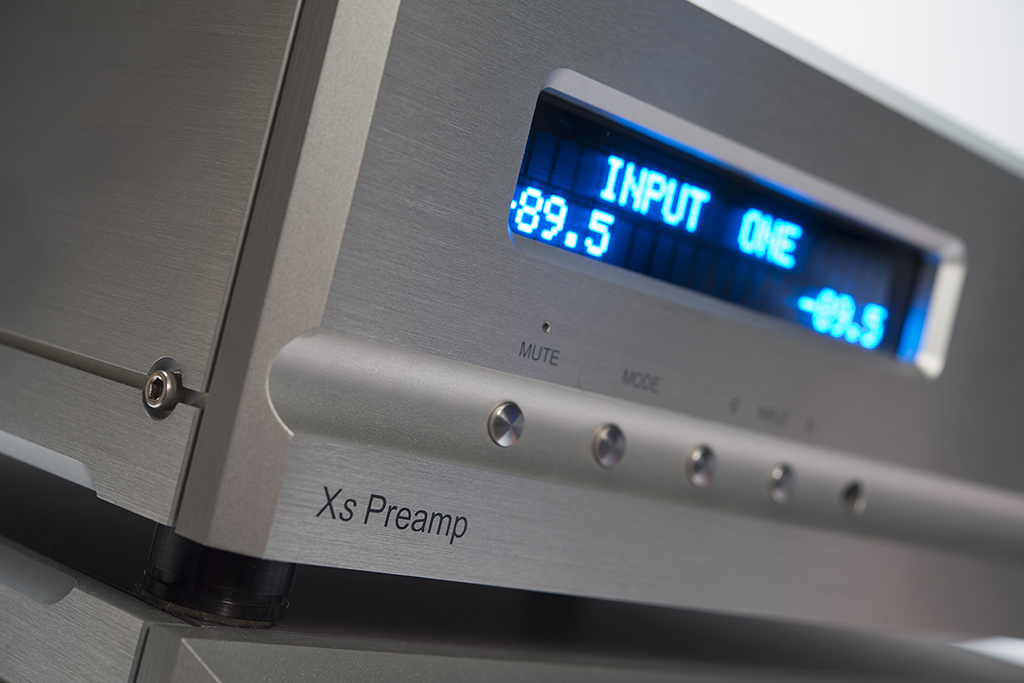
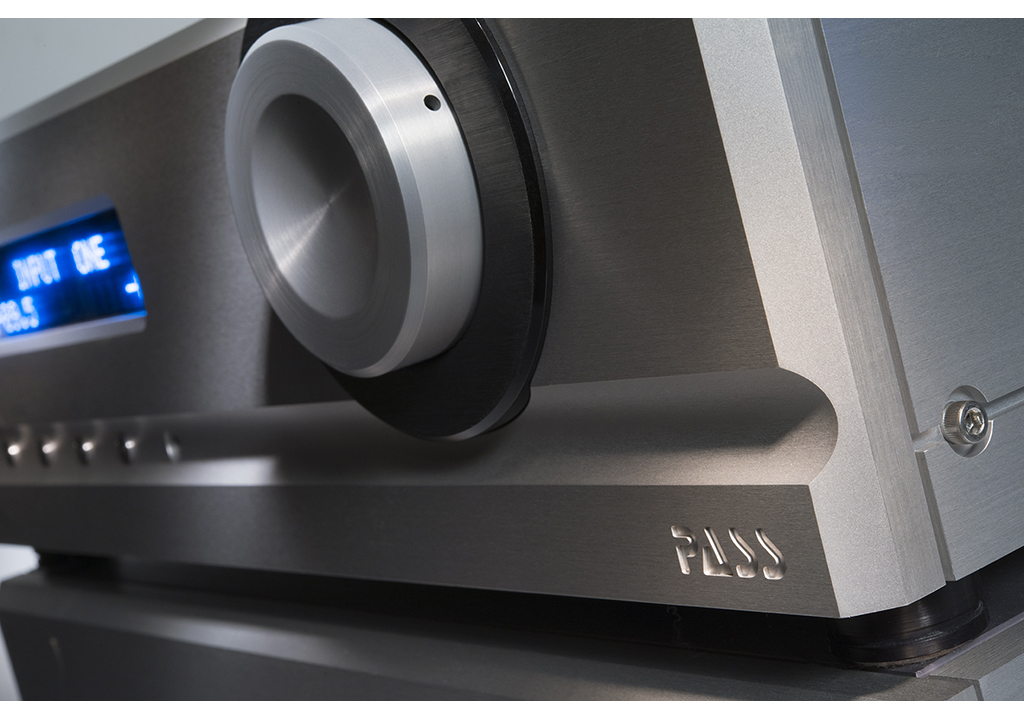
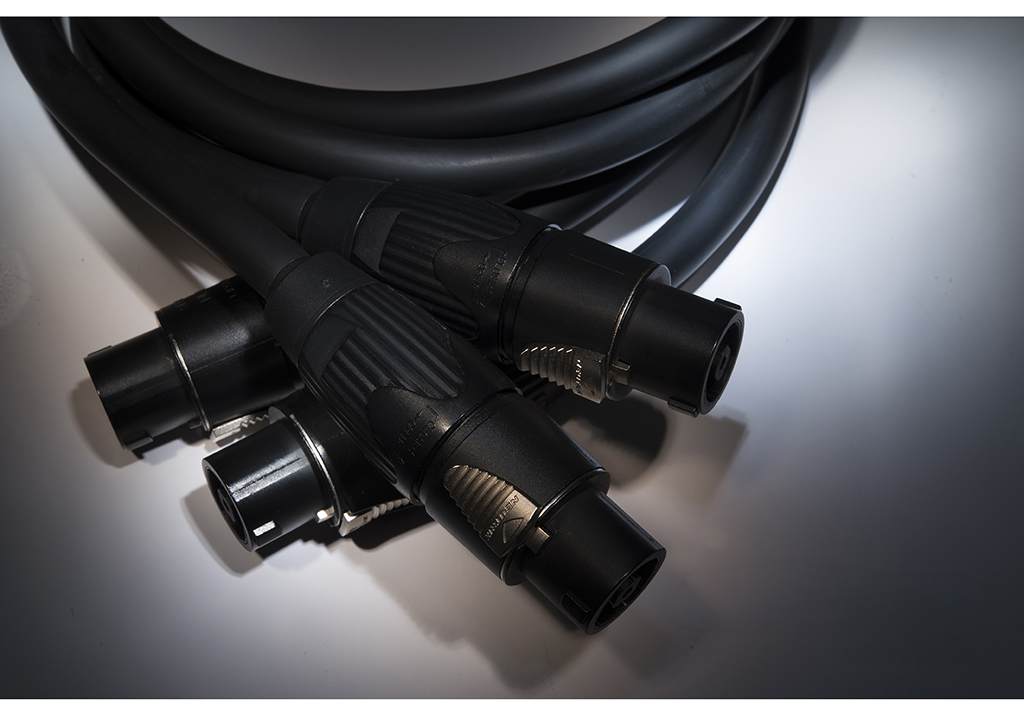
Priced at $38,000, the two-chassis line stage is an engineering statement piece. Designed by Wayne Colburn with a virtually blank check and a mandate from company founder Nelson Pass to build the ultimate preamplifier without compromise, the XS Pre sits at the pinnacle of solid-state circuit design. Comprising an 80-pound split-chassis architecture—separating the heavy-duty power supply (boasting an astonishing 100,000 microfarads of capacitance per channel) from the sensitive audio circuitry via massive, Neutrik-terminated umbilical cords—it represents a masterclass in industrial design and noise isolation.

Unlike many high-end components that impart a distinct sonic signature (a touch of warmth, an etched top-end, or a lush midrange), the XS Pre delivers an almost eerie neutrality. It matches or exceeds the performance of elite contemporaries like the Boulder 3010 and the Robert Koda K-10, offering a level of absolute transparency that redefines what is possible from a line-level component.
Chronology: A Decade of Reference-Level Performance
The Initial Encounter and Long-Term Integration
When the XS Pre first entered our reference system years ago, it immediately faced the skepticism reserved for five-figure high-end gear. Purchasing a component at this price point requires a definitive leap of faith; entering the secondary market prematurely carries a punishing financial penalty. Yet, within days of unboxing and allowing the unit four days to settle out of its initial "out-of-the-box fog," it became clear that this was not a component destined for resale.
Over the subsequent year of continuous evaluation, the XS Pre anchored systems spanning an extraordinary array of source components and loudspeakers. It was paired natively with Pass Labs’ own XS Phono and XS 300 monoblocks, but it proved equally virtuosic when driving third-party amplifiers ranging from modest tube designs to high-powered solid-state monoliths.
The Evolution Toward the XS Pre 2
Now, eleven years after its initial debut, the audio landscape has evolved, prompting Pass Laboratories to prepare the release of the XS Pre 2. By revisiting our archives and re-examining the original unit’s performance parameters, we are reminded of the immense engineering hurdle Pass Labs faces in improving upon an instrument that has stood as a gold standard for over a decade.
Supporting Data: Technical Architecture and System Synergy
The engineering ethos behind the XS Pre is rooted in a "less is more" philosophy, balanced by brute-force power reserves.
- Power Supply Architecture: The dedicated power supply chassis utilizes massive storage capacitance (100,000µF per channel), ensuring instantaneous current delivery and vanishingly low noise floors.
- Chassis Separation: Weighing in at 80 pounds total, the division of power regulation and amplification stages eliminates electromagnetic and mechanical interference.
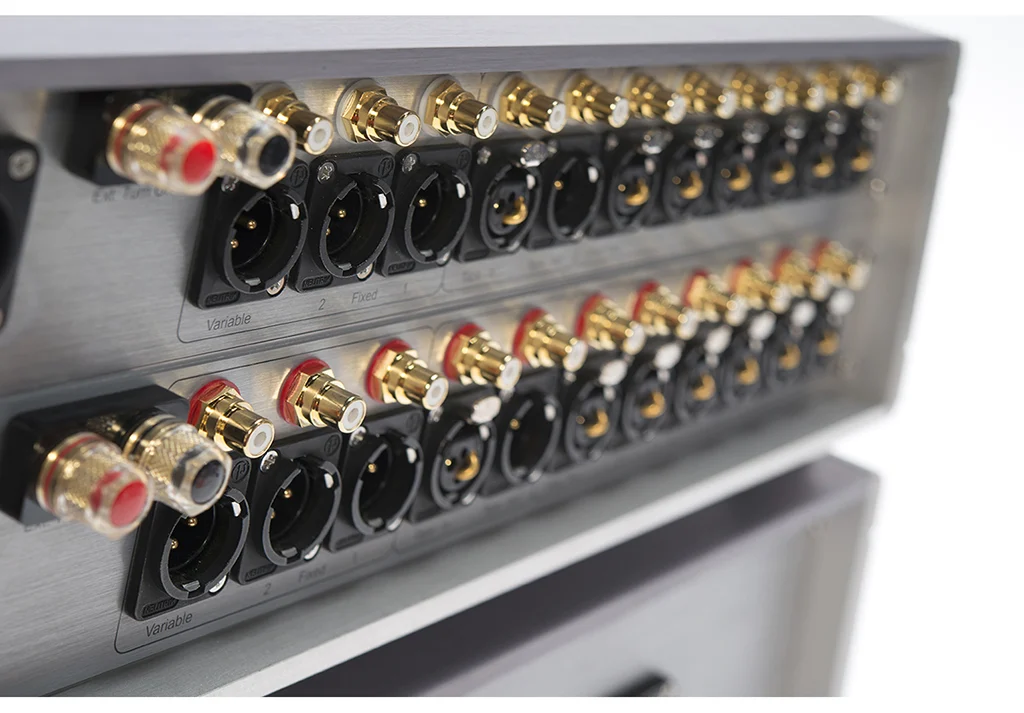
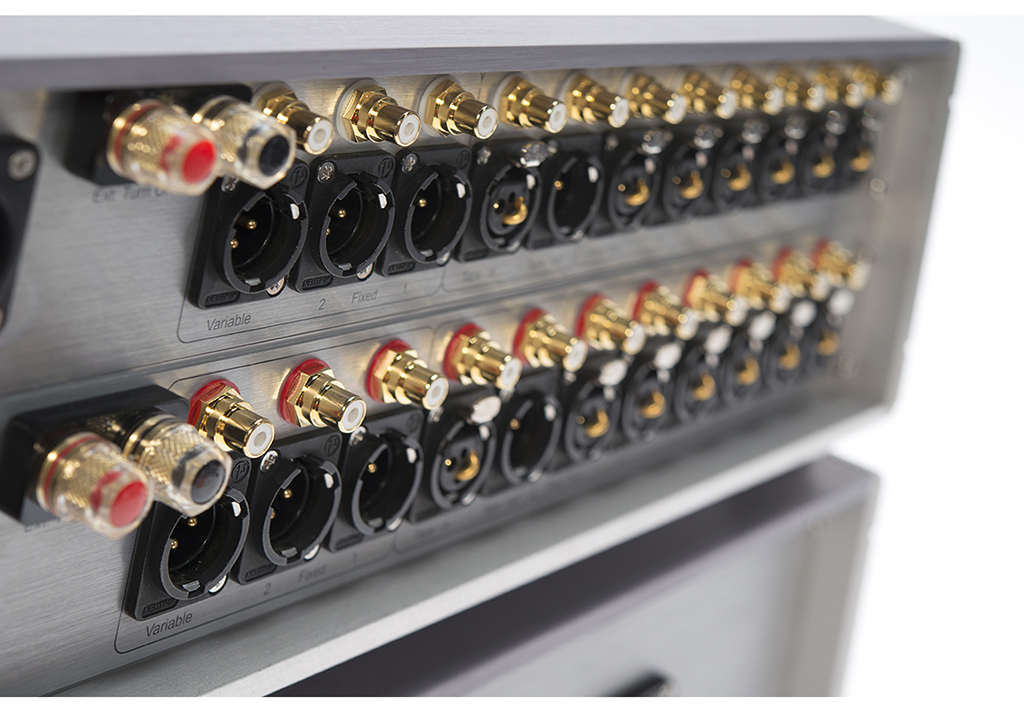
- Circuit Topology: Fully balanced internal architecture featuring both true balanced XLR and single-ended RCA inputs and outputs, ensuring universal compatibility across diverse system topologies.
- Flexibility and Control: A wide-range volume control ensures seamless pairing with high-efficiency horn speakers as well as power-hungry ribbon designs, while the solid aluminum remote echoes the robust build quality of the main chassis.
The "Removal Test"
To truly quantify the impact of the XS Pre, one need only execute a simple diagnostic: remove it from the signal chain. When running a high-end digital front-end—such as the dCS Rossini DAC and Clock combination—directly into a power amplifier via premium interconnects, the presentation is undeniably satisfying.
However, inserting the XS Pre introduces a profound transformation. Rather than coloring the sound, it expands the soundstage in all three dimensions. Transients explode from the speakers with startling dynamic contrast, and the micro-details of complex instrumentation snap into hyper-focus. It is akin to removing a restrictive governor from a high-performance engine; the core character remains pure, but the capacity for expression multiplies exponentially.
Official Perspectives: The Philosophy of Nelson Pass and Wayne Colburn
Within the high-end audio community, Nelson Pass is legendary for his work with single-ended power amplifiers (such as the First Watt series) and high-bias Class-A topologies. However, the architecture of Pass Labs’ preamplification lineup has long been the domain of chief preamplifier designer Wayne Colburn.
When commissioned to design a companion line stage for the flagship XS monoblocks, Colburn was given unprecedented freedom. Rather than relying on traditional audiophile tropes or leaning heavily into tube emulation, Colburn engineered a circuit focused strictly on ultra-low distortion, wide bandwidth, and absolute signal purity.
In official communications, Pass Labs has consistently emphasized that their components are engineered to satisfy the rigorous listening standards of the designers themselves. The absence of a traditional power switch—designed to be left powered continuously for optimal thermal stability and performance readiness—underscores a philosophy of seamless, maintenance-free longevity. Unlike tube-based linestages that require expensive, stressful periodic re-tubing, the solid-state XS Pre offers "set-it-and-forget-it" reliability.
Implications: The Market Impact and the Road to the XS Pre 2
The introduction of any flagship product at the $38,000 price point naturally invites debate regarding value and diminishing returns. As noted in our original findings, you cannot acquire a world-class exotic sports car for economy-car pricing; similarly, ultra-high-performance audio requires a commensurate investment in supporting infrastructure—including top-tier sources, cabling, and acoustic environments.
System Peripherals During Evaluation
To extract the absolute limits of the XS Pre’s performance, the review ecosystem comprised some of the finest playback instruments available:
- Analog Sources: AVID Acutus Ref SP/SME V/Lyra Atlas, Grand Prix Audio Monaco 2.0/Tri-planar/Lyra Etna, Brinkmann Bardo/10.1 arm/Koetsu Jade Platinum.
- Digital Sources: dCS Rossini DAC and Clock, Gryphon Kalliope.
- Phonostage: Pass Labs XS Phono.
- Power Amplification: Pass Labs XS 300 monoblocks, Pass Labs XA200.8.
- Loudspeakers: GamuT RS5i, Focal Sopra No. 3 (paired with dual REL 212 subwoofers), MartinLogan Neolith.
- Cabling: Tellurium Q Silver Diamond, Cardas Clear.
Looking Forward
As audiophiles and industry observers await formal specifications and listening impressions of the forthcoming XS Pre 2, the original XS Pre remains a monument to uncompromising engineering. It proved that solid-state electronics could achieve a rare synthesis of absolute neutrality, massive dynamic scale, and organic musical flow.
Whether the upcoming XS Pre 2 can successfully build upon this monumental foundation will be one of the most closely watched narratives in high-end audio. For now, the original XS Pre stands not as a relic of the past, but as a enduring benchmark—a masterclass in how an audio component can effectively disappear, leaving behind nothing but pure, unadulterated music.