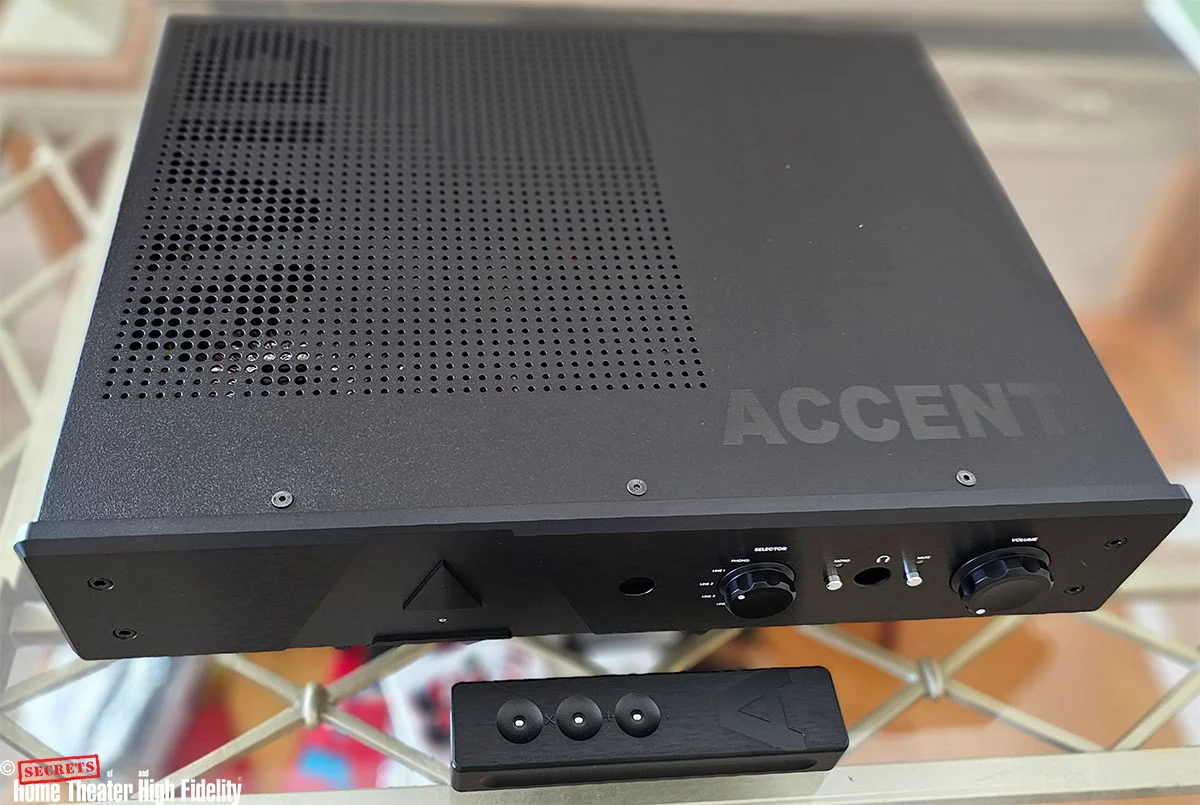
In an era defined by the rapid evolution of digital audio—where streaming services, high-resolution wireless protocols, and multifunctional "all-in-one" hubs dominate the market—the British manufacturer AVID HIFI has chosen a different path. Founded in 1995 by the meticulous engineer Conrad Mas, AVID has spent nearly three decades refining the science of analog playback. Their latest effort, the AVID HIFI Accent integrated amplifier, serves as a masterclass in focused engineering. By stripping away the digital noise and concentrating on the fundamental pillars of high-fidelity sound, the Accent positions itself not as a Swiss Army knife of audio, but as a scalpel: precise, sharp, and purpose-built for the discerning listener.
Main Facts: Engineering Purity Over Digital Proliferation
The AVID Accent is not trying to be a digital streaming platform. It lacks a DAC, network connectivity, and app-based control interfaces. Instead, it is a fully discrete Class AB integrated amplifier built upon a foundation of mechanical and electrical integrity.

At the heart of the Accent lies a massive 617 VA toroidal transformer, supported by 40,000 µF of reservoir capacitance. This robust power supply ensures that the 70 watts per channel (into 8 ohms) are delivered with the kind of authority and stability that typically defies such modest power ratings. The build quality is quintessentially AVID: a thick, vibration-dampening aluminum faceplate bolted to a rigid steel chassis. The design language is starkly minimalist—a testament to the belief that if an electronic component is designed correctly, its performance should speak louder than a cluttered dashboard of flashing lights and digital displays.
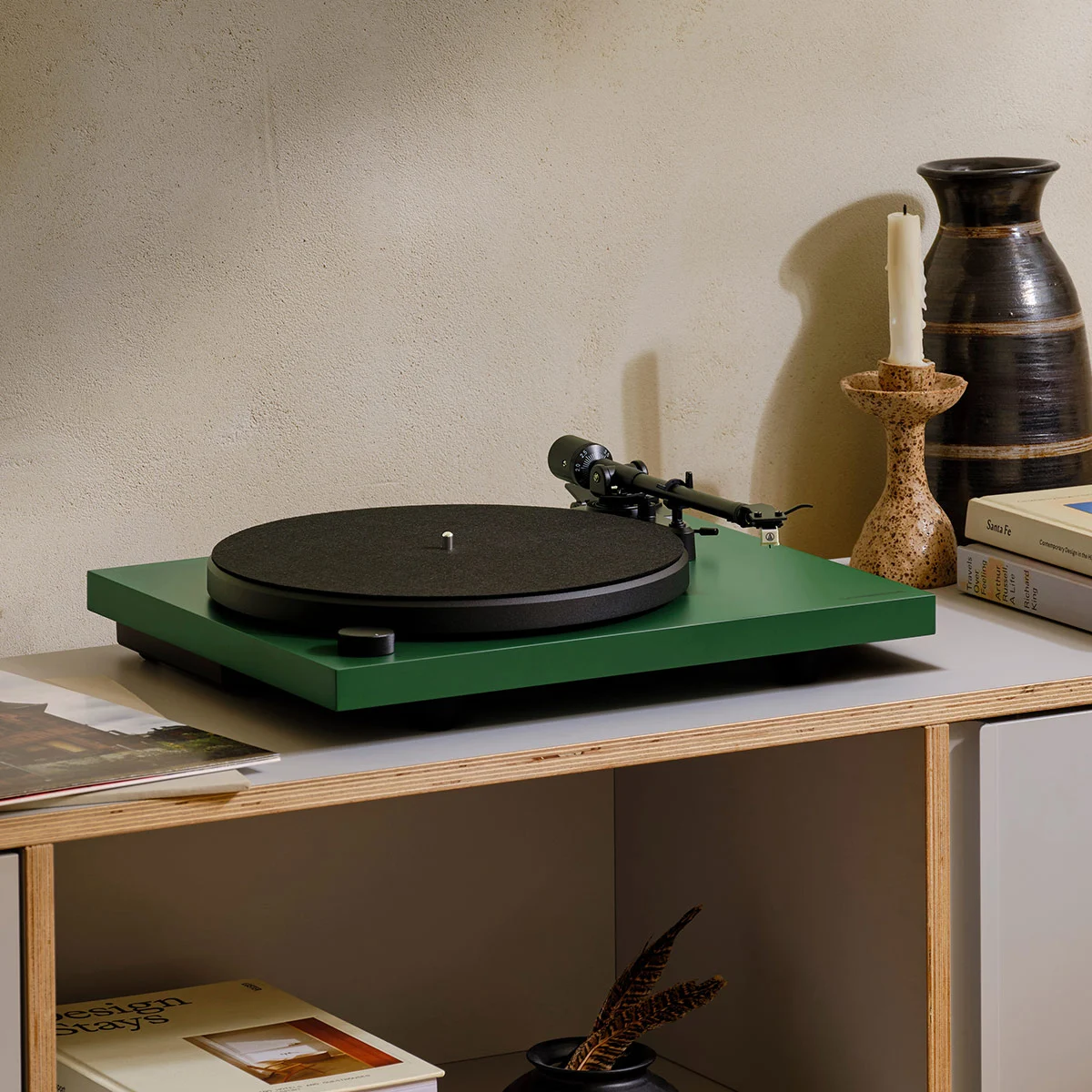
Beyond the amplification stage, the Accent incorporates two "luxury" utility features that are rarely implemented with this level of seriousness: an integrated version of AVID’s acclaimed Pellar phono stage and a high-performance headphone amplifier. By including a fully adjustable MM/MC phono stage that allows for precise loading and gain settings, AVID is signaling its target demographic: the vinyl enthusiast who demands a high-end analog experience without the complexity of a massive rack of separates.

Chronology: The Evolution of AVID’s Philosophy
AVID HIFI’s journey began in the mid-90s with a singular obsession: the elimination of mechanical vibration. Conrad Mas’s early work on turntables, characterized by their unique suspension systems and heavy-duty chassis designs, set the tone for the company’s trajectory. As the company grew, it became clear that the same principles applied to turntables—minimizing noise, maximizing signal purity, and controlling resonances—could be applied to electronics.
The transition from purely analog source components to amplification was a logical, if demanding, progression. AVID’s design philosophy has always been evolutionary rather than revolutionary. They do not chase the "flavor of the month" in audio trends. Instead, they iterate on proven topologies. The Accent represents the culmination of this philosophy in a compact form factor. It is the result of years of research into how signal paths react to interference and how power supplies influence the "blackness" of the background from which music emerges. By the time the Accent hit the market, it had already undergone rigorous testing to ensure it could compete with much larger, more expensive monoblock configurations in terms of transparency and transient speed.

Supporting Data: Technical Specifications and Performance Metrics
The performance of the AVID Accent is backed by specifications that prioritize real-world usability over marketing fluff.
- Output Power: 70 W/ch into 8 ohms.
- Topology: Fully discrete Class AB.
- Phono Stage: Integrated Pellar MM/MC with selectable gain (48dB, 60dB, 70dB) and adjustable loading.
- Headphone Output: 9 V RMS (suitable for 20–600 Ω headphones).
- Frequency Response: 5 Hz – 80 kHz (±1 dB).
- Total Harmonic Distortion (THD): 0.03% at 80% power (1 kHz).
What these numbers do not fully capture is the stability of the amplifier under load. During intensive testing with speakers of varying sensitivities—including the Revel Ultima Studio, GoldenEar T44, and Fyne Audio F502S—the Accent displayed a remarkable ability to maintain control. Even when driven hard, the amplifier did not succumb to the "softening" of transients that often plagues entry-level integrated units. The 40,000 µF capacitance reserve ensures that the amplifier remains composed during complex musical peaks, such as the thunderous percussion in a John Williams orchestral score or the intricate, layered textures of a modern jazz recording.

Official Perspectives: The Design Intent
Conrad Mas and the AVID engineering team have been vocal about their disdain for "feature-bloat." From the company’s perspective, every additional digital circuit, wireless antenna, or complex processing chip is a potential source of electromagnetic interference and, by extension, a degradation of the analog signal path.
The inclusion of the Pellar phono stage is the most significant "feature" of the device, and it is a deliberate one. AVID contends that the vinyl playback chain is the most sensitive in the home audio system. By building a world-class phono stage directly into the amplifier chassis, they eliminate the need for interconnect cables between a separate phono preamplifier and the amp—cables that often act as antennas for noise. The decision to include user-adjustable loading plugs for MC cartridges further underscores the company’s commitment to the serious analog enthusiast. This is not a "convenience" phono stage; it is an audiophile-grade component housed within the main amplifier.

Implications for the High-End Market
The AVID Accent occupies a complex position in the high-end market. At a price point of $7,595, it sits in a tier where consumers expect perfection. The market for integrated amplifiers at this price is fiercely competitive, dominated by brands offering high-resolution streaming, room correction software, and massive power reserves.
The implication of the Accent’s existence is that there is a significant, if overlooked, segment of the market that feels alienated by the "computerization" of audio. For these listeners, the Accent offers a sense of permanence. Because it lacks digital hardware, it will not become obsolete when a new wireless protocol is released or a streaming service changes its app requirements. Its build quality ensures it can last for decades, and its focus on the analog signal path means that as the user upgrades their turntable or speakers, the Accent will likely reveal more of the source material rather than becoming a bottleneck.

However, there are trade-offs. The lack of a remote input selector and the absence of a line-level output for a subwoofer may limit its appeal for those building a 2.1 system or a more complex home theater hybrid. Yet, for the purist, these omissions are not bugs—they are features. They represent a commitment to the absolute shortest signal path.
The Listening Experience: A Sonic Appraisal
In practice, the AVID Accent is a revelation in transparency. It does not impose a "house sound" that colors the music; instead, it acts as a transparent window.

When testing with vinyl—specifically Diana Krall’s The Look of Love—the integrated phono stage provided a depth and holographic imaging that was simply missing from lesser, built-in solutions. The separation between instruments was precise, yet the presentation remained fluid and organic. The "air" around the vocals was palpable, suggesting that the noise floor of the internal phono circuit is exceptionally low.
When switching to digital sources via a high-end DAC, the Accent’s character remained consistent. The reproduction of Melody Gardot’s Moon River highlighted the amplifier’s greatest strength: its ability to handle delicate, nuanced vocal inflections without making them sound artificial. It possesses a "composed" quality; even during the most demanding orchestral passages, the amplifier never feels like it is working hard. It retains a sense of ease, providing a soundstage that is both wide and deep, with stable image placement that allows the listener to pinpoint the location of every instrument.

Conclusion
The AVID HIFI Accent is an amplifier that requires a certain level of maturity from the listener. It is not for the person who wants to control their music through a phone, nor is it for the person who wants to stream thousands of tracks via a built-in interface. It is for the person who owns a record collection, values the tactile experience of turning a volume knob, and seeks a component that will serve as the heart of their music system for years to come.
While the $7,595 price tag will give some pause, the value proposition is found in the build quality, the high-performance integrated phono stage, and the sonic performance that rivals much larger, more complex systems. AVID has successfully created an amplifier that prioritizes the "soul" of the music over the "specs" of the hardware. In a world of fleeting digital trends, the AVID Accent is a refreshing, permanent anchor for the serious two-channel enthusiast. It is, quite simply, a triumph of analog engineering.