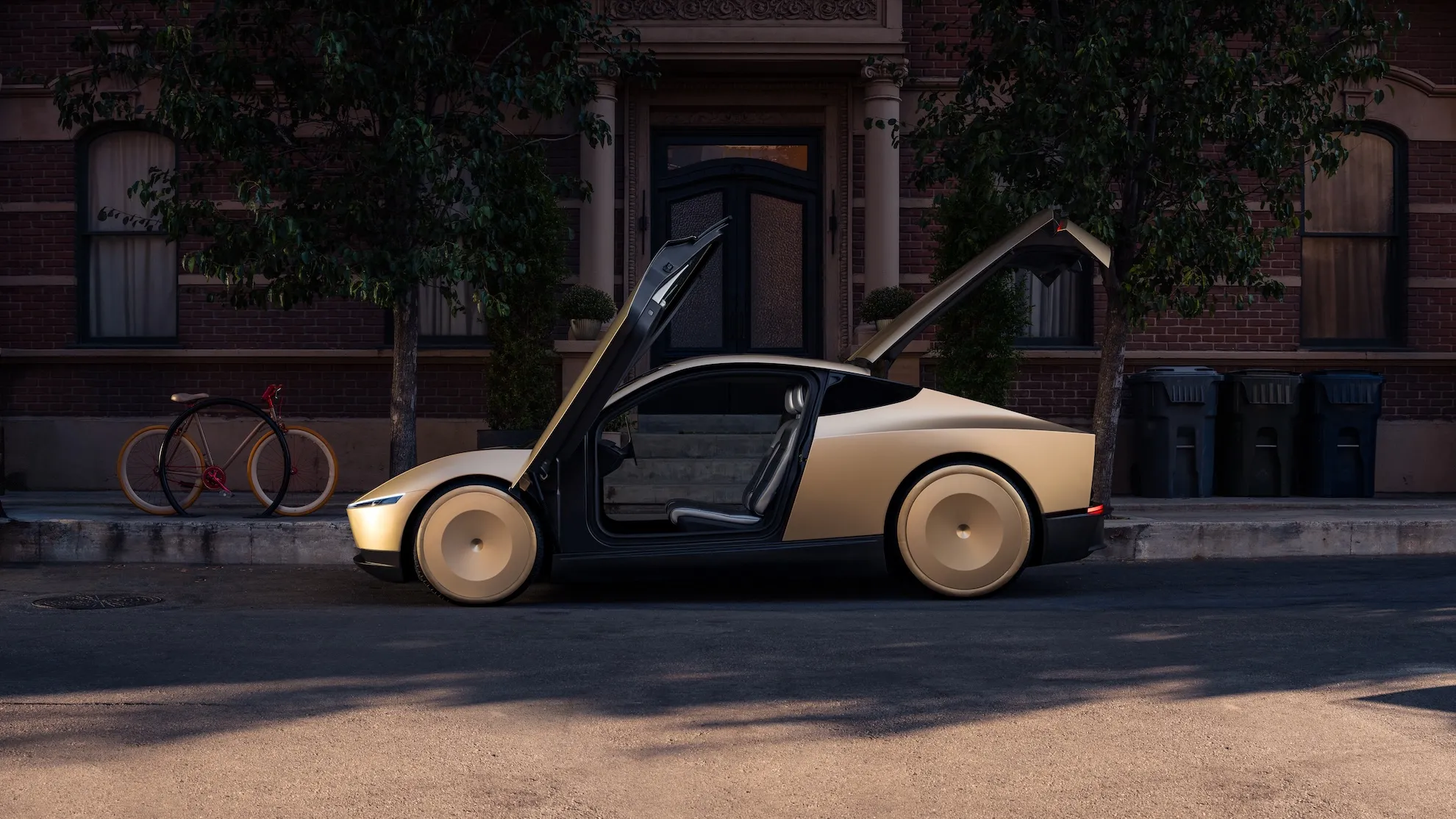
Tesla’s vision of a driverless future reached a critical juncture this week as the company announced its intent to begin selling its gold-hued, steering-wheel-free "Cybercab" to customers by the end of the year. While the announcement, delivered during Tesla’s third-quarter earnings call, was framed as a milestone in the company’s pivot toward "transportation as a service," it arrives under a heavy cloud of federal scrutiny. As Tesla attempts to navigate the transition from a hardware-focused automaker to a robotaxi operator, it faces a complex web of regulatory hurdles, shifting product strategies, and growing skepticism regarding the viability of its autonomous timelines.
The Strategic Pivot: From Personal Ownership to Robotaxi Fleets
For years, Elon Musk’s narrative regarding Tesla’s autonomous future centered on a "software-first" approach. The promise was simple: millions of existing Tesla vehicles already on the road would eventually receive a remote update, transforming them into autonomous robotaxis that could generate passive income for their owners.
However, the reality of the company’s recent earnings call suggests a significant departure from that strategy. Tesla is now signaling that the Cybercab—a two-seater vehicle designed specifically for autonomy—will be the cornerstone of a new, company-managed ecosystem. Lars Moravy, Tesla’s Vice President of Engineering, clarified that current production of the Cybercab is earmarked exclusively for Tesla’s proprietary robotaxi fleet.
"We will mainly deliver fully designed autonomous vehicles to our customers," Moravy stated, noting that the rollout will be incremental. The company plans to scale its operations as it gains empirical data on vehicle delivery, ownership models, and the logistical challenges of managing a fleet of self-driving cars. This represents a fundamental shift in business model: Tesla is moving away from selling cars as consumer goods and toward controlling the entire service layer, positioning the Cybercab as a utility rather than a personal asset.
Chronology of a Shifting Vision
The path to the Cybercab has been marked by repeated delays and evolving goals. To understand the current friction, one must look at the timeline of Tesla’s autonomous aspirations:
- The Early Years (2016–2020): Musk repeatedly promised that "Level 5" autonomy was just around the corner, initially suggesting that a Tesla would be able to drive itself from Los Angeles to New York without a human intervention by the end of 2017.
- The FSD Era (2020–2024): Tesla launched its "Full Self-Driving (Supervised)" program. While it provided advanced driver-assistance features, it remained a Level 2 system, requiring constant human oversight.
- The Cybercab Announcement (September 2026): Tesla held its dedicated Cybercab event in Austin, Texas, showcasing the vehicle and opening a portal for interested parties to express interest in purchasing or operating their own Cybercab fleets.
- The Regulatory Collision (Late 2026): Within hours of the vehicles hitting the streets of Austin for public testing, the National Highway Traffic Safety Administration (NHTSA) launched an investigation.
- The Q3 Earnings Update (October 2026): Tesla reaffirmed its intent to sell the units by year-end, even as the government signals a potential crackdown on the vehicle’s design.
The Regulatory Labyrinth: NHTSA and the FMVSS
The most significant barrier to the Cybercab’s success is not engineering, but compliance. The vehicle’s design—specifically the absence of a steering wheel, brake pedals, and rearview mirrors—violates traditional Federal Motor Vehicle Safety Standards (FMVSS).
Historically, automakers are permitted to "self-certify" that their vehicles meet these safety standards. Tesla has applied this same logic to the Cybercab. However, the NHTSA is not taking this at face value. The agency has launched a formal investigation to examine the technical data and safety justifications Tesla relied upon to determine that a steering-wheel-less car is "safe."
The stakes are high. Current federal regulations were written for human-operated vehicles; they do not explicitly account for a world where the "driver" is a line of software code. While the Department of Transportation has proposed removing the brake pedal requirement for autonomous vehicles—a move widely seen as a nod to the industry’s push toward total automation—the proposal is not yet finalized law. Until the legal framework catches up with the technology, the Cybercab remains in a precarious, quasi-legal limbo.
Implications for Tesla Owners: The Great Delay
The most frustrated stakeholders in this saga may be the loyal Tesla customers who have been paying for "Full Self-Driving" capabilities for years. Musk’s announcement that an unsupervised version of FSD will not reach the general public until the second quarter of next year marks yet another delay.
This creates a paradox: if Tesla’s current timeline holds, third-party fleet operators might be legally permitted to run autonomous Cybercab services before individual Tesla owners are granted the same level of autonomy in their own vehicles. This could exacerbate the growing rift between the company’s loyal early adopters and its corporate strategy, which now appears to prioritize large-scale fleet deployments over the individual ownership experience.
Musk’s own comments on the earnings call reinforced this divide. "Cybercab is primarily going to be something that is offered as transport as a service," he noted, distinguishing it from the Model 3, Model Y, and Roadster, which he explicitly labeled as "cars you’d want to own." This admission confirms that for the CEO, the future of the brand is split: a legacy hardware business for enthusiasts and a new, dominant robotaxi service for the masses.
Supporting Data and Technical Challenges
The technical hurdle for the Cybercab is immense. By removing manual controls, Tesla is betting everything on the infallibility of its vision-based AI system. Unlike competitors (such as Waymo or Zoox) that rely on a redundant sensor suite—including LiDAR, radar, and cameras—Tesla continues to insist that cameras and neural networks are sufficient to navigate complex urban environments.
Data from the current FSD (Supervised) program shows that while the system has improved, it still requires frequent "interventions" in edge cases, such as inclement weather, construction zones, or erratic human behavior. The shift to a completely unsupervised system requires a level of reliability that, according to many safety experts, has yet to be demonstrated in the wild.
Furthermore, the economics of a "transport as a service" model remain unproven. While Tesla promises a low-cost robotaxi experience, the capital expenditure required to maintain, charge, clean, and repair a massive, distributed fleet is vastly different from the high-margin, one-time sales model that built Tesla into a trillion-dollar company.
Future Outlook: A High-Stakes Gamble
The coming months will be a defining period for Tesla. If the NHTSA investigation leads to a mandate that the Cybercab must incorporate manual overrides, it could force a total redesign, potentially setting the program back years. Conversely, if Tesla successfully navigates the regulatory process and begins full-scale deployment in 2027, it could solidify its position as the leader in the autonomous mobility sector.
However, the company faces a dual challenge: it must convince regulators that its software is safe enough to operate without a human, and it must convince its own customer base that their years of investment in FSD software were not in vain.
As the industry watches, the "Cybercab" remains a symbol of both the immense promise and the profound hubris of modern Silicon Valley. Whether it becomes the revolution Musk envisions or a cautionary tale of regulatory overreach and technical over-promise, one thing is certain: the era of the driverless vehicle is no longer a theoretical exercise—it is a battle being fought in real-time on the streets of Austin and within the halls of federal agencies.