Introduction: The Quest for the Perfect Audition
For the discerning audiophile, the process of selecting a pair of high-fidelity loudspeakers is a deeply personal endeavor. It is a pursuit defined by nuance, clarity, and the subjective search for sonic transparency. However, the retail environment has historically posed a significant challenge: how does one provide a truly objective "level playing field" when comparing dozens of disparate speaker models?
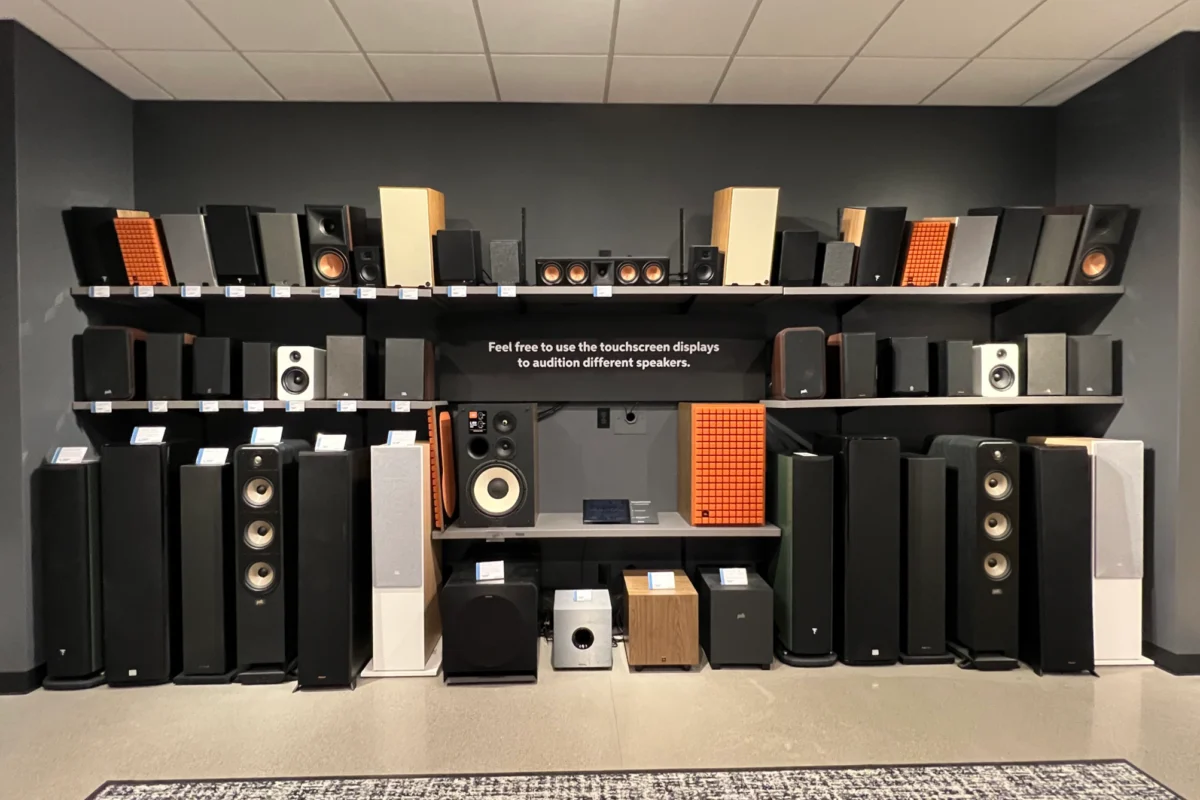
Sweetwater, the world’s leading music technology and instrument retailer, has addressed this challenge head-on with the unveiling of its sophisticated new Home Audio Room at its flagship campus in Fort Wayne, Indiana. By integrating cutting-edge amplification technology from LEA Professional, Sweetwater has created a high-stakes, controlled acoustic environment that allows customers to audition up to 80 passive loudspeakers with absolute consistency. This development represents a marriage of high-end retail experience and professional-grade systems integration.
Main Facts: Engineering a Transparent Listening Environment
The primary objective of the Home Audio Room was to eliminate variables. In traditional retail settings, switching between speakers often involves different signal paths, varying power profiles, or inconsistent gain staging. Sweetwater’s new facility operates on a fundamentally different premise: keeping the amplification constant to ensure that the only variable the customer hears is the speaker itself.
To achieve this, Sweetwater selected the LEA Professional Connect Series 168 (CS168) amplifiers. The selection was predicated on three core requirements:
- Consistency: The need for a "constant" source that maintains sonic integrity across all channels.
- Capacity: The ability to manage a massive switching matrix capable of toggling between 80 individual loudspeakers.
- Efficiency: A compact, 1RU chassis footprint that minimizes heat generation and power consumption without sacrificing output.
The CS168 is an 8-channel powerhouse, delivering 160 watts per channel. Its flexibility in supporting both Hi-Z (70V/100V) and Lo-Z operation—selectable by individual channel—makes it an ideal candidate for complex routing environments. Furthermore, the inclusion of 96kHz DSP as a standard feature allows for precision management of the signal path, ensuring that the source material remains pure from the digital interface to the speaker terminals.
Chronology: From Concept to Sonic Reality
The journey to the completion of the Home Audio Room was one of meticulous planning and technical execution.
Phase I: The Requirements Analysis (Late 2025)
As Sweetwater’s customer base for home audio equipment expanded, the need for a professional-grade auditioning suite became undeniable. The engineering team, led by IT Audio Visual Engineer David Kars, began the search for a hardware backbone that could handle the scale of an 80-speaker matrix while remaining transparent enough for high-end hi-fi evaluation.
Phase II: The Selection and Prototyping (Early 2026)
During the first quarter of 2026, the team evaluated several amplifier platforms. The search was narrowed down to solutions that offered network-based management and deep integration capabilities. LEA Professional’s Connect Series stood out for its proprietary software ecosystem and its ability to communicate seamlessly with existing control protocols.

Phase III: Systems Integration (Spring 2026)
The installation phase involved the deployment of multiple CS168 units. The team focused on mapping the signal flow to ensure that every speaker pair in the 80-unit inventory received identical power characteristics. By utilizing Q-SYS for the overarching room control, the team was able to create a seamless user interface for staff and customers.
Phase IV: Calibration and Launch (July 2026)
Following extensive acoustic tuning and software stress testing to ensure the switching matrix performed without latency or artifacts, the room was officially opened to the public in mid-July 2026. The facility now serves as a benchmark for high-end audio retail.
Supporting Data: Why the CS168 Was the "Sweet Spot"
The choice of the LEA Professional Connect Series 168 was not merely a matter of convenience; it was a technical decision based on the specific architectural requirements of the room.
Technical Specifications of the CS168:
- Output Power: 160 Watts per channel (into 4, 8, or 16 ohms).
- Connectivity: Ethernet-enabled for remote monitoring and control.
- DSP: Integrated 96kHz DSP for crossover, EQ, and limiting.
- Form Factor: 1RU (Rack Unit), allowing for extreme density in the rack room.
- Control Interface: Full LEA Cloud connectivity and Q-SYS plugin compatibility.
The efficiency of the CS168 allowed Sweetwater to maximize the rack space. In a project of this magnitude, heat management is a critical concern. By utilizing LEA’s highly efficient output stage, the facility avoids the noise and thermal load issues typically associated with older, Class-A/B amplification designs. This allows for a quieter, more comfortable environment for customers, essential for the critical listening required to evaluate high-end home audio gear.
Official Responses: The Engineering Perspective
David Kars, the IT Audio Visual Engineer at Sweetwater, has been the driving force behind the room’s technical implementation. His commentary highlights the shift from traditional, analog-heavy retail setups to modern, network-integrated workflows.
"The amplifier needed to be our ‘constant’ source that never changed to make it a level playing field as customers auditioned one speaker pair at a time," Kars explained. "LEA was right in that sweet spot where we have the power requirements, the channel counts, and the super-efficient architecture."
Kars further emphasized the importance of software integration: "Having the ability to manage the amplifiers through the network connection and apply settings across all the amplifiers was incredibly useful and saved us a significant amount of time. The biggest advantage for us was the Q-SYS integration and the plugin developed specifically to manage and control the amplifiers."
By bringing the amplifier management into the same Q-SYS environment used for lighting, room acoustics, and playback control, the Sweetwater team has created a "single-pane-of-glass" experience. This reduces the cognitive load on staff, allowing them to focus entirely on the customer’s needs rather than the mechanics of the equipment.

Implications: The Future of High-End Retail
The implications of Sweetwater’s new Home Audio Room extend well beyond the walls of their Fort Wayne store. This installation serves as a proof-of-concept for the future of retail audio.
1. The Death of the "Sales Pitch"
By removing the amplification as a variable, Sweetwater is effectively shifting the sales dynamic. The equipment speaks for itself. This builds a deeper level of trust between the retailer and the consumer, as the customer knows they are evaluating the speaker, not the synergy (or lack thereof) between the store’s demo equipment and the product.
2. The Rise of Network-Centric AV
The seamless integration of LEA amplifiers with Q-SYS demonstrates that professional AV standards are increasingly migrating into the high-end consumer retail space. The era of manual patch bays and proprietary, closed-loop systems is fading, replaced by flexible, software-defined ecosystems.
3. Scalability and Modular Growth
Because the system is network-based, it is inherently scalable. If Sweetwater decides to expand the Home Audio Room to accommodate 100 or 120 speakers in the future, the foundation provided by the LEA/Q-SYS architecture allows for modular expansion without requiring a complete overhaul of the existing control infrastructure.
4. Setting the Gold Standard
Retailers worldwide are likely to view this facility as a benchmark. The ability to provide a "controlled environment" for audio evaluation is the ultimate value-add in an age where online shopping has made the physical experience of buying equipment feel somewhat archaic. By prioritizing technical excellence, Sweetwater is providing a compelling reason for customers to visit in person.
Conclusion: A New Era for Audiophile Auditioning
Sweetwater’s Home Audio Room is a testament to the fact that even in an increasingly digital world, the physical act of listening remains the most important part of the audio journey. By leveraging the power, efficiency, and integration capabilities of the LEA Professional Connect Series 168, the company has successfully stripped away the technical clutter that often complicates the auditioning process.
As audio technology continues to evolve, the demand for transparency—both in sound and in the sales process—will only grow. Through strategic investments in professional-grade infrastructure, Sweetwater has ensured that its customers can audition with confidence, backed by the knowledge that their experience is as precise as the music they love. Whether it is a pair of high-end bookshelf monitors or floor-standing reference speakers, the path to the perfect sound is now clearer, and more consistent, than ever before.