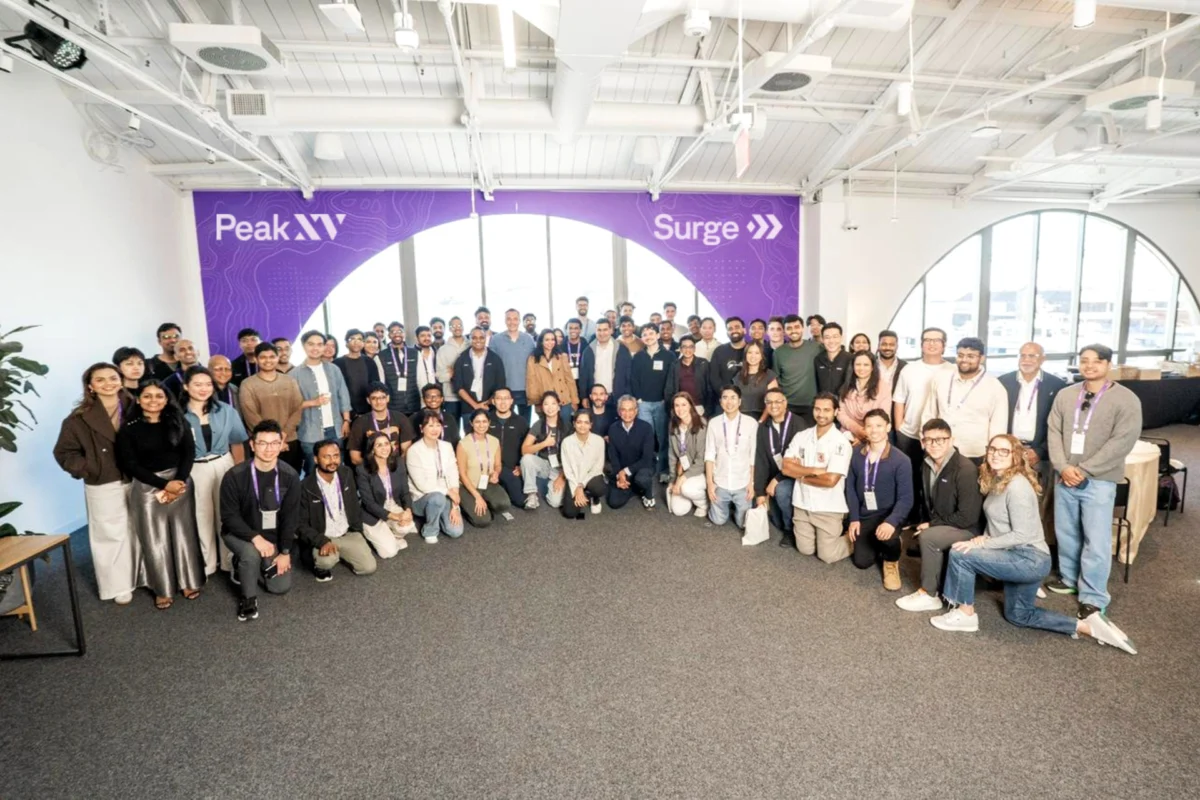
Peak XV Partners, a venture capital powerhouse managing over $10 billion in assets, has signaled a strategic pivot in its early-stage investment philosophy. With the unveiling of "Surge 12"—its latest cohort of 18 startups—the firm has officially implemented a new, higher investment ceiling of up to $5 million per company, a significant leap from its previous $3 million cap. This shift underscores a broader industry trend: as the requirements to reach a successful Series A funding round become increasingly rigorous, the demand for more robust seed-stage capital has surged.
Main Facts: A New Chapter for Surge
The Surge 12 cohort represents a departure from the traditional, smaller-check model that characterized the program’s earlier years. Peak XV has deployed more than $50 million across this specific group, which has collectively garnered over $90 million in seed-stage funding.
The program, which launched in 2019 under the firm’s former identity as Sequoia Capital India and Southeast Asia, has acted as a launchpad for over 180 startups. The 10 largest entities to emerge from these cohorts now boast a combined annual revenue exceeding $1 billion, validating the firm’s "seed-plus" methodology. By raising its investment ceiling, Peak XV is positioning itself to provide a more substantial runway for founders, particularly those operating in capital-intensive sectors like deeptech, robotics, and advanced AI.
Chronology: From Regional Player to Global Incubator
The evolution of Surge reflects the changing geography of the startup ecosystem. When the program debuted in 2019, its primary focus was strictly on the burgeoning tech scenes of India and Southeast Asia. However, Surge 12 paints a different picture.
While the program remains deeply rooted in its original regions—with more than half of the 18 companies currently based in India—the ambition of the founders is distinctly global. Only five of the 18 startups are exclusively focused on the Indian domestic market. The remaining 13 are targeting international markets, with founders scattered from San Francisco to Sydney. This represents a maturation of the ecosystem, where geographical location is increasingly decoupled from a company’s total addressable market.
Since its inception, the program has been defined by its ability to identify high-potential founders. The firm reports that approximately 50% to 60% of any given cohort consists of seasoned operators from established tech giants, alongside a mix of repeat entrepreneurs and highly specialized technical experts.
Supporting Data: The Anatomy of Surge 12
The diversity of the Surge 12 cohort is striking, spanning sectors as varied as AI safety, autonomous infrastructure, and fintech. The following breakdown highlights the depth of the current batch:
- Infrastructure & Deeptech:
- Puralink: Developing autonomous robots for underground pipe navigation, leveraging patented drive technology born from university research.
- ULOOK: A space-tech venture building autonomous satellite systems for radio-frequency sensing, founded by veterans of over 12 satellite missions.
- HiLoop: An AI platform focused on post-training, helping companies adapt open-weight models for enterprise-specific needs.
- Healthcare & Well-being:
- August AI: A global healthcare platform serving 9 million users across 160 countries, blending AI diagnostics with physician-led care.
- Hoola Health: A comprehensive platform for pediatric and family care, consolidating diagnostics, therapy, and medical services.
- Consumer & Fintech:
- Ditto: An AI-driven dating matchmaker integrated into iMessage, aiming to replace swipe-culture with meaningful in-person connections.
- Tribe Money: A personal finance platform utilizing AI to assist users in wealth management and investment research.
- GameStock: A novel platform that gamifies financial trading to increase engagement in capital markets.
- Wingit: A specialized platform catering to India’s premium beauty and personal care market.
- Productivity & AI Operations:
- Alma: A personal computing platform focused on efficiency and affordability, founded by former Microsoft Research engineers.
- Kindling: A "storytelling operating system" that uses AI to automate content and communication workflows for startups.
- Reinforce Labs: Specialized tools for red-teaming and remediating enterprise AI systems, led by former Google AI directors.
- Riffle: A creative platform for musicians to collaborate in a unified browser-based environment.
- Kello: An AI-powered talent discovery engine that evaluates candidate potential beyond traditional resumes.
Official Responses and Strategic Rationale
In an interview, Rajan Anandan, Managing Director at Peak XV, articulated the reasoning behind the firm’s aggressive expansion of its investment range.
"The bar to raise a Series A has gone up pretty significantly," Anandan noted. The current market environment demands that startups arrive at their Series A with more than just a prototype; they need clearer product-market fit, scalable infrastructure, and often, higher technical complexity.

"We are seeing more capital-intensive companies, particularly in the deeptech and AI sectors, that are raising larger rounds at the seed stage," Anandan added. By increasing the check size, Peak XV is ensuring that its founders are not forced back into the fundraising cycle prematurely, allowing them to focus on product development and market expansion during a critical growth phase.
Anandan further clarified that Surge is just one facet of Peak XV’s multi-layered strategy. The firm continues to lead traditional seed-stage rounds outside of the Surge program and remains a committed partner to its companies as they navigate the later stages of venture financing.
Implications: The "Seed-Plus" Era
The shift to a $5 million ceiling has profound implications for the venture capital landscape in the Asia-Pacific region and beyond.
1. The Death of the "Minimalist" Seed Round
For years, the standard seed round was intended to provide just enough capital to reach a "minimum viable product." However, as AI and hardware-intensive startups become the norm, the cost of R&D and compute has risen. Peak XV’s move signals that the industry is transitioning to a "Seed-Plus" model—where companies are expected to have a higher degree of technical maturity and a larger operational budget before they even reach a Series A.
2. A Globalized Talent Pool
The fact that Surge 12 includes companies from San Francisco to Sydney suggests that Peak XV is leveraging its brand to attract global talent. By positioning itself as a hub for international entrepreneurs who want to build for global markets while utilizing the engineering talent and cost-efficiencies of the Indian and Southeast Asian ecosystems, the firm is effectively bridging the gap between emerging markets and Silicon Valley.
3. Increased Competition for Top-Tier Founders
By offering larger checks and a structured "immersion" program, Peak XV is raising the stakes for its competitors. Other venture firms operating in the region will likely face pressure to either increase their own seed-stage commitments or double down on their value-add services to remain attractive to high-caliber, serial entrepreneurs.
4. Continued Focus on "Quality over Quantity"
Despite the increase in capital, the cohort size remains curated. By maintaining a balance of repeat entrepreneurs and highly skilled technical founders—with a significant portion coming from established tech firms—Peak XV is prioritizing founders who already possess the "operating DNA" required to scale. The success of the previous 180 startups, specifically the $1 billion in annual revenue generated by their top 10 performers, suggests that this selective, high-touch approach is delivering superior risk-adjusted returns.
Conclusion
As the venture capital industry adjusts to a more cautious global economic climate, Peak XV Partners’ decision to increase its Surge investment ceiling is a bold statement of confidence. By providing more capital to early-stage ventures that are building the next generation of AI, robotics, and consumer tech, the firm is not just funding companies; it is architecting a new, globalized standard for what a seed-stage startup can and should be. The performance of the Surge 12 cohort will serve as a key indicator of whether this "bigger-is-better" approach to seed funding will become the new industry benchmark in the years to come.