In a move that underscores the streaming giant’s aggressive pivot toward generative artificial intelligence, Netflix has officially disclosed in a recent regulatory filing that it paid $587 million in cash to acquire InterPositive, the AI-driven production startup co-founded by Academy Award-winning actor and director Ben Affleck.
The disclosure, buried in the company’s latest financial statements, finally puts to rest months of speculation regarding the valuation of the deal. While rumors and initial reports from outlets like Bloomberg suggested a figure approaching $600 million, the definitive $587 million price tag highlights the immense premium Netflix is willing to pay to secure proprietary technology that it believes will redefine the economics of post-production.
The Chronology of the Acquisition
The path to this acquisition began in early 2026, marking a significant milestone in Hollywood’s evolving relationship with Silicon Valley.
Initial Overtures and Market Buzz (Early 2026)
As Netflix continued to experiment with AI tools for localization and visual effects, industry whispers indicated that the platform was seeking a more integrated solution for production efficiency. InterPositive, a boutique firm operating in stealth mode, had quietly begun demonstrating tools that could alter the landscape of film editing.
The Formal Announcement (March 2026)
Netflix officially announced the acquisition in early March 2026. At the time, the press release focused heavily on the talent acquisition aspect: the entire InterPositive engineering team would transition to Netflix, with Ben Affleck assuming the role of Senior Advisor to the content division. Notably, the financial terms were omitted from the initial announcement, a common practice for smaller, non-material acquisitions. However, the sheer profile of the founder and the specialized nature of the tech ensured that the deal remained a subject of intense scrutiny.
The Bloomberg Speculation (Mid-March 2026)
Following the announcement, reports emerged suggesting the deal was valued in the neighborhood of $600 million. Analysts were initially skeptical of such a high valuation for a startup with limited commercial output, but the subsequent Q2 earnings report—which highlighted the massive scale of AI implementation across the Netflix library—provided the context necessary to understand why the company made such a substantial investment.
Regulatory Confirmation (July 2026)
The official SEC filing provided the granular detail the market had been awaiting. By formalizing the $587 million cash payout, Netflix has signaled that InterPositive is not merely a research project, but a core component of its future infrastructure.
Understanding InterPositive: Bridging Creativity and Computation
To grasp why Netflix invested nearly $600 million, one must look at what InterPositive actually does. The company’s technology is not designed to replace directors or screenwriters, but to address the "hidden costs" of filmmaking.
Solving "Real-World" Production Challenges
In his public statements regarding the acquisition, Ben Affleck emphasized a philosophy of "protecting the power of human creativity." His argument is that AI should serve as a digital safety net. InterPositive’s software focuses on:
- Missing Shots: Using generative models to fill in gaps in narrative coverage when a set cannot be re-built or actors are unavailable for reshoots.
- Background Replacements: Automating complex rotoscoping and environment generation that previously took weeks of manual labor.
- Lighting Correction: Adjusting color temperatures and shadow maps in post-production to match mismatched takes, saving productions from expensive "fix it in the edit" sessions.
Affleck’s vision is to make these tools invisible. By smoothing out the technical frictions of production, the director can focus on performance and narrative, rather than worrying about continuity errors or lighting inconsistencies that might otherwise force a cut.
The Scaling of AI at Netflix
The acquisition of InterPositive is the tip of the iceberg in terms of Netflix’s broader technological strategy. During its most recent earnings call, the company disclosed that approximately 300 of its titles released this year have utilized generative AI in some capacity.
Beyond Visual Effects
While InterPositive focuses on the visual "polish" of a film, Netflix is simultaneously deploying AI for:
- Localization: Using AI-driven dubbing and subtitle generation to reach global audiences faster and with higher emotional resonance.
- Pre-visualization: Allowing directors to "storyboard" complex sequences using AI-generated mockups before a single camera starts rolling.
- Budget Optimization: Predicting the costs of production based on historical data and visual complexity requirements.
This 300-title milestone represents a significant jump from the previous year, signaling that AI has moved from a "experimental" phase to a "production-ready" phase within the Netflix pipeline.
Official Responses and Industry Sentiment
The response to the deal has been polarized, reflecting the broader anxiety currently gripping the entertainment industry.
The Netflix Perspective
For Netflix, the investment is purely economic. By shortening the post-production cycle and reducing the need for costly reshoots, the company expects the InterPositive tech to pay for itself within the next three to five years. Executives have framed the deal as a necessary evolution, comparing it to the industry’s transition from film to digital capture.
The Affleck Perspective
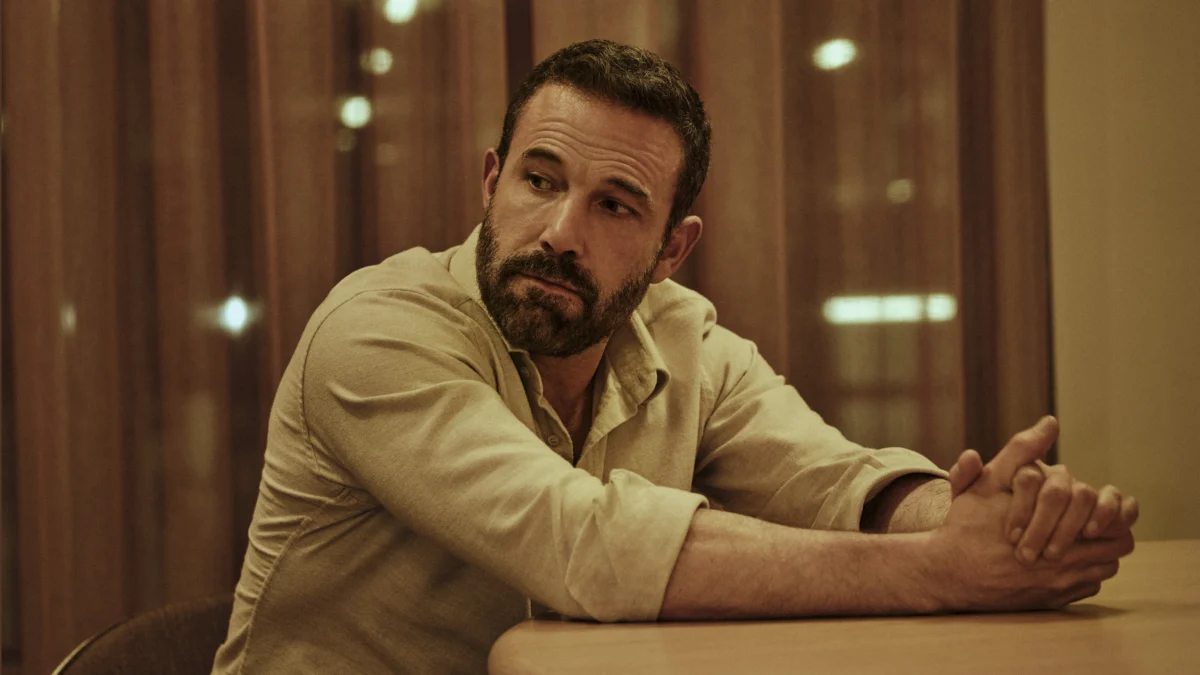
Ben Affleck’s transition from A-list star to "Senior Advisor" for an AI firm is a calculated move. Affleck has consistently stated that the goal is to empower the "storyteller." By positioning himself as a bridge between the creative community and the engineers, he aims to advocate for tools that preserve the "human touch" while offloading the technical drudgery that leads to production burnout.
Labor Concerns
The creative guilds, including the DGA (Directors Guild of America) and IATSE, have remained cautious. While the technology is framed as an efficiency booster, there is an underlying concern that "fixing missing shots" could lead to a devaluation of traditional production planning and a reduction in staffing for post-production roles.
Implications for the Future of Filmmaking
The $587 million price tag is a clear signal to the rest of the industry: the "AI-enabled production" era is here to stay.
1. The Death of the "Fix It in Post" Budget Crisis
Historically, unforeseen production issues have caused ballooning budgets and missed deadlines. If InterPositive’s tools can effectively "hallucinate" a missing background or correct a lighting error with high fidelity, the traditional contingency budgets—often 10-15% of a film’s cost—could be dramatically reduced.
2. A Shift in Talent Roles
We are likely to see a shift in the requirements for film crews. Editors, VFX artists, and cinematographers will increasingly be expected to be "AI-literate." The role of the "Post-Production Supervisor" may evolve into an "AI Orchestrator," managing the prompts and settings for tools like those developed by InterPositive.
3. Consolidation of Tech and Content
Netflix’s move suggests a future where streaming platforms are not just distributors, but tech manufacturers. By owning the tools used to make their content, Netflix creates a competitive moat. If Netflix can produce a high-budget-looking film for 30% less than its competitors, it gains a massive advantage in the content arms race.
4. The Ethical Tug-of-War
The debate over "human creativity" vs. "generative convenience" will only intensify. While Affleck argues that his tools protect creativity, critics will continue to point to the risks of homogenization. If every studio uses the same set of AI tools to "fix" their footage, will the distinct visual languages of different directors begin to blur?
Conclusion
The acquisition of InterPositive for $587 million is perhaps the most tangible evidence to date of the "AI-first" mandate at the world’s largest streamer. As Netflix integrates these tools into its massive pipeline, the company is effectively betting that the future of Hollywood will be decided by code as much as by casting.
For now, the industry watches with bated breath. Whether this investment results in a new golden age of efficient, visually stunning storytelling or leads to a sanitized, algorithmic aesthetic remains to be seen. What is certain, however, is that Ben Affleck and his team have moved to the center of the debate, and the stakes for the entire entertainment industry have never been higher.