In a move that signals a significant pivot for the social media giant, Meta’s Superintelligence Lab unveiled its latest generative AI breakthroughs this Monday: Muse Wonder and Muse Wonder Full. These two new state-of-the-art models represent Meta’s inaugural entry into the “frontier model” category—a classification reserved for the most advanced, high-capability AI systems currently in existence.
While Meta has previously focused on lightweight, latency-optimized solutions like Muse Spark, the introduction of the Wonder series marks an aggressive move toward matching the industry leaders in sheer processing power and complex reasoning. By positioning these models as the backbone of their broader "Muse" ecosystem, Meta is betting that the future of the internet lies not just in chatbot interfaces, but in persistent, highly personalized digital agents.
The New Vanguard: Muse Wonder and Wonder Full
The Wonder series is a departure from the efficiency-first architecture of previous Meta releases. Where Muse Spark was engineered for speed and edge-device deployment, Wonder and Wonder Full are designed for deep, multi-layered problem solving, particularly in specialized domains such as software engineering and complex data synthesis.
According to technical documentation released alongside the announcement, the performance metrics for these models place them in direct competition with the current industry gold standards. Meta’s internal testing suggests that Wonder and Wonder Full achieve parity with Fable 5.1 and GPT-6 Astra—two models that have long defined the upper limits of AI capability.
The strategic differentiation between the two new models is rooted in accessibility. Meta is rolling out the base "Wonder" model via its Meta Model API, with a pricing structure of $4 per million input tokens and $20 per million output tokens. This places the model in a competitive pricing bracket alongside premium offerings like GPT-6 Sol and Opus 5.5. Conversely, "Wonder Full" is being treated as a gated asset, reserved exclusively for "Muse Code" subscribers, reflecting a shift toward tiered, high-value enterprise services.
Chronology: A Calculated Evolution
The arrival of the Wonder models does not exist in a vacuum; it is the culmination of a deliberate restructuring of Meta’s internal research and development pipeline.
August 2025: The Strategic Pivot
The trajectory of Meta’s AI division changed irrevocably in August of last year when founder and AI luminary Alexandr Wang was brought in to oversee a comprehensive restructuring of the company’s AI efforts. At the time, Meta was perceived as lagging behind the aggressive release schedules of OpenAI and Anthropic, preferring to focus on open-source weights and smaller, specialized models.
Late 2025 – Early 2026: Building the Foundation
Following the restructure, the company focused on building the necessary infrastructure to support frontier-level training. This led to the launch of the Prometheus data center in central Ohio, which officially came online in early 2026. As the largest high-capacity data center in Meta’s history, it provided the computational horsepower required to train the Wonder models, which are notably more resource-intensive than their predecessors.
Late 2026: The Muse Ecosystem
In September 2026, Meta introduced the “Muse Agent,” a framework designed to act as a proactive, long-term assistant. The release of the Wonder models acts as the "brain" for this agent, providing the necessary cognitive capacity for the agent to manage long-term projects, synthesize historical user data, and operate across weeks or months rather than in isolated, single-turn interactions.
Supporting Data: The MemoryBench Breakthrough
Perhaps the most significant technical achievement touted by Meta with this release is the implementation of "Active Memory." In traditional LLMs, context windows are often treated as static, and information is frequently "forgotten" as the window slides or resets. Meta’s new architecture aims to change this paradigm by allowing the model to retain and synthesize user information over extended durations.
To validate this capability, Meta utilized "MemoryBench," a rigorous new framework designed to stress-test how models build, retrieve, and update their internal knowledge bases over time.
The results from Meta’s model card are striking:
- Memory Retention: Muse Wonder outperformed both Fable and Opus in long-term information recall tests.
- Contextual Synthesis: The models demonstrated a 22% improvement in synthesizing disparate pieces of information provided by a user over a multi-week trial period compared to previous state-of-the-art benchmarks.
- Complex Task Performance: On standard coding benchmarks, the models showed a high degree of stability, maintaining accuracy even when tasked with managing large, multi-file software projects.
Official Responses and Internal Vision
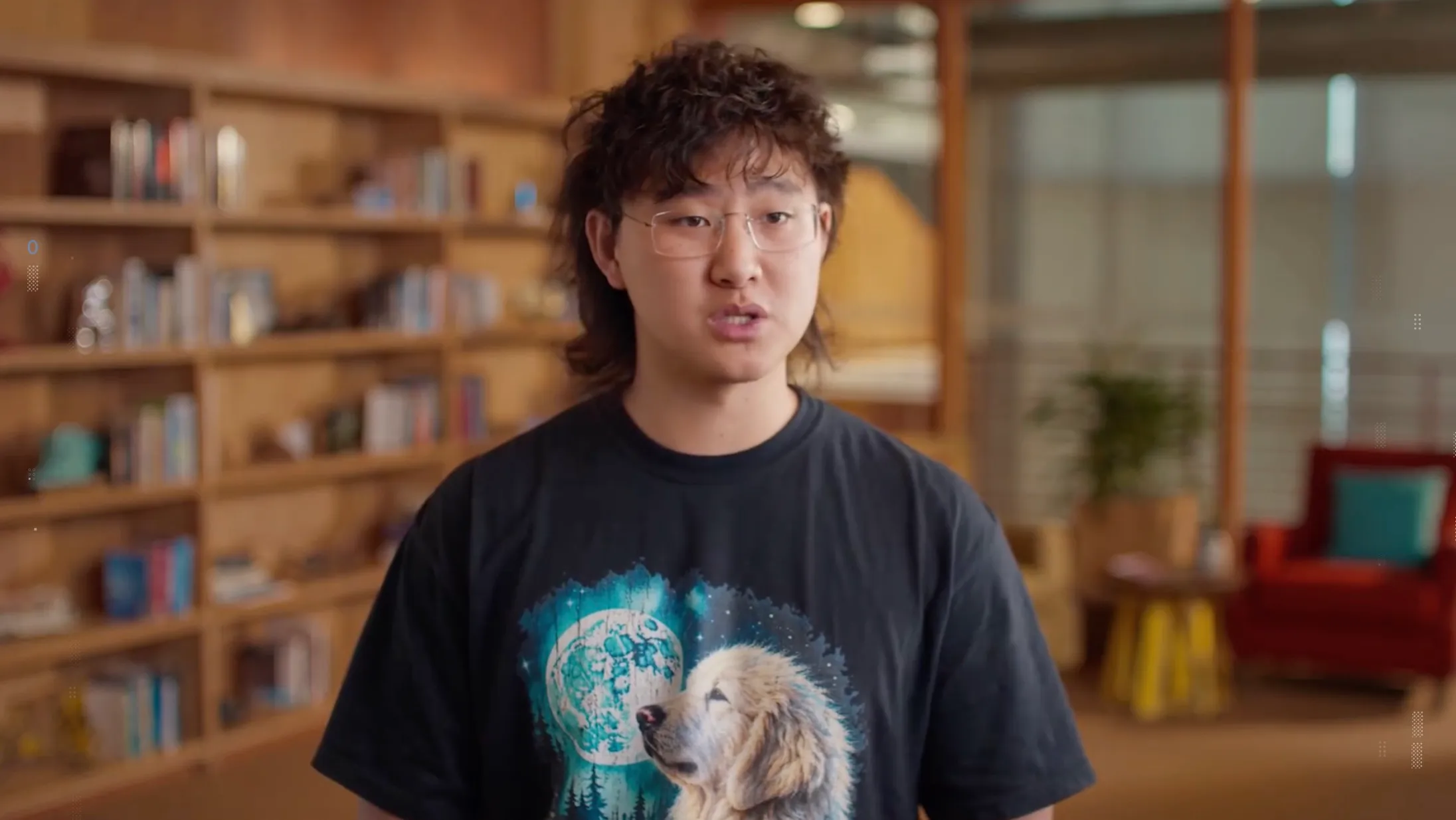
The launch has been accompanied by a concerted public relations effort from Meta’s research wing. In a video statement, Kavya Kopparapu, a lead research scientist at Meta, emphasized that the shift toward "Active Memory" is the core differentiator of the Wonder series.
"We put a tremendous amount of effort into making sure your model can remember what’s important to you over days, weeks, months, and beyond," Kopparapu noted. "This is not just about answering a question today; it’s about understanding the trajectory of a user’s project and providing context-aware assistance that evolves as the user does."
Meta’s official blog post went further, framing the release as a pivotal moment in the company’s history. "Together, they mark the next step on our scaling ladder and a major leap toward personal superintelligence," the post read. By framing the models as the building blocks of "personal superintelligence," Meta is clearly attempting to define the next phase of the AI arms race: moving from simple tools to life-management partners.
Implications for the AI Landscape
The release of the Wonder series carries profound implications for both the tech industry and the end user.
1. The Death of the "One-Off" Chatbot
By prioritizing "Active Memory," Meta is signaling that it views the future of AI not as a search-engine-adjacent tool, but as a persistent entity. If the Wonder models succeed in their stated goal of maintaining memory over months, it could force competitors to rethink their reliance on short-term context windows. This shift could make AI agents significantly more useful for long-term project management, personalized tutoring, and longitudinal health or financial monitoring.
2. Competitive Positioning
Meta’s decision to move into the frontier model space puts it in direct, head-to-head competition with the established giants. While OpenAI and Anthropic have dominated the premium market, Meta’s massive distribution network—spanning Facebook, Instagram, and WhatsApp—gives them a unique distribution advantage. If the Muse Agent becomes the default interface for billions of users, the performance gap between models may become less important than the ubiquity of the agent itself.
3. Economic and Ethical Considerations
The gating of the "Wonder Full" model behind a subscription tier suggests that Meta is moving toward a more traditional enterprise-SaaS monetization model. This could potentially alienate parts of the open-source community that have historically supported Meta’s AI initiatives. Furthermore, the reliance on the massive, energy-intensive Prometheus data center raises questions about the environmental sustainability of scaling these "superintelligence" models. As models grow larger, the energy cost of maintaining "active memory" becomes a significant factor in the total cost of ownership.
4. The Future of Software Development
With the Muse Code subscription and the increased capability of the Wonder models in coding tasks, Meta is positioning itself as a primary player in the developer tools market. By integrating advanced coding capabilities directly into the Muse Agent, the company is aiming to reduce the friction of software development, potentially allowing non-technical users to build functional applications simply by interacting with their agent.
Conclusion
The release of Muse Wonder and Muse Wonder Full marks the end of Meta’s experimental phase and the beginning of its push for dominance in the frontier model market. By combining massive computational investment with a laser focus on persistent memory and agentic behavior, Meta is attempting to redefine what an AI assistant can be. Whether the market is ready for a persistent "personal superintelligence," and whether Meta can maintain this trajectory amidst fierce competition, remains to be seen. However, one thing is certain: the battle for the next generation of AI has officially entered its most ambitious chapter yet.