In the high-stakes environment of live sound reinforcement, engineers are engaged in a perpetual battle against the "gremlins" of the stage. Whether it is the shrill whistle of feedback, the muddying effect of drum bleed into vocal channels, or the technical frustration of wireless glitches and lighting buzz, the pursuit of a pristine, natural sound is a complex engineering challenge.
As the complexity of live productions increases, so too does the need for sophisticated microphone management. By understanding the physics of sound and implementing strategic placement and hardware choices, technicians can transform a chaotic mix into a transparent, high-fidelity experience for the audience.
The Anatomy of the Challenge: Why Sound Reinforcement Fails
The live sound environment is, by definition, a hostile one for audio fidelity. Unlike a controlled studio setting, a stage is filled with competing sound sources in close proximity. When monitors are pushed to provide enough volume for performers, they inevitably bleed into vocal microphones, causing phase issues and unwanted coloration. Similarly, the powerful resonance of a drum kit can easily overpower more delicate instruments, such as an acoustic piano, if microphone isolation is not managed correctly.
Beyond leakage, engineers must contend with transient issues—breath pops, electrical hums, and the dreaded feedback loop, where the microphone hears its own output amplified by the speakers, creating a runaway oscillation. Solving these problems requires more than just high-end gear; it requires a disciplined approach to source management and signal path optimization.
Strategic Placement: The Art of Close-Miking
The most fundamental principle of live sound is simple: improve the signal-to-noise ratio at the source. Getting a microphone within a few inches of a sound source significantly increases the input gain, allowing the engineer to maintain a lower overall system gain, which is the primary defense against feedback.

The Role of Directional Patterns
Unidirectional microphones—including cardioid, supercardioid, and hypercardioid patterns—are the industry standard for live work. Their design allows them to reject sound originating from the sides and rear, effectively "ignoring" the output of floor monitors placed directly in front of the performer.
However, technicians must be wary of the proximity effect. Most directional microphones exhibit a significant bass boost when placed very close to a source. While this can provide "free" gain and body for thin-sounding instruments, it often results in a boomy, unnatural timbre. Skilled mixers use this to their advantage, utilizing high-pass filters or EQ cuts on the console to remove the excess low-frequency build-up, which also helps eliminate low-frequency leakage from other parts of the stage.
Balancing Tone and Proximity
Extreme close-miking—placing a microphone inside the shell of a tom-tom or directly against the bell of a saxophone—is often treated as a last resort. While it guarantees isolation, it sacrifices the "natural" sound of the instrument. Musical instruments are designed to project their full harmonic spectrum over a distance of one to two feet. By placing a microphone mere millimeters from the source, the engineer often captures only a narrow, resonant slice of the instrument’s sound.
For instance, an acoustic guitar mic near the sound hole will emphasize the 80–100 Hz resonance range, resulting in a muddy, boxy tone. To rectify this, engineers must be prepared to perform corrective surgery on the EQ, often dipping the 3 kHz range to remove harshness and applying a sharp low-cut filter to tame the "boom."
Hybrid Solutions: Blending Pickups and Microphones
Modern live sound has seen the rise of the "hybrid" approach, particularly for acoustic instruments. Because microphones are sensitive to sound waves (and thus prone to feedback), pairing them with contact pickups—which respond to mechanical vibrations—offers a robust solution.
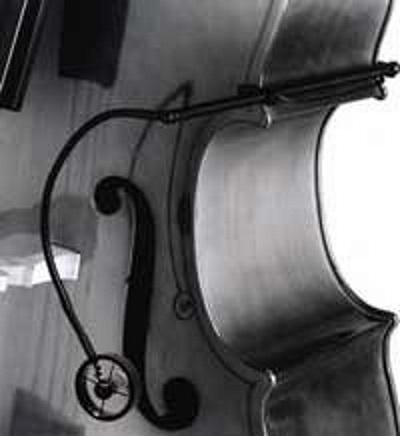
A common professional setup for acoustic guitar involves mounting a piezo pickup under the bridge to handle the low-end "punch" and volume requirements, while placing a miniature hypercardioid microphone inside the sound hole to capture the air and high-frequency detail of the strings. By feeding the pickup signal exclusively to the stage wedges and the microphone signal to the house mains, engineers can achieve a high-gain, feedback-resistant mix that retains the acoustic character of the instrument.
The Logic of Less: Reducing Open Microphones
One of the most overlooked rules in live sound is the "3 dB law" regarding open microphones. Every time the number of open microphones is doubled, the gain-before-feedback potential of the system drops by 3 dB. In a large ensemble, having twenty microphones open simultaneously is a recipe for a fragile, feedback-prone mix.
Minimalism as a Strategy
Professional engineers increasingly favor "less is more." Rather than placing a dedicated microphone on every drum lug, many are returning to a single, high-quality miniature omnidirectional condenser placed centrally over the kit. While this method requires the engineer to balance the drum kit’s internal levels through precise placement rather than mixing console faders, the resulting sound is often more cohesive and "natural" than a multi-miked setup.
Furthermore, replacing microphones with Direct Injection (DI) boxes for electric instruments—such as keyboards, bass guitars, and some electric guitars—eliminates stage leakage entirely. While this bypasses the characteristic tone of a pushed guitar amplifier, the trade-off is often worth the increase in mix clarity.
Noise-Canceling Microphones: The Frontier of Isolation
For vocalists in high-volume settings, the use of differential (or noise-canceling) microphones is becoming a sophisticated, albeit demanding, solution. These microphones are engineered to cancel sounds originating from a distance, effectively creating an "acoustic bubble" around the performer.

Operational Implications
The trade-off for this extreme isolation is technique: the performer must keep their lips in constant contact with the grille. If the singer pulls away, the microphone’s differential design may cancel the voice itself. While this limits the "mic technique" that some performers rely on for dynamic control, it provides unparalleled gain-before-feedback. By utilizing these mics, the "vocal" channel becomes almost entirely isolated from the rest of the stage, allowing the house mixer to process the vocals without the interference of guitars, bass, or drums leaking into the mic.
Implications for Future Sound Design
As technology advances, the industry is moving toward a more holistic integration of hardware and software. We are seeing a shift away from "more gear" toward "smarter placement."
- Phase Coherency: Modern digital consoles allow for minute adjustments in phase alignment, which can further mitigate the issues of leakage between microphones.
- Automated Mixing: Advanced auto-mixers are increasingly capable of automatically attenuating unused channels, effectively managing the "open mic" count without human intervention.
- The Human Element: Despite all technological advancements, the role of the sound engineer remains paramount. The ability to distinguish between a room resonance, a feedback frequency, and a legitimate performance artifact cannot be automated.
Conclusion
The pursuit of cleaner, more natural sound in live environments is an iterative process. It requires a deep understanding of microphone polar patterns, a willingness to use alternative technologies like DI boxes and contact pickups, and the discipline to maintain a clean stage through minimalist miking.
By prioritizing source isolation and leveraging the physics of sound—rather than relying solely on corrective EQ—engineers can overcome the traditional "gremlins" of the stage. Whether through the surgical placement of a miniature condenser or the implementation of a differential vocal mic, these strategies collectively foster a sound that is not only louder and more stable but also significantly more faithful to the artist’s intent. As live performance continues to evolve, these foundational techniques will remain the bedrock of professional sound reinforcement.