In the specialized world of automotive audio, enthusiasts are constantly navigating the delicate balance between factory-integrated systems and the pursuit of sonic perfection. A recent listing from a prominent automotive community member highlights a growing trend among vehicle owners: the systematic upgrade of OEM (Original Equipment Manufacturer) sound systems in favor of high-fidelity digital signal processing (DSP) solutions.
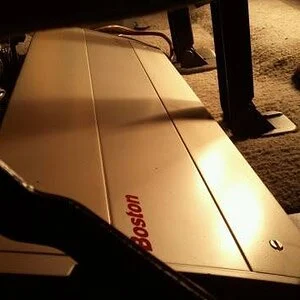
The recent sale of a secondary-market audio component—a high-quality line output converter (LOC) previously installed in a 2020 Dodge Durango—serves as a microcosm for the broader movement in car audio modification. As drivers demand more control over their acoustic environment, the transition from basic integration hardware to sophisticated DSP units like the AudioControl DM-608 has become the gold standard for audiophiles.
Main Facts: The Transition to High-Fidelity Integration
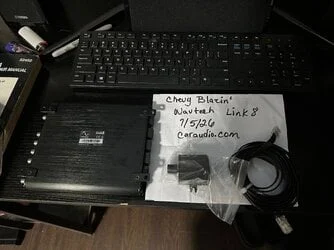
The core of this market shift involves the transition from simple signal integration to complex frequency management. The recent listing by user "Chevy Blazin’" involves the sale of a reliable, high-performance integration unit for $190, intended for a 2020 Dodge Durango. The seller’s motivation for parting with the hardware is revealing: he upgraded to an AudioControl DM-608 Digital Signal Processor.
This upgrade is not merely about volume or bass; it is about the "range of frequencies." In modern vehicles, OEM head units often employ proprietary equalization (EQ) curves to protect factory speakers from damage. These curves often "roll off" lower frequencies at high volumes and compress the dynamic range. A basic integration device often struggles to "flatten" or restore this signal, whereas a dedicated DSP provides the surgical precision required to reshape the audio landscape, effectively undoing the factory’s restrictive processing.

Chronology: From Factory Baseline to Custom Tuning
The journey of an audio enthusiast typically follows a predictable trajectory, often spanning several months of research and iterative hardware installation.
- Phase 1: Identification of Limitation: The owner identifies that the factory 2020 Durango system lacks depth, clarity, or the desired frequency response.
- Phase 2: Initial Integration: The installation of a high-quality line output converter (LOC) serves as the first step. This allows the user to add an aftermarket amplifier and subwoofer to the stock radio, providing a "quick fix" for bass response.
- Phase 3: The Discovery Phase: As the user becomes more accustomed to the improved sound, they begin to notice the limitations of the OEM signal—specifically, the "muddy" mids or the lack of staging (the illusion that the music is coming from the dashboard rather than the door panels).
- Phase 4: The DSP Upgrade: The user makes the leap to a device like the AudioControl DM-608. This allows for time alignment, complex crossover points, and individual channel equalization.
- Phase 5: Liquidation: The original integration hardware is no longer needed. As seen in the July 5, 2026, listing, the hardware is returned to the market, providing an affordable entry point for other enthusiasts looking to start their own audio journey.
Supporting Data: Understanding the Hardware
To understand why enthusiasts like the seller are making these moves, one must look at the specifications that differentiate an LOC from a DSP.
The Role of the Line Output Converter (LOC)
An LOC is a passive or active device that converts the high-voltage speaker-level signals coming from the factory head unit into low-voltage RCA signals compatible with aftermarket amplifiers. At an $8–$10 condition rating (on a 10-point scale), these units represent excellent value for budget-conscious builders who primarily want to add a subwoofer.
The Power of the Digital Signal Processor (DSP)
The AudioControl DM-608, which prompted the seller’s upgrade, is a professional-grade tool. Its key features include:

- Time Alignment: Compensating for the fact that the listener is closer to the left speakers than the right, ensuring sound waves arrive at the ears simultaneously.
- Input Summing: Modern factory radios often send different frequency ranges to different speakers (e.g., bass only to the doors, highs only to the dash). A DSP reconstructs these into a full-range signal.
- Parametric EQ: Allowing the user to surgically remove "peaks" in frequency response caused by the vehicle’s cabin acoustics.
Official Responses and Industry Perspectives
Industry experts have long argued that the modern vehicle interior is one of the most hostile environments for high-fidelity audio. Glass, leather, and plastic surfaces create massive sound reflections, while the positioning of factory speakers is often dictated by interior design rather than acoustic necessity.
"The shift toward DSP integration isn’t just a trend; it’s a necessity for anyone serious about sound quality," says a lead technician at a premier automotive audio house. "When you integrate with a modern vehicle’s CAN-bus or factory amplified signal, you are dealing with a pre-processed signal that is actively fighting against you. You need a processor that can undo that factory ‘tuning’ before you can even begin to apply your own."
The seller’s decision to list his previous equipment at $190—inclusive of shipping—demonstrates a healthy secondary market. It allows new users to experiment with mid-tier audio setups without the high barrier to entry associated with full system overhauls.
Implications: The Future of Vehicle Audio
The implication of this trend is clear: the "Radio Replacement" era is effectively dead. In the past, enthusiasts would rip out the factory radio and install a double-DIN aftermarket head unit. Today, the factory head unit is so deeply integrated into the vehicle’s climate control, navigation, and safety systems that it cannot be removed.

This has birthed a new, thriving industry focused on "Integration Technology." As vehicles become more complex, the hardware used to interface with them must become equally intelligent. The success of the AudioControl DM-608 and similar devices highlights that the future of automotive audio is not in replacing the head unit, but in intercepting and correcting the digital signal before it ever hits the amplifier.
The Economic Impact on the Aftermarket
For the average consumer, this means a "multi-tier" approach to audio. One can achieve a significant improvement with a $150–$200 investment in a converter, or spend upwards of $600–$1,200 for a fully programmable DSP setup. This creates a ladder of upgrades that keeps the aftermarket sector robust.
As we look toward 2026 and beyond, the demand for equipment that is "stealth" (hidden from view) and "intelligent" (able to handle complex factory signals) will only increase. The listing from the Durango owner is a testament to this cycle: the enthusiast upgrades, the market recycles the old gear, and the overall quality of audio on the road improves, one signal at a time.
Conclusion: The Pursuit of Sonic Clarity
Whether it is a 2020 Durango or a luxury sedan, the quest for a better listening experience remains a staple of automotive culture. While the technology has moved from simple wiring to complex digital processors, the underlying goal remains the same: to create a space where the music sounds exactly as the artist intended. For the seller in Raeford, NC, that goal was achieved by moving toward a more sophisticated signal path, proving that in the world of high-end audio, the journey of refinement is rarely finished.