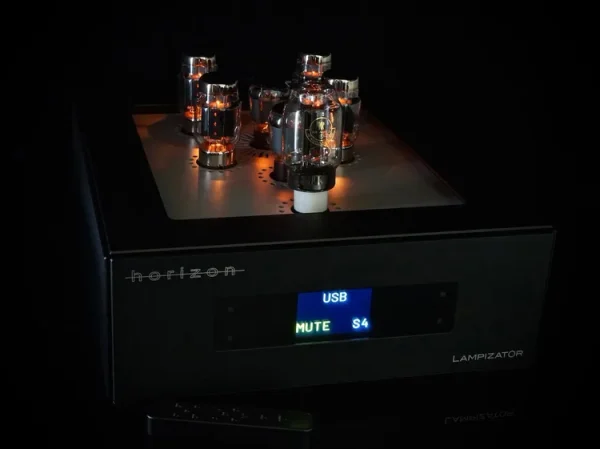
WASHINGTON, D.C. — In the rarefied world of ultra-high-end audio, few names command the reverence and intrigue associated with Poland’s Lampizator. Known for pushing the boundaries of tube-based digital-to-analog conversion, the manufacturer has officially announced its latest flagship creation: the Horizon 2 DAC.
Evolving directly from the legendary architecture of its predecessor—a component that redefined what audiophiles could expect from high-resolution digital playback—the Horizon 2 is not merely an incremental update. Instead, it represents a comprehensive reimagining of the company’s flagship digital platform. By integrating engineering breakthroughs pioneered in the ultra-exclusive Aphrodite project, coupled with a completely redesigned digital interface, advanced volume control topologies, and a modern user experience, Lampizator aims to cement its status at the absolute pinnacle of the high-end audio landscape.
Audiophiles and industry professionals won’t have to wait long to experience the new flagship in person. Lampizator has announced that the Horizon 2 will make its debut appearance at the upcoming Capital Audio Fest, running from November 13–15, where it will be showcased in the Potomac room in a high-profile pairing with electronics from Valve Amplification Company (VAC).
Main Facts: The Anatomy of the Horizon 2
The introduction of a new flagship DAC from Lampizator is always a major event in the audiophile community. The original Horizon set a lofty benchmark with its no-compromise approach to digital conversion, tube output stages, and massive power supplies. The Horizon 2 takes those foundational principles and refines them through years of intensive research and development.
At its core, the Horizon 2 retains the uncompromising signature design philosophy that defines the brand: tube rectification, zero global feedback, zero operational amplifiers (op-amps), fully balanced and single-ended operation, pure silver internal wiring, and premium copper film capacitors. However, wrapped around this purist analog core are several groundbreaking updates:
- Aphrodite-Derived Analog Architecture: The tube and preamplifier sections have been completely redesigned, borrowing heavily from the acoustic and electronic breakthroughs achieved during the development of Lampizator’s Aphrodite project.
- SuperVolume Control: A newly engineered, relayless 100-step volume control mechanism that offers exceptional precision, complete with a full bypass output mode for users who prefer to utilize a dedicated standalone preamplifier.
- Next-Generation Digital Interface Architecture: A completely overhauled digital board featuring reclocked, optoisolated USB input with native DSD512 support, alongside HDMI I²S and triple (3x) BNC I²S connections. For elite digital sources, Taiko Audio’s proprietary XDMI interface is available upon request at no additional charge.
- Modernized User Interface: Moving away from utilitarian or rudimentary displays of the past, the Horizon 2 introduces a vibrant color display, an updated front-panel aesthetic, an intuitive four-button control interface, a dedicated remote control, and expanded firmware-driven functionality.
Despite these radical technological upgrades, Lampizator assures purists that the sonic identity of the device remains unmistakably "Horizon"—delivering the immense soundstage, textural realism, and emotional resonance that tube aficionados demand, paired with the razor-sharp transient response and micro-dynamic resolution of modern state-of-the-art digital audio.
Chronology: The Evolution to the Horizon 2
To understand the magnitude of the Horizon 2 release, it is necessary to examine the historical trajectory of Lampizator and its relentless pursuit of digital perfection.
The Early Innovations: Challenging the Digital Dogma
Founded by Lukasz Fikus, Lampizator initially gained renown in the DIY and audiophile communities for modifying vintage CD players and digital-to-analog converters. Fikus famously argued that digital audio suffered from an excess of sterile, analytical processing, and that the introduction of tube-based output stages could restore the natural harmonic richness, air, and spatial cues stripped away by conventional solid-state circuits.
Over the years, the company evolved from a boutique modifier into a globally respected manufacturer of high-end DACs, preamplifiers, and amplification systems. Models such as the Golden Atlantic, the Pacific, and eventually the original Horizon established Lampizator as a dominant force in the ultra-luxury audio tier.
The Genesis of the Original Horizon
When the original Horizon was launched, it was positioned as a statement piece—a device built without budgetary or engineering constraints. It utilized a massive chassis, complex tube compliment, and a proprietary conversion methodology that bypassed standard off-the-shelf silicon decoding chips in favor of discrete resistor ladders or customized conversion schemes. It quickly garnered universal critical acclaim, becoming the reference DAC for numerous reviewers, mastering engineers, and affluent music lovers worldwide.
The Aphrodite Influence and the Road to Horizon 2
Following the success of the Horizon, Lampizator’s engineering team did not rest. Development began on experimental platforms, most notably the Aphrodite project. This covert, high-level research endeavor explored advanced tube biasing, microphonic isolation, power supply noise rejection, and ultra-short signal paths.
Rather than keeping these discoveries sequestered in a single ultra-expensive ultra-flagship, Lampizator recognized an opportunity to trickle down the Aphrodite lessons into their existing flagship framework. Simultaneously, the digital landscape was evolving: users demanded better integration with advanced music servers (like Taiko Audio), native handling of ultra-high-resolution DSD formats, and more robust, flexible user interfaces.
Over the course of 2024 and 2025, prototypes of the Horizon 2 were quietly tested and refined. The culmination of this multi-year development cycle is the production-ready unit slated for exhibition this November at Capital Audio Fest.
Supporting Data & Technical Specifications
While high-end audio is ultimately judged by the ear, the engineering specifications of the Horizon 2 illustrate the sheer depth of its technological sophistication.
Digital Connectivity and Processing
In the modern digital audio ecosystem, a DAC must act as an environmental hub capable of interfacing with myriad digital sources—ranging from standard network streamers and CD transports to state-of-the-art music servers.
- USB Input: Fully reclocked and optoisolated to eliminate ground loops and high-frequency digital noise originating from noisy computer or server USB buses. Supports PCM up to highest resolutions and native DSD up to DSD512.
- I²S Connectivity: Recognizing that I²S (Inter-IC Sound) represents one of the cleanest methods for transferring digital audio data between a streamer and a DAC, Lampizator has equipped the Horizon 2 with an HDMI-based I²S input as well as a robust triple-BNC I²S array.
- Taiko XDMI Integration: For owners of the ultra-exclusive Taiko Audio Olympus or Extreme music servers, the availability of the Taiko XDMI (Extreme Direct Music Interface) protocol at no additional charge is a monumental value-add, ensuring jitter-free, bit-perfect data transfer tailored specifically for these elite digital transports.
Analog Domain and Power Supply Architecture
True to Lampizator’s heritage, the analog stage is where the magic happens.
- Tube Rectification: Unlike solid-state power supplies, the Horizon 2 utilizes tube rectification, imparting a natural, organic bloom and rhythmic fluidity to the music playback.
- Zero Feedback & Zero Op-Amps: By eliminating global negative feedback and avoiding operational amplifiers entirely, the signal path remains pure, fast, and unconstrained by the phase anomalies and compression often introduced by feedback loops.
- SuperVolume Technology: Volume control in high-end systems has always been a contentious issue. Traditional resistive pots can degrade channel balance and transparency, while digital volume attenuation can reduce bit depth. Lampizator’s new "SuperVolume" system utilizes a relayless, 100-step precision network that guarantees absolute transparency. Furthermore, for users who prefer the sonic signature of a dedicated standalone preamplifier, the SuperVolume features a full bypass output mode.
Official Responses and Industry Outlook
The announcement of the Horizon 2 has sent ripples of excitement across digital audio forums and dealer networks. Industry insiders note that launching a successor to a universally praised flagship is a high-stakes gamble; any misstep in altering a proven sonic recipe can alienate an established customer base. However, Lampizator’s transparent approach—emphasizing that the core sonic DNA remains "unmistakably Horizon" while dramatically upgrading control, connectivity, and micro-dynamics—has instilled confidence.
Fred A., representing Lampizator, has been spearheading communications regarding the rollout. Prospective buyers, reviewers, and international distributors have inundated the company with inquiries regarding pricing, delivery timelines, and upgrade paths for existing original Horizon owners.
"The response has been overwhelming," notes industry analysts tracking the high-end sector. "In a market saturated with incremental firmware updates, Lampizator continues to invest heavily in radical hardware-level engineering. The integration of Aphrodite-derived analog topologies combined with the Taiko XDMI option shows that they are listening closely to what the ultra-high-end consumer demands."
Official demonstrations will kick off in earnest at the Capital Audio Fest, held from November 13–15. Stationed in the prestigious Potomac room, Lampizator will share exhibition space with VAC (Valve Amplification Company), creating a synergistic all-tube ecosystem designed to extract the absolute maximum performance from the Horizon 2. Attendees can expect a breathtaking demonstration of spatial imaging, dynamic contrast, and acoustic realism.
Implications for the High-End Audio Market
The release of the Lampizator Horizon 2 carries several broader implications for the ultra-luxury audio market:
- The Redefinition of Digital Source Hubs: As streaming servers like Taiko, Aurender, and Innuos push the limits of digital transport technology, DAC manufacturers must adapt. By offering native support for Taiko XDMI at no extra cost, Lampizator is positioning the Horizon 2 not just as a standalone DAC, but as an open-architecture digital hub engineered for the absolute elite tier of computer-based audio.
- The Resurgence of Hardware-Level Refinement: While many modern consumer electronics rely entirely on software-defined signal processing (DSP) and mass-produced DAC chips, ultra-high-end brands like Lampizator are doubling down on discrete, purist analog engineering—heavy power supplies, bespoke tube stages, and custom mechanical switching. The Horizon 2 proves that there is a thriving, passionate market for uncompromising physical craftsmanship.
- The Future of Flagship Longevity: By designing the Horizon 2 with an expanded firmware framework, a new color display, and a modern four-button user interface, Lampizator is addressing past critiques regarding the user experience of ultra-luxury audio gear. High-end buyers expect not only world-class sound, but also a seamless, premium operational interface that matches the luxury pricing tier.
As November approaches, all eyes turn toward Washington, D.C., and the Potomac room at Capital Audio Fest. For those fortunate enough to experience it, the Horizon 2 promises to redefine the boundaries of what is possible when digital precision meets uncompromising tube artistry.
For further information, technical inquiries, or to schedule a demonstration, interested parties are encouraged to contact Fred A. directly through the official website at www.lampizator.com.