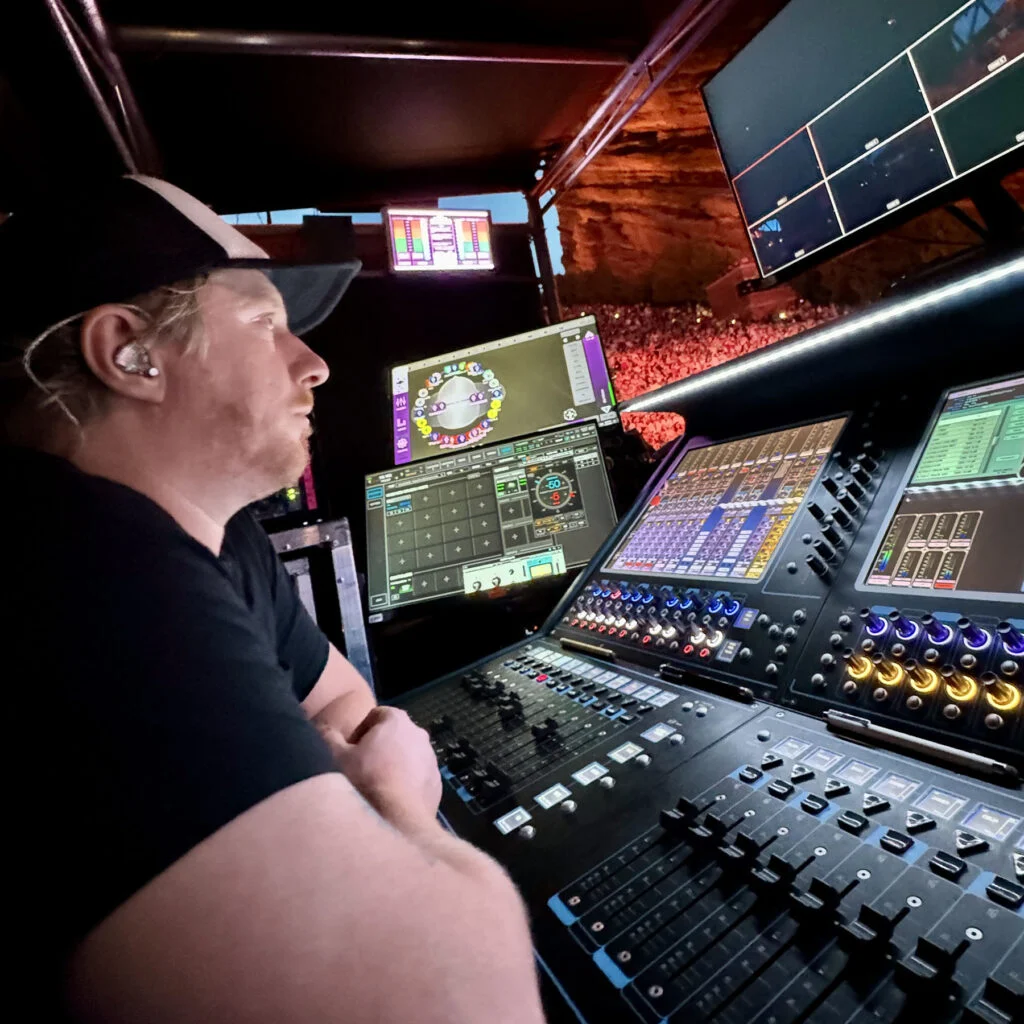
LOS ANGELES — In the high-stakes, high-decibel environment of a major modern pop arena tour, the monitor world is often described as the most stressful office in the building. For veteran monitor engineer Nathan Bond, currently out on the road managing the complex auditory needs of pop icon Hilary Duff’s ongoing The Lucky Me Tour, the challenge goes far beyond simply handing artists a "more me" mix. It requires master-level audio routing, lightning-fast technical communication, and the deployment of cutting-edge spatial processing to keep a massive, multi-input production running with absolute clinical precision.
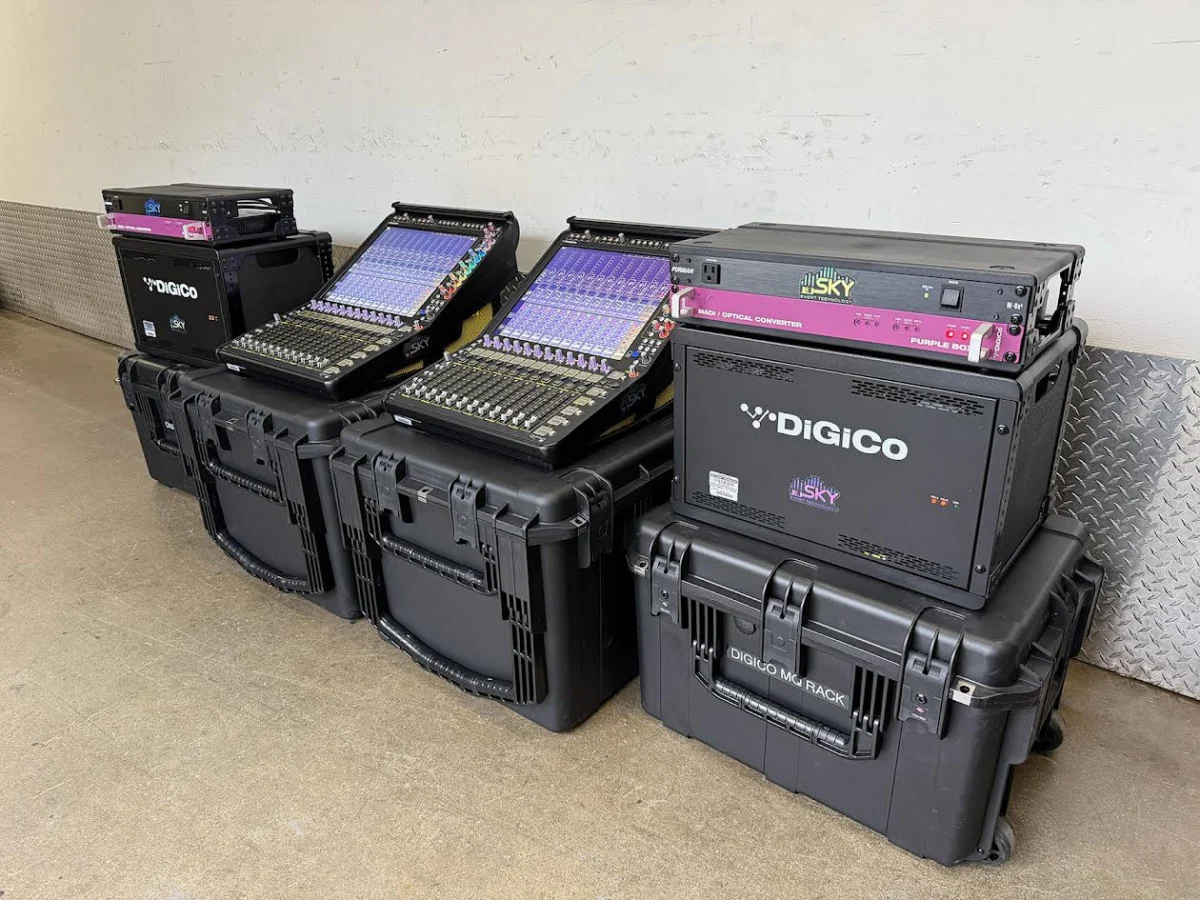
At the heart of Bond’s setup is a robust, meticulously engineered rig featuring a DiGiCo Quantum338 mixing console paired with a DMI-KLANG immersive in-ear mixing card, supplied by Soundbox Productions. Together, this hardware synergy has transformed how Bond balances massive input lists, handles complex production communications, and delivers a natural, fatigue-free sonic experience to performers and crew members alike.
Main Facts: The Tech Stack Behind The Lucky Me Tour
The sonic footprint of The Lucky Me Tour is substantial, anchored by a technical infrastructure built to handle high channel counts, extensive stage communications, and spatial audio processing without compromise.
- The Console: DiGiCo Quantum338, chosen for its advanced processing capabilities, rapid workflow flexibility, and flawless integration with DiGiCo’s broader ecosystem.
- Immersive Processing: DMI-KLANG card running spatial 3D in-ear monitor mixes across every single output, including musician, vocalist, and technical crew mixes.
- Audio Transport & Preamps: A Dante network utilizing Rupert Neve Designs RMP-D8 preamps for the primary band inputs, complemented by a DiGiCo SD-Rack dedicated to auxiliary functions such as talkback microphones. Playback feeds the console directly via MADI.
- Infrastructure Support: Audio equipment and touring packages are provided by Soundbox Productions.
- Custom Control: Elgato Stream Deck hardware controllers integrated to streamline crew communication channels.
According to Bond, the input list for the tour quickly ballooned past 80 channels. When factoring in the myriad of stage talkbacks, production radios, and auxiliary feeds, the Quantum338 is essentially functioning as an advanced corporate switchboard disguised as a high-end concert console.
Chronology: Evolution of a Modern Monitor Rig
To understand the sophistication of Bond’s current setup, one must trace the rapid evolution of live monitor engineering over the past half-decade.

When Bond first encountered KLANG’s immersive audio technology back in 2020, standalone hardware processors were the primary method of integration. While those early systems proved the viability of 3D binaural mixing for live performers, the subsequent introduction of the DMI-KLANG card—which slots directly into DiGiCo Quantum and SD-series consoles—marked a paradigm shift in workflow efficiency.
By moving from outboard hardware to a native console card, engineers like Bond could eliminate conversion steps, minimize latency, and manage spatial positioning directly from their primary surface. Over successive years of field testing and refinement, this technology evolved from a novelty reserved for high-end headliners into an indispensable touring tool.
When planning The Lucky Me Tour alongside Soundbox Productions, Bond knew that Hilary Duff’s dynamic vocal performance and diverse instrumental arrangements would demand an uncompromising approach to monitor clarity. The decision was made early on to build the entire infrastructure around the Quantum338 and DMI-KLANG pairing, ensuring that every individual on stage—and behind the scenes—would experience a revolutionary level of sonic transparency.
Supporting Data: Managing Over 80 Channels and Autonomous Tech Mixes
Managing a modern arena tour requires accommodating not just the band and lead vocalists, but an army of lighting techs, audio assistants, stage managers, and video directors who all need reliable, real-time communication.
"Our input list is at 80-plus, but then once I have all these talkbacks and everything else, my console is really like a big switchboard for a lot of things," Bond explains. "For instance, throughout the show, I have a separate tech mix going, with a lot of people on that. There are a lot of different talkbacks, and I have radios going through there. It just keeps growing and growing."

To prevent this massive web of communications from overwhelming his primary focus—mixing for Hilary Duff and her band—Bond decentralizes control where possible. By utilizing Elgato Stream Deck controllers, crew members are empowered to manage aspects of their own communication workflows.
Furthermore, Bond extended his network reach directly to the video director’s position:
"I ended up running Ethernet cable over to him, giving him a KLANG mix on his computer running KLANG, so he could make any changes he needed to his mix without having to go through me to do it. I am actually using KLANG for every single mix, including the tech mixes. I don’t think we could do all this without it."
This autonomous routing ensures that while Bond remains focused on the primary performance, auxiliary production personnel have absolute command over their respective auditory environments.
Official Perspectives: The Magic of Immersive 3D Spatial Mixing
For decades, in-ear monitors (IEMs) offered musicians crystal-clear fidelity at the expense of natural spatial awareness, often locking performers into a claustrophobic, "two-dimensional inside-the-head" listening experience. The integration of KLANG’s immersive technology on The Lucky Me Tour directly combats this issue by placing sound sources in a 360-degree virtual soundstage around the listener’s head.

Bond notes that the spatial approach yields immediate dividends, particularly when dealing with dense arrangements:
"KLANG’s immersiveness makes it just so easy to make a mix sound really good without fighting anything, especially when you have that many input channels. Just being able to find a home in the mix for everything is so easy. Our techs even came up to me early on in the tour and said, ‘Man, it sounds like the guitar amp is coming from behind us a little bit!’"
This psychological shift in how musicians perceive their environment changes everything about live performance dynamics. By spatially separating instruments, Bond creates distinct "pockets" of acoustic space. This allows lead vocals to sit dead center and cut through the mix effortlessly without needing excessive volume.
"When you have a singer, you can move things around so that you can have space for the vocal to be there and be really heard, but without being way too loud or buried by other elements of the mix," Bond elaborates. "To be able to still hear everything else around, but keep the vocal as the central primary focus, has been awesome."
Moreover, the psychological benefit to the musicians on stage cannot be overstated. By blending carefully routed audience mics into the spatial matrix, Bond bridges the gap between isolation and environment:
"For the musicians, I find that it allows me to make a mix that’s more of a realistic experience on stage, being able to take the audience mix, add it in, and spread them around. The people on stage get to hear more of a natural experience of being on stage instead of feeling like, ‘I have my headphones on and I’m playing music.’ That’s what KLANG helps bring to the table: making moments where you can feel like you’re almost not wearing your in-ears anymore."
Implications: The Future of Live Sound and Monitor Engineering
The audio methodology deployed on The Lucky Me Tour highlights a broader, industry-wide evolution in live production. As pop productions incorporate increasingly complex backing tracks, extensive wireless infrastructure, and soaring channel counts, traditional stereo monitor mixing is reaching its practical limits.
Engineers are discovering that spatial audio processing is no longer a luxury feature reserved for classical concerts or specialized immersive installations; it is rapidly becoming a vital problem-solving tool for contemporary pop touring. By diffusing sound across a 360-degree auditory horizon, immersive processing preserves performer ear health, reduces listening fatigue, and minimizes the cognitive load placed on monitor engineers during high-pressure shows.
Furthermore, the integration of networked control surfaces—such as Ethernet-extended KLANG software rigs and programmable macro controllers like Elgato Stream Decks—points toward a future where monitor worlds are increasingly collaborative and decentralized.
As Hilary Duff continues to captivate audiences across the country on The Lucky Me Tour, the unseen acoustic architecture humming quietly offstage stands as a testament to modern engineering excellence. Through the seamless partnership of Nathan Bond, Soundbox Productions, DiGiCo, and KLANG, live monitor engineering has proven once again that when technology serves artistry, the boundaries of what is possible on stage expand exponentially.