By the Editorial Desk
Published September 2026
Main Facts
The landscape of high-end digital-to-analog conversion and physical media playback has just shifted once again. Building upon a long-standing tradition of sonic excellence, high-end audio manufacturer Aqua (Aqua Acoustic Quality) has officially placed its newly minted LaScala mk.III R2R Ladder DAC and matching LaDiva CD Transport into circulation for an exhaustive, long-term review cycle.
For audiophiles and industry critics alike, the pairing of these two flagship digital components represents the absolute apex of Italian audio engineering. The LaScala mk.III is the latest evolution of Aqua’s celebrated pure R2R (Resistor-to-Resistor) ladder architecture, a design philosophy prized for its organic, non-oversampling, and profoundly musical presentation. This third-generation iteration does not merely rest on the laurels of its predecessors; it introduces a comprehensive suite of hardware upgrades, most notably a newly engineered tube stage and an innovative analog board module known as the Pilot Buffer.
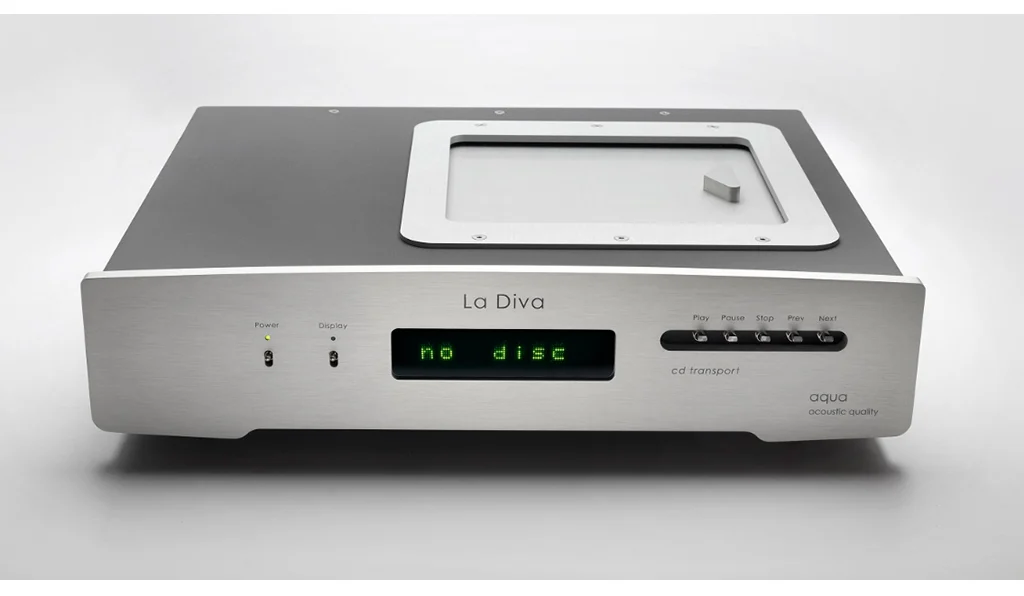
Complementing the DAC is the meticulously engineered LaDiva CD transport. Designed from the ground up to extract every microscopic detail from the Red Book compact disc format, the LaDiva allows reviewers to experience physical silver-disc playback at its absolute finest.
Priced firmly in the ultra-high-end tier, the LaScala mk.III DAC commands an MSRP of $9,850, while the LaDiva Transport retails for $9,960. Together, they form a nearly $20,000 digital frontend designed to extract the ultimate performance from both legacy physical media and modern high-resolution digital streams.
Chronology
To understand the weight of this new arrival, it is essential to trace the historical trajectory of Aqua and its flagship digital components within the audiophile community.
- The Foundation (Pre-2015): Aqua established its reputation by rejecting mainstream delta-sigma DAC chips in favor of discrete R2R ladder DAC architectures. Their design ethos centered on minimizing digital artifacts, jitter, and listening fatigue, steering digital audio toward an analog-like fluid continuity.
- The Evolution of LaScala (2010s–2020s): The original LaScala DAC put Aqua on the map for combining the warmth and dimensionality of vacuum tubes with the precision of discrete ladder DACs. Subsequent iterations refined the power supplies, reduced noise floors, and improved module modularity, allowing owners to upgrade their units as technology advanced.
- The Introduction of the LaDiva: Recognizing that millions of music lovers still prefer the tactile engagement and mastering quality of compact discs, Aqua developed the LaDiva transport. Utilizing proprietary reading mechanisms and rigorous isolation techniques, it quickly earned a reputation as one of the definitive transport solutions in high-end audio.
- The Present Day (September 2026): Aqua officially unveils the LaScala mk.III. Featuring the newly minted Pilot Buffer and a completely overhauled analog board, the unit arrives at reference listening rooms alongside the LaDiva transport for an in-depth, long-term evaluation. This marks the beginning of a multi-month review period to test the limits of their combined synergy.
Supporting Data & Technical Architecture
The technical specifications and engineering choices underpinning the Aqua LaScala mk.III and LaDiva transport reveal an uncompromising commitment to audio purity.
The Aqua LaScala mk.III R2R Ladder DAC ($9,850)
Unlike standard mass-produced DAC chips that utilize delta-sigma modulation, Aqua’s pure R2R ladder design constructs analog waveforms using a precise network of resistors. This approach avoids heavy digital filtering and mathematically intensive processing, preserving the natural phase coherence and temporal structure of the original recording.
- The Pilot Buffer: The standout hardware update in the mk.III is the integration of the Pilot Buffer module onto the analog board. This proprietary circuit isolates the R2R ladder network from downstream preamplification stages, ensuring optimal impedance matching, lower distortion, and enhanced dynamic contrast.
- Tube Output Stage: True to the LaScala lineage, the mk.III features a meticulously implemented vacuum tube analog stage. This marries the lightning-fast transient response of the R2R ladder with the harmonic richness, air, and holographic soundstage depth that only tubes can provide.
- Comprehensive Circuit Overhaul: Beyond the Pilot Buffer and tube stage, virtually every critical path within the DAC circuit has been re-engineered. Power supply regulation has been refined to lower the noise floor further, and component tolerances have been tightened to ensure exceptional channel separation and long-term reliability.
The Aqua LaDiva CD Transport ($9,960)
In an era dominated by network streamers and file servers, the LaDiva stands defiant as a monument to physical media.
- Proprietary Transport Mechanism: The LaDiva employs a specialized, high-rigidity CD reading mechanism designed exclusively for audio extraction. By minimizing mechanical resonance and rotational jitter, it ensures that laser tracking remains unfailingly precise.
- Advanced Isolation and Clocking: Jitter is the mortal enemy of digital audio. The LaDiva utilizes ultra-low jitter master clocks and advanced internal decoupling to prevent structural vibrations from contaminating the digital datastream before it even reaches the DAC.
- Seamless Interface Synergy: While the LaDiva can be paired with various high-end converters, its proprietary I2S digital output makes it a devastatingly effective partner for the LaScala mk.III, creating a closed-loop digital ecosystem optimized for ultra-low error rates.
Official Responses and Industry Perspectives
While formal, comprehensive review verdicts will take months to publish as the evaluation period unfolds, initial reactions from the reviewing staff and statements from Aqua’s engineering team highlight the immense anticipation surrounding this hardware pairing.
"Having had excellent luck in the past with Aqua Audio products, we are thrilled to have their new LaScala mk.III DAC and LaDiva CD transport in for long term review," noted the editorial team upon unboxing the units.
Regarding the sonic improvements of the new DAC, the evaluators added: "Everything else in the DAC circuit has had an upgrade, so this already highly musical DAC should be a major treat for the ears. Aqua was kind enough to send their LaDiva transport along, so we could experience CD playback at its very finest."
From a manufacturing standpoint, Aqua has consistently emphasized modularity and future-proofing. By designing their DACs with upgradable internal boards, the company protects the investment of high-end consumers. The evolution from the original LaScala to the mk.III demonstrates that legacy architectures can be meaningfully modernized without abandoning the core sonic philosophies that initially earned customer loyalty.
Implications for the High-End Audio Market
The arrival of the Aqua LaScala mk.III and LaDiva transport carries several notable implications for the audiophile market at large:
- The Renaissance of Physical Media: Despite the undeniable convenience of streaming platforms like Qobuz, Tidal, and local NAS drives, high-end manufacturers continue to invest heavily in physical playback. The success of transports like the LaDiva proves that compact discs, when read by reference-grade hardware, can outperform high-resolution digital streams in terms of sheer engagement, tactile satisfaction, and master-tape fidelity.
- The Resurgence of R2R Ladder Technology: As more manufacturers experiment with discrete ladder designs, Aqua remains a pioneer in refining the technology. The inclusion of the Pilot Buffer in the mk.III addresses historical challenges associated with R2R output impedance, potentially setting a new benchmark for how ladder DACs interface with downstream tube or solid-state preamplifiers.
- Benchmark Pricing in the Ultra-Tier: At a combined investment of roughly $19,810, this setup squarely targets the ultra-high-end tier of the market. It challenges consumers and reviewers alike to re-evaluate what performance gains are achievable when cost-no-object engineering is applied to standard digital formats (Red Book CDs and standard PCM/DSD files) rather than chasing abstract, ultra-high-rate streaming specs.
As the long-term review process moves forward, the audio community eagerly awaits the final verdict on how the Pilot Buffer and upgraded analog board perform over hundreds of hours of critical listening. For now, Aqua has once again proven that the intersection of innovative digital topologies and timeless analog traditions is a fertile ground for true sonic magic.
For more information, specifications, and dealer locators, visit the official Aqua website at aquahifi.com/la_scala.html.