By the Audiophile Review Desk
Published September 2026
Main Facts
The high-end audio community has long held Italian manufacturer Aqua Acoustic Quality (known simply as Aqua) in high regard for their uncompromising approach to digital-to-analog conversion. Building upon a legacy of critically acclaimed components, the company has officially dispatched its latest flagship-tier digital pairing to our listening rooms for an exhaustive, long-term evaluation: the LaScala Mk. III R2R Ladder DAC and the matching LaDiva CD Transport.
Representing a significant engineering evolution over its predecessors, the LaScala Mk. III features a pure R2R (Resistor-to-Resistor) ladder architecture coupled with a sophisticated tube output stage. The third-generation model introduces a newly engineered "Pilot Buffer" module on the analog board, alongside comprehensive, across-the-board upgrades to the internal DAC circuitry.
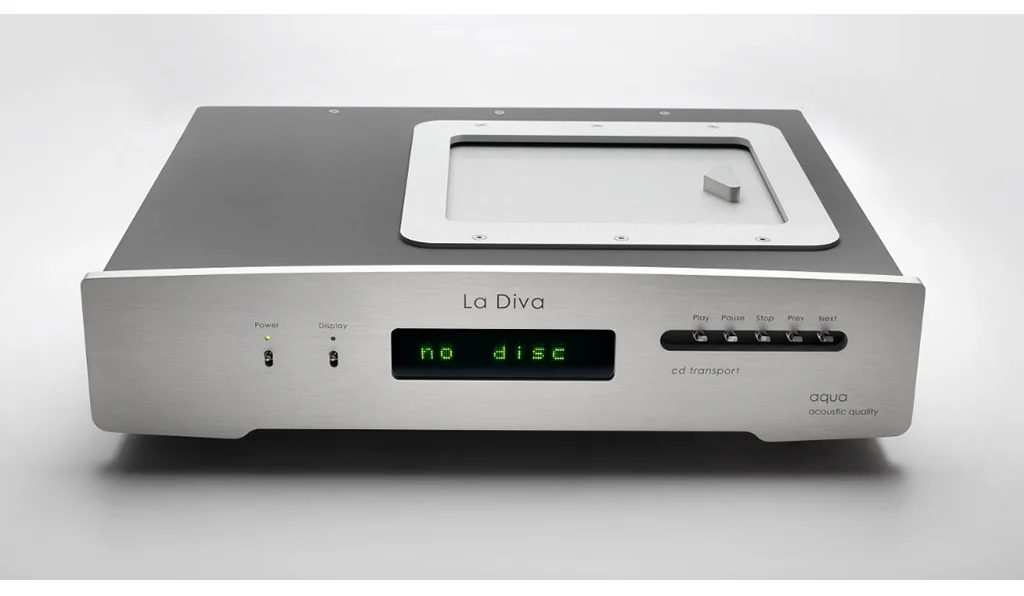
To evaluate the true potential of this digital-to-analog converter, Aqua has paired it with the LaDiva CD transport—a dedicated, no-compromise disc spinner designed to extract the absolute maximum performance from Red Book compact discs.
Positioned firmly in the ultra-high-end tier of the audio market, the gear commands a commensurate investment:
- Aqua LaScala Mk. III DAC: $9,850 USD MSRP
- Aqua LaDiva CD Transport: $9,960 USD MSRP
Together, this nearly $20,000 digital front-end represents the pinnacle of modern physical and file-based digital playback. Over the coming months, our editorial team will put this dynamic duo through rigorous testing across various musical genres, system configurations, and acoustic environments to determine if it sets a new benchmark for musical realism.
Chronology
To understand the weight of the arrival of the LaScala Mk. III and LaDiva, it is helpful to trace the trajectory of Aqua Acoustic Quality within the high-end audio landscape.
- The Foundations of Aqua (Early 2010s): Based in Milan, Italy, Aqua carved out a distinct niche by rejecting conventional off-the-shelf Delta-Sigma DAC chips in favor of discrete R2R ladder DAC architectures. Their design philosophy prioritized timbral accuracy, phase coherence, and an analog-like texture over hyper-detailed, sterile digital measurements.
- The Evolution of the LaScala Series: The original LaScala established Aqua’s reputation for blending the warmth and dimensionality of vacuum tubes with the precision of discrete ladder conversion. The subsequent Mk. II iteration refined power delivery, jitter reduction, and component selection. Over the years, the platform earned a devoted following among purist audiophiles seeking relief from digital fatigue.
- The Introduction of the LaDiva: Recognizing that many audiophiles still maintain extensive physical CD collections, Aqua developed the LaDiva transport to complement their DAC lineup. Utilizing proprietary mechanical decoupling, advanced laser pickup mechanisms, and ultra-low jitter clocking, the LaDiva was engineered to treat the CD not as a legacy format, but as a premier archival medium.
- The Birth of the Mk. III and Pilot Buffer (2025–2026): Following years of research into analog stage topology, Aqua finalized the engineering for the LaScala Mk. III. The breakthrough development centered on the creation of the proprietary "Pilot Buffer" module—a specialized circuit designed to optimize impedance matching and transient response on the analog board. Concurrently, engineers overhauled the surrounding DAC circuitry to lower noise floors and enhance micro-dynamic resolution.
- Arrival at Review Headquarters (September 2026): With review units freshly unboxed and placed into our reference system, the long-term evaluation phase officially begins. Initial burn-in and baseline listening sessions are currently underway.
Supporting Data & Technical Architecture
The technical specifications and architectural choices behind the Aqua LaScala Mk. III and LaDiva transport reflect a meticulous, zero-compromise engineering ethos. High-end audio buyers investing nearly five figures per component expect nothing less than master-class manufacturing, and Aqua’s design choices justify the outlay.
Aqua LaScala Mk. III R2R DAC Specifications & Design
- Conversion Technology: Pure discrete R2R (Resistor Ladder) architecture. Unlike common Delta-Sigma chips that process audio via high-frequency modulation and digital filtering algorithms, a discrete R2R ladder utilizes a precision network of individual resistors to directly convert digital binary code into analog voltage steps. This topology is widely credited with delivering superior spatial depth, natural decay, and timbral richness.
- Analog Output Stage: Tube-buffered analog stage. By incorporating vacuum tubes into the output path, Aqua bridges the gap between digital precision and the harmonic bloom characteristic of world-class vinyl playback.
- The Pilot Buffer: The defining innovation of the Mk. III iteration. This newly designed module on the analog board stabilizes signal transfer between the conversion stage and the output tubes, reducing distortion and improving low-frequency authority and transient snap.
- Circuit Enhancements: Beyond the Pilot Buffer, nearly every active and passive component in the DAC circuit path has been re-evaluated and upgraded, resulting in a significantly lower signal-to-noise ratio and heightened resolution of micro-details.
- Pricing: $9,850 USD
Aqua LaDiva CD Transport Specifications & Design
- Mechanism: Premium, dedicated CD transport mechanism (non-multiformat drive), heavily isolated to eliminate external vibration and internal resonance.
- Clocking Architecture: Ultra-low phase noise digital clocks designed to drastically minimize jitter at the source level, ensuring that data is transmitted to the DAC with absolute temporal integrity.
- Chassis & Power Supply: Massive, heavily shielded chassis construction with independent power supply stages dedicated to the transport motor, laser assembly, and digital output stages respectively, preventing cross-contamination of electrical noise.
- Pricing: $9,960 USD
Official Perspectives and Manufacturer Philosophy
While official press statements regarding the LaScala Mk. III emphasize continuity with Aqua’s core musical ethos, they also highlight the company’s relentless pursuit of refinement.
In past communications, Aqua’s design team has consistently underscored their philosophical opposition to "trend-chasing" in digital audio. Where other manufacturers frequently redesign products to support ever-higher, yet often superfluous, sampling rates (such as astronomical DSD or ultra-high-PCM formats that lack native software support), Aqua focuses on extracting maximum emotional and sonic truth from standard and high-resolution files alike.
A representative for Aqua Acoustic Quality noted during the conceptual rollout of the Mk. III platform:
"Our goal has never been to win a specification sheet war based on theoretical numbers. Digital audio must ultimately serve the music. With the LaScala Mk. III, our engineering efforts were entirely concentrated on what happens in the analog domain immediately following conversion. The introduction of the Pilot Buffer is not merely a component swap; it is a fundamental enhancement in how the delicate musical signal transitions from our R2R ladder network to the tube stage, preserving the purity, air, and emotional weight of the original performance."
Similarly, the rationale behind maintaining and continuously improving a high-end CD transport like the LaDiva speaks to the enduring viability of physical media in audiophile circles. Aqua maintains that a dedicated, single-purpose transport engineered specifically for the Red Book CD standard will routinely outperform multi-purpose universal disc players or general-purpose computer drives by eliminating the compromises inherent in shared processing architectures.
Implications for the High-End Audio Market
The arrival of the LaScala Mk. III and LaDiva transport carries several notable implications for the luxury audio sector, particularly within the shrinking yet passionate segment of physical media enthusiasts and pure-audio purists.
1. The Resurgence and Validation of R2R Ladder DACs
For years, Delta-Sigma DACs dominated the market due to their cost-effectiveness and ease of implementation. However, the sustained commercial and critical success of manufacturers like Aqua demonstrates that a dedicated segment of audiophiles is willing to pay a premium for discrete R2R ladder topologies. The LaScala Mk. III serves as a litmus test for how much further discrete ladder performance can be pushed when paired with modern tube-buffering and impedance-matching innovations like the Pilot Buffer.
2. The Continued Viability of Dedicated CD Transports
In an era dominated by network streaming, cloud libraries, and server-based local storage, the market for a nearly $10,000 standalone CD transport might seem counterintuitive to casual observers. Yet, manufacturers like Aqua recognize that many collectors possess thousands of meticulously curated compact discs that have yet to be satisfactorily ripped or streamed. By offering a transport built to reference-grade standards, Aqua validates the argument that the physical CD, when read by a world-class mechanism and clocked with extreme precision, remains a remarkably potent high-end source.
3. Benchmarking the Ultra-High-End Tier
At a combined price point approaching $20,000, this digital front-end enters a fiercely competitive bracket occupied by some of the most respected brands in high-end audio—including DCS, Esoteric, MSB Technology, and Chord Electronics. How the LaScala Mk. III and LaDiva stack up against FPGA-based converters and multi-box mega-DACs will heavily influence purchasing decisions among well-heeled audiophiles seeking the absolute apex of digital reproduction.
Conclusion & Looking Ahead
As our long-term review process officially commences, the Aqua LaScala Mk. III and LaDiva CD transport face an exacting evaluation. Over the coming weeks and months, our listening panels will test their mettle with everything from intimate acoustic jazz and sparse classical chamber music to massive orchestral swells and driving rock tracks.
Will the combination of the new Pilot Buffer module, the refined R2R ladder architecture, and uncompromising disc transport mechanics elevate digital playback to new heights of emotional engagement? Stay tuned to our forthcoming, comprehensive long-term review for the definitive verdict.
For more information on the LaScala Mk. III and other products in the Aqua lineup, visit the official manufacturer website at aquahifi.com.