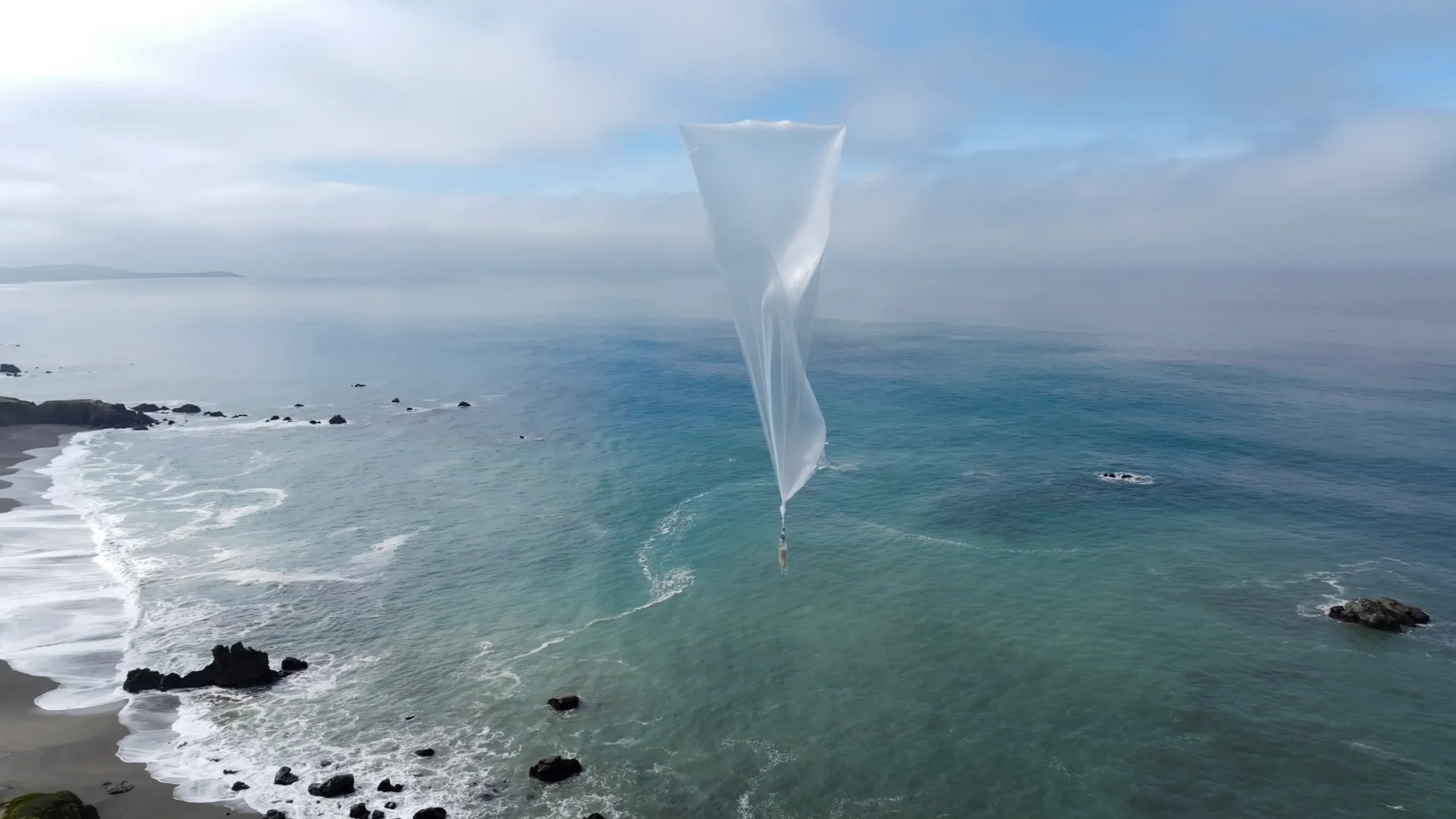
In a significant pivot for military meteorological strategy, the U.S. Air Force has finalized a contract with Redwood City-based startup WindBorne Systems. This agreement, which could reach a ceiling of $49 million, marks a transformative moment in how the American defense apparatus sources atmospheric data. By leveraging a global constellation of autonomous, AI-piloted weather balloons, the military is moving away from traditional, resource-heavy observation methods toward a dynamic, data-as-a-service model that promises unprecedented precision in global weather forecasting.
The Core Agreement: Precision-On-Demand
The contract is structured as an indefinite-delivery, indefinite-quantity (IDIQ) vehicle. Unlike traditional procurement contracts that mandate massive upfront expenditures, this agreement allows the Air Force to purchase specific atmospheric data packages tailored to regional requirements.
While the total potential value is $49 million, the Air Force operates on a "pay-as-you-go" basis. To date, the military has already activated $1.7 million in task orders, a figure that industry analysts expect to balloon as the Air Force integrates WindBorne’s proprietary data streams into its strategic planning. For the military, this offers a tactical advantage: the ability to request granular, high-fidelity sensor readings over specific geolocations—be it a flight path over the Pacific or a potential storm zone near a naval base—without the need to deploy traditional, expensive, and often vulnerable manned aircraft or ground-based stations.
A Brief Chronology: From Silicon Valley Startup to Defense Asset
WindBorne Systems, founded in 2015, has spent nearly a decade refining the intersection of fluid dynamics, aeronautics, and machine learning.
- 2015: WindBorne is established in Redwood City, California, with the goal of revolutionizing weather observation through low-cost, high-altitude hardware.
- Early 2024: The company expands its constellation to roughly 700 active balloons, creating a "mesh network" of sensor data that covers the globe.
- June 2026: WindBorne releases "WeatherMesh 6," its latest deep-learning forecasting model. The model’s performance metrics reportedly outpace the European Centre for Medium-Range Weather Forecasts (ECMWF), setting a new benchmark for AI-driven meteorology.
- August 2026: In a milestone for autonomous navigation, WindBorne becomes the first entity to steer an unpowered, engine-less balloon directly into the eye of a typhoon. This feat was made possible by the company’s proprietary ability to maneuver through atmospheric layers by adjusting altitude and managing ballast.
- August 2026: The company secures a $37 million Series B funding round, signaling strong investor confidence in its ability to scale operations.
- Late 2026: The U.S. Air Force formalizes the current $49 million contract, recognizing the startup as the sole provider capable of meeting their specific, hyper-local, and global data-collection requirements.
The Technological Leap: Why AI Replaces the Supercomputer
For decades, meteorology was the exclusive domain of massive, energy-intensive supercomputers. These machines simulated the behavior of the atmosphere by crunching complex equations based on physical laws. While effective, this process is inherently slow and prone to approximation errors.
WindBorne represents the new guard of "AI-first" meteorology. Instead of relying purely on physical simulations, the company’s model—WeatherMesh 6—utilizes transformer architectures. These models ingest vast historical and real-time datasets to "learn" the patterns of the atmosphere. Because WindBorne controls its own hardware, it acts as both the sensor and the analyst. It feeds empirical, high-resolution data directly into its deep-learning engines, closing the feedback loop between observation and prediction.
This approach is fundamentally changing the accuracy of forecasts. By deploying hundreds of balloons that act as autonomous mobile observatories, WindBorne fills the "data deserts" where conventional weather stations are sparse, such as over the vast stretches of the world’s oceans.
Official Responses and Strategic Rationale
The decision by the U.S. government to award this contract without competitive bidding speaks to the unique, proprietary nature of WindBorne’s technology.
"This is a determination by the government that for this capability of collecting global data, we were the only company able to provide it in the way that met their needs for these operations," noted Andrey Sushko, co-founder and CTO of WindBorne.
Sushko emphasized that the contract serves two primary purposes: facilitating the continued expansion of the balloon constellation and fueling further research and development into hardware miniaturization and sensor precision. The government is not merely buying data; it is investing in the underlying infrastructure that allows the U.S. to maintain an "all-weather" operational advantage.
The integration of these balloons into military operations is not purely for combat readiness; it is also a critical component of climate resilience. As extreme weather events—such as the typhoon successfully navigated by a WindBorne balloon—become more frequent, the ability to predict pathing and intensity with sub-hourly updates becomes a matter of national security and public safety.
Implications: The New Frontier of Weather Intelligence
The partnership between the Air Force and WindBorne signals a broader trend in the defense-tech landscape. We are witnessing a shift where private-sector, AI-native companies are becoming essential infrastructure providers.
1. The Death of the "Data Desert"
Traditional weather models are limited by a lack of data in remote regions. WindBorne’s constellation effectively turns the entire globe into a monitored grid. By maneuvering balloons into high-interest areas, the Air Force can gain a tactical picture that was previously impossible to obtain in real-time.
2. Operational Decision-Making
As Sushko pointed out, the typhoon mission was one of the first times a deep-learning model was used for an "actual operational decision"—using AI to navigate hardware into the heart of a storm. This suggests a future where AI does not just predict the weather, but proactively maneuvers assets to study or avoid it.
3. Challenges to the Status Quo
The success of WindBorne’s WeatherMesh 6 model poses a direct challenge to long-standing institutions like the ECMWF. While traditional physics-based models remain the bedrock of scientific weather understanding, the speed and adaptability of AI-based "end-to-end" learning models are forcing a rapid evolution in how weather agencies approach their craft.
4. A Template for Future Procurement
The structure of this contract—an open-ended, pay-per-data model—may become the gold standard for the Department of Defense. It minimizes risk, ensures that the military only pays for the data it needs, and incentivizes the private sector to keep their hardware cutting-edge.
Conclusion
The $49 million deal between the U.S. Air Force and WindBorne Systems is more than a procurement win for a Silicon Valley startup. It is an acknowledgment that the future of atmospheric intelligence lies in the sky, managed by autonomous swarms and analyzed by deep-learning models. As WindBorne continues to scale its fleet and refine its algorithms, the barrier between the physical chaos of the atmosphere and the precise calculations of the digital world is thinning. In this new era, the ability to predict the weather is no longer just about knowing if it will rain—it is about maintaining an information advantage in an increasingly volatile climate.