Clear-Com Powers Seamless Production and Broadcast Communications Infrastructure at Rock in Rio 2026
015 mins
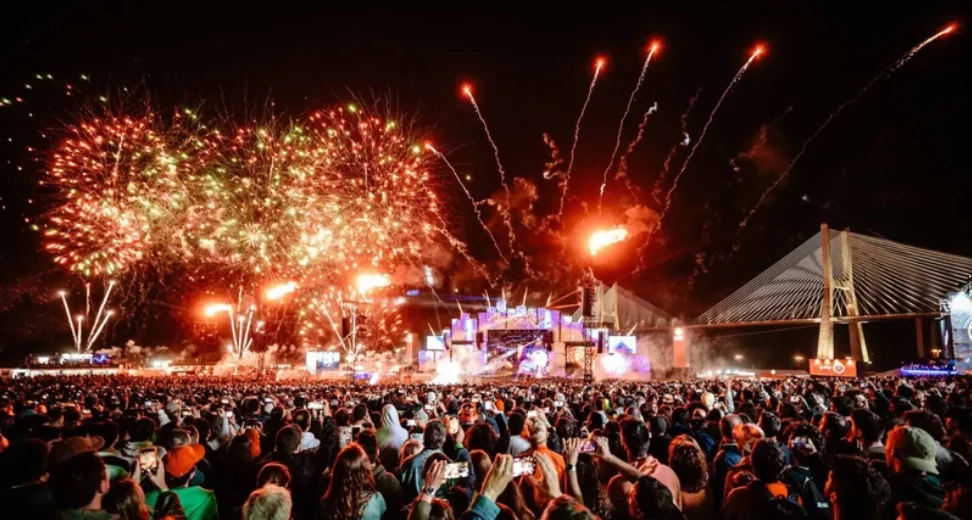
RIO DE JANEIRO, BRAZIL — In the high-stakes, hyper-demanding world of modern mega-festivals, flawless communication is just as vital as thunderous bass and pristine guitar riffs. When Rock in Rio 2026 opened its gates to hundreds of thousands of ecstatic music fans in Brazil, the mammoth multi-stage production relied on a robust, enterprise-grade communications backbone to keep its complex ecosystem running like clockwork.
At the heart of this intricate web of stage management, audio engineering, and live television broadcasting was Clear-Com. Partnering with prominent Brazilian systems provider Savana Comunicação Ltd., Clear-Com deployed a comprehensive communications architecture that spanned multiple active performance zones across the festival grounds while simultaneously bridging the physical venue with TV Globo’s off-site broadcast facilities.
The successful deployment proved once again that advanced intercom and audio-over-IP (AoIP) integration can eliminate the traditional barriers between live event production and global broadcast distribution, setting a new benchmark for major international music festivals.
Main Facts: Inside the Rock in Rio 2026 Clear-Com Deployment
Rock in Rio is widely regarded as one of the largest and most complex music festivals on the globe. Hosting an eclectic roster of top-tier international superstars alongside legendary Brazilian acts, the 2026 edition required a communications matrix capable of covering vast physical acreage, navigating heavy RF environments, and maintaining zero-latency communication across separate production departments.
The core infrastructure deployed by Clear-Com and Savana Comunicação featured:
Arcadia Central Station Systems: Four core Arcadia Central Station units served as the central processing hubs for the entire festival site.
Wireless Beltpacks: Approximately 50 wireless FreeSpeak II and FreeSpeak Icon beltpacks were distributed to key crew members, stage managers, and technical directors, offering uncompromised mobility across multi-stage layouts.
Transceiver Integration: A hybrid configuration of E1 and IP-connected FreeSpeak transceivers blanketed the festival’s extensive production zones, eliminating dead zones and ensuring uninterrupted radio frequency (RF) connectivity.
Broadcast Bridge via Dante: The festival’s on-site Arcadia systems were linked directly to TV Globo’s permanent broadcast facilities using Dante protocol over a dedicated, high-speed network. This tied the festival hardware seamlessly into Clear-Com’s broader Eclipse matrix infrastructure.
Live Television Integration: Multishow, a premier TV channel operated by Globo, leveraged this unified communications grid to coordinate live broadcasts reaching millions of viewers worldwide.
Chronology: Building a Communications Giant
Planning and executing a communications network for an event the size of Rock in Rio is a multi-month logistical undertaking that requires meticulous coordination between equipment manufacturers, local integration partners, and broadcast networks.
Phase 1: Architectural Design and Pre-Planning (Months Prior to Event)
The blueprint for the 2026 deployment began long before the first stage was erected. Engineers from Savana Comunicação and Clear-Com mapped out the festival site, identifying critical bottlenecks where RF congestion and physical distance could potentially disrupt crew communications. Given the physical footprint of Rock in Rio—featuring multiple massive performance stages, VIP zones, and backstage compounds—traditional analog or simple two-way radio setups were deemed insufficient.
The team decided on a decentralized yet centrally managed topology centered around the Arcadia platform. By utilizing a hybrid of E1 and IP-connected FreeSpeak transceivers, the engineers could scale the wireless footprint organically across the sprawling site.
Phase 2: On-Site Integration and Network Rigging (Weeks Prior to Gates Opening)
As festival construction shifted into high gear, the Savana Comunicação technical crew deployed the hardware backbone on-site. The four Arcadia Central Station systems were strategically positioned in production hubs to manage localized traffic while interconnecting via the festival’s dedicated IP network.
Concurrently, technicians established the high-speed Dante-over-fiber link connecting the festival grounds to TV Globo’s broadcast center. Rigging the physical infrastructure required running miles of fiber-optic cabling and mapping complex audio routing tables to ensure that directors, audio engineers, camera operators, and stage managers could communicate across different platforms without delay or dropouts.
Phase 3: System Testing, RF Sweeps, and Rehearsals (Days Prior to Show)
With the hardware locked into place, rigorous testing commenced. Technicians conducted thorough RF sweeps across the festival site to identify potential interference from competing wireless devices, broadcast equipment, and local telecommunications signals. The FreeSpeak II and FreeSpeak Icon beltpacks were assigned to various user groups—ranging from lighting and audio crews to runner teams and executive producers—and subjected to stress tests across maximum operating distances.
Phase 4: Live Execution (Festival Days)
When the festival officially kicked off, the Clear-Com ecosystem entered a continuous multi-day operational cycle. Day and night, thousands of cues were called, stage changeovers were executed with military precision, and live broadcast switches were timed down to the millisecond—all facilitated by the invisible, reliable web of the Clear-Com infrastructure.
Supporting Data: Scalability and Technical Architecture
The technical triumph of the Rock in Rio 2026 deployment lies in its architectural flexibility. Modern live events must contend with an exponentially growing demand for wireless bandwidth, and music festivals are among the most hostile RF environments imaginable.
The Power of Arcadia and FreeSpeak
The deployment of four Arcadia Central Station systems provided an exceptionally scalable platform. Arcadia is designed to bridge traditional analog party-line systems, digital matrix systems, and IP-based wireless protocols into a single, cohesive chassis.
By pairing Arcadia with roughly 50 FreeSpeak II and FreeSpeak Icon wireless beltpacks, the production team achieved a rare balance of high channel density and pristine audio quality. The FreeSpeak Icon and FreeSpeak II series operate across multiple frequency bands (depending on regional allocations), allowing audio teams to dynamically assign channels and clear out congested spectrums on the fly.
Furthermore, the integration of both E1 and IP-connected transceivers provided crucial redundancy. If an IP network path experienced high traffic or latency anomalies, the E1 infrastructure acted as an impenetrable secondary transport layer, guaranteeing that mission-critical communications would never drop during a live cue.
Bridging Live Events and Broadcast Operations
Perhaps the most sophisticated element of the Rock in Rio setup was the deep integration between the festival site and TV Globo’s broadcast operations. Historically, live concert broadcasts suffered from a communication gap between the venue’s stage managers and the television truck directors.
By leveraging Dante audio-over-IP networking, the Clear-Com Arcadia units on-site were directly tied into TV Globo’s robust Eclipse matrix infrastructure. This allowed broadcast personnel stationed blocks or miles away to converse natively with stage crew members as if they were standing side-by-side in the wings. For Multishow, the Globo-operated channel broadcasting the festival live to millions of viewers, this unified audio network eliminated miscommunications during complex musical transitions, camera pans, and commercial breaks.
Official Responses and Industry Perspectives
The success of the deployment drew high praise from the engineering teams who spent months turning the ambitious technical blueprint into reality.
João Pedro Homem, Director of Engineering at Savana Comunicação Ltd., emphasized the unique challenges posed by a festival of Rock in Rio’s magnitude and highlighted how the Clear-Com technology met every demand:
"Rock in Rio is an incredibly demanding production environment, with teams working across multiple stages and production areas while simultaneously supporting a major live broadcast," noted Homem. "The Clear-Com system gave the production teams the flexibility of wireless communications while seamlessly connecting the festival operation with the broadcaster. It’s a strong example of how the system can scale and work together across even the most complex live productions."
Industry analysts have similarly pointed to the Rock in Rio 2026 deployment as a milestone for audio-over-IP convergence in live entertainment. As audiences demand higher-fidelity broadcast streams and festivals grow larger and more technologically complex, the demand for unified, rock-solid communications systems has never been higher.
Implications: The Future of Festival and Broadcast Communications
The flawless execution of the Clear-Com and Savana Comunicação deployment at Rock in Rio 2026 carries significant implications for the future of live event production and global broadcasting.
1. The Death of Siloed Production Models
For decades, live concert production and television broadcast production operated as two separate entities sharing little more than audio splits and video feeds. The seamless Dante-bridge integration seen at Rock in Rio signals a permanent shift toward unified production ecosystems. By treating the festival grounds and the broadcast truck as a single extended intercom network, production errors caused by miscommunication are drastically reduced.
2. Heightened Expectations for Wireless Reliability
As spectrum crowding worsens in urban and mega-event environments, relying on legacy analog radio systems is increasingly unviable. The successful deployment of approximately 50 FreeSpeak beltpacks across a sprawling, high-interference festival site demonstrates that modern IP-and-DECT-based wireless intercom systems can deliver the rock-solid reliability required for mission-critical show control. Future festivals will undoubtedly look to hybrid E1/IP setups as the gold standard for site-wide mobility.
3. Setting the Bar for Global Hybrid Events
As live streaming becomes an essential revenue and engagement stream for major music festivals, the behind-the-scenes machinery must evolve accordingly. Rock in Rio 2026 has shown that bridging on-site staging with national television networks via advanced AoIP matrices is no longer an experimental luxury—it is an absolute necessity.
As technology partners like Clear-Com and Savana Comunicação continue to refine these scalable infrastructures, the boundary between being in the festival crowd and watching from a screen at home continues to shrink, driven entirely by the invisible, flawless network of professional communication.