In a landmark shift for the autonomous vehicle (AV) industry, California has enacted Senate Bill 1246, a legislative mandate that fundamentally alters how robotaxi operators must interact with the state’s emergency services. Signed into law by Governor Gavin Newsom, the legislation establishes a rigorous framework for public safety, compelling tech giants—including Waymo, Zoox, and Tesla—to provide on-the-ground support when their vehicles become disabled or pose an obstruction to law enforcement, fire departments, or emergency medical services.
The law marks a significant departure from the industry’s previously hands-off approach to roadside incidents. By requiring companies to deploy "local incident technicians" and prohibiting remote operations by non-U.S.-based drivers, California is signaling that the era of unfettered experimentation on public streets is coming to a close.
The Core Mandates of Senate Bill 1246
The legislation, introduced by state Senator Dave Cortese, serves as a direct legislative response to the friction between high-tech automation and real-world urban chaos. The bill introduces three primary requirements that will reshape the operational footprint of AV companies in California:
- Mandatory Local Incident Response: AV companies must provide local, on-the-ground support teams capable of assisting in accidents or clearing obstructions.
- Strict Penalties for Obstruction: Companies now face formal penalties if an autonomous vehicle blocks police, fire, or ambulance access for more than 30 minutes.
- Domestic Remote Operations: Any human operator taking direct control of a vehicle remotely must hold a U.S. driver’s license and be based within the United States. This specifically targets the ambiguity of "remote assistance" vs. "remote driving," ensuring that those in command of a vehicle during a crisis are subject to U.S. regulatory and safety standards.
“California has embraced autonomous vehicles, but we cannot embrace innovation at the expense of public safety,” Senator Cortese said following the signing. “When an autonomous vehicle crashes, breaks down, blocks a roadway in an emergency, or gets in the way of law enforcement or first responders, there must be clear accountability.”
A Chronology of Conflict: Why the Law Was Necessary
The impetus for SB 1246 was not a theoretical concern, but a documented string of high-profile failures that turned from public annoyances into serious safety risks.
- Early 2024: Mounting reports of Waymo vehicles stalling in intersections or entering active construction zones began to dominate local news cycles in San Francisco.
- Spring 2024: Investigations, including those by TechCrunch, revealed that in numerous instances, robotaxis became incapacitated, effectively forcing first responders to step in and manage the vehicle’s obstruction themselves. In some cases, the vehicles relied on police to manually move them.
- Summer 2026: The National Highway Traffic Safety Administration (NHTSA) escalated the situation, issuing a formal demand to AV developers to devise immediate "solutions" to the problem of vehicle interference with emergency services.
- Late 2026: With federal pressure mounting and local municipalities demanding the power to hold corporations accountable, the California legislature pushed SB 1246 forward, bridging the gap between state regulation and the rapid deployment of commercial fleets.
Supporting Data: The Scale of the Robotaxi Footprint
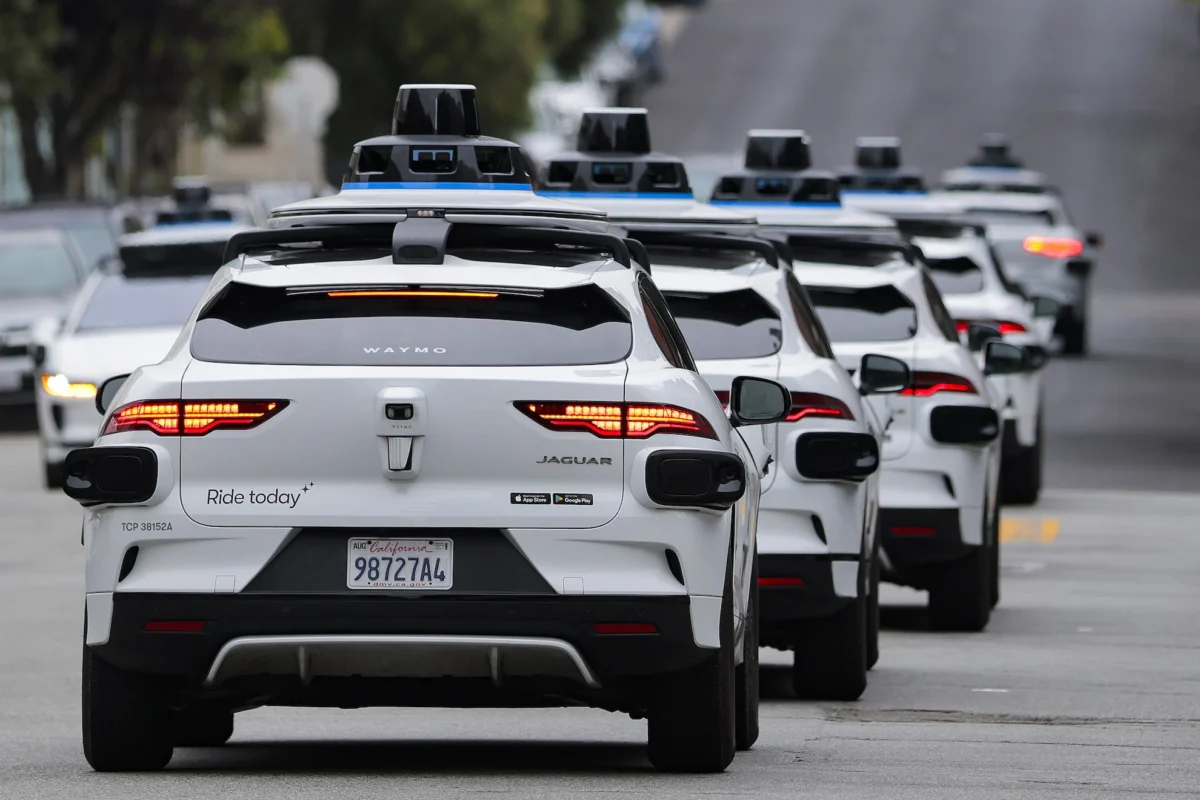
The necessity for this regulation is underscored by the sheer volume of autonomous vehicles currently operating on California’s roads. Waymo, the dominant player in the space, operates approximately 4,000 autonomous vehicles across the United States. Of that fleet, roughly 1,200 vehicles are concentrated in the San Francisco Bay Area alone.
The complexity of these operations is vast. While companies have previously cited "remote assistance" as a safety feature, the reality of these systems often involves global teams. For instance, Waymo has historically utilized command centers in Arizona and Michigan, with remote support staff located as far away as the Philippines.
The new law draws a hard line between "assistance" (sending software commands) and "driving" (direct remote control). Tesla, to date, remains the only major manufacturer to openly confirm it employs remote operators capable of taking direct, real-time control of a vehicle. By requiring that these direct operators be U.S.-based and licensed, California is ensuring that the human behind the digital wheel is legally and geographically accountable to the state’s jurisdiction.
Official Responses and Industry Outlook
The industry’s reaction to the bill has been one of calculated compliance. While some lobbyists initially pushed back against the financial burden of maintaining a fleet of "local incident technicians," major players have signaled that the rules are a reasonable price to pay for continued access to the California market.
A Waymo spokesperson issued a statement acknowledging the importance of the legislative changes: "We are grateful for the amendments made to the bill, which ensure autonomous vehicle operators can still feasibly serve Californians. Waymo is committed to making roads safer in California and continually improving our service."
Zoox, another key player in the sector, has largely sidestepped the controversy regarding remote operations by keeping its support teams based domestically. For these companies, the primary challenge moving forward will be operational efficiency. Maintaining a ready-to-deploy force of incident technicians for every jurisdiction in which they operate represents a significant overhead cost—a direct trade-off for the ability to scale their robotaxi services.
Implications: The Future of Autonomous Infrastructure
The passage of SB 1246 has broad implications for the future of urban mobility.
1. Increased Operational Costs
Companies will no longer be able to rely on a purely "automated" business model. The requirement for local, on-the-ground human presence means that robotaxi firms are essentially becoming logistics and roadside assistance companies. This will likely slow the aggressive expansion strategies of smaller startups that lack the capital to maintain a permanent local staff in every city they enter.
2. A New Regulatory Benchmark
California often serves as the "laboratory" for national policy. It is highly probable that other states—particularly those with high concentrations of AV testing like Arizona, Texas, and Nevada—will adopt similar mandates. By setting a 30-minute threshold for obstruction, California has provided a measurable metric for "success" or "failure" that regulators elsewhere can easily replicate.
3. The Role of the DMV
The California Department of Motor Vehicles is now tasked with the heavy lifting of implementation. By July 2028, the DMV must define specific "response time" metrics. This creates a new layer of bureaucratic oversight that will keep the industry under a microscope. The DMV’s future guidelines will likely dictate exactly how many technicians must be on standby relative to the number of vehicles on the road, further tethering the growth of robotaxi fleets to the availability of human safety infrastructure.
4. Public Trust
Perhaps the most important implication is the restoration of public confidence. The "wild west" era of robotaxis—characterized by vehicles blocking fire trucks and wandering into crime scenes—has eroded public support. By institutionalizing a "Safety First, Tech Second" approach, the state is attempting to ensure that if these vehicles are to become a permanent part of our transportation ecosystem, they do not impede the basic services that keep citizens safe.
As we look toward the July 2028 enforcement date, the technology companies are entering a new phase of maturity. They are no longer just software developers; they are now, by law, integral participants in the municipal emergency response network. Whether this leads to a safer, more efficient urban environment remains to be seen, but one thing is certain: the era of the "unmonitored robot" has officially come to an end in California.