In the world of high-end audio, the pursuit of transparency is often measured by a component’s ability to handle the "transient"—the sudden, sharp sonic events that define the leading edge of a piano note, a cymbal strike, or a plucked string. As digital-to-analog converters (DACs) have reached unprecedented levels of performance, engineers have shifted their focus from simple frequency response to the more elusive metric of transient resolution.

Recently, the Esoteric Grandioso D1X SE—a flagship DAC—was subjected to a series of rigorous technical evaluations to determine its limits in the time domain. These tests, combined with an extensive analysis of the underlying mathematics of Direct Stream Digital (DSD) versus Pulse Code Modulation (PCM), provide a sobering, data-driven look at what happens when audio signals pass through the digital-to-analog boundary.

The Measurement of Time: Transient Resolution
Transient resolution asks a fundamental question: what is the shortest single event a DAC can faithfully reproduce? When measuring the Esoteric Grandioso D1X SE, researchers focused on impulse response, noting that the "width" of an impulse is inherently constrained by the sampling rate. At a standard CD rate (44.1 kHz), a signal cannot contain information narrower than approximately 27 microseconds (µs).

The D1X SE’s performance was measured across five sampling rates. At 44.1 kHz and 96 kHz, the DAC performed at the absolute limit of the format, meaning the "bottleneck" for sharpness was the recording itself, not the hardware. However, as the sampling rate climbed to 384 kHz and 768 kHz, the D1X SE hit an analog physical limit of approximately 9.1 µs. This confirms that the DAC’s internal analog output stage, rather than the digital format, dictates the resolution ceiling.

Crucially, the study warns against the common audiophile trap of assuming "narrower is better." Reconstruction filters that are not "brickwall" (such as slow-rolloff or apodizing filters) often produce a narrower central lobe, but they do so by allowing ultrasonic energy to pass through or by introducing pre-ringing. The D1X SE’s performance is notable not because it is the "fastest" in a raw numerical sense, but because its limit is roughly twice as fast as the human ear can perceive and twice as fast as the limitations imposed by the physics of microphones and air.

Chronology of a Blind Test
To bridge the gap between technical metrics and subjective listening, a blind test was conducted using a TASCAM DA-3000 SD recorder. The methodology was designed to be statistically robust:

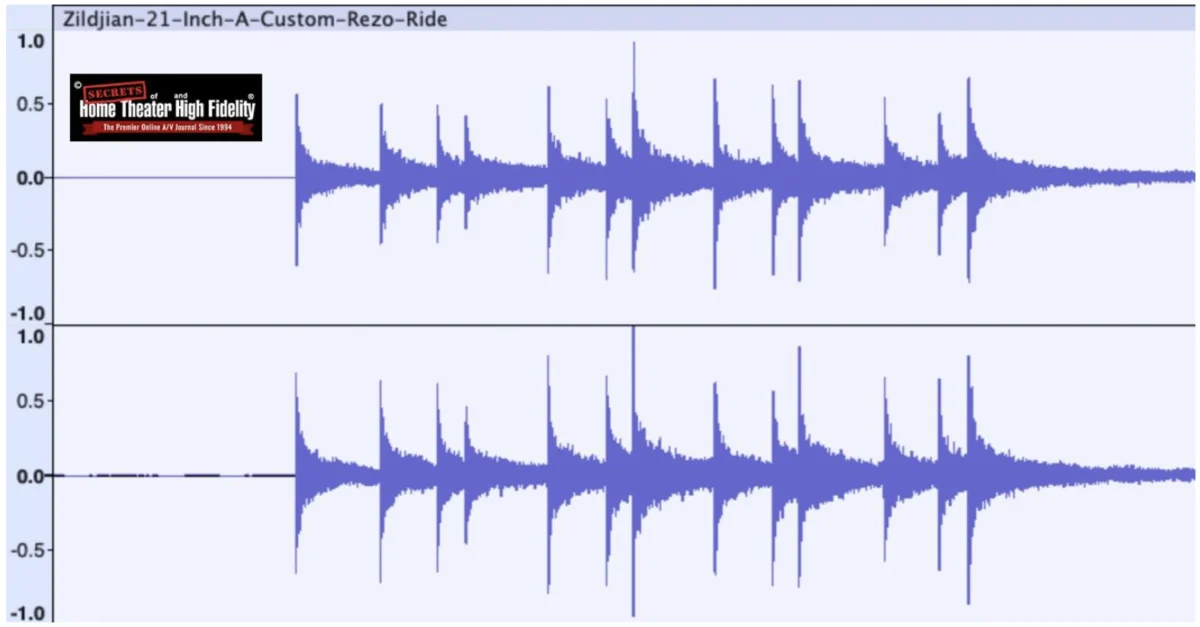
- The Setup: A Paiste 22" Mellow Ride cymbal was recorded using high-fidelity Earthworks M30 condenser microphones fed into an Earthworks 1022 preamp.
- The Samples: 20 taps were recorded in both PCM and DSD128 formats.
- The Test: A script presented pairs of PCM and DSD files in randomized order to a listener. The goal was to identify which format was preferred.
- The Result: The participant chose PCM 12 times and DSD 8 times. With a p-value of 0.5034, the results were consistent with random guessing.
While this does not prove the formats are identical, it highlights that in a controlled, high-quality environment, the audible differences—if they exist—are far more subtle than marketing claims suggest.

Supporting Data: The Mathematics of Noise Shaping
The debate between PCM and DSD often hinges on the "purity" of the one-bit DSD stream. However, a technical analysis reveals that DSD relies entirely on noise shaping—a process that does not remove quantization noise but rather moves it.

The Conservation Law
According to the Gerzon-Craven conservation law, the area under the noise transfer function curve must equal zero. This means that every decibel of quantization noise pushed out of the audible range must reappear elsewhere. As the order of the modulator increases (up to 7th or 8th order), the noise floor in the audio band drops, but the ultrasonic noise floor rises sharply. This is not a design flaw; it is a mathematical necessity.

The Stability Cliff
One-bit modulators are prone to instability. If the input signal exceeds a certain threshold (defined by the "Scarlet Book" SACD specification), the loop filter’s integrators can "run away," leading to a collapse of dynamic range. This is why SACD defines 0 dB as 50% modulation depth. Modern delta-sigma DAC chips from major manufacturers often convert DSD to multi-bit PCM internally precisely because multi-bit modulators are more stable and easier to dither.

Implications for Production and Playback
The "unbroken one-bit path" from microphone to speaker is largely a marketing narrative. Because DSD cannot be edited (you cannot splice or adjust levels on a one-bit stream), most commercial DSD releases pass through a Digital eXtreme Definition (DXD) stage—which is essentially high-rate PCM (352.8 kHz/32-bit).

Consequently, the digital music consumer is rarely listening to a "pure" one-bit signal. Every time a file moves between these formats, it undergoes decimation and interpolation. Measurements show that a single round-trip conversion leaves a residual artifact 109 dB below the signal. While this is mathematically measurable, it is effectively inaudible, as it sits well below the noise floor of any analog playback chain.

Conclusion: The Reality of Modern Audio
The evidence suggests that the battle between PCM and DSD is largely moot in the context of modern hardware. The Esoteric Grandioso D1X SE, like many contemporary high-end converters, handles both formats with equal competence.

The primary takeaways for the audiophile are clear:

- Mastering Matters Most: The differences between a DSD release and a PCM release of the same album are almost certainly the result of separate mastering sessions and conversion choices, not the codec itself.
- Ultrasonic Filtering: Because DSD generates significant ultrasonic noise, the quality of the DAC’s analog reconstruction filter is paramount to prevent intermodulation distortion in the power amplifier.
- The "Format Myth": The idea that DSD is "analog-like" while PCM is "digital" is a simplification that ignores the fact that nearly all modern DACs use delta-sigma modulation internally for both formats.
Ultimately, the limitations of the listening room, the loudspeakers, and the original recording environment are orders of magnitude greater than the minute differences between well-implemented PCM and DSD. The Esoteric D1X SE provides a masterclass in engineering, proving that when a system is designed with sufficient headroom and precise filtering, the "format war" becomes an echo of the past, leaving only the music to be heard.