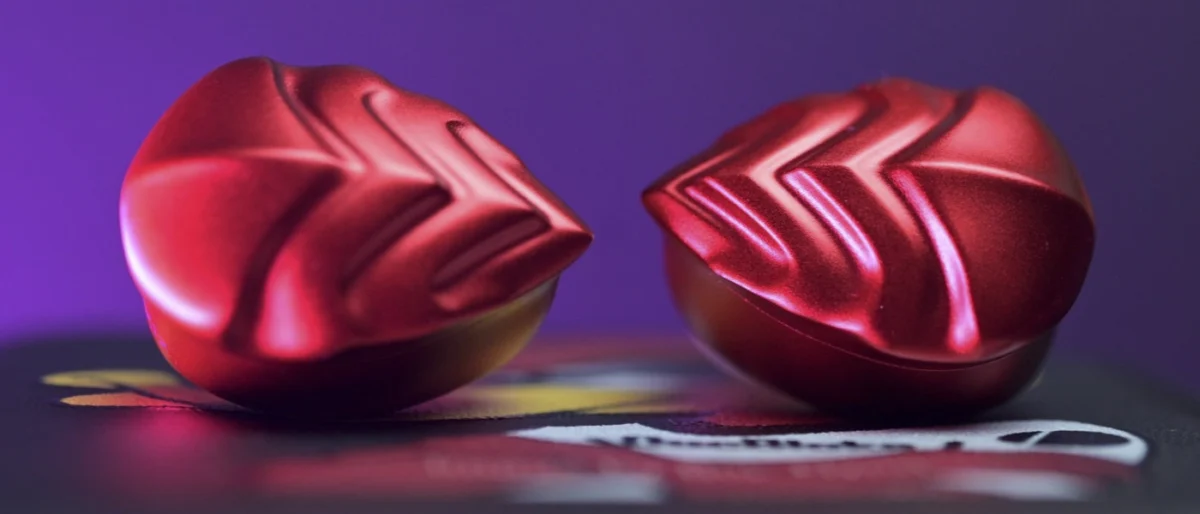
The landscape of high-fidelity audio has undergone a seismic shift over the past decade. Where once the market was dominated by legacy conglomerates and monolithic audio engineering firms, the rise of the "enthusiast-as-expert" has democratized product development. Today, the most anticipated releases in the In-Ear Monitor (IEM) space are often the result of collaborative efforts between boutique manufacturers and influential voices from the audiophile community.
But how exactly does a content creator transition from reviewer to architect? What are the technical realities of tuning, and how do engineering constraints collide with subjective preference? To understand this, we look to the recent collaboration between HIDIZS and prominent audio enthusiast DucBloke, whose work on the MK12 x DucBloke project provides a masterclass in modern audio development.
Main Facts: The Anatomy of a Partnership
The partnership between HIDIZS and DucBloke represents a growing trend in the Chi-Fi (Chinese Hi-Fi) market: the "signature" IEM. These projects are rarely simple re-skins of existing hardware. Instead, they involve a rigorous process of iterative testing, driver selection, and precision acoustic tuning.
DucBloke, who rose to prominence through his meticulous YouTube analysis and his specialized work in Parametric Equalizer (PEQ) profiles, was tapped by HIDIZS to bring his specific "house sound" to their hardware. The resulting MK12 x DucBloke is not merely a marketing exercise; it is a technical manifestation of DucBloke’s philosophy regarding frequency response and harmonic clarity.
The Core Pillars of Collaboration:
- The Vision: The collaborator establishes a target frequency response curve based on their expertise.
- The Prototype: Manufacturers provide raw hardware, which the collaborator tests against their target.
- The Tuning: A back-and-forth process involving physical dampeners, acoustic chamber adjustments, and internal driver configuration.
- The Final Polish: Finalizing the PEQ/EQ integration to ensure the out-of-the-box sound meets the vision while leaving room for user adjustment.
Chronology of Development
The development cycle of a high-end IEM is a grueling timeline of engineering, feedback loops, and calibration.
Phase 1: The Concept and Alignment (Months 1–2)
The process begins with a series of discussions regarding the intended "target" of the IEM. In the case of the MK12, the conversation focused on balancing technical resolution with musicality. DucBloke utilized his background in PEQ to map out a frequency curve that addressed common pitfalls in budget and mid-tier IEMs, such as sibilance in the upper mids and "bloated" sub-bass.
Phase 2: Prototyping and Acoustic Architecture (Months 3–5)
HIDIZS provided early samples. Unlike mass-market headphones, IEM tuning is highly sensitive to the physical construction of the shell. A change as small as a micron in the internal tube length or the density of the acoustic filter can shift the resonant frequency. During this phase, DucBloke performed intensive testing, sending back data logs and frequency response graphs that highlighted areas for improvement.
Phase 3: The Tuning Iterations (Months 6–8)
This is the "crunch" period. The engineering team at HIDIZS implemented mechanical changes—adjusting the crossover points of the drivers and modifying the dampening materials—while DucBloke tested these changes against various audio sources, from high-end DAC/Amps to portable dongles.
Phase 4: Final Validation and Launch (Month 9)
Once the frequency response was locked in, the branding and marketing collateral were finalized. The product moved from the laboratory to the assembly line, culminating in the official launch of the MK12 x DucBloke.
Supporting Data: The Technicality of Tuning
To understand why this collaboration succeeded, one must look at the data-driven nature of modern tuning. Tuning is not "guesswork"; it is the art of manipulating the transfer function between the driver and the eardrum.
The Role of PEQ and Frequency Response
DucBloke’s expertise lies in his ability to visualize sound through PEQ. By analyzing existing market favorites, he identified that many users were using EQ to "fix" inherent flaws in their IEMs. The goal of the MK12 was to minimize the need for heavy digital correction by perfecting the mechanical frequency response.
Technical Data Points:
- Driver Configuration: A hybrid array designed to handle the frequency spectrum in distinct bands to reduce intermodulation distortion.
- Acoustic Impedance: Adjusting the internal resistance to ensure the IEM remains efficient across various output impedances of modern digital audio players (DAPs).
- The Harman/Diffuse Field Debate: The MK12 aimed for a "modern neutral" target, a hybrid approach that prioritizes a natural timbre in the vocals while maintaining a tight, punchy low-end response.
Official Responses and Industry Context
In an interview regarding the partnership, the team at HIDIZS emphasized the importance of external feedback. "We have the engineering capability to build almost any transducer, but we don’t always have the pulse of the community," a spokesperson noted. "By partnering with someone who spends thousands of hours analyzing sound profiles, we bypass the guesswork. DucBloke brings a level of granularity that our engineers appreciate because it gives us a clear, quantifiable goal."
For his part, DucBloke describes the process as a humbling experience. "It’s one thing to say ‘this needs more bass’ in a review," he explains. "It’s another thing entirely to have to work within the physical constraints of an IEM shell, balancing driver sensitivity, phase alignment, and shell resonance. You learn very quickly that there is no ‘perfect’ sound, only a series of trade-offs."
Implications for the Future of Audiophilia
The success of the MK12 x DucBloke collaboration suggests several major implications for the future of the personal audio industry.
1. The Death of the "Black Box" Manufacturer
Consumers are increasingly wary of "black box" products—gear that is released with little explanation of its tuning philosophy. Collaborations provide transparency. When a known reviewer puts their name on a product, they are essentially providing a "vouch" for the sound signature, creating a higher level of trust.
2. The Rise of "Prosumer" Engineering
We are entering an era where the line between the consumer and the producer is blurring. As software tools for PEQ and frequency measurement (such as Room EQ Wizard) become more accessible, the barrier to entry for "tuning experts" is lowered. This will likely lead to an influx of high-quality, niche-market products that cater to specific, underserved segments of the listening population.
3. Sustainability and Iteration
By collaborating with experts, manufacturers reduce the risk of releasing products that fall flat. This creates a more sustainable development cycle, as companies spend less time "throwing darts in the dark" and more time refining designs that the community has already signaled a demand for.
4. The Future of the "Signature" Product
The MK12 is likely just the beginning. As influencers build their own brands, we can expect to see more "curated" audio hardware. This creates a unique ecosystem where an enthusiast can choose an IEM not just based on the brand logo, but on the "sound signature" associated with their favorite audio experts.
Conclusion: A New Standard
The HIDIZS x DucBloke collaboration is more than just a successful product release; it is a blueprint for the future of high-end audio. By merging professional manufacturing capabilities with the deep, granular knowledge of the content creator community, the industry is creating products that are more responsive, more technically refined, and more aligned with the actual needs of the modern audiophile.
For the average listener, this means better sound quality at lower price points, as the "guesswork" is replaced by evidence-based tuning. For the industry, it represents a necessary evolution in how products are conceived and brought to market. As we look toward the future, one thing is certain: the era of the "lone wolf" manufacturer is ending, and the age of the collaborative, community-driven audio landscape is officially here.