By Marcelo
Published by Headfonics
Main Facts
The audio landscape welcomes a compelling new contender with the ARIA Ear Sylva, a dynamic driver In-Ear Monitor (IEM) retailing at $160. Hailing from Vietnam—a burgeoning hub for specialized audio craftsmanship—ARIA Ear has quickly established its presence alongside sibling releases like the Azuri.

At the core of the Sylva’s acoustic architecture is a 10mm birch wood diaphragm, treated via a multi-step hardening process designed to eliminate the metallic timbre often associated with traditional polymer or metallic domes. This driver is paired with an advanced acoustic array featuring a dual Helmholtz resonance system, a Ribbon Waveguide System for back-wave absorption, and a metal damping system designed to outlast moisture-degraded paper or cloth alternatives.
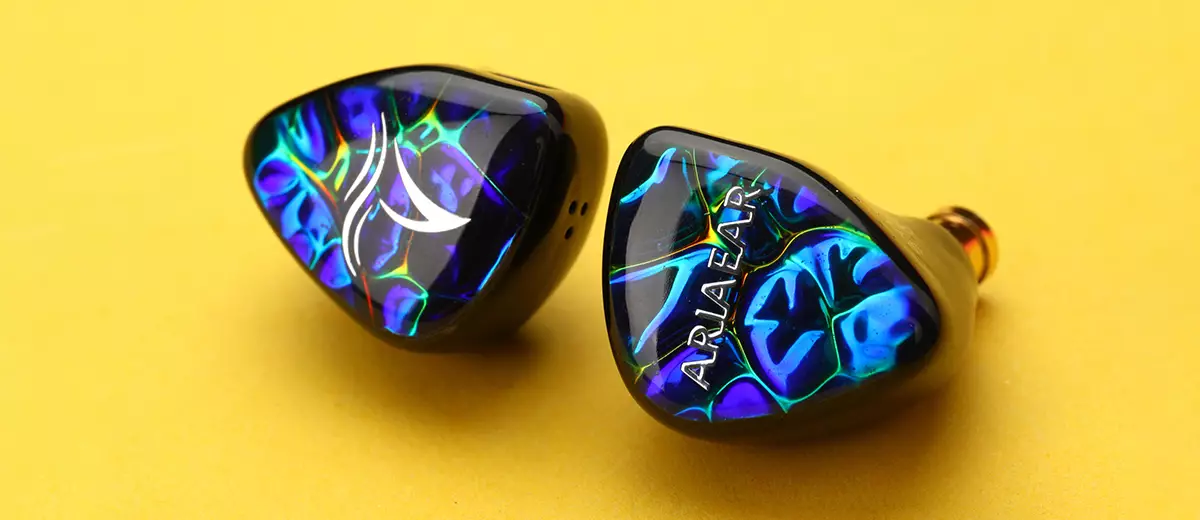
Operating at an impedance of 16Ω with a sensitivity of 109 dB/mW at 1 kHz, the Sylva strikes a balance between easy driveability and high-fidelity output. It combines a lightweight, ergonomically sculpted 5.3-gram resin shell with a striking water-ripple faceplate design, delivering a mild-to-moderately V-shaped acoustic profile that challenges established competitors in and above its price category.

Chronology and Background
From the Cultural Landscapes of Vietnam to Global Hi-Fi
Every listening session with the ARIA Ear Sylva evokes distinct impressions of Vietnam’s vibrant cultural tapestry—from the sprawling culinary spreads atop Ba Na Hills’ French village to the historic corridors of the Imperial City of Hue. It is within this culturally rich environment that ARIA Ear was founded, rapidly emerging as an innovative voice in the global personal audio market.
While many startup brands rely on off-the-shelf driver implementations and standard shell designs, ARIA Ear opted for a rigorous engineering path from day one. The development of the Sylva represents a deliberate push to conquer common acoustic bottlenecks found in single dynamic driver systems, specifically targeting unwanted resonance, high-frequency distortion, and phase smearing.

The Unboxing and Early Impressions
Upon unboxing the Sylva from its sleek, sleeved black presentation box (measuring 196 x 138 x 73 mm), users are greeted with a comprehensive accessory suite. The package includes six pairs of specialized eartips, a luxurious leather hard carrying case, a microfiber cleaning cloth, and a modular high-purity OCC copper cable.
Crucially, early adopters—specifically the first 50 customers—receive a premium, DUNU-branded Lyre Mini 2-pin 240-strand modular cable featuring interchangeable 3.5mm and 4.4mm terminations. Following this initial promotional window, the stock cable configuration transitions to a standard offering.

Following standard protocol, the review unit underwent a mandatory 24-hour burn-in period. As expected with single dynamic driver configurations, this settling-in phase yielded a subtle yet noticeable improvement in overall transient smoothness and upper-register fluidity.
Supporting Data and Technical Specifications
Acoustic Engineering & Innovation
The defining characteristic of the Sylva is its departure from conventional acoustic dampening. Most dynamic driver IEMs utilize paper or cloth damping materials behind the driver to control high-frequency peaks. Over time, these materials are vulnerable to humidity and moisture degradation, altering the frequency response. ARIA Ear solved this by implementing a metal damping system, which stabilizes high-frequency resonance while preserving air, sparkle, and micro-detail retrieval.

Furthermore, the integration of dual resonance-reducing chambers targets specific problematic peaks at 4.8 kHz and 6 kHz, while the Ribbon Waveguide System manages rear acoustic waves to maintain a pristine, uncluttered presentation.
Ergonomics, Design, and Hardware
- Driver Configuration: 10mm dynamic driver with a multi-step treated birch wood diaphragm.
- Shell Material: High-grade, ergonomically contoured resin.
- Faceplate Aesthetics: Fluid, water-ripple finish reflecting a yellow-orange sunset.
- Nozzle Specifications: Metal nozzle with a secure retention lip (5.8 mm diameter) paired with a pressure-relief vent hole near the base and a triple-vent array near the deeply recessed 2-pin connectors.
- Weight: 5.3 grams per shell.
- Impedance: 16Ω.
- Sensitivity: 109 dB/mW @ 1 kHz.
Sound Impressions & Frequency Response Analysis
Evaluated primarily through balanced 4.4mm connections using source chains comprising the iBasso DC-Elite and MUSE HiFi M6 Double DAC/amps, paired with a FiiO M15S DAP playing high-resolution files via UAPP and PowerAmp, the Sylva displays exceptional channel matching indicative of strict quality control.

- Bass Performance: Features an authoritative 10 dB sub-bass boost. The low-end delivers substantial physical impact, energy, and depth without bleeding into the lower midrange, maintaining impressive speed and articulation.
- Midrange Clarity: The midrange exhibits a mild, tasteful recession—preventing a forward, fatiguing presentation—while avoiding a hollow, distant feel. Vocals remain articulate, organic, and properly anchored. The 2.5 kHz pinna gain compensation achieves natural vocal placement without aggressive shoutiness.
- Treble Extension: Thanks to the metal damping system and waveguide, the treble extends cleanly into the upper registers, offering the kind of airy, micro-detailed resolution typically associated with planar magnetic or hybrid multi-driver configurations rather than a traditional single dynamic driver.
- Soundstage & Imaging: The soundstage is expansively wide and deep, avoiding artificial stretching in favor of a holographic, surround-sound presentation. Instrument separation and layering are remarkably distinct, allowing listeners to easily track subtle background elements that are often obscured on lesser IEMs.
Official Responses and Industry Context
While ARIA Ear is a relative newcomer to the personal audio scene, industry analysts and early reviewers have taken note of the brand’s uncompromising engineering philosophy. Rather than chasing transient market trends, ARIA Ear’s design team focused on material science—specifically leveraging organic wood diaphragms treated to eliminate structural resonance.
Independent feedback from early reviewers underscores the brand’s success in carving out a distinct identity. By avoiding the typical pitfalls of wood-diaphragm drivers (such as upper-treble roll-off or a blunted transient response) and metallic-diaphragm driver harshness, ARIA Ear has positioned the Sylva as a benchmark project for what a dedicated single dynamic driver can achieve at a mid-tier price point.

Implications for the Audio Market
The release of the ARIA Ear Sylva at the $160 price point carries several important implications for the portable audio market:
- Raising the Bar for Single Dynamic Drivers: For years, the sub-$200 market has been dominated by hybrid multi-driver configurations and planar IEMs attempting to maximize technicalities through sheer driver counts. The Sylva proves that meticulous acoustic engineering, chamber tuning, and diaphragm material innovation can allow a single dynamic driver to compete toe-to-toe with more complex architectures.
- Durability and Reliability Innovations: By replacing moisture-sensitive paper and cloth dampers with permanent metal damping structures, ARIA Ear addresses long-term reliability issues that plague many IEM enthusiasts living in humid climates.
- The Rise of Regional Innovators: The success of Vietnamese audio brands like ARIA Ear broadens the geographic map of high-end personal audio manufacturing, signaling that world-class acoustic R&D is increasingly decentralized.
Ultimately, the ARIA Ear Sylva earns an impressive endorsement score of 8.4, proving that thoughtful engineering, mature tuning, and cultural dedication can coalesce into an extraordinary listening instrument.