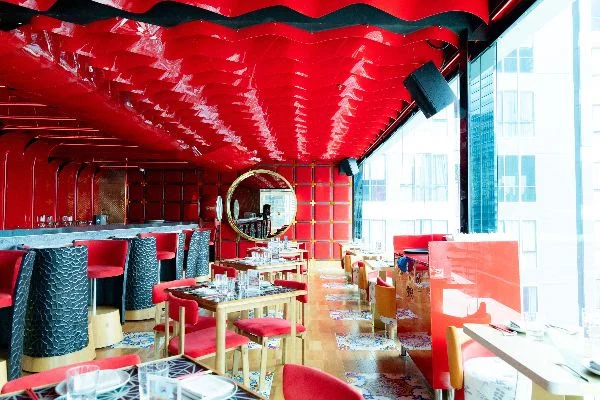
Bangkok’s vibrant hospitality scene has welcomed a sophisticated new benchmark in acoustic design with the recent audio overhaul at Japanish, a high-end restaurant and nightlife destination. Melding Japanese culinary traditions with lively Spanish cultural influences, Japanish offers a dynamic environment that seamlessly shifts from an intimate dining experience to a high-energy late-night venue featuring DJ sets and dancing. To manage the complex acoustic demands of this dual-personality venue, the management enlisted ProPlugin, Optimal Audio’s premier distributor in Thailand, to install a comprehensive, multi-zone sound system.
At the heart of this installation is Optimal Audio’s Zone 4 controller, which is paired with Cuboid 8 loudspeakers, Sub 10 subwoofers, ceiling speakers, and the intuitive ZonePad 4 wall controller. This ecosystem allows venue operators to independently manage source selection, volume, and equalization (EQ) across four distinct zones. As a result, the terrace can maintain relaxed, conversational audio levels while the indoor dancefloor operates at a much higher output for immersive club nights. Furthermore, the system is flexible enough to accommodate private functions in isolated areas without bleeding audio into or disrupting the rest of the venue.
The project highlights a growing trend in commercial audio design: the need for sophisticated, highly zoned audio architectures that can be operated intuitively by non-technical hospitality staff. By leveraging the unified Optimal Audio ecosystem, Japanish has achieved a seamless acoustic identity where sonic clarity and character remain consistent throughout the property, regardless of disparate volume levels or audio sources playing simultaneously.
Chronology of the Project
The realization of Japanish’s state-of-the-art audio setup followed a structured, deliberate timeline, moving from initial concept to final deployment and ongoing operation.
Phase 1: Conceptualization and Acoustic Brief
When the owners of Japanish set out to create a venue marrying Japanese aesthetics and Spanish nightlife energy in the heart of Bangkok, they recognized early on that standard, single-zone background music systems would fall short. The architectural layout—featuring an open-air terrace, an indoor dining area, a dancefloor, restrooms, and specific decorative photo zones—demanded strict acoustic separation. The core design brief given to ProPlugin was clear: the venue needed to feel like multiple distinct spaces operating under one roof, requiring independent control over sound fields without compromising overall audio fidelity.
Phase 2: System Specification and Engineering
Wasee Karnchawee, representing Optimal Audio distributor ProPlugin, took charge of the design and specification process. Recognizing the need for robust zoning, independent source routing, and straightforward user interfaces, Karnchawee centered the design around the Optimal Audio Zone 4 controller. To complement the controller, he selected the Cuboid 8 full-range loudspeakers and Sub 10 subwoofers for the high-impact indoor zones, supplemented by discreet ceiling speakers for auxiliary areas like restrooms and photo spots. Rather than mixing and matching hardware from disparate manufacturers—which often leads to phase issues, configuration bottlenecks, and compatibility headaches—Karnchawee specified a complete, native ecosystem from Optimal Audio.
Phase 3: Installation and Configuration
Because the entire hardware lineup was sourced from a single manufacturer, the physical installation phase was remarkably streamlined. Rather than spending valuable hours troubleshooting impedance matching, custom cabling, or cross-platform digital signal processor (DSP) integration, the ProPlugin team focused efficiently on clean cabling runs, speaker mounting, and network configuration. The deployment of the Zone 4 controller, the wall-mounted ZonePad 4, and the loudspeakers was executed smoothly, meeting the rigorous opening timelines demanded by the bustling Bangkok hospitality market.
Phase 4: Integration of User Controls and Staff Training
With the hardware successfully deployed, the final pre-launch phase involved setting up the software architecture. ProPlugin integrated Optimal Audio’s proprietary WebApp, enabling venue staff to adjust audio levels, switch sources, and monitor system performance directly from mobile phones or tablets. The wall-mounted ZonePad 4 was also configured and tested to give floor managers immediate, physical access to volume and source controls across all four zones. Staff training was minimal due to the intuitive design of the user interface, ensuring that floor servers and managers could easily manage the venue’s shifting acoustic moods as evening service progressed into late-night operations.
Supporting Data and Technical Specifications
The acoustic success of the Japanish installation relies on a carefully curated hardware and software ecosystem designed to deliver high fidelity and operational reliability. Below is a breakdown of the core components deployed at the venue:
Core Hardware Components
Optimal Audio Zone 4 Controller: The multi-zone DSP and routing brain of the installation. It facilitates independent source selection, volume control, and EQ shaping across four separate zones, allowing for entirely distinct audio profiles in different parts of the venue simultaneously.
Cuboid 8 Loudspeakers: Deployed throughout the primary indoor dining and nightlife spaces. These eight-inch, two-way passive loudspeakers deliver robust output, crisp high frequencies, and articulate mid-range reproduction capable of handling both background dining playlists and high-energy DJ sets.
Sub 10 Subwoofers: Paired with the Cuboid 8 units to deliver deep, controlled low-frequency reinforcement, adding necessary warmth and punch for the venue’s dancing and late-night nightlife segments.
Ceiling Loudspeakers: Discreetly integrated into secondary zones, specifically the restrooms and designated photo areas, ensuring seamless acoustic coverage without disrupting interior design aesthetics or sightlines.
ZonePad 4: A sleek, wall-mounted hardware controller offering quick, tactile access to volume and source switching for all four zones, empowering staff to make instant adjustments without needing a computer or mobile device.
Software and Control Infrastructure
Optimal Audio WebApp: A browser-based software interface accessible via secure Wi-Fi on standard smartphones and tablets. It grants floor managers granular control over EQ, routing, and gain structures from anywhere within the venue.
Multi-Zone Separation Metrics: The system successfully isolates the outdoor terrace from the indoor club room, allowing the terrace to maintain ambient speech-level decibels (typically below 65 dB) while the main indoor room achieves higher pressure levels suited for dynamic nightlife entertainment.
Official Responses and Industry Perspectives
The collaboration between ProPlugin and Optimal Audio at Japanish has drawn positive commentary from the professionals responsible for its realization, shedding light on the design philosophies that guided the project.
Wasee Karnchawee, speaking on behalf of ProPlugin, emphasized that the primary motivation behind the equipment selection was operational clarity and seamless integration:
"The brief was really about separation. The client wanted the terrace and the indoor room to feel like different places, and that only works if you can treat them as different systems. Zone 4 lets us do that."
Karnchawee further elaborated on why the Optimal Audio ecosystem stood out compared to mixed-brand signal chains:
"We specified Optimal Audio because it’s so simple to install as well as being easy for staff to use. The appeal of the ecosystem is that you are not making products from different manufacturers agree with each other. Zone, ZonePad and the loudspeakers were specified together, so the install was cabling and configuration rather than problem solving."
Commenting on the real-world client feedback following the venue’s opening, Karnchawee highlighted the consistency of the acoustic signature across the venue’s distinct physical environments:
"What the client noticed first was that the audio quality is the same across the venue. You can walk from the terrace to the dancefloor, and the sound character does not change, even though the levels and the sources do."
This sentiment underlines a major goal of modern commercial audio engineering: eliminating sonic fatigue and jarring sonic transitions for patrons moving through multifaceted hospitality venues.
Implications for the Hospitality and Commercial Audio Sectors
The successful deployment at Japanish carries broader implications for how restaurants, bars, and hybrid nightlife venues approach sound system design moving forward.
1. The Rise of the Native Ecosystem Approach
For years, commercial integrators routinely built systems by sourcing amplifiers from one manufacturer, DSPs from another, controllers from a third, and loudspeakers from a fourth. While this offered ultimate customization, it frequently introduced compatibility issues, complicated software training for end-users, and extended troubleshooting timelines during installation. The Japanish project demonstrates the distinct advantages of a unified, single-manufacturer ecosystem. By utilizing matched components from Optimal Audio, ProPlugin minimized deployment friction, proving that cohesive native engineering translates directly to faster project turnaround and greater reliability.
2. Empowering Non-Technical Hospitality Staff
In high-turnover industries like hospitality and nightlife, complex audio equipment can quickly become a liability if only specialized technicians know how to operate it. The combination of the Optimal Audio WebApp and the physical ZonePad 4 interface illustrates how modern commercial audio is shifting toward intuitive, consumer-grade user experiences in professional settings. By placing simple controls into the hands of floor managers and servers, venues can dynamically respond to shifting crowd sizes, weather changes on outdoor terraces, or impromptu private events without waiting for an off-site audio engineer.
3. Acoustic Zoning as a Core Hospitality Asset
As contemporary venues increasingly adopt multi-concept business models—such as transitioning from a quiet dining room early in the evening to a high-energy dance club late at night—flexible acoustic zoning is no longer a luxury; it is an absolute operational requirement. Japanish proves that careful acoustic partitioning, supported by intelligent DSP routing, allows venues to maximize their square footage by satisfying diverse customer groups simultaneously. Diners can converse comfortably on the terrace while clubgoers enjoy high-SPL performances indoors, all under one unified roof without sonic interference.