Mastering the Art of Silence: How Primacoustic and Paramount Automation Revitalized Vancouver’s Historic Terminal City Club
016 mins
VANCOUVER, B.C. — In the world of high-end hospitality and private member dining, the sensory experience extends far beyond the plate. Lighting, interior architecture, service, and aroma all play critical roles in defining a venue’s atmosphere. Yet, one of the most powerful determinants of a guest’s comfort and willingness to return is frequently overlooked until it becomes an active deterrent: acoustics.
When Vancouver’s prestigious Terminal City Club (TCC) noticed a dip in lunchtime business following a major interior redesign, leadership did not look to the kitchen or the wine list for answers. Instead, they looked upward and outward, recognizing that a stunning visual space had inadvertently transformed into an acoustic echo chamber.
Through a meticulous collaboration between acoustic manufacturer Primacoustic and AV integration specialists Paramount Automation, the historic club achieved a masterclass in modern sound mitigation. The resulting installation proves that high-performance acoustic treatment does not have to come at the expense of interior design. In fact, when executed with precision craftsmanship, the best acoustic intervention is the one you never see.
Main Facts: The Challenge at Terminal City Club
Situated on West Hastings Street in the heart of downtown Vancouver, the Terminal City Club is a cornerstone of the city’s professional and social community. Operating as an exclusive private members’ club, TCC offers a comprehensive suite of amenities, including state-of-the-art fitness facilities, extensive banquet and meeting spaces, a refined members’ lounge, a main dining room, and an intimate private dining suite.
The core demographic of the club heavily features business professionals, executives, and entrepreneurs. For these members, the dining facilities function as dynamic extensions of the boardroom—spaces where critical networking, negotiations, and corporate discussions take place, particularly during the bustling midday lunch hour.
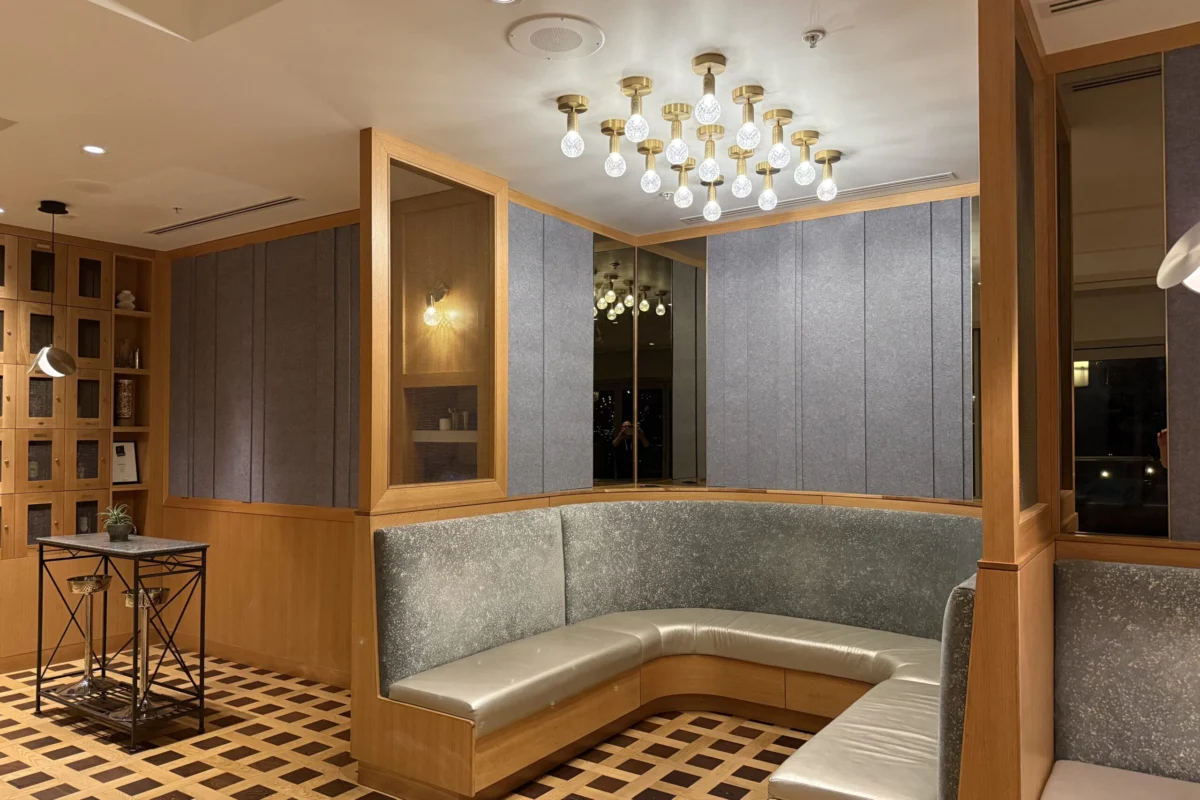
However, a recent renovation of the club’s primary dining areas, while visually striking, introduced an unintended acoustic hurdle. The contemporary design choices prioritized modern aesthetics: hard, sound-reflecting surfaces, sleek minimalist lines, and the removal of soft furnishings, heavy drapery, and carpeting that historically functioned as natural sound absorbers.
The physics of the room quickly rebelled. Sound waves bounced endlessly off glass, polished wood, and drywall, raising the ambient noise floor to uncomfortable levels. Speech intelligibility plummeted, forcing patrons to strain their voices to hold conversations. Consequently, business clientele began quietly taking their midday meetings elsewhere.
To reverse the trend, TCC required an intervention that could dramatically lower decibel levels and restore speech clarity without altering the award-winning interior design that the club had worked so hard to curate.
Chronology: From Recognition to Invisible Integration
The journey to restoring the acoustic equilibrium of the Terminal City Club followed a deliberate path of discovery, design, and meticulous execution.
Phase 1: Problem Identification and Inspiration
Iain Fletcher, TCC’s Director of Club Outlets, noted the growing disconnect between the beauty of the newly renovated dining space and the declining patron retention. Observing that patrons were visibly struggling to converse across tables, Fletcher recognized that unchecked reverberation was quietly eroding the club’s value proposition.
Desperate for a solution, Fletcher investigated successful local precedents. His search led him to videos documenting a transformative acoustic overhaul performed by Primacoustic and Paramount Automation at Piva Restaurant in nearby New Westminster. Motivated by glowing recommendations from former colleagues and undeniable before-and-after digital demonstrations, TCC leadership decided to contact the integration team.
Phase 2: Assessment and Design Constraints
Paramount Automation deployed its resident craftsman, Marty Nightingale, to evaluate the TCC property. Nightingale immediately identified that the dining room and an attached private lounge presented a labyrinth of structural obstacles.
"There were many limitations to where treatments could actually be placed," Nightingale explained, noting a complex layout featuring expansive glass walls, pre-existing decorative millwork, mirrors, integrated lighting fixtures, and high-end laminates.
Working in close tandem with Dylan Bubel, Primacoustic’s Western Canada Sales Manager, Nightingale engineered a dual-room strategy that married cutting-edge acoustic physics with bespoke visual replication.
Phase 3: The Custom Installation
Rather than applying standard, off-the-shelf acoustic panels that would disrupt the room’s aesthetic pedigree, the team utilized a hybrid system. Primacoustic’s EcoScapes PET (polyethylene terephthalate) panels and studio-grade Broadway glass wool treatments formed the backbone of the project.
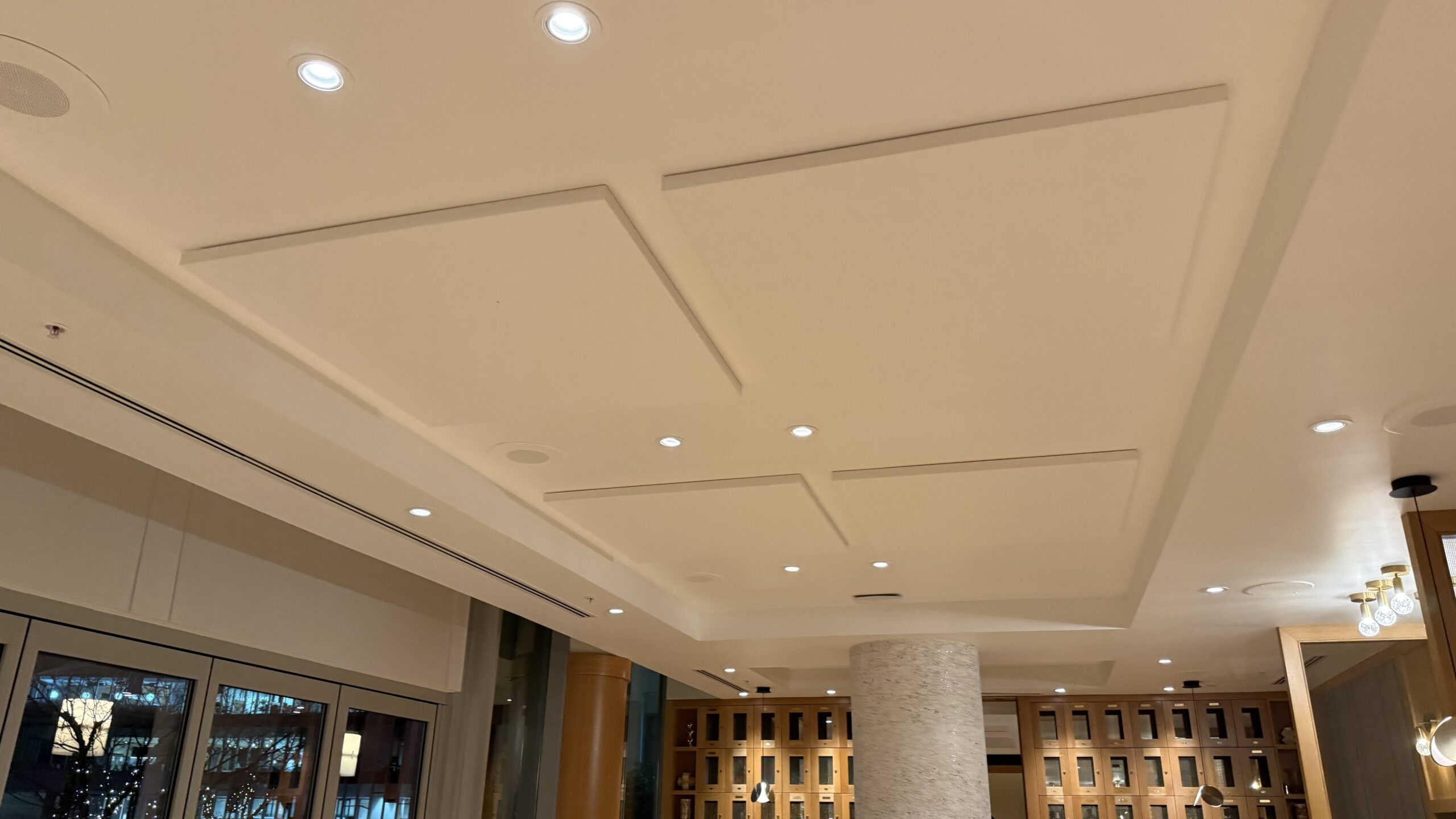
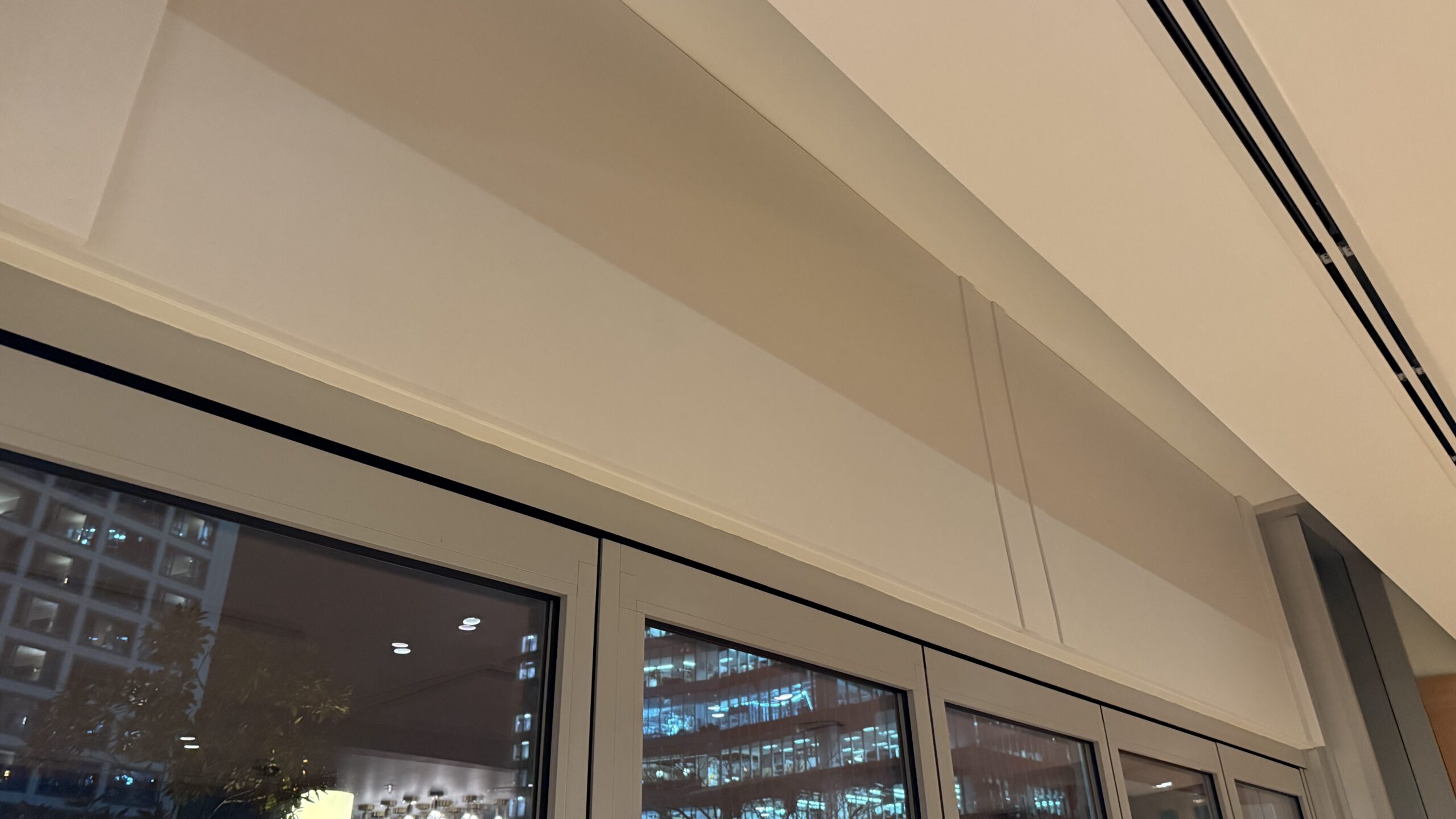
In the main dining area, Broadway panels were flush-mounted to the ceiling to capture vertical floor-to-ceiling reflections. Meanwhile, custom-cut EcoScapes panels in ‘Glacier’ white were fitted along drywall sections above glass doors to maintain a seamless visual continuity.
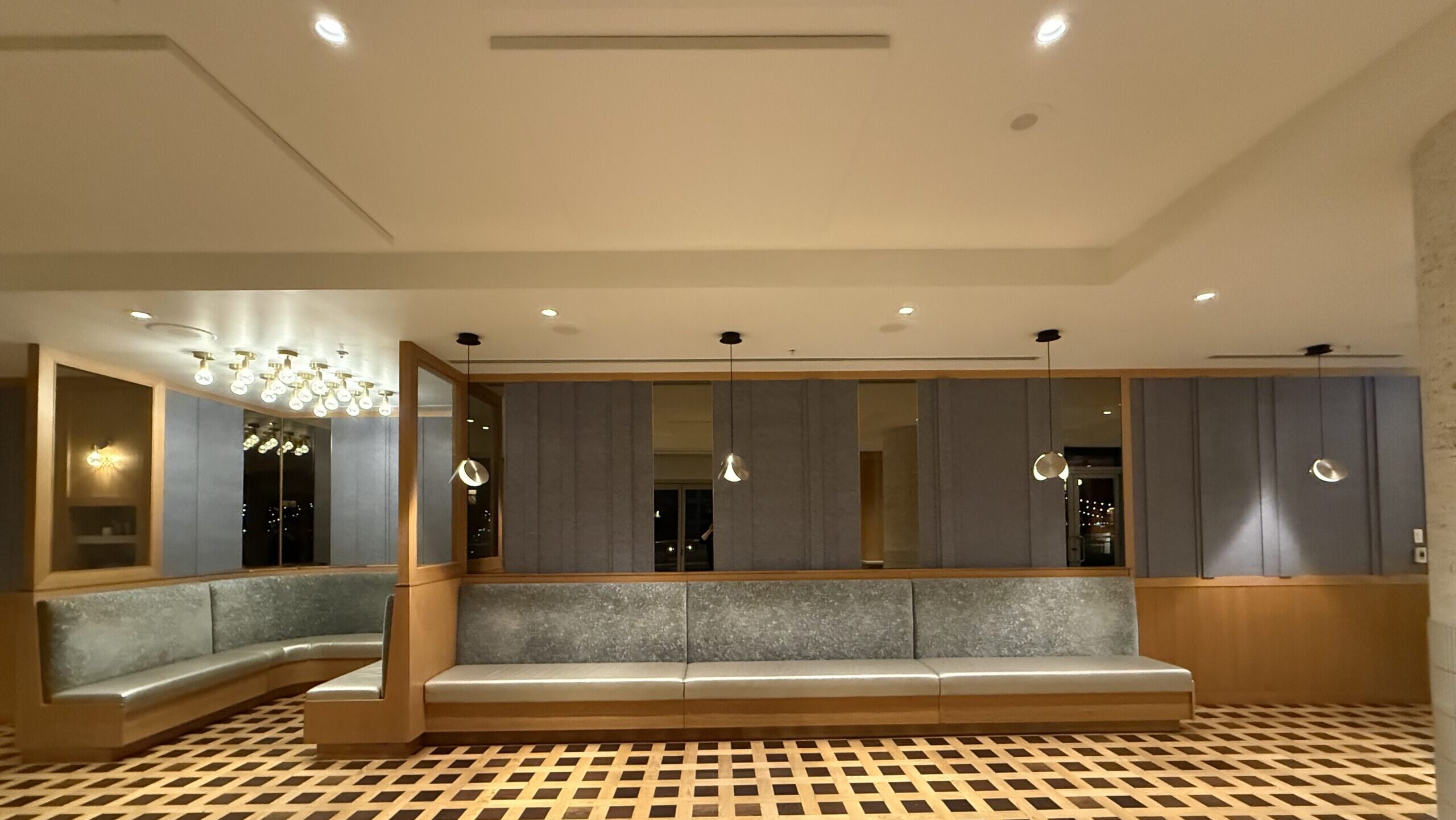
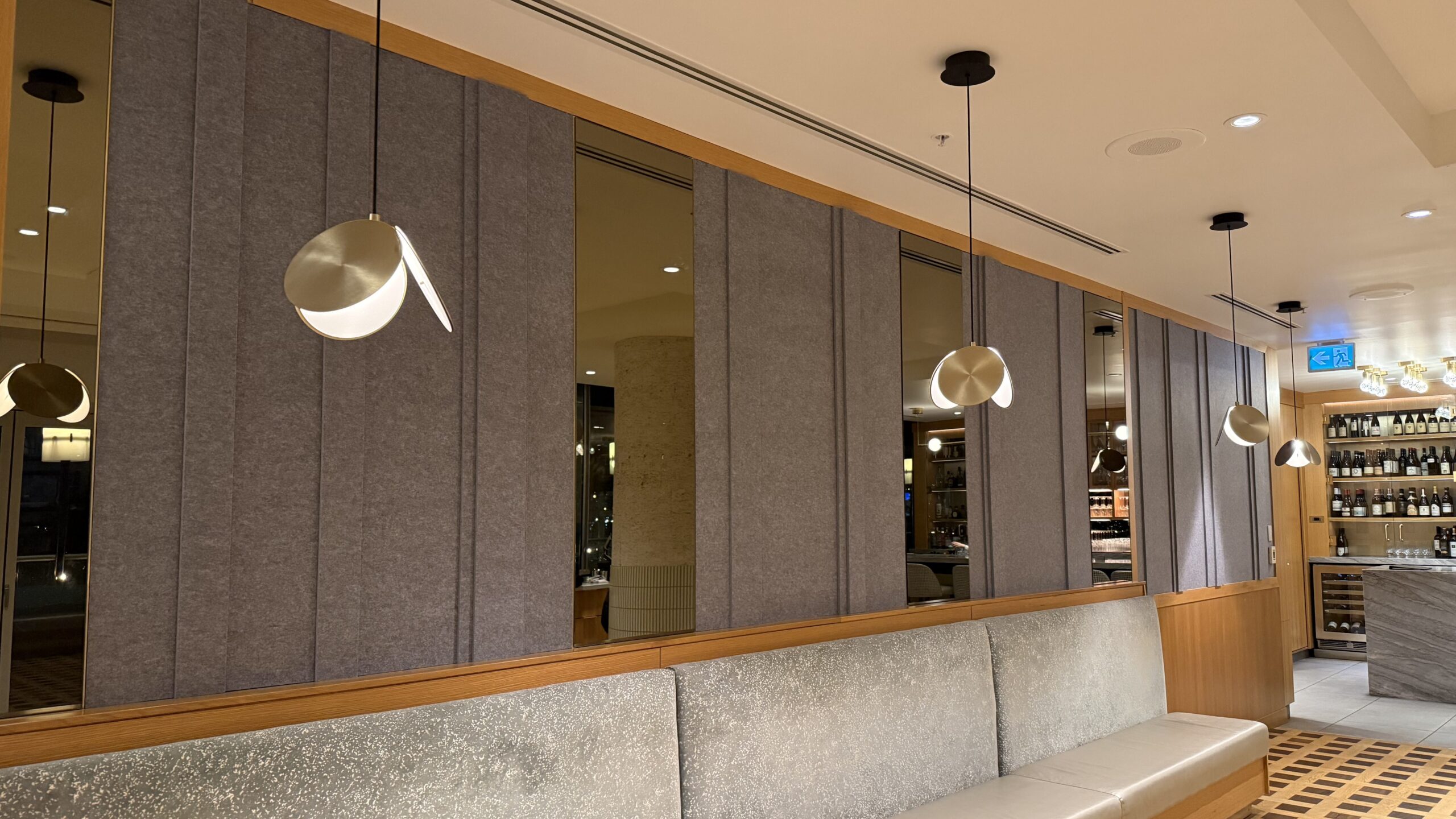
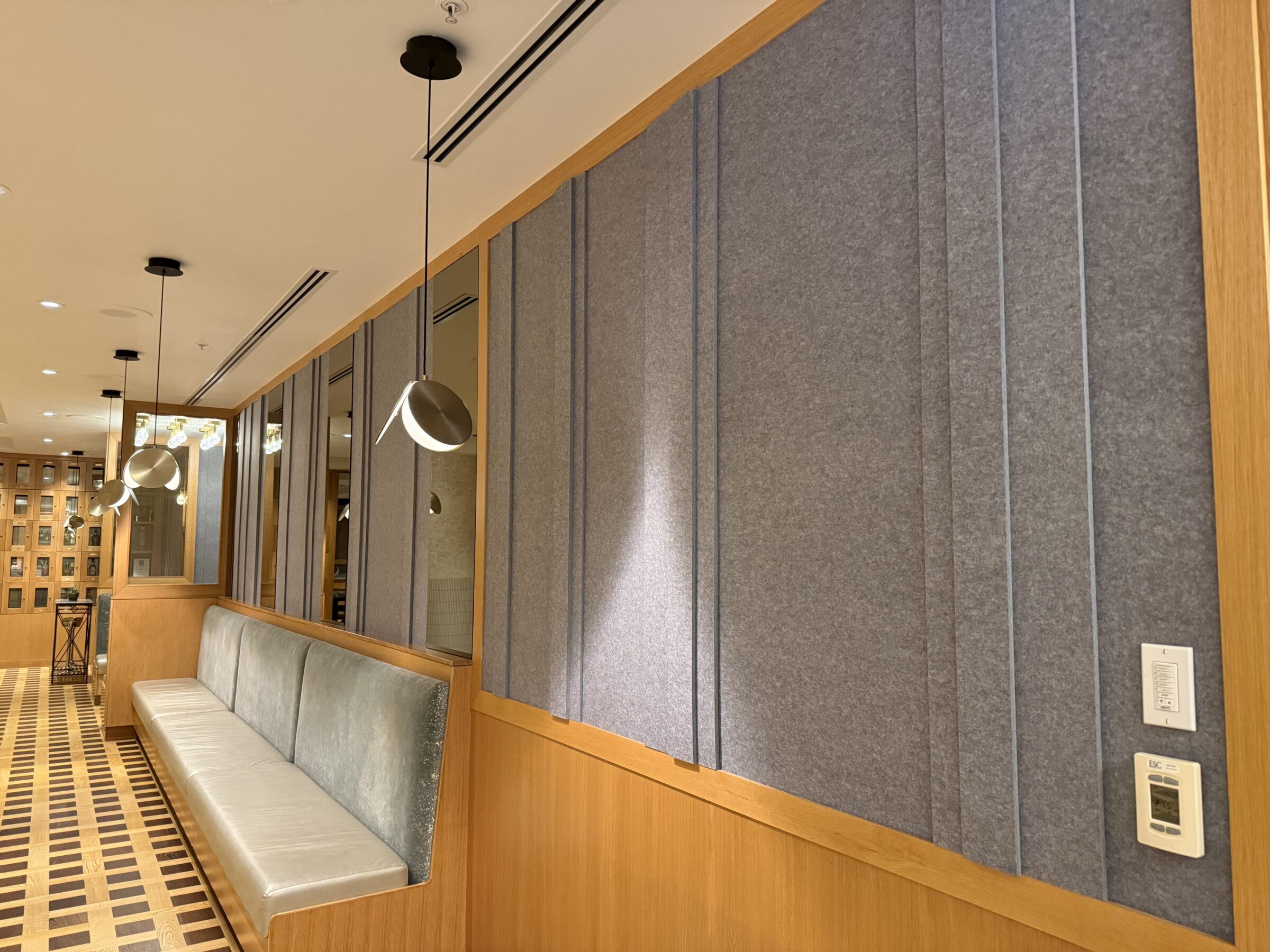
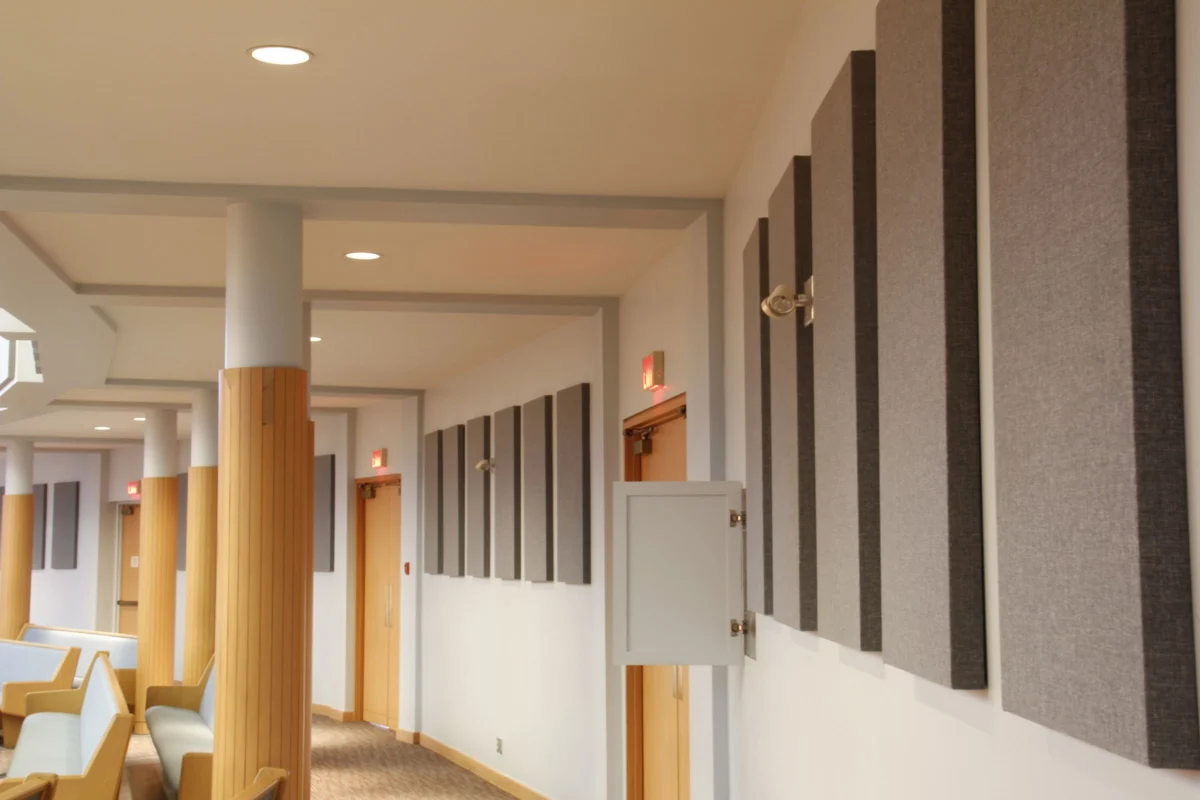
The most delicate phase of the installation occurred at eye level on the dining room walls, where a series of gray felt decorative features needed replacement. Nightingale stripped the old material, laid down a base layer of PET for acoustic absorption, and individually hand-cut and layered intricate strips of ‘Slate’ gray EcoScapes panels in dual thicknesses. The result was a seamless recreation that masqueraded as a single, expertly sculpted architectural element.
In the private lounge—hampered by patio glass doors, decorative wall laminates, a large television display, and kitchen access pathways—the team replicated this layered approach on the ceiling. By combining a base of ‘Glacier’ white EcoScapes with precision-cut overlay strips, they successfully reconstructed the room’s original recessed, coffered ceiling aesthetic while trapping rogue sound waves.
Supporting Data & Material Science
The success of the Terminal City Club installation rests heavily on the advanced material science and flexibility provided by Primacoustic’s product lines. Managing a commercial restaurant’s acoustics requires targeting specific frequency ranges—predominantly human speech (typically 500 Hz to 4,000 Hz)—without entirely deadening the room to the point of unnatural silence.
Primacoustic Broadway Panels: Constructed from high-density (6 lbs per cubic foot) glass wool, these studio-grade panels offer superior sound absorption coefficients compared to standard commercial foam. By deploying ‘Arctic White’ Broadway panels flush against the ceiling, the installation curbed vertical flutter echoes—the ping-pong effect of sound waves bouncing between hard floors and ceilings.
EcoScapes PET Panels: Manufactured from recycled plastic materials, EcoScapes provide eco-friendly sound mitigation with exceptional structural versatility. Their capacity to be precision-cut, color-matched, and layered made them ideal for the intricate wall and ceiling detailing required at TCC.
NRC Ratings: Both Broadway and EcoScapes materials boast high Noise Reduction Coefficients (NRC), ensuring that a minimal surface area of treatment yields maximum acoustic absorption, a critical factor in spaces with limited wall real estate.
Official Responses and Stakeholder Insights
The collaborative ethos shared between Primacoustic and Paramount Automation was frequently cited by project leaders as the foundational element that elevated the installation from a standard contracting job to a work of acoustic art.
Iain Fletcher expressed profound relief at the project’s outcome, emphasizing the seamless integration of form and function:
"The restaurant had won several design awards, so we wanted people to hear the difference, but not see the difference… I have had people ask what we did and where the panels are, so they’ve noticed a difference in sound, but haven’t seen a difference."
Fletcher further detailed the immediate operational impacts of the overhaul:
"Right away, it’s something you can feel when you walk into the restaurant. The acoustic performance exceeded our expectations by far. The unbearable echo has been replaced by a soft murmur of voices. Our members can conduct business meetings at the club because they can hear each other over the crowd. And I’ve increased the music volume to create a welcoming ambiance."
Marty Nightingale, the lead craftsman from Paramount Automation, highlighted the shared problem-solving mentality that defines his company’s long-standing relationship with Primacoustic:
"At Paramount Automation, we’re outside-the-box thinkers. So it’s a perfect fit, because with both Paramount and Primacoustic, it’s like, ‘this is a challenge, not a problem — let’s figure it out.’"
Drew Campbell, founder and owner of Paramount Automation, echoed these sentiments, noting the symbiotic nature of their corporate partnership:
"We work well together because we’re like-minded, because we complement each other. And Primacoustic is always open to feedback, which fosters a continuous improvement approach."
Broader Implications for the Hospitality Industry
The successful acoustic rescue of the Terminal City Club serves as an instructive case study for the broader hospitality, restaurant, and private club sectors.
For decades, interior design trends have favored hard industrial finishes—exposed concrete, polished hardwood, expansive glass facades, and minimalist metal accents. While these materials create undeniably photogenic spaces, they inadvertently transform dining rooms into acoustic nightmares. Historically, venue operators faced a false dichotomy: either accept high noise levels that drive away conversation-seeking patrons or install bulky, unsightly acoustic baffles that ruin interior aesthetics.
The TCC project demonstrates that this compromise is no longer necessary. Through advanced manufacturing techniques—such as custom-colored PET panels, precision waterjet or hand-cutting, and flush-mounting techniques—integrators can conceal high-performance sound absorption within decorative moldings, coffered ceilings, and textured wall features.
Furthermore, the economic implications are clear. In competitive urban markets like Vancouver, where members and high-end diners have endless alternatives, venue comfort directly correlates to customer retention and bottom-line revenue. By restoring speech intelligibility to their dining rooms, TCC successfully reclaimed its core demographic of business professionals, proving that investments in acoustics are, fundamentally, investments in business continuity and growth.
As venues continue to balance aesthetic ambition with sensory comfort, the blueprint established by Primacoustic and Paramount Automation at the Terminal City Club sets a new benchmark for what is possible when design-forward flexibility meets uncompromising acoustic engineering.