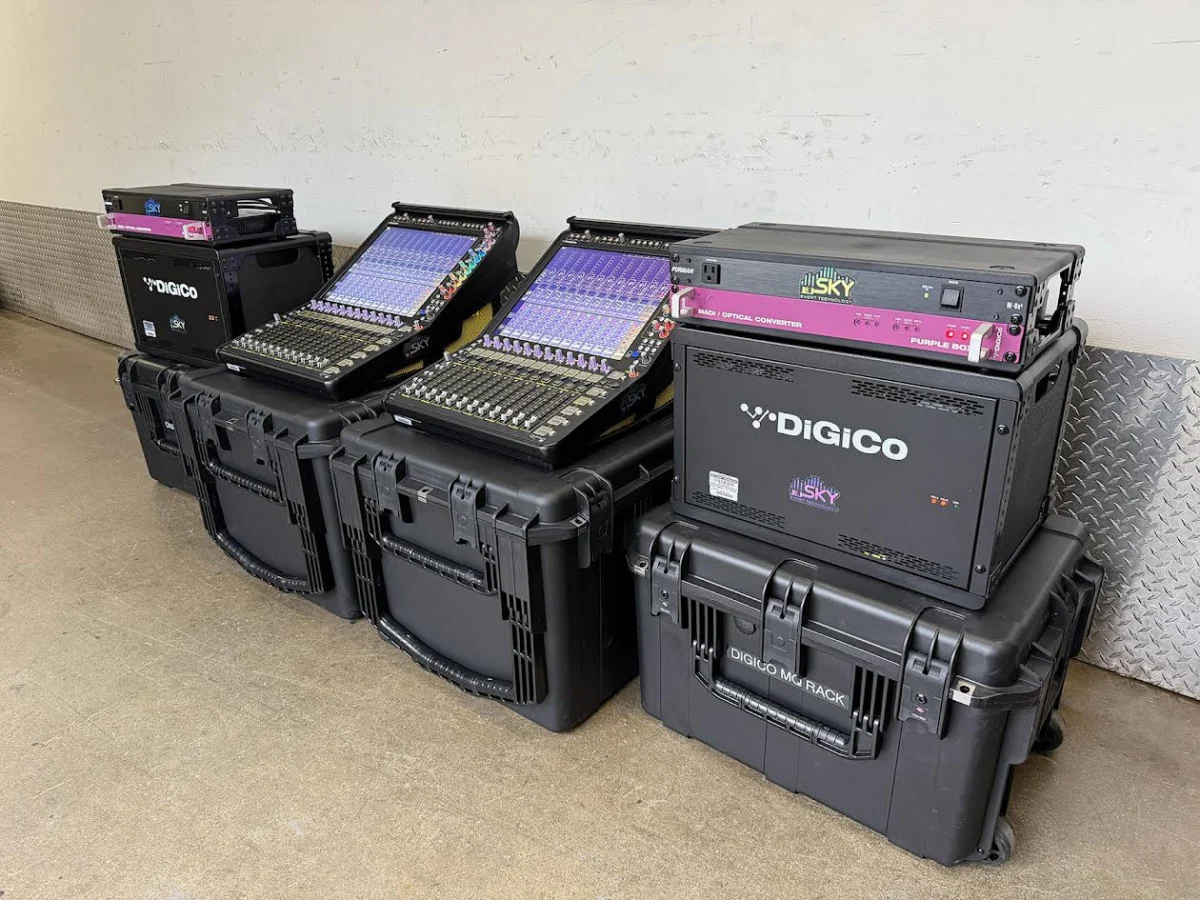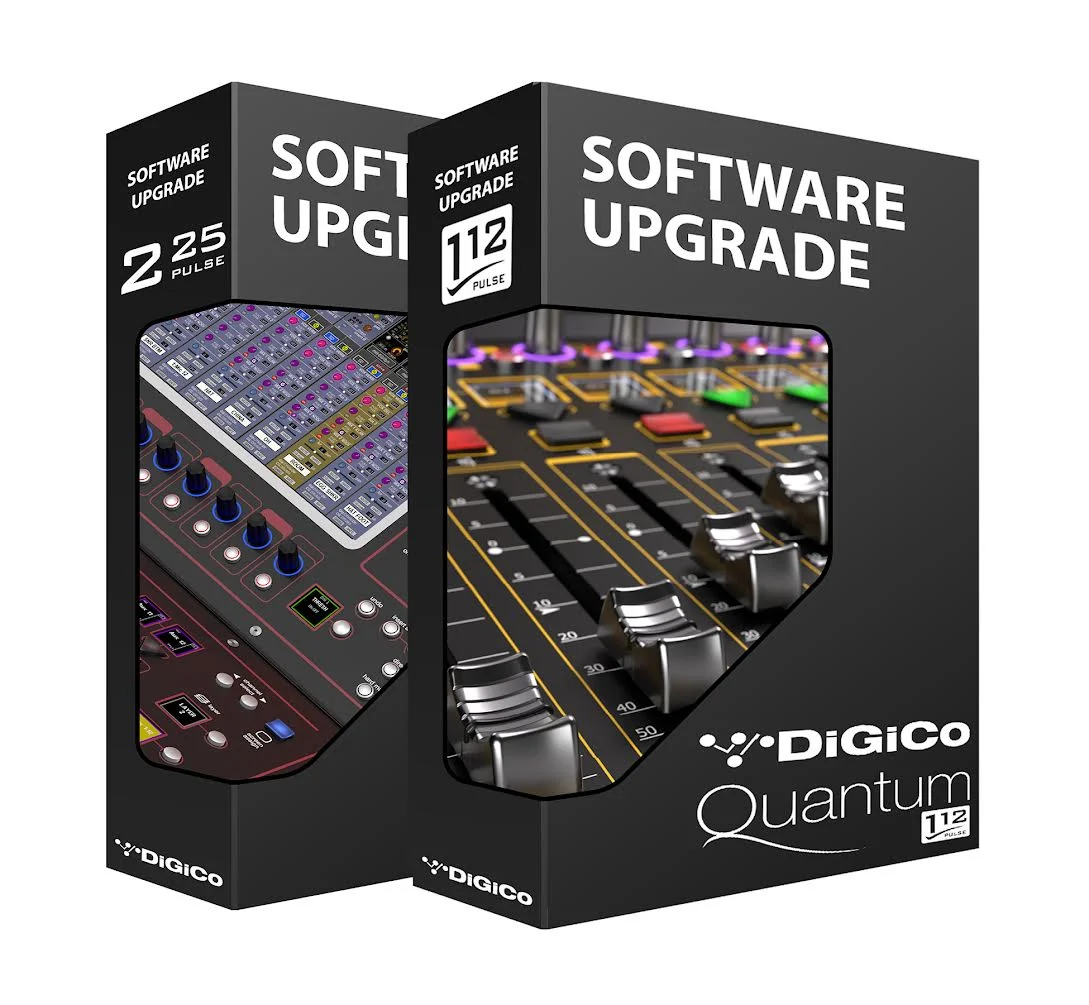
October 2026 — In a move designed to redefine what is possible in compact live-sound environments, renowned audio manufacturer DiGiCo has announced significant, feature-rich software updates for its popular Quantum112 Pulse and Quantum225 Pulse mixing consoles. Available immediately as downloadable updates, these new software versions substantially elevate the operational capacity of both mixing desks by expanding input channel counts, auxiliary and subgroup buses, matrix sizes, and advanced processing instances without requiring hardware overhauls.
The announcement underscores DiGiCo’s ongoing commitment to maximizing the lifecycle and performance of its hardware ecosystem. By leaning into software-defined processing architectures, the company is ensuring that audio engineers working on compact, space-restricted tours and festival stages can access the robust horsepower typically reserved for much larger, high-end touring consoles.
Main Facts
The newly released software updates deliver targeted performance enhancements tailored to the specific footprints of the Quantum112 and Quantum225 series:
-
Quantum112 Pulse Upgrades:
- Input channel capacity increases from 80 to 96 channels.
- Aux/subgroup buses expand from 24 to 48 buses.
- The matrix grows from a 12×8 configuration to a 12×12 matrix.
- Mustard processing instances increase from 20 to 24.
- Nodal Processing instances increase from 24 to 32.
- Includes a completely updated version of the core control application.
-
Quantum225 Pulse & Quantum225 DS Upgrades:
- Input channel count jumps from 96 to 120 channels at no additional cost for Pulse models (with enhancement paths also available for non-Pulse legacy configurations).
- Bus architecture expands to a total of 48 buses.
- Matrix configuration expands to 12×12.
- Mustard processing instances increase to 36.
- Nodal Processing instances scale up to 48.
These enhancements allow users to tackle vastly more complex shows—incorporating dense multi-track playback, extensive wireless microphone coordination, and complex monitor mixes—all from a surface area small enough to fit into tight front-of-house (FOH) positions or cramped broadcast trucks.

Chronology: The Evolution of Compact Power
To understand the significance of this latest software drop, it is helpful to look back at the developmental trajectory of DiGiCo’s Quantum range and how engineering demands have shifted over recent years.
The Rise of Footprint-Conscious Touring
Over the past decade, live events have faced increasing spatial constraints. Music festivals feature tightly packed changeover schedules with multiple console setups sharing limited stage wings and FOH risers. Corporate events, theater productions, and mid-sized venues routinely demand pristine, broadcast-grade audio processing, yet offer minimal physical space for control surfaces.
When DiGiCo originally introduced the Quantum225 and later the Quantum112 Pulse, they were engineered specifically to bridge the gap between high-end tour-rider requirements and small-format practicality. They utilized DiGiCo’s cutting-edge FPGA (Field-Programmable Gate Array) technology to deliver massive internal routing and processing power inside chassis that could easily travel as checked luggage or fit into cramped control booths.
The Shift to Software-Defined Scalability
As touring productions grew increasingly reliant on immersive audio formats, complex stage routing, and channel-heavy virtual soundchecks, audio engineers began pushing mid-sized consoles to their absolute limits. Recognizing this bottleneck, DiGiCo’s R&D team focused on optimizing core processing pipelines. By refining the efficiency of the underlying algorithms, the manufacturer discovered it could safely unlock hidden processing headroom within the existing hardware architecture.
This culminated in the October 2026 software release, effectively transforming existing Quantum112 and Quantum225 hardware investments into substantially more powerful mixing systems overnight. Rather than forcing audio professionals to purchase entirely new hardware tiers to gain extra channels and processing instances, DiGiCo delivered the upgrade via a software download—a move widely celebrated across the live production community.
Supporting Data: Technical Deep Dive
The numerical improvements brought by the update are not merely incremental; they represent a fundamental shift in the scale of productions that mid-format consoles can comfortably handle.

| Feature / Metric | Quantum112 Pulse (Previous) | Quantum112 Pulse (New Upgrade) | Quantum225 Pulse (Previous) | Quantum225 Pulse (New Upgrade) |
|---|---|---|---|---|
| Input Channels | 80 | 96 | 96 | 120 |
| Aux / Subgroup Buses | 24 | 48 | 48 (dependent) | 48 (fully expanded) |
| Matrix Size | 12×8 | 12×12 | 12×8 | 12×12 |
| Mustard Processing | 20 | 24 | 36 | 36 (optimized) |
| Nodal Processing | 24 | 32 | 48 | 48 (optimized) |
Understanding the Processing Engines
Beyond raw channel counts, the inclusion of additional Mustard processing instances and Nodal Processing instances is perhaps the most vital component of the update for professional audio engineers.
- Mustard Processing: DiGiCo’s suite of channel strip algorithms—which includes authentic analog-modeled tube preamp saturation, proprietary optical and VCA compressors, and sophisticated EQ curves—gives engineers access to deeply colored, character-rich processing right out of the box without needing external plugins. Expanding the instance count allows engineers to apply this premium processing across a much larger percentage of their input list.
- Nodal Processing: Unique to the Quantum range, Nodal Processing allows engineers to apply specific processing (such as dynamic EQ, compression, and delay adjustments) to auxiliary sends on a per-node basis. This means an artist’s in-ear monitor mix can feature completely distinct EQ and dynamics tailored specifically to what they need to hear, independent of the front-of-house main mix or other band members’ mixes. Increasing the Nodal Processing instance ceiling to 32 on the Quantum112 and 48 on the Quantum225 empowers monitor engineers managing complex multi-artist festival sets with unprecedented flexibility.
Official Responses and Industry Perspectives
DiGiCo’s leadership team emphasizes that the updates are a direct response to real-world feedback gathered from front-of-house and monitor engineers operating in the field.
"Our customers have told us that they appreciate the Q112 and Q225 Pulse for their ability to easily travel anywhere and take up precious little real estate in venues or at festivals where space is at an absolute premium," states DiGiCo Managing Director Austin Freshwater.
"But at the same time, those logistics and size constraints should never come at a trade-off to workflow, power, features or sound. That’s exactly where these two consoles now shine even brighter with their new software upgrades, which pack in more than ever for our users to love."
Industry analysts and early-adopting sound engineers have echoed Freshwater’s sentiments, noting that the ability to scale up channel capacity and routing matrices without changing physical infrastructure significantly reduces logistical headaches for tour managers and production companies. Rental houses, in particular, stand to benefit immensely, as their existing inventory of Quantum consoles instantly gains a competitive edge for upcoming touring riders without requiring capital expenditure on new hardware desks.
Implications for the Live Sound and Touring Industry
The release of these software upgrades highlights several broader trends shaping the professional audio landscape in 2026:

1. Maximizing Return on Investment (ROI) for Rental Fleets
In an economic climate where audio rental companies must carefully balance equipment costs against fluctuating touring budgets, software-driven feature expansions are invaluable. Extending the lifespan and capability of existing assets protects capital investments and delays the need for fleet turnovers, providing higher profitability on mid-sized tours and corporate gigs.
2. Bridging the Gap Between Mid-Format and Flagship Consoles
Historically, engineers mixing massive stadium shows or complex televised events were forced to use massive flagship control surfaces simply to access 120+ input channels and dozens of auxiliary buses. With the Quantum225 Pulse now accommodating 120 input channels and comprehensive Nodal Processing, the performance gap between mid-sized footprints and flagship desks continues to narrow. Engineers no longer have to compromise on channel count when working in venues with strict weight or spatial limits.
3. Workflow Streamlining and Creative Freedom
With more Mustard processing instances available per show, engineers are liberated to shape audio dynamics creatively across larger channel arrays. Whether managing a complex musical theater production with dozens of active body mics or a high-channel-count rock concert with extensive drum and percussion miking, the expanded headroom ensures that sonic quality never bottlenecks due to digital resource constraints.
Summary and Availability
DiGiCo’s new software upgrades for the Quantum112 Pulse and Quantum225 Pulse consoles represent a major milestone in software-optimized audio processing. By significantly increasing input channels, bus counts, matrix routing, and advanced processing instances, DiGiCo has successfully redefined the performance envelope of compact mixing systems.
The software updates are available now as a free download for existing Pulse console owners, with enhancement paths ready for legacy non-Pulse models. Users can access the downloads, along with updated documentation and application software, directly through the official DiGiCo Website.