Naim Unveils the Flagship Mu-so Utopia: A Masterclass in High-End All-in-One Wireless Audio Engineering
016 mins
By Global Audio News Desk
In the upper echelons of the consumer audio market, the convergence of uncompromising acoustic engineering and contemporary lifestyle convenience has long been the holy grail. For decades, audiophiles seeking reference-grade performance were required to construct sprawling, multi-component systems tethered by yards of specialized cabling. However, as interior aesthetics evolve and consumer demand shifts toward streamlined elegance without sonic compromise, premium manufacturers have been forced to rethink the high-end paradigm.
Enter the Naim Mu-so Utopia, the latest flagship all-in-one wireless music system from the celebrated British audio powerhouse. Representing the pinnacle of the company’s design philosophy, the Mu-so Utopia bridges the chasm between dedicated hi-fi separates and connected, domestic-friendly audio solutions. Built upon a foundation of trickle-down technology from some of the most prestigious loudspeaker systems in the world, this bold release aims to prove that convenience no longer necessitates a compromise in fidelity.
Main Facts: What Defines the Naim Mu-so Utopia?
At its core, the Naim Mu-so Utopia is an ambitious, self-contained wireless music system engineered to deliver immersive, high-resolution audio to medium-to-large living spaces without the visual clutter of traditional component racks.
Key technical and structural highlights include:
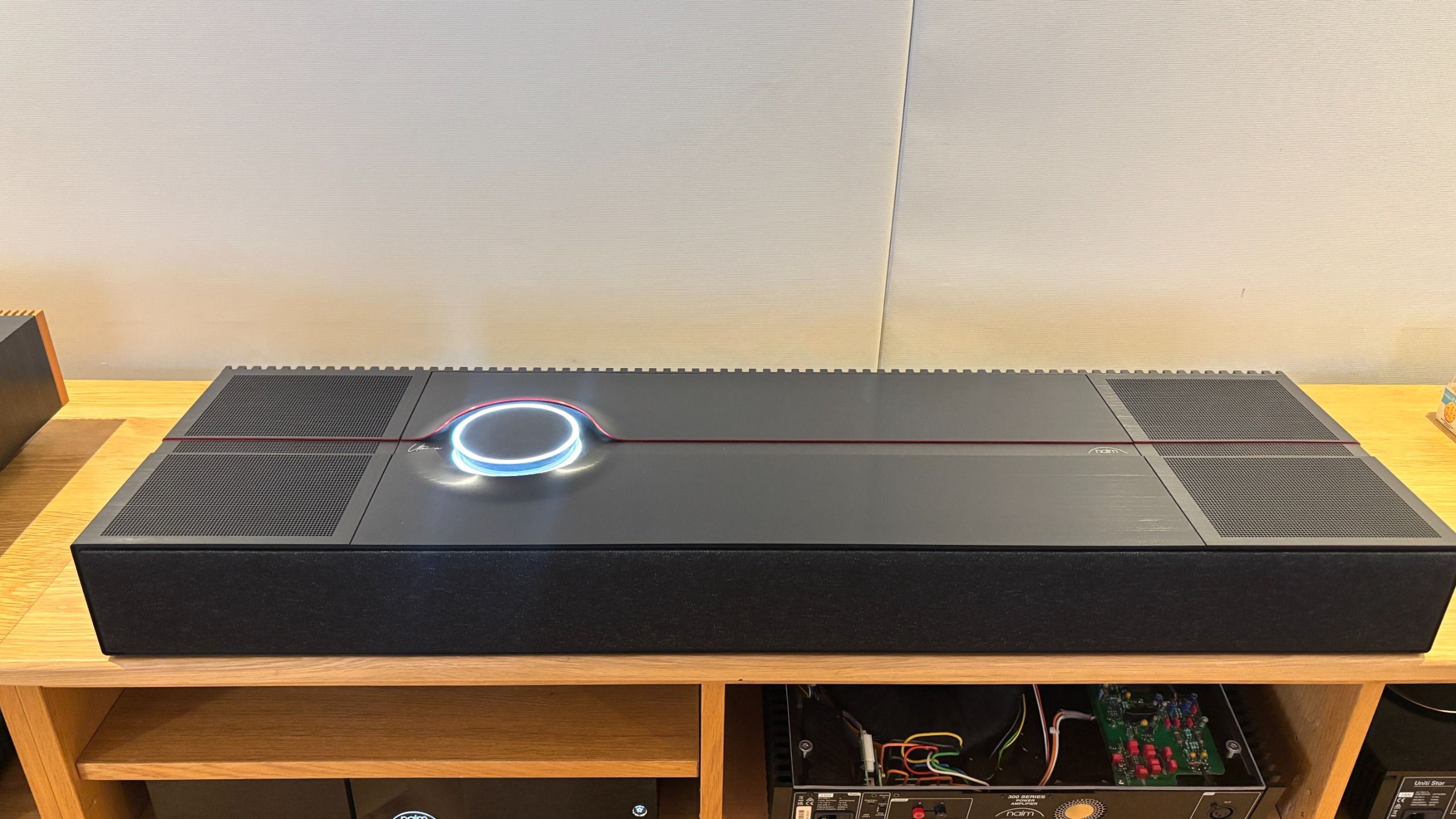
Acoustic Architecture: A massive array of 15 individual drive units powered by a combined 720 watts of amplification.
Dual-Topology Amplification: A hybrid approach utilizing Class D amplification for the majority of the drivers, paired with refined Class A/B amplification dedicated strictly to the high-frequency tweeters.
Utopia-Derived Transducers: Incorporation of proprietary engineering elements directly inherited from Focal’s high-end Utopia and Diva Utopia loudspeaker series, including custom "M-shaped" midrange woofers and PRISM tweeters.
Immersive Audio & Dolby Atmos: Full support for Dolby Atmos soundtracks and spatial audio formats, enhanced by specialized sound modes like "Sphere Music" driven by advanced beamforming microphone technology.
Comprehensive Connectivity: Extensive wireless streaming protocols (Tidal Connect, Qobuz Connect, Spotify Connect, AirPlay 2, Google Cast, and Bluetooth 5.3) alongside physical ports including HDMI eARC, optical inputs, Ethernet, and an RCA subwoofer output.
Pricing and Availability: Launching with a retail price of £4,499 / $5,500, positioning it firmly at the ultra-premium end of the lifestyle audio market.
Chronology: The Journey to the Utopia Flagship
To understand the significance of the Mu-so Utopia, one must examine the evolutionary trajectory of Naim Audio and its corporate sibling, Focal, following their 2011 merger under the VerVent Audio Group banner. For years, the two brands operated with distinct identities—Naim dominating electronics, amplification, and streaming platforms, while Focal specialized in world-class driver manufacturing and cabinet design.
The Mu-so Legacy
The journey toward a luxury all-in-one system began in 2014 with the release of the original Naim Mu-so. That product single-handedly redefined the wireless speaker category, proving that high-end brands could successfully target lifestyle consumers. It was followed by the critically acclaimed Mu-so 2nd Generation in 2019, which refined the internal processing, added HDMI ARC connectivity, and introduced a vastly upgraded streaming platform.
The Focal-Naim Convergence
As engineering teams across the UK (Salisbury, home of Naim) and France (Saint-Étienne, home of Focal) began collaborating more closely, cross-pollination became inevitable. Earlier this year, the market witnessed the introduction of the Focal Mu-so Hekla soundbar—a £3,000 / $3,600 home cinema solution that signaled a new era of joint engineering.
The Mu-so Utopia represents the natural evolution of this cross-border partnership. Following an exclusive early preview event at Naim and Focal’s respective European headquarters, industry analysts and audio journalists were given a rare glimpse into the rigorous R&D process that preceded the system’s global rollout. The resulting product is not merely a cosmetic update to an existing chassis, but a ground-up reimagining of what an integrated desktop or media-room audio system can achieve.
Supporting Data: Under the Hood of a 720-Watt Powerhouse
The technical specifications of the Naim Mu-so Utopia read less like a traditional wireless speaker and more like a high-end audiophile stereo system compressed into a single, beautifully engineered enclosure.
Amplification and Drive Unit Breakdown
The system deploys 720 watts of total power, intelligently distributed across its 15 drive units to ensure optimal control across the frequency spectrum:
Low-Frequency and Mid-Range Control: The vast majority of the drivers—including a pair of robust 2.75-inch "M-shaped" midrange woofers and four specialized full-range drivers positioned strategically along the sides and top of the unit—are powered by highly efficient Class D amplification. This allows the system to effortlessly manage transient peaks and deliver deep, authoritative bass capable of pressurizing rooms up to approximately 50 square meters.
High-Frequency Refinement: To achieve crystalline highs without harshness, Naim has equipped the Mu-so Utopia with twin 25mm "PRISM" tweeters. Directly derived from Focal’s prestigious Scala and Diva Utopia floorstanding loudspeaker ranges, these tweeters are driven by dedicated Class A/B amplification. Focal’s engineering team noted during preview sessions that Class A/B circuitry provides the precise, delicate control required for upper-frequency purity, distinguishing this unit from competitors relying entirely on digital switching amps.
Hi-Res Streaming and Connectivity
Modern audiophiles demand versatility alongside fidelity. The Mu-so Utopia meets these expectations through Naim’s industry-leading streaming architecture:
High-Resolution File Support: Capable of handling PCM files up to 32-bit/384kHz and native DSD128, ensuring that uncompressed master-quality tracks are reproduced without downsampling.
Native Ecosystems: Direct integration with streaming giants via Tidal Connect, Qobuz Connect, and Spotify Connect.
Universal Casting & Wireless: Apple AirPlay 2, Google Cast, and Bluetooth 5.3 (supporting standard AAC and SBC codecs) ensure seamless playback from any smart device. For local libraries, UPnP streaming allows playback from network-attached storage (NAS) drives.
Physical Interfaces: A robust selection of inputs and outputs includes an HDMI eARC port for seamless television integration, an optical digital input for legacy digital sources, a wired Ethernet port for rock-solid network stability, and an RCA line-out for users wishing to tether an external active subwoofer.
Dimensions and Aesthetics
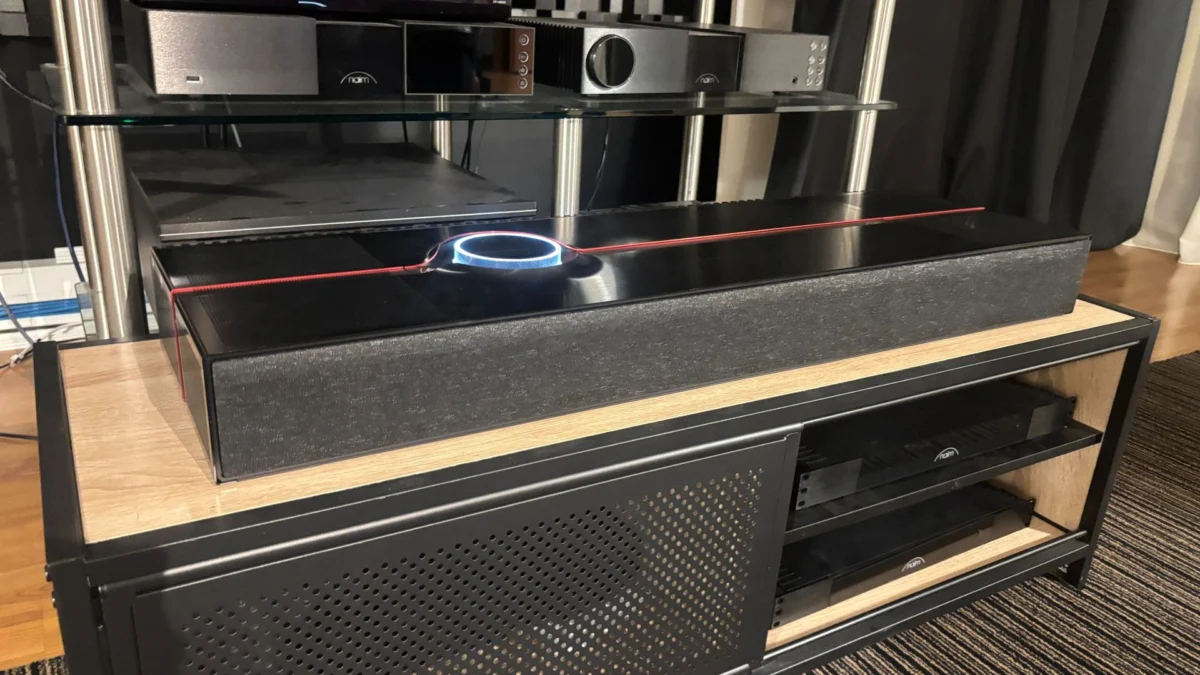
Retaining the iconic design language of its predecessors, the chassis is fashioned from anodised aluminum, punctuated by a striking red accent trim that spans the length of the body. Dominating the top panel is Naim’s signature illuminated white glass volume dial, which doubles as a responsive touch-panel interface for source selection and power controls. Prospective buyers must, however, account for its substantial footprint: measuring 40 centimeters in length and tipping the scales at roughly 14 kilograms, the Mu-so Utopia demands a sturdy, dedicated surface.
Official Responses and Engineering Insights
Speaking on the design philosophy behind the Mu-so Utopia, Naim’s chief acoustic engineers emphasized the challenges of integrating reference-grade components into a sealed, compact cabinet.
"When you take acoustic topologies designed for multi-thousand-dollar floorstanding speakers—such as our PRISM tweeters and M-shaped diaphragms—and constrain them within an all-in-one chassis, acoustic isolation and thermal management become paramount," noted a lead Focal-Naim engineer during the initial prototype demonstrations.
"By splitting our amplification strategy—employing Class D for raw authority down low and Class A/B for delicate upper register articulation—we avoided the sonic compromises that typically plague single-box audio systems. The Mu-so Utopia is not a compromise; it is a statement of intent."
Furthermore, the implementation of Dolby Atmos and spatial audio processing was highlighted as a major milestone for the brand. Rather than treating surround sound as an afterthought, Naim integrated advanced beamforming microphone technology into the "Sphere Music" and Dolby Movie processing modes, allowing the unit to dynamically map sound waves within the listening environment to generate a convincing three-dimensional soundstage from a single physical cabinet.
Implications: What the Mu-so Utopia Means for the Hi-Fi Market
The launch of the Naim Mu-so Utopia at £4,499 / $5,500 carries profound implications for the high-end audio industry, signaling several shifting trends in consumer behavior and manufacturing priorities.
1. The Normalization of Ultra-Premium Lifestyle Audio
For decades, high-end audio was defined by physical separation: a turntable or streamer feeding a separate preamplifier, driving monoblock power amplifiers, which in turn drove massive floorstanders. Products like the Mu-so Utopia demonstrate that consumer tastes have decisively shifted. Wealthy music lovers increasingly prioritize interior design harmony, simplicity, and minimal cabling without being willing to sacrifice dynamic scale, resolution, or soundstage depth. At $5,500, this system proves there is a thriving market for ultra-luxury lifestyle gear that costs as much as a traditional separates rig.
2. The Maturation of Spatial Audio in Stereo Systems
As streaming services increasingly adopt Dolby Atmos and spatial audio mixes, traditional two-channel purists have often dismissed spatial formats as cinematic gimmicks ill-suited for critical music listening. By incorporating sophisticated beamforming calibration and dedicated spatial music modes, Naim is positioning the Mu-so Utopia at the forefront of the spatial audio revolution. If successful, it could pave the way for more high-end manufacturers to embrace multidimensional audio formats in domestic living spaces.
3. Deepening Synergies Within VerVent Audio
The successful integration of Focal driver technologies into a Naim-amplified and streamed chassis underscores the immense strategic value of the VerVent Audio merger. By sharing intellectual property across acoustic and electronic engineering divisions, the parent company is carving out an unassailable lead in the luxury audio segment, leaving competing lifestyle brands struggling to match their pedigree.
Outlook
As the Naim Mu-so Utopia transitions from prototype demonstrations to rigorous, real-world evaluation in professional testing facilities, the audio community waits with bated breath. While its price tag places it in rarefied air—substantially higher than its sibling, the Focal Mu-so Hekla—the sheer density of high-end engineering packed into its aluminum chassis suggests that it just might redefine the ceiling of what all-in-one wireless audio can achieve.