Main Facts: Redefining the In-Ear Landscape
In an audiophile market saturated with cookie-cutter multi-driver configurations and traditional closed-back shells, true innovation is a rare commodity. Enter the Flare Audio Flare Zero, a uniquely designed, high-end open-back in-ear monitor (IEM) priced at $595.00. Spearheaded by Davies and Naomi at Flare Audio—a company long recognized for pushing acoustic boundaries with custom ear inserts and past models like the R2A and Flares Pro—the Flare Zero introduces a novel "Zero-refraction" design philosophy.
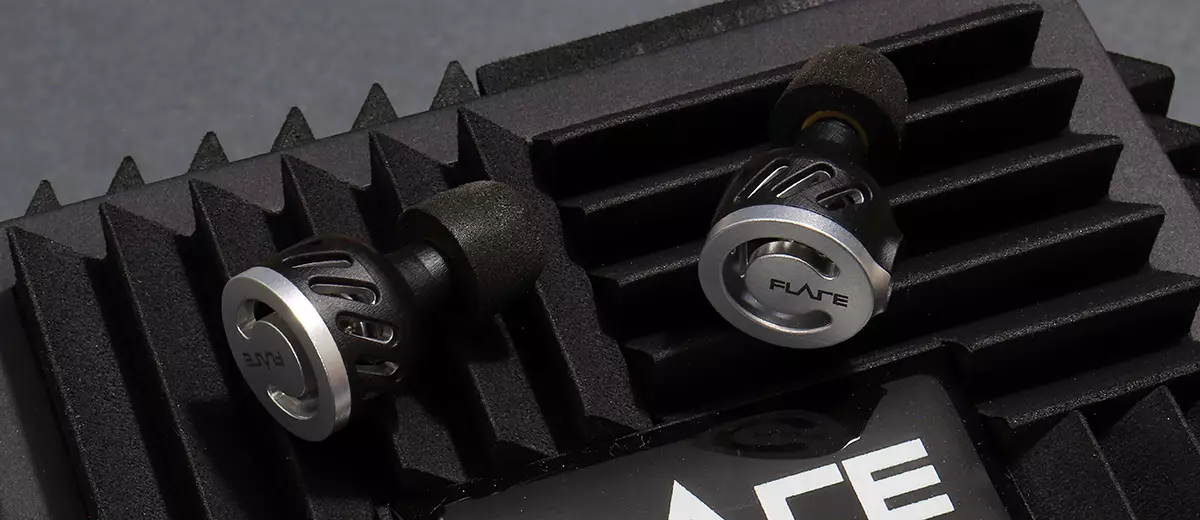
At its acoustic core, the Flare Zero discards conventional multi-driver crossover complexity in favor of a single, high-spec 10mm beryllium-coated dynamic driver. Housed within a hybrid shell composed of satin-finished aluminum and poly resin, the Zero leverages an entirely open-back architectural concept. This allows the driver to breathe freely, eliminating internal back pressure and acoustic refractions. Certified under Headfonics’ rigorous scoring framework with an impressive overall reader score of 8.4/10, the Flare Zero aims to deliver a pristine, studio-grade listening experience that bridges the gap between traditional open-back full-sized headphones and portable in-ear monitors.

Chronology: The Evolution of Flare Audio’s Acoustic Journey
To understand the engineering significance of the Flare Zero, it is essential to trace the trajectory of Flare Audio’s product development over the past decade.
- 2015: Flare Audio introduced the audiophile community to the R2A and R2Pro models, establishing an early reputation for unconventional driver mounting and metal-injected housings.
- The Interim Years: The brand continued experimenting with alternative form factors, rolling out iterative designs such as the E prototype, the Flares Pro 2, and the consumer-focused Flares Jet. Concurrently, their professional acoustic engineering branched into industrial ear inserts like the Immerse series, which heavily influenced later studio-grade monitoring lines like the Flare Studio and Flare Studio Master.
- Present Day: Culminating years of material research and anti-resonance engineering, Flare Audio launched the Flare Zero alongside its closed-back sibling, the Flare Ultra. By tackling the persistent problem of internal acoustic reflections head-on, the Flare Zero marks the brand’s most ambitious attempt to bring a true open-air environment to the IEM space.
Supporting Data & Technical Architecture: Engineering the Open-Back IEM
The acoustic engineering of the Flare Zero relies heavily on proprietary, patented designs aimed at neutralizing distortion at the microscopic level.

Driver Configuration and the "Source Point" Philosophy
By utilizing a single 10mm beryllium-coated dynamic driver, Flare Audio bypasses the phase cancellation and coherence issues often introduced by multi-driver crossovers. The driver acts as a pure source point, mounted directly on the inside of the output nozzle and facing the listener’s ear canal.
Unlike closed-back architectures that trap air behind the diaphragm, the Flare Zero features a vast open space behind the driver. To manage rear emissions, Flare Audio integrated a turbine-type surface known as a spiraled exhaust. Similar in theory to FiiO’s S-Turbo design but inverted, this feature diffuses back pressure rather than merely controlling cone motion, eliminating secondary harmonics and internal reflections.

The Laminated Composite Shell
Material resonance is a primary adversary in audio gear design. After extensive testing, Flare Audio discovered that using a single material for an IEM shell inevitably introduces distinct resonant frequencies. Their solution was the laminated body: a composite structure pairing satin-finished aluminum with a specialized poly resin. These two materials acoustically cancel out each other’s resonant frequencies, transforming the shell into a acoustically "dead" enclosure.
Furthermore, the Flare Zero adopts an ambidextrous design. The earpieces are exact mirror images of one another; left and right orientation is determined entirely by which side of the 16-core silver-coated OFC cable is plugged into the respective MMCX connector.

Ergonomics, Comfort, and Tip-Rolling
Weighing an ultralight 6 to 7 grams per earbud, the Flare Zero is practically weightless in hand and remarkably comfortable during extended listening sessions. The elongated output stems ensure that the nozzle sits deep within the ear canal, minimizing alterations to the sound wave before it reaches the eardrum.
The package includes three distinct sets of ear tips: standard silicone, comfort tips, and audiophile-grade tips. Reviewers note that tip selection dramatically alters the presentation. While standard silicone tips provide an agile, nimble response, the proprietary audiophile tips place the nozzle closest to the inner ear, maximizing low-end impact and frequency extension. Meanwhile, aftermarket options like Clarion TRI tips widen the soundstage further at a minor cost to bass punch.

Official Responses and Industry Context: The Open-Back Movement
The philosophy behind the Flare Zero mirrors a broader structural shift happening across the high-end headphone and earphone industries. For decades, both over-ear headphones and in-ear monitors relied almost exclusively on closed-back enclosures for isolation and bass amplification. However, modern acoustic engineering increasingly prioritizes "breathability" to mimic a natural speaker-in-room experience.
This trend is best exemplified in the over-ear segment by high-end manufacturers like HIFIMAN, whose "Unveiled" series (featuring models such as the HE1000 Unveiled and Arya Unveiled) completely removes the traditional rear grille to let drivers operate in free air. While true open-back designs in the IEM space remain exceedingly rare—historically populated only by niche planar-magnetic or heavily vented models like the Audeze iSINE, LCDi4, and Moondrop Illustrious—Flare Audio’s execution with a dynamic driver represents a vital step forward.

Official statements from the creators emphasize that the Flare Zero was never intended to be a mass-market, party-pleasing earphone with exaggerated bass response. Instead, it is pitched as a high-fidelity analytical tool designed to extract the absolute truth from an amplifier signal.
Implications: Sonic Performance and Market Impact
At $595.00, the Flare Audio Flare Zero enters a fiercely competitive mid-to-high-tier IEM market dominated by multi-driver hybrids from brands like FiiO (e.g., the FH19) and Oriveti (e.g., the OH700VB). Yet, its sonic signature carves out a completely distinct lane.

Sound Profile and Technical Performance
- Bass: Capable of digging down to a subterranean 16Hz, the bass is defined by speed, texture, and decay rather than brute force. Listeners will easily discern subtle string vibrations, acoustic resonances, and recording space afternotes.
- Midrange: Exhibiting natural transparency with zero artificial coloration, the midrange places vocals and acoustic instruments front and center. Minor peaks at 5kHz and 7kHz are successfully smoothed out by the inverted horn output nozzle, resulting in a balmy, highly detailed presentation that exposes breathing and plucks without stridency.
- Treble: Well-extended and airy, the treble remains controlled even at elevated listening volumes. It avoids artificial harshness, maintaining composure where lesser dynamic drivers typically break down.
- Soundstage and Dynamics: The staging is realistically proportioned—wider than it is tall—successfully mimicking a seventh-row center seat at a live performance. Supported by the free-air mounting of the beryllium driver, macro-dynamic contrasts and transient crescendos are delivered with shocking physical authority.
Market Implications
The Flare Zero proves that the dynamic driver is far from obsolete. By stripping away multi-driver crossovers and embracing a radical open-back architecture, Flare Audio has created an IEM that acts as a magnifying glass for source files. While its limited passive noise isolation (due to the open design) and exposed internal components demand careful handling, its ability to render complex tracks—particularly classic rock and live acoustic recordings—with utter coherence makes it a triumph of acoustic engineering.
For audiophiles willing to trade extreme isolation for uncompromised, natural soundstaging and transparent detail retrieval, the Flare Audio Flare Zero sets a new benchmark in portable open-back performance.