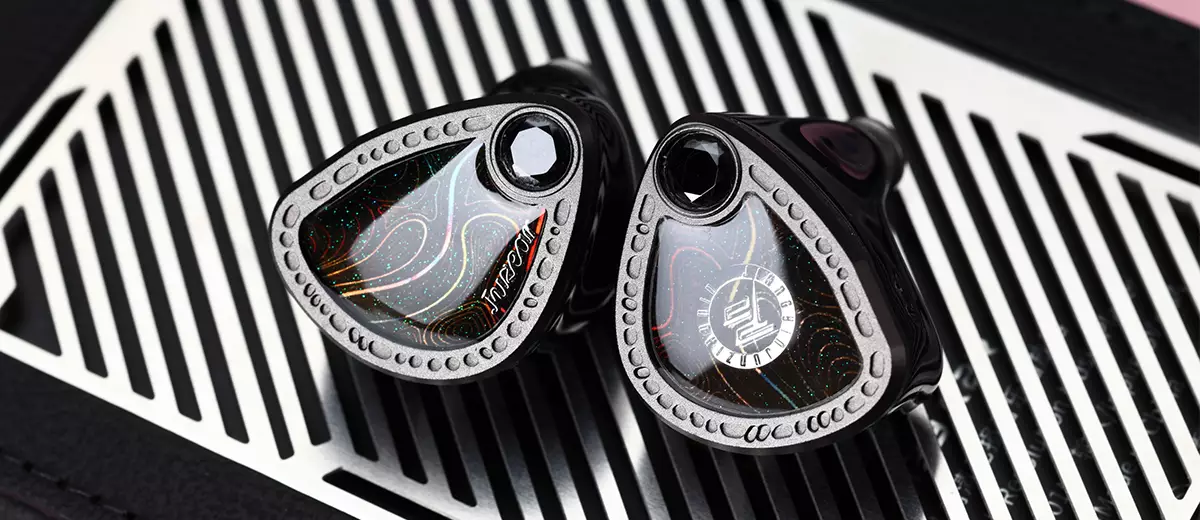
In the fiercely competitive landscape of portable audio, finding a multi-driver hybrid—often referred to as a "tribrid"—priced below the $200 threshold is becoming increasingly common. However, engineering a coherent, multi-driver configuration without stumbling into phasing issues or harsh timbres remains a formidable challenge for audio manufacturers.
Enter the Juzear Light Shuttle, a 7-driver hybrid In-Ear Monitor (IEM) retailing at $189.99. Distributed and reviewed within the audiophile community, this model promises a sophisticated driver array typically reserved for higher-tier flagships.

Headfonics reviewer Marcelo recently put the Light Shuttle through its paces. Supplied directly for an independent review by Juzear and HiFiGO, this comprehensive evaluation analyzes the product’s architectural design, sonic profile, source synergy, and market positioning relative to key competitors like the Kiwi Ears Étude, TinHiFi T6, and Tipsy M3.
Main Facts: The Anatomy of the Juzear Light Shuttle
At its core, the Light Shuttle packs an ambitious 7-driver configuration per side into a lightweight, 3D-printed resin shell. The internal acoustic architecture relies on a diversified assortment of transducer technologies:

- Low Frequencies: A 10mm self-developed dynamic driver, designated by Juzear as the MACCD (Multi-Acoustic Composite Carbon Diaphragm) driver, handles the low-end production.
- Midrange: Dual balanced armature (BA) drivers are dedicated to delivering the critical midrange frequencies.
- High Frequencies: A second set of dual balanced armature drivers manages the high-end extension.
- Ultra-High Frequencies: Dual micro-planar drivers take charge of the ultra-highs, providing extended air and micro-detail retrieval.
Specifications at a Glance
- Impedance: 32 Ω
- Sensitivity: 113 dB/mW @ 1kHz
- Shell Weight: 6.4 grams per side
- Nozzle Diameter: 6.2 mm (metal grille assembly)
- Cable: High-purity 6N OCC silver-plated copper twisted-pair cable featuring a modular plug system (interchangeable 3.5mm single-ended and 4.4mm balanced terminations).
To combat internal reflections and refine the crossover network, Juzear integrated a proprietary physical sound tube system called ATI-SW (Acoustic Tube Integrated Spiral Waveguide), specifically engineered to optimize vocal clarity.
Chronology and Unboxing Experience
The arrival of the Light Shuttle marks the latest chapter in Juzear’s ongoing expansion within the budget-to-mid-fi portable audio market. Building on the brand’s reputation for delivering high price-to-performance ratios, anticipation for the Light Shuttle peaked following promotional materials boasting a "pure, natural sound with a vocal-focused signature."

Packaging and Accessories
Upon unboxing the 193 x 141 x 54 mm sleeved black box, users are greeted with dense protective foam housing a remarkably comprehensive accessory kit. The bundle includes:
- The Juzear Light Shuttle IEMs themselves.
- Eight pairs of interchangeable ear tips (spanning different bores and materials, including standard black, white, and foam options).
- A premium leather hard-shell carrying case.
- The modular 6N OCC silver-plated copper cable with 3.5mm and 4.4mm modular plugs.
- A microfiber cleaning cloth and user manual.
Marcelo noted that the packaging and accessory suite punch well above the $189.99 price point, matching or exceeding the unboxing experience of products costing significantly more.

Supporting Data: Sound Impressions and Technical Performance
Following a mandatory 24-hour burn-in period to settle the diverse driver types, testing was conducted using a variety of high-resolution sources—including the FiiO M15S DAP, MUSE HiFi M3 Ultra, and xDuoo XP-2 Bal DAC/amps—utilizing the 4.4mm balanced connection.
Frequency Response and Tonality
Contrary to early marketing claims suggesting a strictly vocal-forward presentation, acoustic measurements and critical listening reveal a mildly U-shaped sound signature with a balanced tonal foundation and a tasteful bass bias.

- Bass: The 10mm MACCD dynamic driver delivers stellar performance. Sub-bass extension is deep, exhibiting an elastic yet taut texture with excellent impact and physical slam. Crucially, the low-end remains disciplined, stepping back gracefully when the track calls for restraint without bleeding into the mids.
- Midrange: Neutral and flat with a mildly relaxed, laid-back character. The upper-midrange features a modest pinna gain peak of roughly 8 dB, prioritizing a smooth, fatigue-free presentation over aggressive forwardness.
- Treble: Extended, airy, and rich in detail. The dual micro-planars and high-frequency BAs provide clean resolution without introducing harsh sibilance.
Soundstage and Imaging
The soundstage measures above average in width, depth, and height, constructing a natural, three-dimensional acoustic space. Instrument decay is clean, dropping off into a dark background that enhances perceived layering. Imaging is equally commendable; while center vocals project accurately in front of the listener, they are somewhat laid back rather than aggressively palpable.
Furthermore, despite blending three distinct transducer technologies (dynamic, balanced armature, and micro-planar), Juzear achieved remarkable driver coherency. There are no noticeable timbre mismatches or disjointed transitions across the frequency spectrum.

Official Responses and Source Synergy
The Light Shuttle proves to be exceptionally cooperative with a wide array of front-end equipment. Boasting an impedance of 32 ohms and a high sensitivity of 113 dB/mW, it is remarkably easy to drive, reaching comfortable listening levels even from basic USB-C dongle adapters.
Furthermore, electromagnetic shielding is robust; no radio-frequency (RF) interference or background hiss was detected, even when the cable rested directly against a smartphone operating active Wi-Fi and cellular data.

Pairing Profiles
- MUSE HiFi M3 Ultra: Yields a warm, energetic low-end combined with airy highs and solid transparency.
- xDuoo XP-2 Bal: Introduces a leaner, tighter bass response while preserving adequate physical weight, avoiding any cold or sterile artifacts.
- FiiO M15S: Smooths out the upper treble slightly while granting superior sub-bass punch, enhanced midrange clarity, and heightened micro-dynamics.
Implications and Market Comparisons
At $189.99, the Juzear Light Shuttle competes directly in a brutal bracket occupied by some of the industry’s most creative multi-driver configurations.
Juzear Light Shuttle vs. Kiwi Ears Étude ($199-range Tribrid)
The Kiwi Ears Étude utilizes a tribrid setup featuring a beryllium-plated dynamic subwoofer, BAs, and a proprietary Kiwi Vibration Transducer (bone conduction). While both share a mildly U-shaped signature, the Étude pushes its upper treble harder, resulting in a more forward and airier vocal presentation. However, the Étude’s bone conduction element introduces mild coloration to background decay, leaving the Light Shuttle with a noticeably cleaner background and tighter coherency.

Juzear Light Shuttle vs. TinHiFi T6
The TinHiFi T6 relies on a dynamic driver and micro-planar setup, accompanied by interchangeable tuning nozzles. Sonically, the T6 and Light Shuttle are kissing cousins. The primary distinction lies in the Light Shuttle’s slightly more robust bass boost and cleaner, more extended upper-treble decay, which grants it an edge in perceived soundstage depth.
Juzear Light Shuttle vs. Tipsy M3
The Tipsy M3 leans heavily into a classic V-shaped tuning—brighter, punchier, and unabashedly catered toward the "fun-listening" demographic. By comparison, the Light Shuttle offers a more mature, refined, and balanced presentation with superior spatial proportions and far more realistic, precise imaging.

Verdict
The Juzear Light Shuttle stands as a triumph of acoustic engineering at the sub-$200 mark.
While purists seeking an aggressively vocal-centric presentation might find the upper midrange a touch too relaxed and polite, evaluating the IEM on its own merits reveals an exceptionally well-rounded performer. Boasting a balanced tonality, a satisfying and elastic bass foundation, high-resolution treble extension, and a remarkably coherent multi-driver integration, the Light Shuttle bypasses the typical pitfalls of budget tribrids.

Supported by a lavish accessory package, modular cabling, and excellent source synergy, the Juzear Light Shuttle earns its standing as a safe, highly capable, and non-fatiguing all-rounder for everyday audiophile enjoyment.