By Tom Parsons
TV and AV Editor, What Hi-Fi?
Main Facts
Sony’s ambitious modular home cinema ecosystem has reached new heights. Building upon the core design of the Bravia Theatre Trio—Sony’s unconventional "soundbar-in-three-parts"—the audio giant offers an optional surround upgrade package featuring the Rear 9 wireless speakers and the formidable Sub 9 subwoofer.
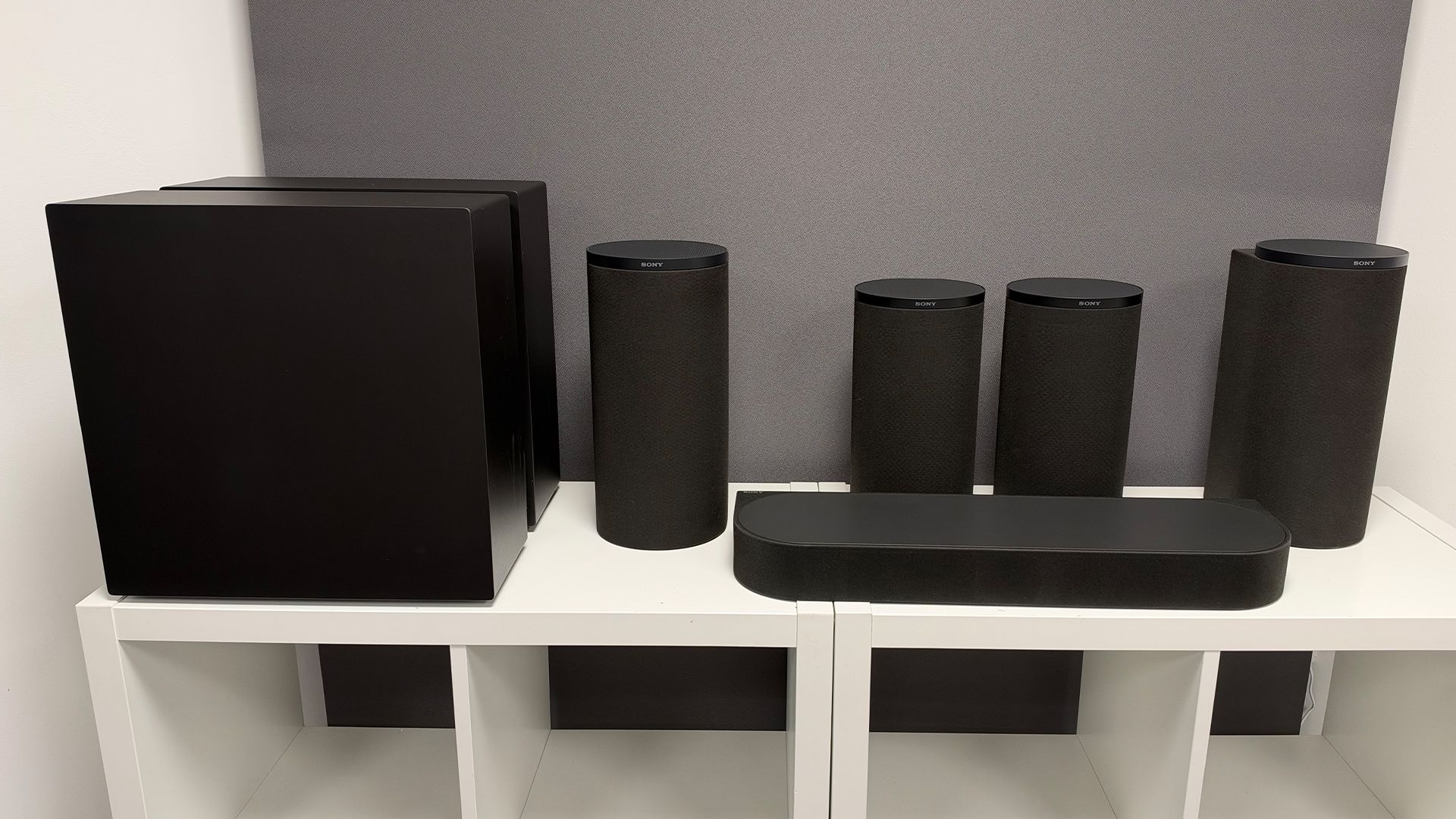
- System Configuration: Transforms from a 3.0.2-channel setup into a full-fledged, IMAX Enhanced certified 5.1.4-channel Dolby Atmos and DTS:X system.
- Total Power Output: An astonishing claimed 1,185W of system amplification (405W from the Trio, 180W from the Rear 9s, and 600W from the Sub 9).
- Pricing: The core Bravia Theatre Trio retails for £1,999 / $2,000 / AU$2,999. Bought separately, the Rear 9 speakers cost £699 / $750 / AU$1299, and the Sub 9 commands £899 / $900 / AU$1299. Substantial bundling discounts are available in the UK and US markets.
- The Verdict: Praised as a "spectacularly immersive wireless home cinema system" and crowned the best alternative to a traditional, wired AVR-driven Dolby Atmos speaker package currently on the market.
Chronology and Testing Evolution
When the What Hi-Fi? expert review team first evaluated the Sony Bravia Theatre Trio alongside the older Sub 8 and standard rear speaker configurations, the results were overwhelmingly positive. However, minor limitations held the setup back from absolute perfection—chiefly, occasional, subtle subwoofer buzzing during intense low-frequency sequences.
The team theorized that upgrading from the Sub 8 to the newly engineered Sub 9 would eradicate these anomalies and transform an "excellent" rating into a "truly exemplary" one. Over a rigorous two-week testing period in dedicated acoustic rooms, that hypothesis was put to the test.
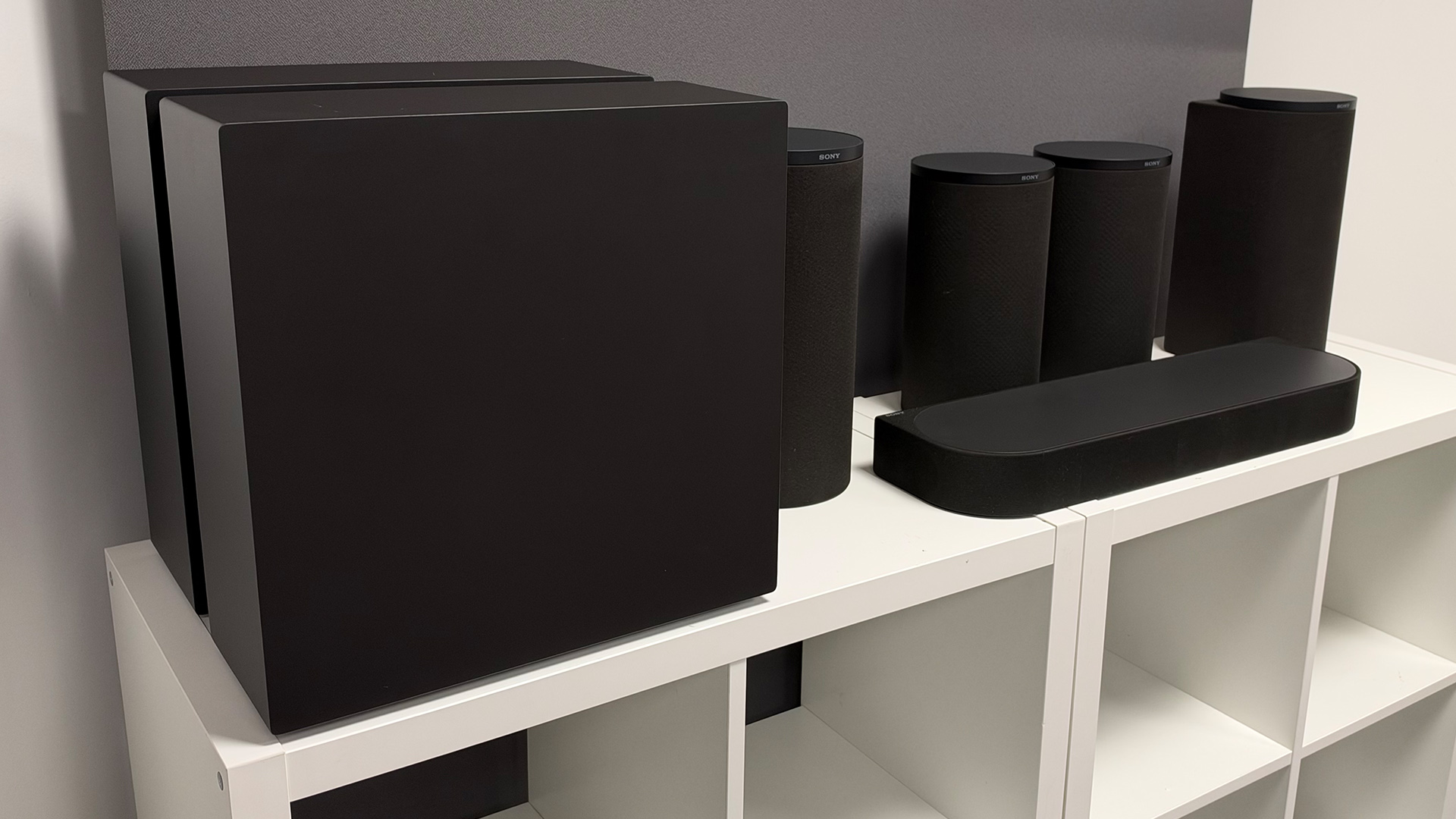
By combining the Trio soundbar components with the Rear 9 surround speakers and the hefty Sub 9, testers tracked improvements across spatial imaging, dynamic headroom, and low-frequency control. The resulting performance proved that the engineering adjustments made by Sony directly resolved previous hardware complaints, cementing a new benchmark for wireless home audio.
Supporting Data and Technical Specifications
Evaluating a high-end lifestyle home cinema system requires looking closely at both its physical footprint and its underlying architecture:
| Feature / Metric | Specification Details |
|---|---|
| Connectivity | HDMI eARC, 1x HDMI in (supporting 4K/120Hz, VRR, ALLM), Bluetooth, Wi-Fi |
| Audio Formats | Dolby Atmos, DTS:X, IMAX Enhanced certified |
| Streaming Support | Apple AirPlay, Spotify Connect, Tidal Connect |
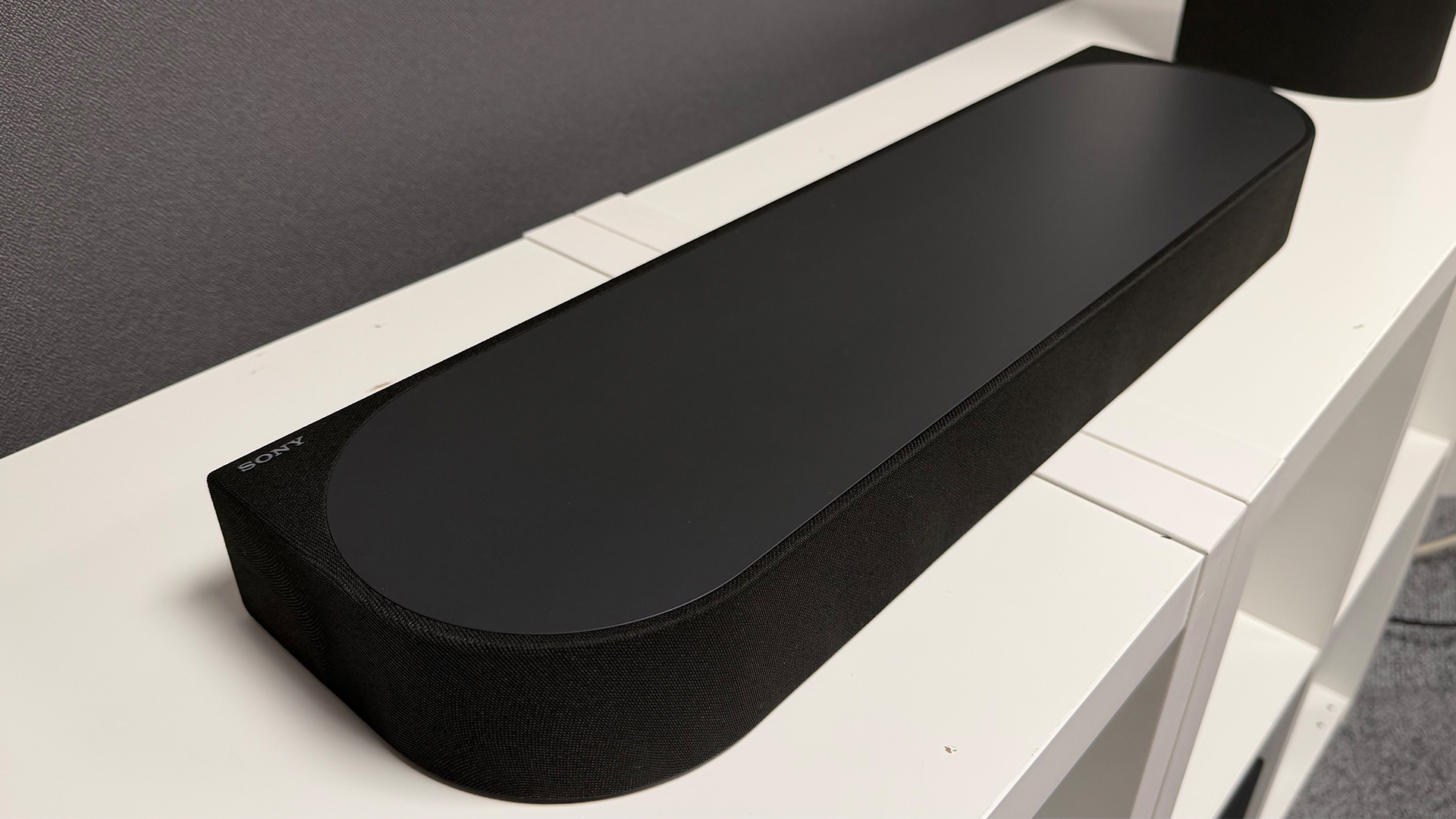
| Dimensions (HWD) | • Centre: 6.4 x 59 x 17cm (3.2kg) • Front L/R: 34 x 16 x 17cm (3.6kg) • Rear Surrounds: 29 x 15 x 15cm (2.7kg) • Subwoofer: 40 x 39 x 35cm (23.3kg) |
| Total System Power | 1,185W combined amplification |
Design and Build
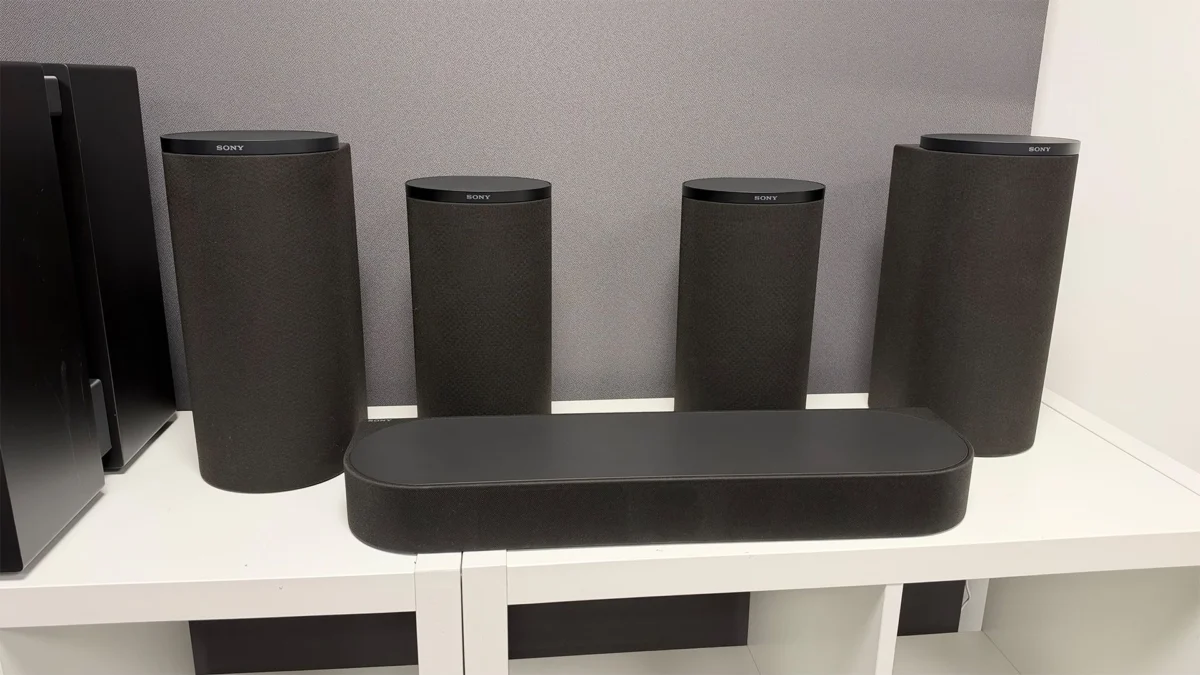
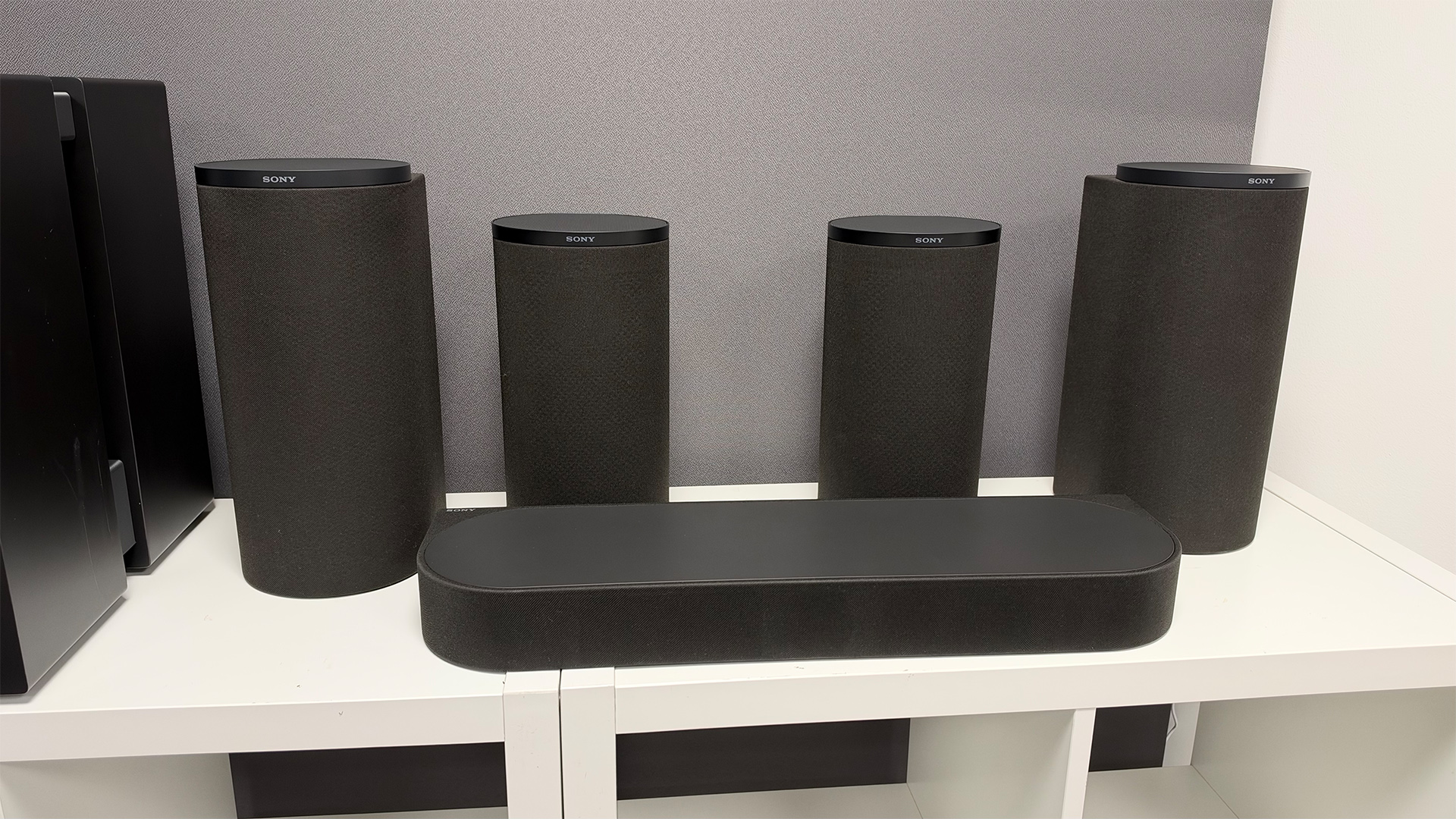
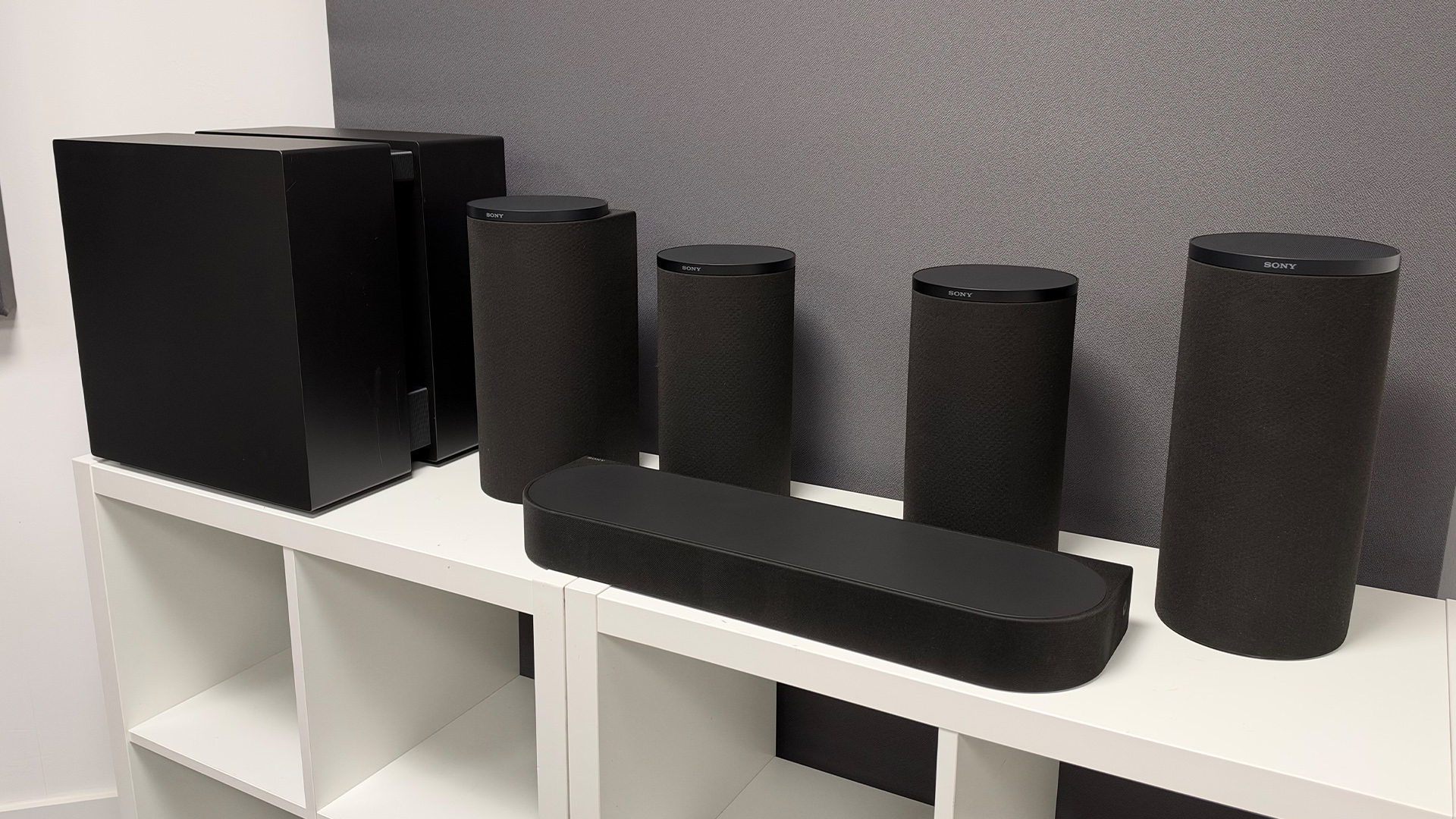
The Bravia Theatre Trio breaks away from conventional single-bar designs. It utilizes a narrow, low-profile centre channel that neatly avoids blocking TV screens (with spacer feet included for pedestal stands), flanked by two substantial cylindrical left and right front speakers featuring metallic top rings and up-firing drivers.
The Rear 9 speakers mirror the aesthetic of the front units—though slightly shorter—and can be wall-mounted directly or angled using dedicated brackets. Meanwhile, the Sub 9 is a massive, cube-shaped powerhouse weighing 23.3kg. Nearly double the weight of its predecessor, it demands dedicated floor space and muscle to position correctly, but its sheer size underpins its acoustic authority.
Official Insights and Setup Integration
Sony’s proprietary 360 Spatial Sound Mapping technology forms the brains of the operation. By mapping the physical speaker layout, the system constructs up to 24 phantom speakers around the room, effectively eliminating acoustic blind spots.
Calibration and Usability
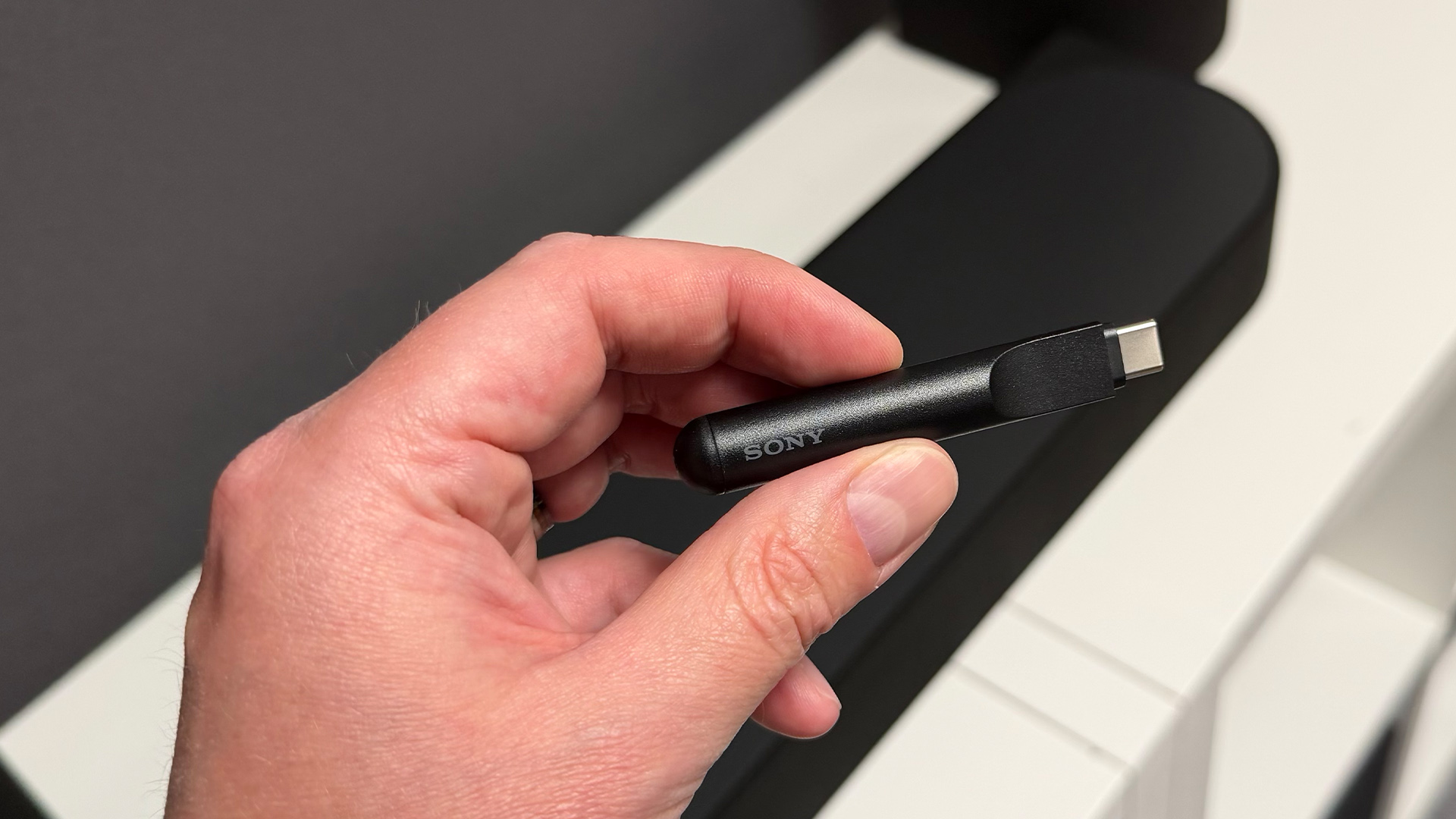
Setup is managed primarily through the Bravia Connect app, which guides users through approximate positioning or exact distance measurements for asymmetrical spaces. Uniquely, Sony supplies a dedicated USB-C calibration microphone that plugs directly into a smartphone. Users hold the phone at the listening position, allowing the system to run a thorough, reliable acoustic sweep that outclasses basic phone-mic-dependent calibration apps.
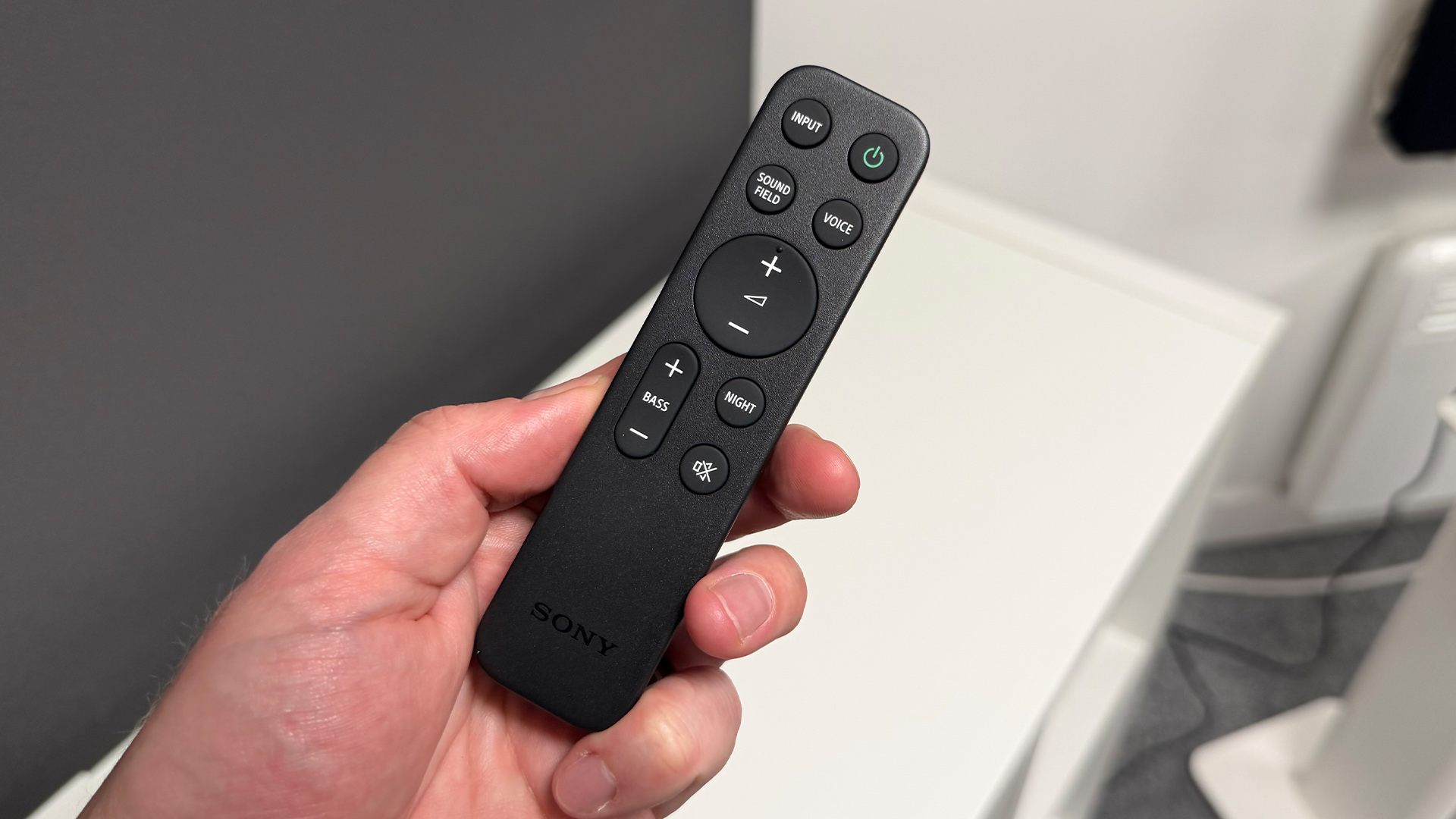
Physical control is equally flexible. The system includes a compact remote control, and owners of recent Sony Bravia TVs can manage advanced settings directly through the television’s on-screen menus.
Performance Analysis: Sound Quality
Movie Playback and Spatial Imaging
When fed challenging cinematic soundtracks like Arrival and Blade Runner 2049 in Dolby Atmos, the complete system delivers a masterclass in spatial cohesion.
- Dialogue and Midrange: Speech remains crystal-clear, tightly anchored to the onscreen action, and rich with micro-details.
- Height and Surround Effects: Jets sweep across the ceiling and raindrops fall with pin-point three-dimensional accuracy. Rather than hearing individual speakers, listeners are enveloped in a seamless, cavernous audio bubble.
- Bass Performance: The Sub 9 represents a massive leap over the Sub 8. The previous model’s occasional buzzing is entirely absent, replaced by a deep, highly controlled, and tuneful sub-sonic thump. Complex low-end passages maintain rhythmic definition rather than collapsing into a muddy rumble.
Music Reproduction
For stereo music streaming via AirPlay or Spotify Connect, users can disable the "Sound Field" processing to enjoy a direct, highly authentic stereo image through the front left/right speakers and subwoofer. While the subwoofer integration is remarkably agile, reviewers noted a minor desire for an option to bypass the subwoofer entirely during pure stereo playback, as the front towers possess enough natural balance to handle mid-bass independently.
Market Implications and Competitive Landscape
Priced around £2,798 in the UK (with promotional bundling) and approximately $3,250 in the US, Sony’s complete configuration occupies a rarified tier in the home entertainment market.
- The Competition: Direct alternatives include the Sonos Ultimate Immersive Set with Arc Ultra (£2,516 / $2,446) and the LG Sound Suite Immersive Suite 7 Pro (£2,300 / $2,150). For consumers wishing to bypass soundbars altogether, Sony’s own Bravia Theatre Quad system paired with the Sub 9 offers an alternative modular approach for roughly £2,949 / $2,496 / AU$4998.
Conclusion and Final Verdict
Traditionalists maintaining that a separates-based AV receiver and wired speaker package still hold the ultimate performance crown will find little argument here. However, for households demanding uncompromising Dolby Atmos immersion without the cable clutter and complex installation hurdles of a traditional separates rig, the Sony Bravia Theatre Trio paired with the Rear 9 and Sub 9 stands peerless.
Aside from minor interface complaints—such as the lack of an on-device display to check incoming audio formats—this ecosystem proves that lifestyle-friendly wireless audio no longer requires a sacrifice in cinematic scale, power, or precision.