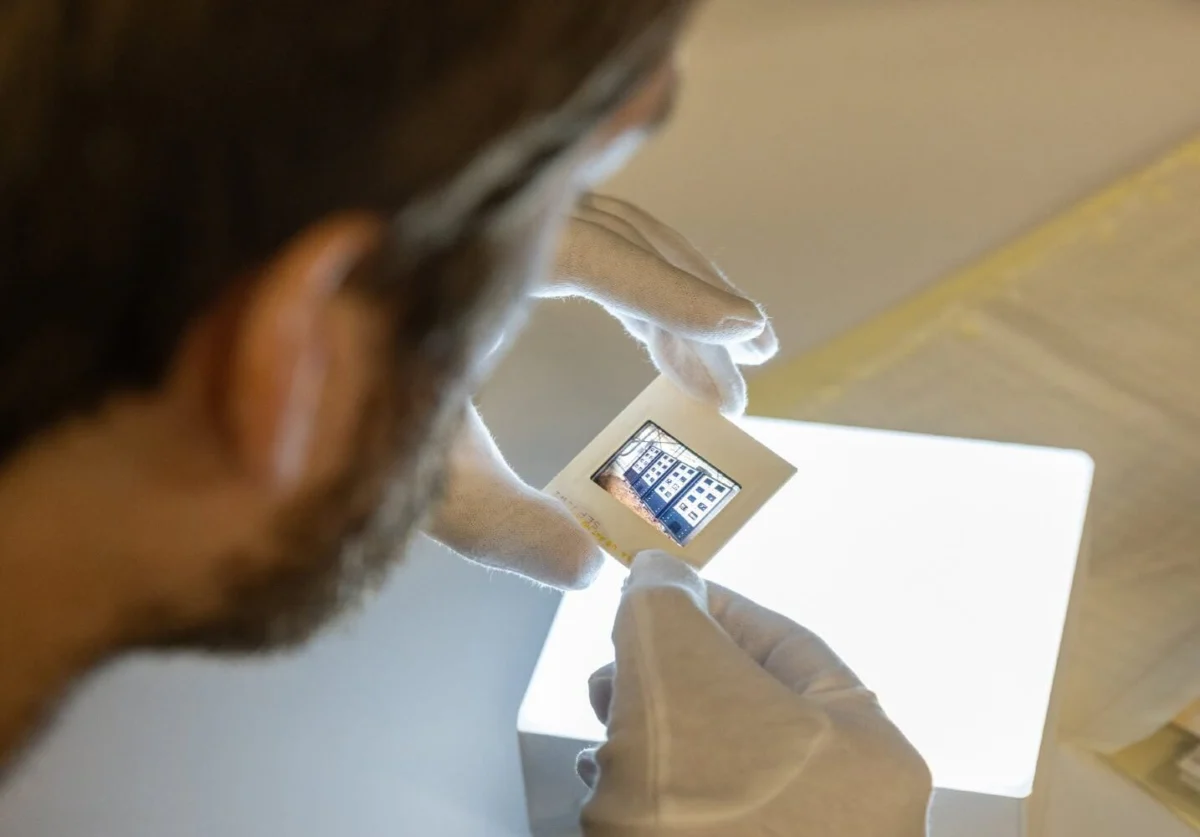
LITITZ, Pa. — For six decades, the name Clair Global has been synonymous with the pinnacle of live event production and professional audio engineering. From the explosive stadium rock era of the 1960s and 70s to the massive global broadcasts of the late 20th century and the hyper-sophisticated touring networks of today, the company has sat at the bleeding edge of acoustic innovation. Now, in an ambitious effort to cement this rich legacy for future generations, Clair Global has officially launched a dedicated online archive website at www.clairglobalarchives.com.
The digital platform represents the culmination of three intensive years of meticulous historical preservation. Spanning photographs, rare audio equipment, engineering blueprints, business documents, and deeply personal narratives, the archive chronicles six decades of technological evolution not just within Clair Global, but across the entire live entertainment industry.
Yet, the digital portal is only half the story. Behind the scenes, the organization is converting a former headquarters wing into a sprawling, dedicated physical archive. Spanning more than 8,000 square feet across two levels, the facility will soon house specialized storage spaces, processing laboratories, a research library, meeting rooms, and curated public displays.
Spearheaded by company archivist Joe Stolarick, the initiative aims to safeguard the physical and digital artifacts of an industry that historically lived out of the back of semi-trucks, moving too fast to look in the rearview mirror.
Main Facts: Unlocking Six Decades of Pro Audio Lore
The newly unveiled Clair Global Archives website offers the public an unprecedented, behind-the-scenes look at the gear, the milestones, and the human stories that shaped modern live sound.
At its core, the collection serves as a living museum for the evolution of sound reinforcement. It documents how a regional Pennsylvania audio provider grew into an international powerhouse responsible for audio production on some of the largest tours and events in human history.
The physical and digital repositories encompass an astonishing variety of materials. According to Stolarick, the collection holds everything from foundational business papers, tour passes, and engineering schematics to remarkably intimate items—including grade school report cards belonging to company co-founder Gene Clair.
Hardware enthusiasts will find plenty to marvel at, as the archive preserves legendary pieces of audio history. These include rare 12AM horn prototypes, legendary SAE amplifiers, and complete, fully-riggable iterations of industry-defining speaker systems like the Clair S-4 and the Showco PRISM.
Crucially, the archive does not just celebrate Clair Global’s standalone journey; it honors the broader ecosystem of live sound by incorporating historical artifacts and institutional knowledge from major industry entities that have integrated into the Clair Global group over the years. This includes historical records from legendary production houses such as Showco, dB Sound, MD Systems, and Concert Sound.
Chronology: The Trajectory of Sound From Shea Stadium to Live Aid
To understand the magnitude of the Clair Global archive, one must contextualize the sheer velocity at which live sound technology advanced during the second half of the 20th century.
"On the surface, 60 years doesn’t sound like a long time, but just think about the advances in sound reinforcement from The Beatles’ Shea Stadium concert in 1965 to Live Aid in 1985!" reflects Stolarick. "That’s massive progress packed into just 20 years!"
When Clair Brothers first started out in the 1960s, the concept of arena-scale concert sound was practically nonexistent. Rock and roll had outgrown the primitive public address systems designed for high school gym announcements and political speeches, but the technology required to fill a 50,000-seat stadium with intelligible, high-fidelity music simply had not been invented yet. Brothers Gene and Roy Clair had to invent it themselves.
The timeline preserved within the archive maps this frantic pace of innovation:
- The Mid-1960s: The dawn of stadium touring. Early experiments in amplification as bands like The Beatles push existing sound systems past their absolute breaking points.
- The 1970s: The birth of proprietary engineering. The creation of rugged, road-ready speaker systems like the iconic S-4, designed by Clair to withstand the brutal physical realities of cross-country rock tours.
- The 1980s: The maturation of global event production. Mega-concerts like Live Aid (1985) demand synchronized, flawless audio distribution across massive international audiences, pushing touring networks to unprecedented scales.
- The 1990s to 2010s: Corporate consolidation and technological convergence. The integration of pioneering companies like Showco and dB Sound into the Clair fold, blending rival engineering philosophies into a unified global standard.
- The Modern Era: The transition into digital mixing, sophisticated line array theories, networked audio, and now, institutional self-reflection through systematic historical preservation.
Supporting Data: Inside the 8,000-Square-Foot Preservation Effort
Preserving six decades of industrial audio history is a logistical labyrinth. Sound reinforcement equipment is heavy, bulky, and historically subjected to extreme environmental conditions—from freezing European winter tours to blistering outdoor summer festivals in the American desert.
The establishment of the new 8,000-square-foot, two-level physical archive at the company’s Lititz, Pennsylvania footprint provides the controlled environment required to halt the degradation of vulnerable historical media.
Infrastructure of the Physical Archive
- Total Space: 8,000+ square feet distributed across two levels.
- Functional Zones: Dedicated administrative offices, interactive public displays, a specialized research library, collaborative meeting rooms, and climate-controlled processing and storage areas.
- Collection Scope: Spans hardware (amplifiers, mixing consoles, speaker cabinets, custom prototypes), paper ephemera (engineering drawings, contracts, tour itineraries, backstage passes, personal correspondence), and photographic media (35mm slides, negatives, and prints).
The Challenge of Media Diversity
Stolarick and his team face unique curation hurdles due to the sheer diversity of formats housed within the collection. While traditional analog paper and durable metal-and-wood speaker cabinets can survive decades of neglect, modern archiving requires specialized care for fragile media.
- Textiles and Film: Costumes, tour jackets, vintage backdrops, and historical celluloid film require precise temperature and humidity controls to prevent chemical breakdown and mold growth.
- Digital Preservation: Perhaps the most complex hurdle facing the archive is the safeguarding of digital assets. Early floppy disks, proprietary hard drives, and legacy digital audio workstation (DAW) files risk obsolescence as computer hardware evolves. The archiving team is actively developing protocols to migrate aging digital data into stable, future-proof formats without losing fidelity.
Despite the vulnerabilities of early digital storage, Stolarick notes with a touch of humor that much of the physical hardware built by the company decades ago was vastly over-engineered: "Fortunately, a lot of this equipment was built to be durable—I think I’m more fragile than an S-4!"
Official Responses: Preserving Relationships Above All
The launch of the archive is more than an exercise in corporate nostalgia; it is a philosophical commitment to honoring the people who built the live entertainment industry from the ground up.
In acquiring and cataloging outside materials, Stolarick emphasizes a strict curation philosophy centered on accessibility and stewardship. "Archives exist to be used, so when acquiring outside materials, we prioritize those without restrictions," he explains. "It is also important to ensure we’re willing to dedicate the space and resources needed to properly care for historical materials, hence the new physical space."
Building an archive of this scale requires looking past the gleaming hardware and examining the human element that powered the industry through decades of volatile growth, economic shifts, and technological revolutions.
"I draw from both facts and inspiration," Stolarick reflects, summarizing the ethos of the project. "At the end of the day, this is really a story about hardworking people who are incredibly proud of what they’ve accomplished. Sure, there are plenty of colorful stories from the shop and the road, but, as with anything in this industry, what ultimately matters most is the preservation of relationships."
Implications: Securing the Industry’s Institutional Memory
The unveiling of the Clair Global Archives carries significant implications for both the pro audio community and the broader field of entertainment history.
For decades, the live event production industry has suffered from a chronic case of institutional amnesia. Because live sound is, by its very nature, ephemeral—existing only in the moment it is performed and heard—the physical tools and the tacit knowledge of the engineers who wielded them have frequently been lost to time, rust, or the dumpster once newer technology rendered them obsolete.
By dedicating physical square footage, financial capital, and human labor to the systematic curation of its past, Clair Global is setting a new benchmark for corporate stewardship in entertainment technology. The initiative ensures that future generations of audio engineers, acoustic researchers music historians, and students can study the exact evolutionary lineage of modern sound reinforcement.
Furthermore, by actively absorbing and preserving the histories of once-competing or complementary entities like Showco and Concert Sound, the archive acts as an objective, centralized repository for the collective memory of an entire industry.
As the physical facility continues its phased rollout and the digital archive expands its public footprint, www.clairglobalarchives.com stands as an open invitation to anyone curious about how the modern concert experience was engineered. It reminds the world that behind every stadium-shaking guitar riff, crystal-clear vocal track, and seamless festival production lies six decades of relentless human ingenuity, heavy lifting, and enduring collaboration.