FRANKLIN, Tenn. — In the rapidly evolving landscape of audio engineering and music production, the gap between what is taught in academic institutions and what is demanded by the modern commercial industry is a persistent challenge. Emerging technologies—ranging from Dolby Atmos and spatial mixing to networked audio and artificial intelligence—are transforming the sonic landscape at a blistering pace. For educators tasked with preparing the next generation of audio professionals, keeping pace requires more than updated textbooks; it requires direct collaboration with the manufacturers and innovators building the tools of tomorrow.
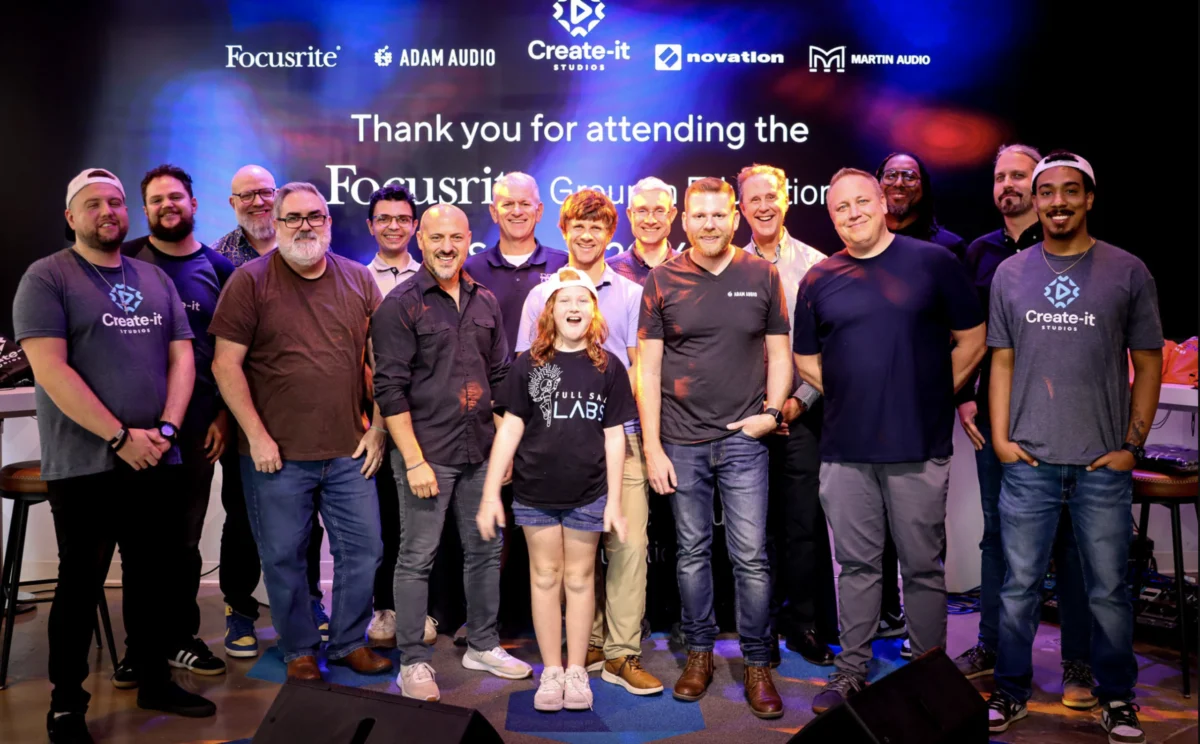
To address this pressing need, the Focusrite Group convened approximately 20 prominent educators and industry professionals this past August for its second annual EDU Summit. Hosted at the state-of-the-art Create-it Studios in Franklin, Tennessee, the intensive two-day event drew participants from universities, community colleges, career-focused technical schools, and K-12 music technology programs across the Southeast, alongside international attendees and local Nashville-area professionals.
Organized by Bryan Castle, Focusrite EDU Director, and John Merchant, Director of Partner Development for Focusrite Group Professional, the summit served as a high-level laboratory for ideas. The curriculum centered on two primary pillars: mastering the pedagogical and technical demands of immersive 3D audio experiences, and implementing network-centric system designs to maximize the flexibility and efficiency of modern studio and academic facilities.
Main Facts: The 2026 Focusrite EDU Summit at a Glance
- Dates & Location: Held over two days in August at Create-it Studios in Franklin, Tennessee.
- Host Organization: The Focusrite Group, spearheaded by Bryan Castle (Focusrite EDU Director) and John Merchant (Director of Partner Development, Focusrite Group Professional).
- Attendance: Approximately 20 educators, institutional leaders, and industry professionals representing a diverse cross-section of academia—from major universities to K-12 music tech programs.
- Core Focus Areas: Immersive 3D audio production, networked audio infrastructure (such as Dante), remote production workflows, and the integration of artificial intelligence in audio education and professional workflows.
- Key Presenters: Michael Orlowski (Create-it Studios), Vince Lepore (Networked Systems/Dante), Nuno Fonseca (Sound Particles), Lasse Nipkow (Immersive Pedagogy), and Brad Berridge (Studio and Live Immersive Applications).
- Represented Institutions: Belmont University, Elon University, Full Sail University, Middle Tennessee State University, University of North Alabama, Vanderbilt University, Northwest Mississippi Community College, Dark Horse Academy, SAE Institute Atlanta, SAE Institute Nashville, Music Education Group, and Cobb County Schools.
Chronology: A Two-Day Deep Dive Into Audio Pedagogy
The structure of the two-day summit was meticulously designed to balance theoretical panel discussions with hands-on technical demonstrations, ensuring that attendees left with actionable strategies for their respective campuses.
Day One: Welcome, Ecosystems, and the Networking Blueprint
The event kicked off on a Thursday evening with a welcome dinner, serving as an informal networking incubator. Emceed by Bryan Castle, the evening allowed educators from vastly different institutional backgrounds—ranging from large research universities to specialized trade academies—to compare notes on student engagement, curriculum bottlenecks, and facility limitations.
Friday’s official program commenced with a heavy emphasis on studio design and infrastructure flexibility. As audio facilities increasingly demand multi-room connectivity without the nightmare of traditional analog patch bays, networked audio has become the industry standard.
Vince Lepore led a critical session on utilizing technologies like Audinate’s Dante protocol to maximize the utility of classrooms, tracking rooms, and isolated production booths. By routing audio seamlessly over standard IP networks, schools can transform virtually any classroom into a functional recording or mixing environment, drastically stretching institutional budgets while giving students experience with enterprise-level routing.
Following the infrastructure panels, the spotlight shifted to spatial computing. Nuno Fonseca of Sound Particles led an immersive session featuring advanced binaural listening demonstrations. Fonseca demonstrated how procedural audio and physics-based software are redefining how sound designers and music producers think about movement in a virtual space, moving far beyond traditional static panning.
Day Two: Immersive Pedagogy, AI, and Future-Proofing
Saturday’s agenda tackled the two most disruptive forces in modern audio: immersive 3D mixing and artificial intelligence.
Lasse Nipkow took the stage to explore immersive music production pedagogy. Nipkow addressed the elephant in the room for many academic program directors: how to teach surround-sound and spatial audio production in facilities that may currently feature traditional stereo or limited multi-channel monitoring setups. His presentation offered scalable curriculum frameworks that introduce students to object-based mixing concepts regardless of studio constraints.
Brad Berridge followed with a deep dive into practical immersive audio applications, bridging the gap between studio production and live sound reinforcement. As major concert venues, theme parks, and theatrical productions adopt spatial audio systems, Berridge’s session provided educators with insight into what skills working touring engineers and live producers expect graduates to possess.
The afternoon concluded with a forward-looking panel on artificial intelligence. Rather than viewing generative and assistive AI as a threat, participants analyzed how AI-driven tools are reshaping mixing, mastering, restoration, and asset management. The discussion centered on how educational programs can ethically and effectively incorporate AI into workflows, ensuring students graduate with a realistic understanding of how the technology is utilized in commercial studios.
Supporting Data & Institutional Participation
The strength of the Focusrite EDU Summit lay heavily in the diversity of its participant base. Rather than catering solely to elite four-year universities, the event intentionally gathered a cross-section of the entire educational ecosystem.

+-------------------------------------------------------------------------+
|                  INSTITUTIONAL REPRESENTATION BREAKDOWN                 |
+--------------------------+----------------------------------------------+
| Universities & Colleges  | Belmont University, Elon University,         |
|                          | Middle Tennessee State University (MTSU),    |
|                          | University of North Alabama, Vanderbilt      |
|                          | University, Northwest Mississippi CC         |
+--------------------------+----------------------------------------------+
| Specialized / Career     | Full Sail University, Dark Horse Academy,    |
| Technical Schools        | SAE Institute Atlanta, SAE Institute         |
|                          | Nashville                                    |
+--------------------------+----------------------------------------------+
| K-12 & Community Groups  | Cobb County Schools, Music Education Group   |
+--------------------------+----------------------------------------------+
This broad representation ensured that discussions accounted for vastly different financial realities, resource allocations, and institutional goals. A professor from a community college implementing a basic audio tech certificate program faced different hurdles than a department chair at a university building a quarter-million-dollar Dolby Atmos mixing stage; yet, both found common ground when discussing student retention, software licensing, and industry alignment.
Furthermore, the logistical success of the event relied on a tight-knit partnership with the host facility. Organizers specifically acknowledged the contributions of the Create-it team, including co-creator Michael Orlowski, studio manager Diego Arvelo (Franklin), engineer Elijah Fregia (Springdale), and Andrew Duncan, Senior Director of Outreach for Full Sail University.
Official Responses and Perspectives
For the organizers at Focusrite, the summit is not merely a marketing exercise or a product showcase; it is an essential listening post.
"The EDU Summit gives us a unique opportunity to move beyond the typical product conversation and spend meaningful time listening to educators and learning about the challenges they’re facing," says Bryan Castle, Focusrite EDU Director.
Castle, who guided the room through complex discussions on remote production, spatial audio, and artificial intelligence, emphasized that the ultimate objective is future-proofing education.
"Whether the conversation is about immersive audio, networked facilities, remote production, or AI, our goal is to better understand what schools and their students need today and where music and audio education is heading. That exchange is incredibly valuable, and it’s why we plan to continue expanding these events."
Echoing these sentiments, Castle noted that the insights harvested from the two days in Franklin directly influence how manufacturers approach product development, academic discounting, and curriculum support.
"Events like this are as much about what we learn from educators as what we’re able to share with them," Castle concluded. "Having people from different types of institutions in the same room creates conversations that simply don’t happen anywhere else. That feedback helps us better serve our education partners, and we’re committed to continuing the EDU Summit as an ongoing part of our education outreach."
Implications for the Future of Audio Education
The conclusions drawn at the 2026 Focusrite EDU Summit point toward a definitive paradigm shift in how audio arts will be taught over the next decade.
1. The Democratization of Immersive Audio
For years, Dolby Atmos and spatial audio mixing were luxuries reserved for elite post-production houses in Los Angeles, New York, and Nashville. Today, software monitoring tools, binaural simulation, and scalable hardware interfaces have brought spatial mixing into the bedroom producer’s setup—and by extension, into budget-conscious classrooms. Educators left Franklin with blueprints on how to introduce multi-dimensional mixing concepts without requiring every student to have immediate access to an expensive 7.1.4 physical speaker array.
2. Infrastructure as a Curriculum Cornerstone
The heavy focus on Dante and networked studio design highlights a shift in what an "audio engineer" needs to know. It is no longer enough to understand signal flow through an analog mixing console or a patch bay. Modern graduates must understand IP networking, switch configurations, latency management, and system redundancy. By designing school studios with networked infrastructure, institutions are simultaneously teaching the IT skills required to survive in modern broadcast, live sound, and corporate AV environments.
3. Preparing for the AI-Augmented Studio
Perhaps the most contentious yet vital topic of the summit was the integration of artificial intelligence. As stem-separation algorithms, intelligent EQ, and generative sound design tools become standard plugins in DAWs (Digital Audio Workstations), educators face the challenge of teaching core fundamentals while acknowledging automated assistance. The consensus emerging from the summit is that academic programs must teach students how to master these tools as force multipliers rather than fearing them as replacements.
Looking Ahead
As the Focusrite Group looks toward future installments of the EDU Summit, the initiative stands as a model for how hardware and software manufacturers can actively support the academic community. By removing the corporate sales pitch and replacing it with collaborative problem-solving, events in spaces like Create-it Studios ensure that the pipeline from classroom to commercial control room remains robust, adaptable, and ready for whatever sonic innovations lie ahead.