Introduction: The Sound of a Distant Horizon
Welcome to ‘Dodd’s Discoveries’, an exclusive review and curation series brought to you by NativeDSD Senior Music Reviewer Bill Dodd. Designed to spotlight the finest releases in high-resolution audio, this recurring series offers classical music enthusiasts an intimate look at landmark recordings, masterclass performances, and state-of-the-art DSD masterings.
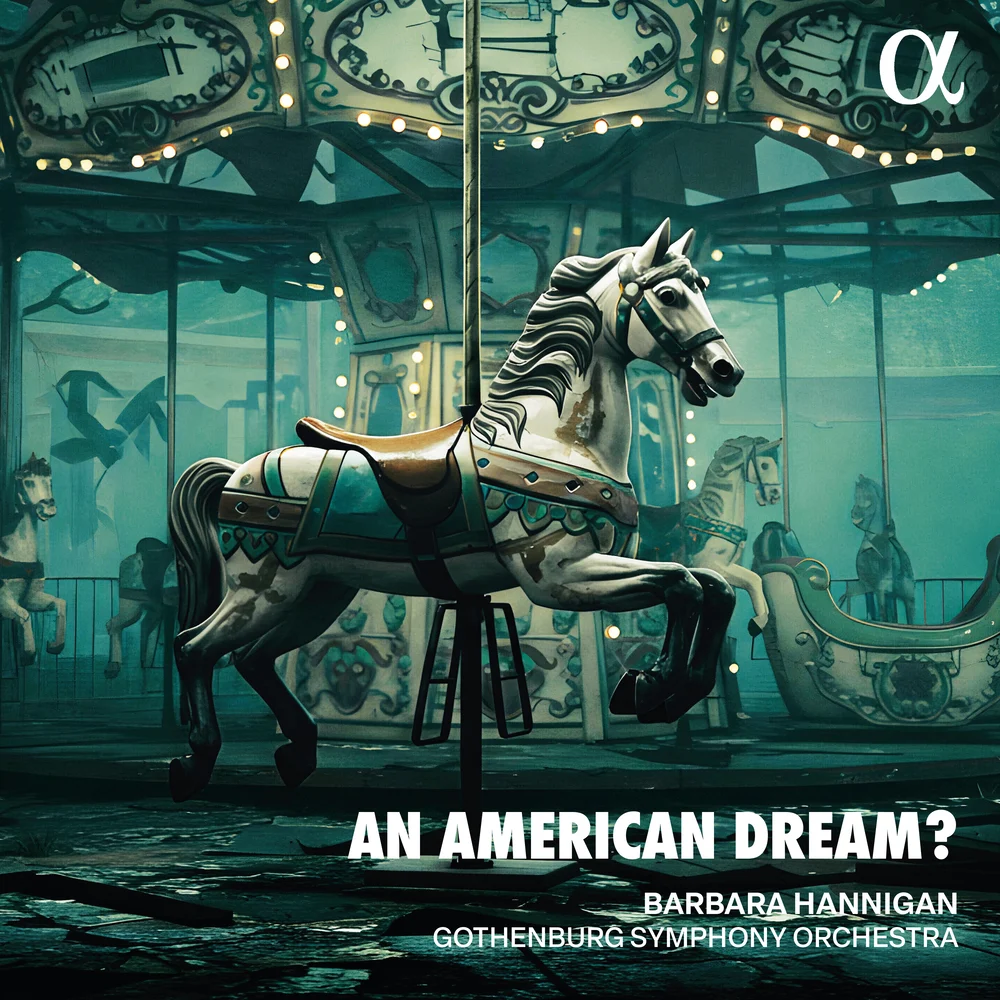
Even better, NativeDSD pairs each new installment of Dodd’s Discoveries with a special limited-time promotional discount, allowing collectors to acquire the featured albums at a reduced price. In this edition, Dodd turns his critical ear toward a breathtaking, genre-blurring release from renowned Canadian soprano and conductor Barbara Hannigan: An American Dream? Leading the Gothenburg Symphony Orchestra from the podium and the microphone, Hannigan delivers a poignant meditation on American classical heritage, nostalgia, and myth-making.
Below is an in-depth exploration of the release, contextualizing its repertoire, performance dynamics, and emotional core, alongside background on the critic and the series.
Main Facts: A Dual Masterclass in Conducting and Vocal Artistry
At its core, An American Dream? is more than a standard orchestral compilation of mid-20th-century U.S. masterworks; it is a carefully curated psychological landscape. Released to critical acclaim, the album captures Barbara Hannigan in her dual role as Principal Guest Conductor of the Gothenburg Symphony Orchestra and as a singular vocal soloist.
Rather than treating American music through a lens of uncritical flag-waving, Hannigan approaches icons like George Gershwin and Aaron Copland with a sophisticated mixture of affection, historical distance, and analytical clarity. The repertoire bridges the operatic sweep of Gershwin’s Porgy and Bess, the structural rigor and Stravinskian pulse of Copland’s Dance Symphony, the bittersweet cinematic nostalgia of Rodgers and Hammerstein’s Carousel Waltz, and a suite of Americana titled At the Fair.
What sets this recording apart is the sheer acoustic and interpretive integration. Hannigan’s vocals do not arrive as a superimposed overlay mixed high above the ensemble. Instead, her voice emerges organically from the center of the Gothenburg Symphony, weaving through the string sections and brass like a half-remembered tune surfacing in real-time consciousness.
Chronology: Tracing the Arc of An American Dream?
To understand the emotional and structural journey of the album, one must examine the chronology of the program as meticulously mapped out by Hannigan and arranger Bill Elliott.
1. Opening: The Twilight Fairground
The album opens with the title work, immediately establishing a twilight atmosphere reminiscent of a fairground at dusk. The physical lights may still be glowing, but the colors are faded, and the surrounding music carries the heavy weight of memory rather than the sharp promise of a new dawn. Hannigan has frequently noted in interviews that while she once held a deep, youthful awe toward the United States, her contemporary relationship with the country is defined primarily by a complex, multi-layered nostalgia.
2. Gershwin’s Exuberance
Transitioning into selections from Gershwin’s Porgy and Bess, the program captures the bold, primary colors and bustling urban activity of a bygone era. However, under Hannigan’s baton, this exuberance feels like a postcard from an irretrievable past—an optimism that is remembered rather than actively lived.

3. Copland’s Kinetic Pulses
The momentum shifts seamlessly into Aaron Copland’s Dance Symphony. Here, the jagged, kinetic rhythms that once pushed forward with revolutionary modernism now echo backward into history. Musicologists and listeners alike will note the historical resonance: both Gershwin and Copland were the children of immigrants, whose musical idioms helped construct the foundational sonic identity of the American twentieth century.
4. Nostalgia and Metaphor: At the Fair and Carousel Waltz
As the program winds through the bittersweet refrains of the Carousel Waltz and the circling reflections of At the Fair (jointly arranged by Hannigan and Bill Elliott), the fairground transforms into a potent metaphor. It encapsulates American innocence, grand-scale spectacle, and deep-seated cultural longing.
5. The Grand Finale: Unfiltered Confidence
Hannigan concludes the performance with a striking rendition of Don’t Rain On My Parade. Eschewing cheap sentimentality or wistful irony, she treats the showtune as a definitive artistic stance. Following a program saturated with circling memories, this final track erupts as a burst of unfiltered confidence. It does not attempt to define what America objectively is; rather, it forces the listener to feel what it is like to remember it.
Supporting Data: The Artistic Forces Behind the Recording
The Performer-Conductor Synergy
The success of An American Dream? hinges on the rare technical and artistic capabilities of Barbara Hannigan. Widely celebrated across the globe as one of contemporary music’s most adventurous champions—having premiered hundreds of new vocal works and conducted major orchestras across Europe and North America—Hannigan brings a hyper-literate curiosity to standard symphonic repertoire.
As Principal Guest Conductor of the Gothenburg Symphony Orchestra, her rapport with the ensemble is palpable. The Swedish orchestra responds with a warmth, transparency, and rhythmic precision that matches Hannigan’s vision. The acoustic staging captures the spatial depth of the Gothenburg Concert Hall, preserving the natural bloom of the brass and the crystalline purity of the strings.
About the Reviewer: Bill Dodd
The man behind this installment of Dodd’s Discoveries, Bill Dodd, brings a lifetime of diverse audio experience to his role as Senior Music Reviewer at NativeDSD. Residing in the Pacific Northwest near Portland, Oregon, Dodd’s background is as eclectic as it is accomplished.
- Early Exposure: Exposed to classical music in small doses starting at age five, Dodd began formal piano lessons at age nine, cutting his teeth on the works of Johann Sebastian Bach before expanding into the jazz-infused worlds of George Gershwin.
- Broadcasting Legacy: Displaying an early affinity for high-fidelity audio and broadcasting, Dodd achieved remarkable success early in life, working as a popular morning radio personality in San Francisco by the age of 22.
- Choral and Eclectic Tastes: He honed his vocal abilities by singing in high school and college choirs. Although his professional broadcasting career leaned toward popular music, his personal listening habits have remained anchored in classical masterworks, complemented by an insatiable appreciation for jazz legends (Miles Davis, Dave Brubeck, Benny Goodman) and iconic singer-songwriters and rock acts (Joni Mitchell, The Who, Led Zeppelin).
- Visual Arts: Outside of his critical work for NativeDSD, Dodd is an avid, accomplished photographer, an eye for composition that often translates into the vivid, pictorial language of his music reviews.
Official Responses and Critical Reception
Since its release, An American Dream? has garnered widespread critical acclaim from high-resolution audio circles, classical music critics, and audiophile communities.
- The Artistic Stance: In statements accompanying the release, cultural commentators have praised Hannigan for avoiding the trap of pastiche. Rather than delivering a Hollywood-style tribute or a condescending museum piece, Hannigan’s orchestration and vocal delivery treat American musical modernism as a living, breathing, and ultimately fragile organism.
- Audiophile Praise: Engineers and reviewers within the NativeDSD ecosystem have lauded the engineering choices on the album. By placing the soprano voice within the orchestral texture rather than isolating it in a traditional soloist soundstage, the recording honors the symphonic integrity of the scores. The DSD mastering highlights the rich harmonic resonance of the Gothenburg strings, offering listeners a masterclass in dynamic range and spatial imaging.
Implications: The Future of Curated Classical Discovery
The success of releases like An American Dream?—and their promotion through structured editorial initiatives like Dodd’s Discoveries—carries significant implications for the modern classical music marketplace.
- Reimagining the Canon: Hannigan proves that standard or semi-standard repertoire (Gershwin and Copland) can be radically recontextualized through imaginative programming and thoughtful cross-genre arranging (such as the inclusion of musical theater elements alongside symphonic movements).
- The Audiophile Renaissance: Platforms like NativeDSD continue to demonstrate that passionate, expert-led curation combined with ultra-high-resolution audio formats can create a deeply engaging ecosystem for listeners who demand both sonic fidelity and intellectual depth.
- The Human Element in Curation: Algorithms alone cannot capture the nuanced, cross-disciplinary insights offered by reviewers like Bill Dodd. By pairing decades of broadcasting experience, instrumental training, and a deep love for both classical masterworks and jazz-inflected Americana, Dodd provides a vital bridge between complex artistic statements and the listening public.
As Dodd’s Discoveries continues to roll out regular features, music lovers are encouraged to explore the NativeDSD catalog, take advantage of the rotating promotional discounts, and experience how brilliant curation can breathe fresh life into recorded sound.