By Architectural Design & Acoustics Review
Published: October 2023
Main Facts: The Sound Crisis in Shared Spaces
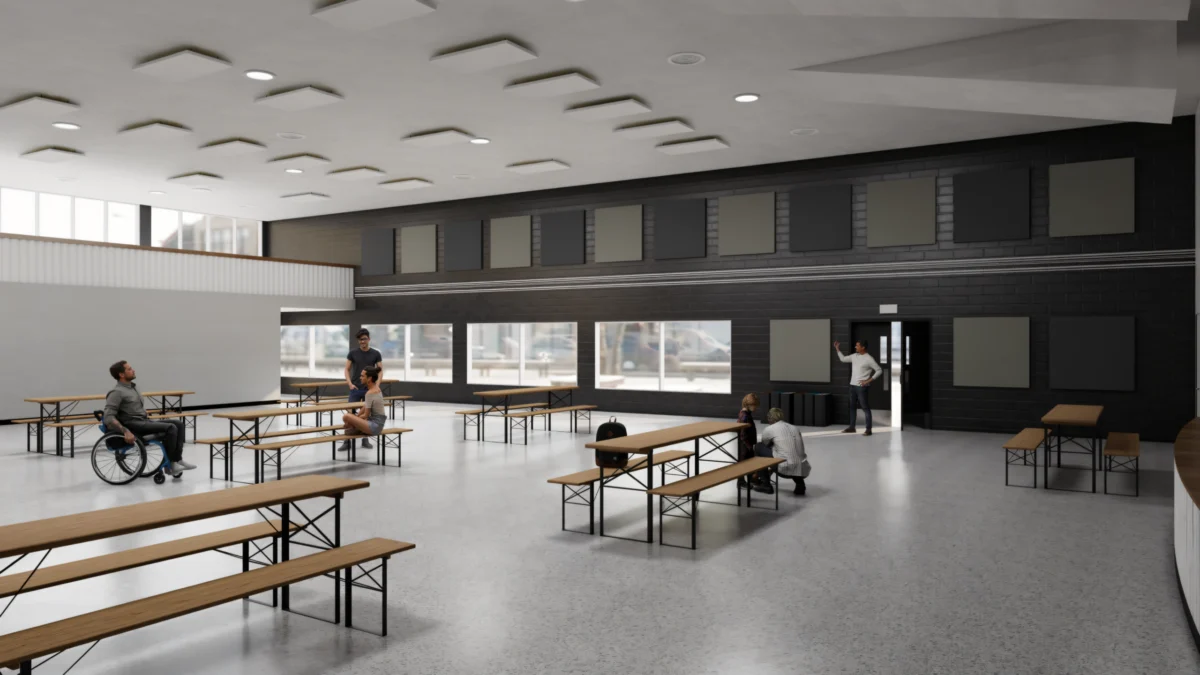
Walk into a modern open-plan office, a bustling downtown restaurant, or a newly renovated community center, and you are likely to experience a familiar phenomenon: a wall of sound so dense that basic conversation feels like a strenuous physical workout. You hear plenty, but you understand very little.
This is not merely an annoyance; it is a systemic architectural failure known as poor speech intelligibility. In busy workplaces and high-traffic shared environments, a lack of acoustic clarity steadily chips away at human comfort, diminishes productivity, and exacts a hidden psychological toll.
For decades, the design world has treated acoustics as an afterthought—something to be patched over with cheap foam or awkward wall panels once the building is already occupied. However, a growing body of spatial design research indicates that solving the modern acoustic puzzle requires shifting our gaze upward.

The primary culprit behind poor speech intelligibility is rarely a lack of wall space; rather, it is uncontrolled ceiling reflections. Because ceilings are typically the largest uninterrupted sound-reflecting surfaces in any room, they act as acoustic mirrors. The more sound energy that hits a ceiling, the more chaotic the reflections become, and the lower the overall clarity drops across the entire space.
Industry leaders like Primacoustic are spearheading a movement toward "ceiling-first" sound mitigation. Utilizing advanced, sustainable materials like post-consumer PET (polyethylene terephthalate), modern acoustic engineering is proving that sound control and high-end interior design do not have to be mutually exclusive.
Chronology: The Evolution of Architectural Acoustics
To understand how modern spaces became so loud, it is helpful to look at how architectural trends have shifted over the last century:
- The Mid-20th Century (The Rise of Acoustic Tiles): During the post-war boom, commercial architecture heavily relied on drop-ceilings and fissured mineral fiber tiles. While aesthetically monotonous, these utilitarian systems managed sound quite effectively by trapping energy in porous materials.
- The Late 20th Century (The Minimalist Shift): As architectural tastes shifted toward minimalism, industrial aesthetics, and biophilic design, dropped ceilings fell out of favor. Exposed concrete, high open rafters, polished concrete floors, and expansive glass curtain walls became the gold standard of modern interior design.
- The 2000s–2010s (The Open-Plan Revolution): Driven by a desire for collaborative, fluid workspaces, companies ripped down private offices and replaced them with vast open floors. Unfortunately, acoustic planning failed to keep pace with spatial layout changes. The result was a generation of echo-laden rooms where phone calls, typing, and HVAC hums compounded into a relentless ambient roar.
- The Present Day (Integrated Acoustic Architecture): Recognizing that traditional wall treatments often conflict with branding, large windows, and art installations, the industry has pivoted toward high-performance overhead solutions. Innovations like acoustic blades and dimensional baffles allow designers to treat ceilings dynamically without sacrificing architectural openness or natural light.
Supporting Data: The Physics of Sound and Cognitive Fatigue
To fix a noisy room, one must first dismantle a persistent design myth: higher volume does not equal better clarity.

When people struggle to hear in a noisy environment, their natural instinct is to speak louder. If the room is equipped with sound-reinforcement technology (such as public address systems or conference room speakers), operators frequently respond by turning up the volume.
Acoustically speaking, this approach backfires. Higher sound levels introduce more sound energy into the room, creating an exponential increase in reflections and reverberation. This further obscures detail, burying human speech under layers of overlapping echoes.
The Problem with High vs. Low Ceilings
The geometry of a room dictates how sound waves behave:
- High Ceilings: In expansive spaces, high ceilings increase the distance and travel time for sound waves. Because sound is multi-directional, a single vocalization hits the ceiling surface along multiple paths at different times. These delayed secondary reflections cause severe reverberation and echoes, muddying the acoustic profile.
- Low Ceilings: While low ceilings return sound waves to the listener’s ears much faster, they create an entirely different set of problems. Early reflections bounce directly back into the listening zone, creating standing waves—destructive frequencies trapped between the floor and ceiling—along with low-frequency buildup.
The Cognitive Cost
Understanding speech is not a passive mechanical activity; it requires substantial cognitive processing. Under normal conditions, the human brain effortlessly separates a primary voice from background noise.

However, when a room suffers from high reverberation and poor speech intelligibility, the brain is forced to work overtime. It must continuously filter out overlapping reflections, secondary echoes, and ambient hums (such as HVAC systems and lighting electrical noise).
This constant cognitive strain leads directly to listener fatigue. In offices, this manifests as reduced focus and errors by the end of the day. In restaurants and hospitality venues, it causes guests to leave earlier because they are mentally exhausted from shouting across the table. In educational and spiritual spaces, it causes audiences to disconnect.
Official Responses and Industry Insights
Acoustical engineers and product developers are responding to these challenges with sophisticated systems that merge structural physics with visual artistry.
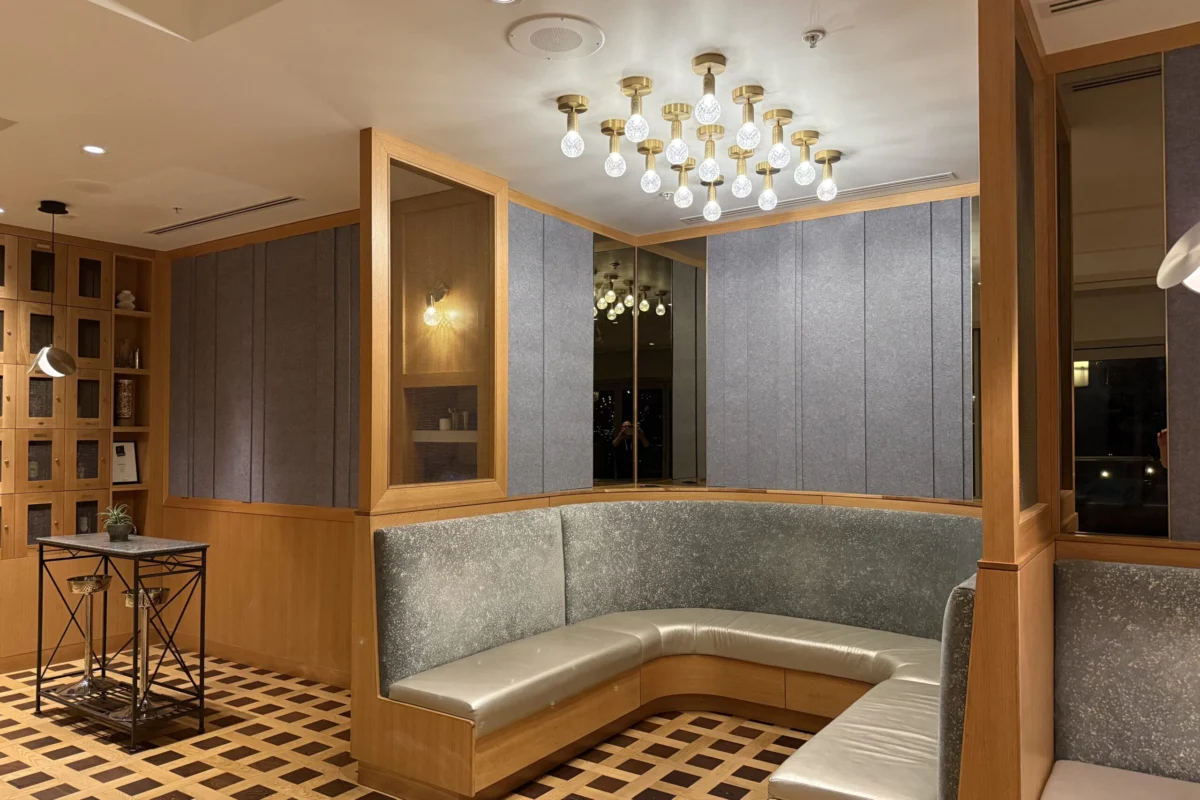
According to product development teams at Primacoustic, the challenge of modern interior architecture is balancing sound control with spatial aesthetics. "When you look at a modern office, restaurant, or civic building, the walls are rarely available for heavy treatment," notes a leading architectural acoustic specialist. "You have expansive glass windows, branding elements, corporate artwork, and architectural finishes. That leaves the ceiling as the single most viable canvas for comprehensive sound mitigation."

Furthermore, modern acoustic solutions are breaking away from the boring, industrial drop-tile grid of the past. Today’s architectural market demands products that introduce visual rhythm, define spatial zones, and complement existing infrastructure—such as exposed timber beams, steel rafters, and complex lighting arrays.
Designers are increasingly leveraging two primary ceiling interventions: Blades and Dimensional Baffles.
- EcoScapes Blades: Typically mounted parallel or adjacent to the ceiling surface, blades are exceptionally useful in spaces with lower ceilings where hanging elements might feel intrusive. By arranging blades in precise patterns, designers can create angular modern looks, evoke a wave-like rhythmic movement, or establish functional architectural compositions that drastically reduce the visual footprint of acoustic treatment.
- Dimensional Baffles: Suspended freely in space, 3-D baffles are striking additions to large, high-ceilinged environments like atriums, open-concept offices, and expansive dining halls. Their three-dimensional geometry allows them to capture sound waves from multiple angles while seamlessly integrating with exposed structural ceilings.
Implications: The Future of Human-Centric Architecture
The implications of adopting a "ceiling-first" approach to acoustic design extend far beyond simple noise reduction. They touch upon health, sustainability, and the fundamental usability of human spaces.
1. Health, Safety, and Sustainability
Modern architectural materials are increasingly judged by their environmental footprint and occupant safety. High-performance ceiling treatments crafted from post-consumer recycled PET (polyethylene terephthalate) offer a dual advantage. They deliver exceptional sound absorption while helping buildings secure prestigious green building credentials, such as LEEDS and WELL Building Standards.

Moreover, because these materials are manufactured without glues, binders, formaldehyde, or volatile organic compounds (VOCs), they improve indoor air quality. Their durability ensures they resist sagging, wear, and discoloration over decades of use.
2. Emotional and Psychological Well-Being
Spaces that sound good feel good. When an environment is acoustically comfortable, human behavior shifts organically. People no longer need to shout to be heard; meetings become more collaborative and less tense; dining patrons linger longer because they can converse in normal tones. By reducing vocal strain for speakers and eliminating cognitive overload for listeners, acoustic design directly fosters better communication, focus, and emotional well-being.
3. A Paradigm Shift for Designers
Ultimately, the transition toward ceiling-centric acoustic planning represents a maturation of the architectural industry. Sound control is no longer viewed as a remedial measure deployed to fix a broken room. Instead, it is recognized as a foundational element of spatial design—as critical to human comfort as lighting, temperature control, and ergonomic furniture.
Conclusion: Designing for the Ear and the Eye
As society demands more from our shared environments—whether for work, collaboration, hospitality, or entertainment—ignoring the acoustic dimension is no longer tenable. Poor speech intelligibility quietly undermines the utility of expensive architectural investments, draining energy and patience from everyone who enters the space.
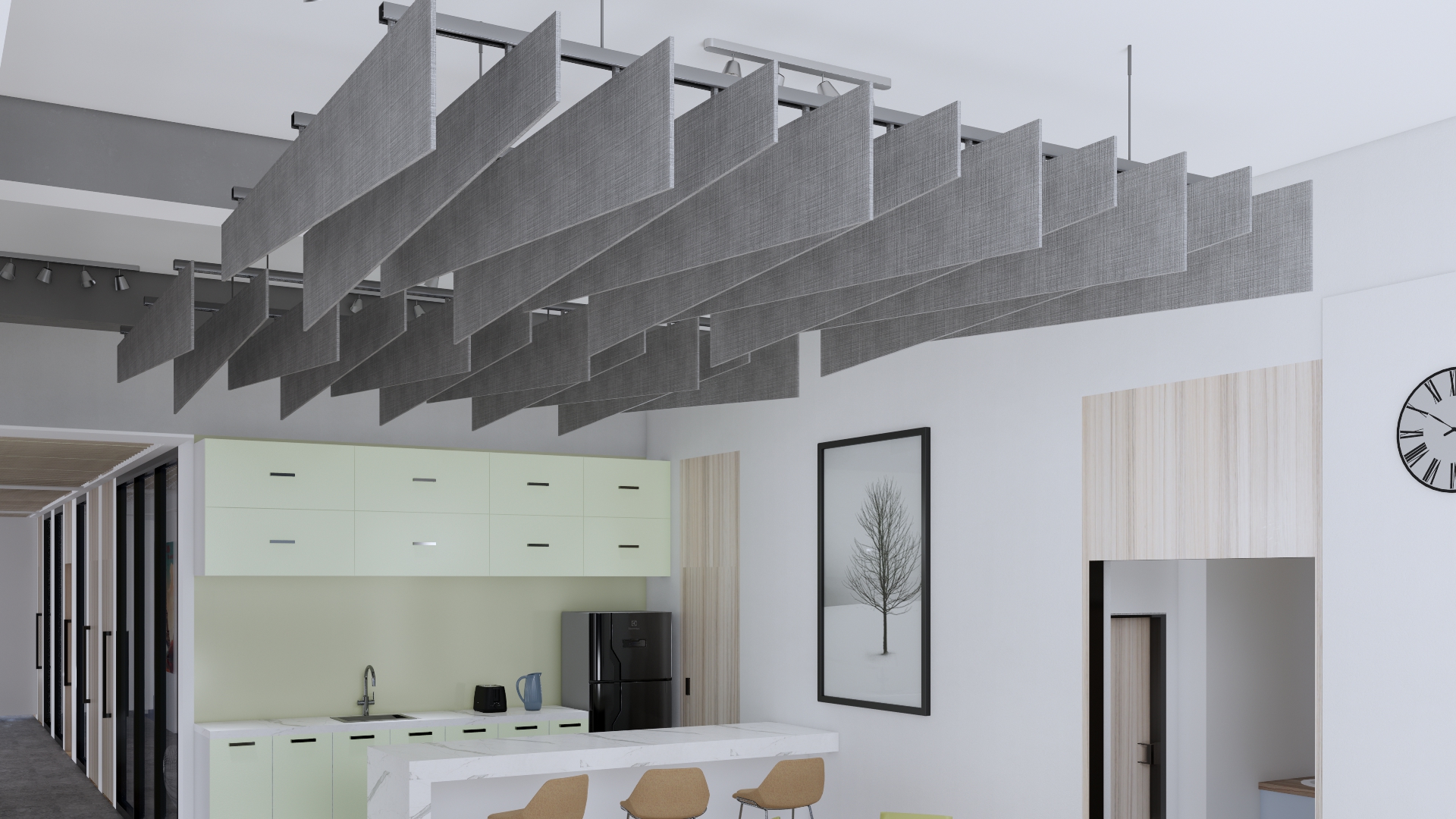
By recognizing the ceiling’s dominant role in sound reflection and utilizing advanced, design-forward solutions like PET blades and dimensional baffles, architects and facility managers can reclaim control over their acoustic environments.
A ceiling-first strategy proves that you do not have to compromise aesthetic vision for sonic performance. By treating the overhead plane, designers can open up walls for art and light, maintain clean architectural lines, and—most importantly—create spaces where people can finally hear, understand, and connect with ease.
Are you considering a “ceiling-first” approach to sound control for your next architectural project? Explore the possibilities offered by Primacoustic’s EcoScapes Blades and Dimensional Baffles, or contact their team directly at Primacoustic.com to book a professional acoustic consultation.