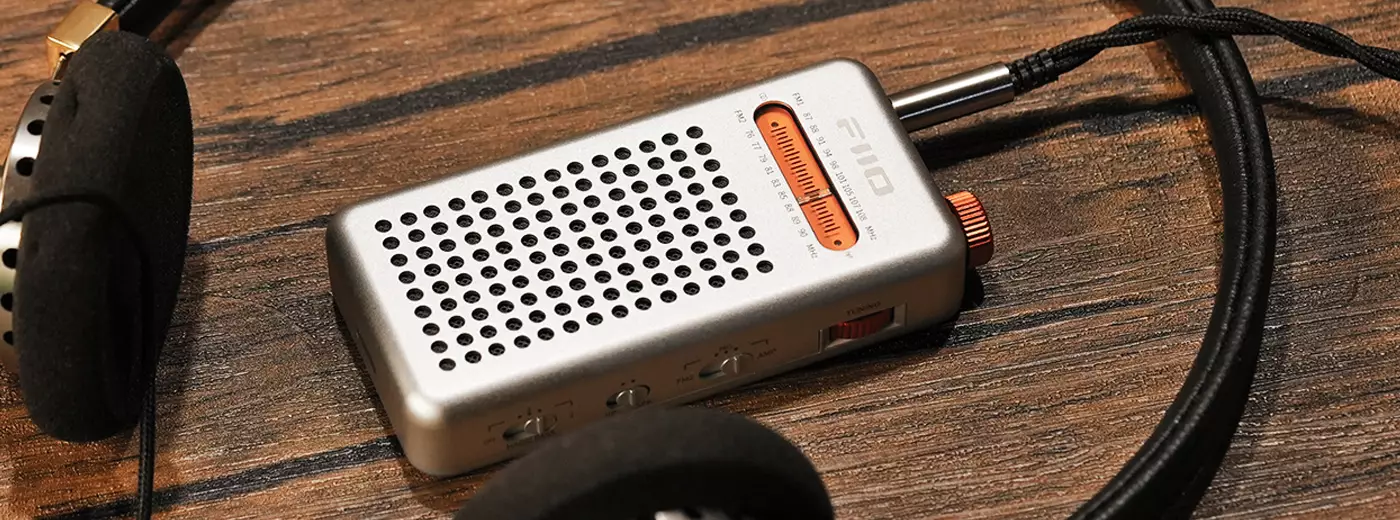
In an era dominated by hyper-optimized streaming algorithms, endless digital playlists, and lossless cloud files, a surprising segment of the consumer electronics market is looking backward. Brands specializing in personal audio are discovering a profound consumer appetite for tactile, nostalgic, and analog-driven hardware. Leading this charge is FiiO, a manufacturer renowned for bridging modern fidelity with vintage aesthetics. Following the success of retro-styled products like the SNOWSKY ECHO NANO and the CP13 cassette player, the company has expanded its portfolio with the introduction of the FiiO RR13—an affordable, multi-functional retro pocket FM radio priced at $64.99.
Far from being a mere novelty item, the RR13 blends classic analog tuning with contemporary decoding technology. It operates not only as a traditional pocket radio but also as a portable USB-DAC and a desktop active speaker. Reviewers testing the unit emphasize that official marketing materials undersell the device’s versatility, positioning it as an engaging piece of everyday carry (EDC) audio gear that reintroduces the serendipity of live broadcasting to a generation raised on on-demand media.

Chronology of Development: Expanding the Portable Radio Concept
FiiO’s journey into the retro radio space began with the introduction of the RR11, a compact, dongle-sized FM receiver designed for minimalists. While the RR11 established that a market existed for pocket-sized analog tuners, users demanded broader functionality, better signal reception, and standalone playback options.
Recognizing these limitations, FiiO engineers conceptualized a successor that would retain the pocket-friendly footprint while incorporating a built-in stereo speaker system, a higher-capacity swappable lithium battery, and an external antenna jack. The result of this development cycle is the RR13. By integrating advanced digital signal processing (DSP) chipsets with classic mechanical tuning wheels, FiiO created a hybrid device capable of bridging the gap between vintage radio broadcasting and modern smartphone-based audio ecosystems.

Engineering and Design: Supporting Data and Specifications
Weighing in at a remarkably light 76 grams, the FiiO RR13 is encased in a sleek aluminum shell available in several industrial color schemes. Despite packing significantly more features than traditional pocket radios from legacy brands like Sony, it remains remarkably portable and operable with a single hand.
Radio Functionality and Chipset Architecture
At the core of the RR13’s radio performance is the Skyworks Solutions Si4831 chipset. This advanced digital signal processor (DSP) cleans and processes radio frequency (RF) signals, automatically optimizing reception across its supported bands (87–108 MHz and 76–90 MHz).

Unlike AM signals, which prioritize range at the expense of fidelity, FM signals trade range for superior audio clarity—much like how Bluetooth LDAC trades transmission stability for resolution over standard SBC codecs. Field tests indicate that when paired with its detachable antenna, the RR13 delivers reception quality comparable to a modern automobile radio, maintaining signal stability even in challenging outdoor environments.
Power, Battery Life, and Ergonomics
One of the most significant upgrades over traditional pocket radios is the inclusion of a rechargeable 3.7V 10440 lithium battery rather than standard, disposable AAA cells. This power source allows the RR13 to run at a higher voltage, providing sufficient amplification to drive a wide variety of in-ear monitors (IEMs) and small headphones with dynamic flair.

- Battery Life: Delivers approximately 7 hours of continuous playback via earphones, and roughly 4 hours when utilizing the built-in stereo speakers.
- Charging Time: A full recharge takes approximately 2 hours via USB-C.
- Sleep Timer: A dedicated timer button on the left panel allows users to program an automatic shutoff for 30 or 60 minutes—a thoughtful inclusion for bedside listeners.
- Tactile Controls: The volume wheel and band switches offer satisfying tactile feedback, reinforcing the product’s premium industrial design ethos.
Audio Performance and Official Assessments
Evaluating the FiiO RR13 requires a dual perspective, as it must be judged both as a radio receiver and as a USB-DAC/amplifier. Independent reviews highlight its surprisingly capable acoustic architecture.
Timbre, Soundstage, and DSP Filtering
Traditional radios often suffer from background hiss, channel interference, and bloated low-end response. However, the RR13 utilizes its DSP filtering to maintain a remarkably clean background free of artifacts when switching between frequencies.

When listening to talk radio, newscasts, or sports broadcasts, human voices are reproduced with notable clarity, avoiding harshness or sibilance even when announcers elevate their volume. For music consumption, the device features a two-step "Magic-Bass" boost. This feature introduces a subtle mid-bass elevation that compensates for ambient noise when using semi-open earbuds or IEMs outdoors, providing a fuller, warmer presentation well-suited for jazz and classic pop.
USB Decoding and Speaker Performance
When switched to amplifier mode and connected to a smartphone or PC via USB-C, the RR13 functions as a competent portable DAC. While it does not include a USB-C to USB-C cable in the standard packaging—requiring users to source their own or utilize a compatible FiiO accessory—the internal DAC delivers an output profile comparable to entry-level USB dongles.

Furthermore, the built-in stereo speakers punch well above their weight class. While not intended to replace dedicated desktop monitors, they get surprisingly loud for their physical dimensions, making them ideal for casual casual listening or shared background music.
Market Implications and Competitive Landscape
The release of the FiiO RR13 arrives at a fascinating cultural juncture. As subscription fatigue sets in and users experience cognitive overload from endless digital choices, analog and physical media are experiencing a renaissance—evidenced by the ongoing revival of vinyl records, cassette tapes, and film photography.

FiiO RR13 vs. FiiO RR11
To understand the positioning of the RR13, industry analysts look directly at its sibling, the RR11.
- Form Factor: The RR11 is strictly a dongle-sized receiver that requires a permanent wired earphone connection to function. The RR13, while slightly heavier (roughly 50% heavier due to its added components), incorporates a built-in speaker, a detachable antenna, and a 50% larger battery.
- Reception: Thanks to its physical antenna and dedicated speaker architecture, the RR13 offers significantly better signal acquisition in rural or fringe coverage areas.
- Value Proposition: Priced at $64.99, the RR13 offers a broader feature set while maintaining a footprint small enough for pocket carry.
Conclusion and Verdict
For audiophiles and casual listeners alike, the FiiO RR13 offers a refreshing change of pace. By stepping away from algorithmic recommendation engines and tuning into live FM broadcasts, users can rediscover the organic, unpredictable joy of radio disc jockeys selecting music in real time. Backed by solid build quality, reliable DSP noise suppression, and versatile multi-functionality as both a radio and a USB-DAC, the RR13 proves that retro audio gear can successfully find a modern home.