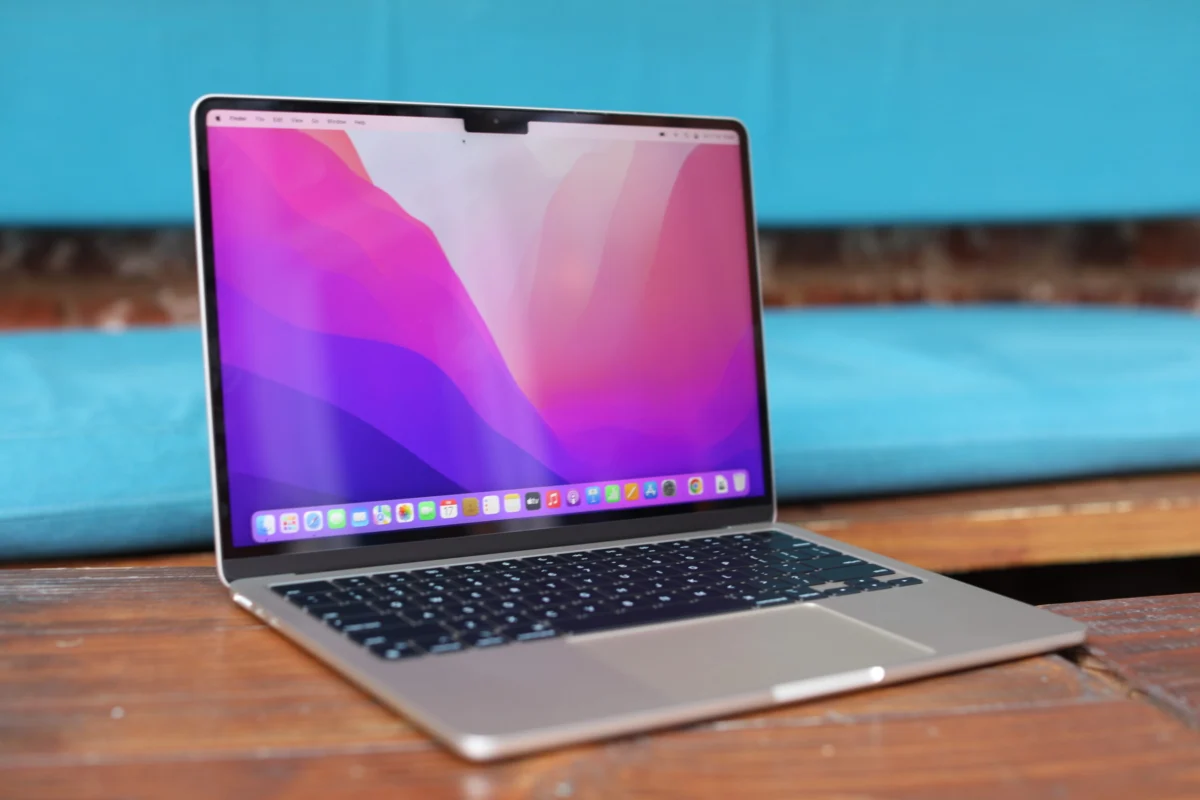
In a move that underscores the growing friction between the rapid advancement of artificial intelligence and the sanctity of personal digital privacy, Apple has announced a significant overhaul of how macOS handles the "Full Disk Access" permission. This shift, which promises to introduce more stringent, explicit controls, comes in the wake of high-profile security concerns involving AI agents—most notably Meta’s Muse app—that have left users questioning the safety of integrating autonomous software into their private computing environments.
The decision represents a major pivot in Apple’s security architecture. While "Full Disk Access" was originally conceived as a necessary "power user" feature to ensure that backup utilities and security software could perform comprehensive system scans, the rise of AI agents has fundamentally altered the threat landscape. Apple is now signaling that the convenience of AI-powered productivity must not come at the expense of systemic vulnerability.
The Catalyst: A Crisis of Trust
The urgency behind Apple’s announcement can be traced directly to a series of recent incidents that rattled the tech community. The most prominent of these involved Inc. columnist Jason Aten, who reported that Meta’s new AI agent, Muse, appeared to possess knowledge of his private messages—information he insisted he had never authorized the application to access.
While Meta has officially disputed the claim, the incident ignited a firestorm of speculation regarding the "black box" nature of AI agents. If an AI is designed to assist a user, it often requires a broad aperture into the user’s digital life to be "helpful." When that aperture is wide enough to ingest private correspondence, the line between a "smart assistant" and a "digital eavesdropper" begins to blur.
This incident did not occur in a vacuum. Shortly before the Muse controversy, Wired published a report detailing a critical flaw in the macOS version of ChatGPT. That vulnerability could have potentially allowed malicious actors to scrape sensitive user data, further exposing the inherent risks of granting desktop applications deep, persistent access to the file system. Together, these reports have created a climate of apprehension, forcing Apple to address the potential for overreach by third-party developers.
Chronology of the Escalation
To understand the current regulatory pivot, one must examine the timeline of how desktop AI has evolved from a novel tool to a potential security liability.
- The Proliferation Phase: Throughout 2024 and early 2025, the release of advanced AI agents for macOS—including integrations from major tech giants—pushed the boundaries of system permissions. Developers began requesting "Full Disk Access" as a prerequisite for "intelligent" features, promising users that the AI would be able to summarize emails, organize files, and manage schedules more effectively.
- The Security Warning (Early 2025): Security researchers began flagging the risks associated with AI agents that reside on the local system. Unlike cloud-based AI, which operates on remote servers, local agents often require access to the local file system, Mail databases, and Messages to function.
- The ChatGPT Flaw: The Wired report highlighted that even industry-leading applications were not immune to architecture flaws, proving that an app with "Full Disk Access" could become a "golden key" for hackers if the app itself were compromised.
- The Meta Muse Incident (September 2025): The report by Jason Aten served as the tipping point. The public outcry over the possibility of an AI reading private, unauthorized messages moved the issue from niche security circles to the mainstream tech discourse.
- Apple’s Policy Shift (October 2025): Within days of the Meta controversy, Apple issued a new directive to developers and announced the implementation of more granular, user-centric controls for macOS permissions.
The Mechanics of "Full Disk Access"
To understand why Apple’s intervention is so critical, one must look at what "Full Disk Access" actually grants. In the current macOS architecture, this permission is essentially an "all or nothing" toggle. By enabling it, a user grants an application the authority to read, modify, and delete any file on the system, including:
- Communication Archives: Access to the local SQL databases for Apple Messages and Mail.
- Browsing History: Access to cookies, cache, and history files from Safari, Chrome, and Firefox.
- System Logs: The ability to scrape metadata and diagnostic logs that could reveal system activity patterns.
- Cloud Sync Data: Access to files stored in iCloud Drive, which could include sensitive work documents and personal media.
Apple’s new policy acknowledges that many users do not fully grasp the scope of this permission. As AI agents become more autonomous—meaning they act on the user’s behalf without constant prompting—the risk that these apps might "over-index" on sensitive information grows exponentially.
Official Responses and Developer Guidelines
Apple’s approach to this crisis has been one of quiet but firm enforcement. In a blog post directed at the developer community, the company stated: "Some developers are using Full Disk Access in ways that could put users at risk, exposing everything on their systems… without users’ full knowledge and understanding."
Apple’s new guidelines emphasize "very explicit user action." The company is moving away from the paradigm where a developer can simply prompt a user to "Enable Full Disk Access for a better experience." Instead, Apple is mandating that applications provide a clear, concise justification for why such a permission is necessary for a specific feature, and likely introducing a system-level audit trail that shows exactly what the app is accessing and when.
Meta, for its part, has maintained its stance that Muse operates within the established privacy guidelines of the macOS ecosystem. However, the company is under mounting pressure to demonstrate that its AI training models are not ingesting private user data from the local machine without explicit, compartmentalized consent.
The Broader Implications for AI and Privacy
The move by Apple represents a significant turning point in the AI era. It signals that the era of "move fast and break things" in the AI space is meeting the hard wall of consumer privacy rights.
1. The Death of "Permission Creep"
For years, apps have been incentivized to request the broadest set of permissions possible. Apple’s crackdown forces developers to rethink their architecture. The new standard will likely be "Least Privilege," where AI agents are granted access only to specific folders or specific data streams rather than the entire disk.
2. The Rise of "Privacy-Preserving AI"
This shift will likely accelerate the development of Privacy-Preserving Machine Learning (PPML). Instead of apps reading raw files, they may be forced to use new, Apple-provided APIs that allow the AI to "read" data in a sandboxed, encrypted environment, where the raw content never truly enters the app’s long-term memory or training set.
3. Increased User Skepticism
The "Muse" incident has caused a permanent change in how users view AI. The perception that an app is "smart" is no longer enough to justify trust. Users are increasingly demanding transparency, seeking to know not just what an AI can do, but what it knows about them and who has access to that knowledge.
4. Regulatory Pressure
While Apple is taking internal action, this incident provides fuel for global regulators. The EU’s AI Act and the ongoing scrutiny of big tech’s data practices in the U.S. will likely view this as evidence that self-regulation by tech giants is insufficient. We should expect to see more legislative mandates requiring that AI agents clearly disclose their data-gathering behaviors at the system level.
Conclusion: A New Standard for Personal Computing
As we move further into the age of the autonomous agent, the computer is no longer just a tool; it is a repository of our entire digital existence. Apple’s decision to tighten "Full Disk Access" is not merely a technical update; it is a declaration that the user—not the developer—must maintain absolute sovereignty over their data.
For developers, the message is clear: trust is the most valuable commodity in the AI ecosystem. If an application is found to be overstepping its bounds, or if it lacks the transparency required to justify deep system access, it will no longer be tolerated on the platform. For the end user, this is a long-overdue step toward a safer digital future, where the benefits of AI are enjoyed without the haunting uncertainty of whether our personal thoughts and private messages are being analyzed, indexed, or exposed.
The path forward for AI is one of transparency. As Apple sets these new barriers, the rest of the industry will be forced to follow suit, ensuring that the "agents" of the future act as true stewards of our privacy, rather than just another threat to it.