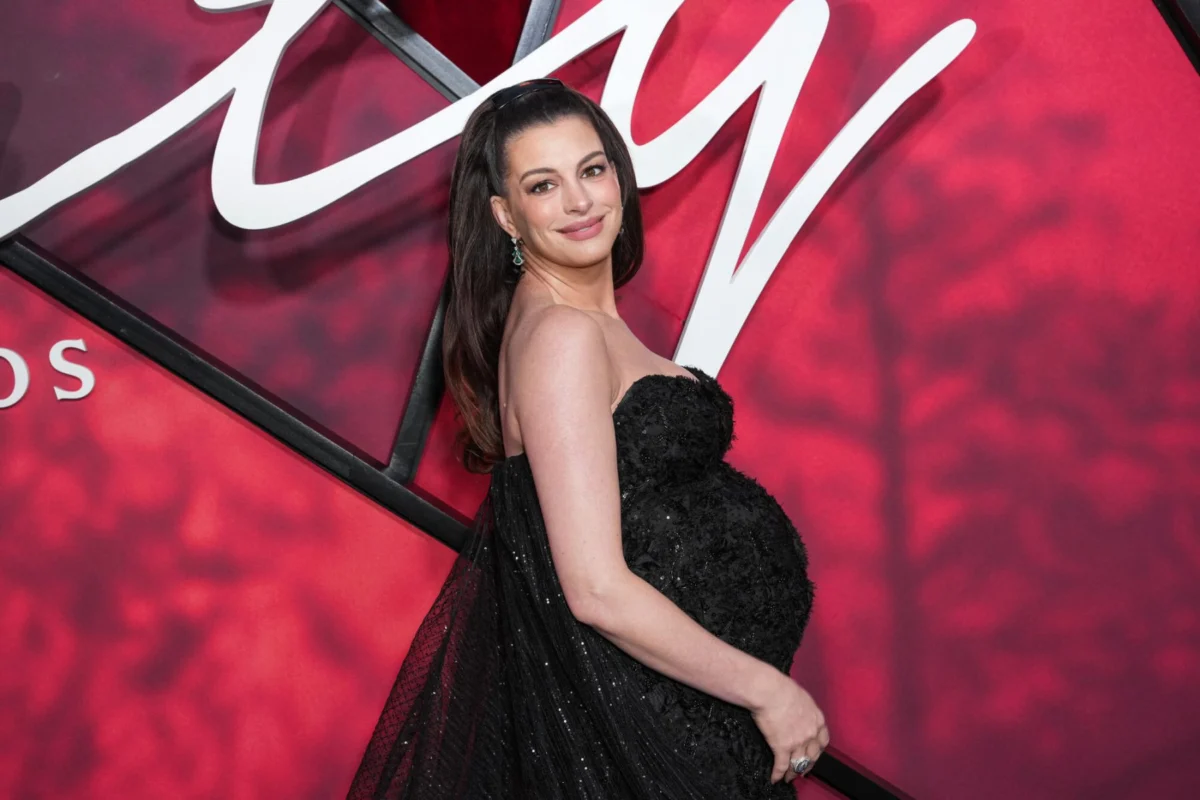
In the ever-evolving landscape of celebrity fashion, few shifts have been as seismic as the transition from the "conceal and camouflage" era of maternity wear to the current movement of bold, unapologetic self-expression. At the center of this cultural pivot stands Rihanna, whose own pregnancies served as a masterclass in challenging societal expectations. Now, as Hollywood royalty Anne Hathaway steps into her own third pregnancy, she is crediting the Fenty mogul with providing the sartorial blueprint for her current red-carpet resurgence.
The Catalyst: A New Era of Maternity Confidence
During a recent appearance on CBS Mornings to promote her latest psychological thriller, Verity, Anne Hathaway offered a candid look into the intersection of motherhood and high fashion. While discussing the promotional tour for her new role, the Oscar-winning actress—who is expecting her third child with husband Adam Shulman—was lauded by host Gayle King for her adventurous and daring wardrobe choices.
Hathaway’s response was immediate and reverent: "I think we have Rihanna to thank," she stated, noting that the singer’s approach to pregnancy fashion fundamentally altered the industry standard. "She changed the game. When I saw what she was doing with her maternity style, I just realized that I just needed to use my imagination and go out there and have more fun."
This acknowledgement highlights a broader trend: the de-stigmatization of the pregnant body in the public eye. For decades, celebrity maternity style was defined by flowy silhouettes, empire waists, and a general effort to hide the baby bump. Rihanna’s defiance of these norms—replacing maternity smocks with sheer fabrics, crop tops, and statement jewelry—has empowered a new generation of stars to embrace their physical transformation rather than hide it.
A Chronology of the Style Shift
The transformation of maternity fashion didn’t happen overnight; it was a steady progression fueled by a handful of cultural icons.
The Era of Concealment (Pre-2010s)
For much of the early 2000s, the "bump watch" was a tabloid staple, often characterized by a cat-and-mouse game between celebrities and the press. Fashion houses largely avoided high-concept maternity wear, leaving pregnant women to navigate a limited market of "special occasion" dresses that focused on obscuring the midsection.
The Turning Point (2022–2024)
Rihanna’s pregnancy with her first son, RZA, became a watershed moment in fashion history. In early 2022, she stepped out in New York City wearing a vintage pink Chanel puffer coat, unbuttoned to reveal a growing belly adorned with a long-line cross necklace. This look, captured by photographer Diggzy, effectively dismantled the "maternity dress code." Throughout her subsequent pregnancies with Riot Rose and her daughter, Rocki, Rihanna continued to push boundaries with cutouts, latex, and high-fashion streetwear.
The Current "Mainstream" Embrace (2025–2026)
Following in these footsteps, icons like Anne Hathaway have moved beyond merely "dressing the bump." Instead, they are integrating their pregnancy into their personal branding. Hathaway’s promotional tour for Verity serves as a continuation of this legacy, proving that high-fashion designers are now willing to customize couture pieces to celebrate, rather than accommodate, the pregnant form.
Supporting Data: The Economics of the "Bump"
The shift toward maternity-forward fashion has had a measurable impact on both the luxury fashion sector and the broader retail market.
According to recent fashion industry analytics, search terms related to "chic maternity wear" and "maternity red carpet looks" have seen a 45% increase in volume since 2023. Designers are no longer viewing maternity wear as a secondary, "niche" category. Instead, major fashion houses are increasingly offering "bump-friendly" couture, recognizing that expectant mothers—especially high-profile ones—are looking to maintain their personal style throughout their pregnancies.
Furthermore, the "Rihanna Effect" has trickled down to mass-market retailers. Data from consumer behavior analysts indicates that demand for body-con maternity dresses and crop-top sets has surged, as consumers look to replicate the "unapologetic" style popularized by the billionaire entrepreneur. The economic implications are clear: the maternity market is no longer just about utility; it is a burgeoning sector of the high-fashion economy.
Official Responses and Public Sentiment
The cultural discourse surrounding Hathaway’s comments has been overwhelmingly positive. Stylists and fashion critics have lauded the move as a long-overdue evolution in how society treats pregnancy.
"It’s about agency," says celebrity stylist Marcus Thorne. "When Anne Hathaway says she’s using her imagination, she’s really talking about reclaiming her body from the public narrative. By choosing to wear bold, form-fitting pieces, she’s signaling that she is the one in control of her image, not the pregnancy itself."
Hathaway herself elaborated on this during her CBS Mornings interview, focusing on the psychological freedom that comes with this approach. "I’m enjoying not having to worry about covering up my tummy," she explained, echoing the sentiment Rihanna shared with People magazine years prior: "If I feel a little chubby, it’s like, whatever! It’s a baby!"
This shift is also reflective of a larger change in family life for the actress. Discussing her two sons, aged 10 and 6, Hathaway emphasized the importance of the current moment. "We’re thrilled, we’re overjoyed," she told Gayle King. "But what we’re really focused on right now is actually just taking in still being a family of four, because everything’s going to change for us, but it’s really going to change for our kids."
Implications for the Future of Celebrity Culture
The ripple effects of this trend are likely to be felt for years to come. By normalizing the "maternity look" as a legitimate high-fashion category, figures like Hathaway and Rihanna are setting a new standard for the next generation of celebrities.
1. The Redefinition of "Professional"
For years, there was an implicit pressure for pregnant actresses to step back from the spotlight or adopt a "softened" aesthetic. By continuing to take on complex, intense roles—such as her role in the psychological thriller Verity—while maintaining a high-fashion presence, Hathaway is helping to dismantle the idea that pregnancy limits a woman’s professional or aesthetic range.
2. A Shift in Retail Dynamics
As high-profile figures continue to demand more inclusive and daring designs from luxury houses, we can expect to see a permanent shift in how major designers approach their collections. The "maternity line" may eventually become an obsolete concept, replaced by inclusive sizing and flexible silhouettes that cater to all body types, regardless of pregnancy.
3. Cultural Normalization
Perhaps the most significant implication is the change in public perception. The constant, intrusive questioning about "what to wear" during pregnancy is being replaced by a celebration of personal style. As Hathaway noted, it is about having "more fun"—a simple concept that, when applied to a rigid industry like Hollywood, becomes a revolutionary act.
Conclusion
Anne Hathaway’s public tribute to Rihanna is more than just a nod to a fellow icon; it is a recognition of a movement that has redefined what it means to be a pregnant woman in the public eye. By moving away from the need to hide and toward the desire to express, celebrities are changing the conversation around motherhood.
As Hathaway continues her promotional tour for Verity, she does so with a sense of freedom and joy that has clearly been informed by the "game-changing" influence of the Fenty founder. Whether on the red carpet or in the quiet moments of raising her family, Hathaway’s journey proves that maternity style—and indeed, motherhood itself—is a space for creativity, imagination, and, above all, the confidence to remain oneself.
As we look toward the future of fashion, one thing is certain: the era of the "maternity uniform" is over, and the era of the individual has firmly arrived.