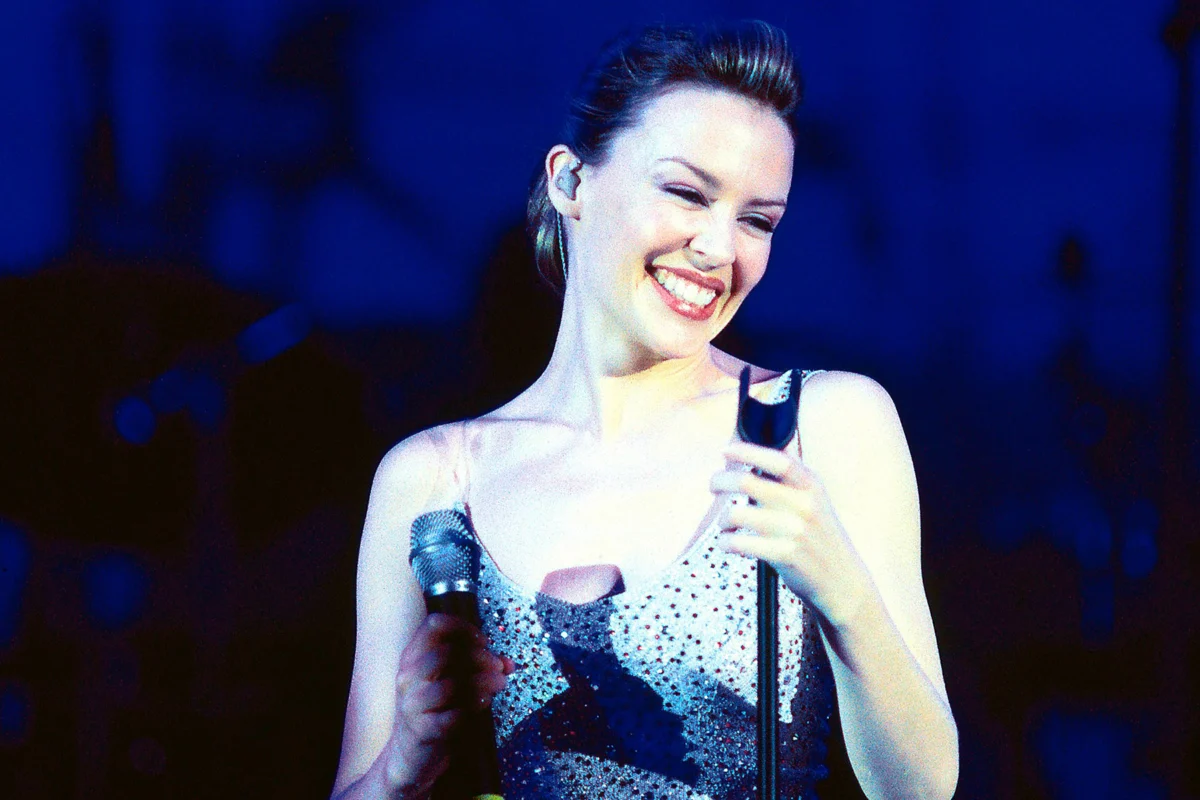
On October 1, 2001, the music industry was fundamentally altered by the arrival of a record that was as clinical as it was intoxicating. Fever, the eighth studio album from Australian pop icon Kylie Minogue, did more than just top the charts—it crystallized the transition of electronic dance music from the fringes of European club culture to the absolute epicenter of global radio.
As we approach the 25th anniversary of this cultural touchstone, it is worth examining how Fever served as the engine for one of the most remarkable career renaissances in music history. It was the moment Kylie Minogue transitioned from a beloved pop star into an international treasure, cementing a Y2K-era aesthetic that remains the gold standard for dance-pop.
The Context: A Career at the Crossroads
By the late 1990s, Kylie Minogue’s career trajectory was in a state of flux. After departing from the hit-making factory of Stock Aitken Waterman and exploring more indie-leaning, experimental sounds on her mid-90s self-titled record and Impossible Princess, the public’s perception of Minogue was fractured. Was she a serious artist, or a manufactured pop star?
The answer arrived with 2000’s Light Years, a project that functioned as a deliberate pivot back to her roots. By embracing the effervescent, disco-infused pop that defined her early years, she signaled to the industry that she had mastered the art of reinvention. However, Light Years was merely the prelude. If Light Years was the invitation, Fever was the full-blown, neon-lit experience.
"I feel like I’m on a wave and I actually know how to stand on the board at this point," Minogue told The Guardian in September 2001, just weeks before the album’s release. "I feel quite solid. I don’t know where it’s taking me, but everything feels really good."
The Chronology of a Global Phenomenon
The rollout of Fever was a masterclass in strategic momentum. The campaign was spearheaded by "Can’t Get You Out of My Head," a song so infectious it defied the laws of traditional airplay. Produced by Cathy Dennis and Rob Davis, the track was famously rejected by S Club 7 and Sophie Ellis-Bextor before landing with Minogue.
Upon its release in September 2001, the single became a seismic event. It reached number one in over 40 countries, effectively turning the tide for the entire album. Following the single’s dominance, the album Fever dropped on October 1, 2001, in Europe and Australia, creating a sustained period of commercial success that lasted well into 2002.
The subsequent singles—"In Your Eyes," "Love at First Sight," and "Come Into My World"—each acted as a reinforcement of the album’s core identity: a sleek, futuristic, and highly danceable collection of tracks that mirrored the clinical, Y2K-obsessed fashion of the era.
Supporting Data: By the Numbers
The statistical footprint of Fever is staggering, providing empirical evidence of its impact on the music industry.
- Sales Milestones: Fever shifted over six million copies worldwide, making it the highest-selling album of Minogue’s career. It remains one of the most successful international pop albums of the early 2000s.
- Billboard Breakthrough: For the American market, Fever represented a breakthrough. It reached the top three of the Billboard 200, a monumental leap from the No. 53 peak of her 1988 self-titled debut. This signaled that the "Kylie brand" had finally successfully crossed the Atlantic.
- Chart Dominance: The album produced four major international hits. "Can’t Get You Out of My Head" alone spent four weeks at the top of the UK Singles Chart and became one of the best-selling singles of the 21st century.
- Awards Recognition: The critical and commercial acclaim culminated in a sweep of accolades. Minogue secured the Best International Album at the 2002 BRIT Awards, and "Come Into My World" earned her a Grammy Award for Best Dance Recording in 2004, validating the album’s artistic merit in the eyes of the Academy.
The Aesthetic Shift: A New Visual Language
While the music was undeniably the focal point, Fever was equally defined by its visual identity. The era introduced the world to the "White Hooded Jumpsuit," a costume so iconic it now resides in the Victoria and Albert Museum.
The aesthetic of Fever—defined by director and collaborator William Baker—was one of "retro-futurism." It was cold, metallic, and precise. In an era where pop stars were often marketed through "girl next door" tropes, Minogue opted for a detached, robotic glamour. This was a deliberate choice to emphasize the electronic nature of the music. The videos were sparse, focusing on choreography and the star’s physical presence, stripping away the clutter of late-90s music video tropes.
Official Responses and Critical Legacy
Critics at the time were almost universal in their praise. NME described the album as "the perfect pop record," while Rolling Stone noted that Minogue had managed to bridge the gap between "kitsch and cool."
Industry experts often cite Fever as the blueprint for the modern pop star. By collaborating with a rotating cast of producers (including Cathy Dennis, Guy Chambers, and Richard Stannard), Minogue proved that a pop star didn’t need a single auteur to define their sound; rather, she could curate a team of experts to create a cohesive, polished product.
"Kylie was the first to really understand that pop music in the new millennium needed to be sleek," says music journalist Sarah Jenkins. "She took the camp sensibility of the 80s and filtered it through the cold, digital lens of the year 2000. Everyone from Dua Lipa to Lady Gaga owes a debt to the structural perfection of Fever."
The Long-Term Implications
The legacy of Fever extends far beyond its initial sales. It set the standard for what a "comeback" should look like. It proved that a veteran artist could remain relevant not by chasing trends, but by refining their own signature style.
Furthermore, Fever solidified the role of the "Pop Girl" as a global touring entity. The subsequent KylieFever2002 tour was a spectacle of high-concept design, setting the bar for future arena tours. It was a theatrical production that prioritized high-fashion costumes, intricate lighting, and synchronized dance—a standard that remains the baseline for today’s stadium-filling artists.
Conclusion: Why We Still Listen
Twenty-five years later, Fever does not sound dated. Its production, which relied heavily on synth-pop sensibilities and steady, four-on-the-floor beats, has aged with a grace that few other albums from 2001 can claim. While many of its contemporaries relied on the "nu-metal" or "teen pop" trends of the day, Fever was built on the timeless foundation of disco and house.
As Kylie Minogue prepares to commemorate this milestone, the industry looks back at Fever not just as a collection of hits, but as a turning point. It was the moment the world caught up to her, realizing that she wasn’t just a participant in the pop machine—she was its master.
From the opening hum of "More More More" to the final fade of "Burning Up," Fever remains a testament to the power of commitment. It is the sound of an artist standing firmly on her board, riding a wave that, a quarter-century later, shows no signs of breaking.