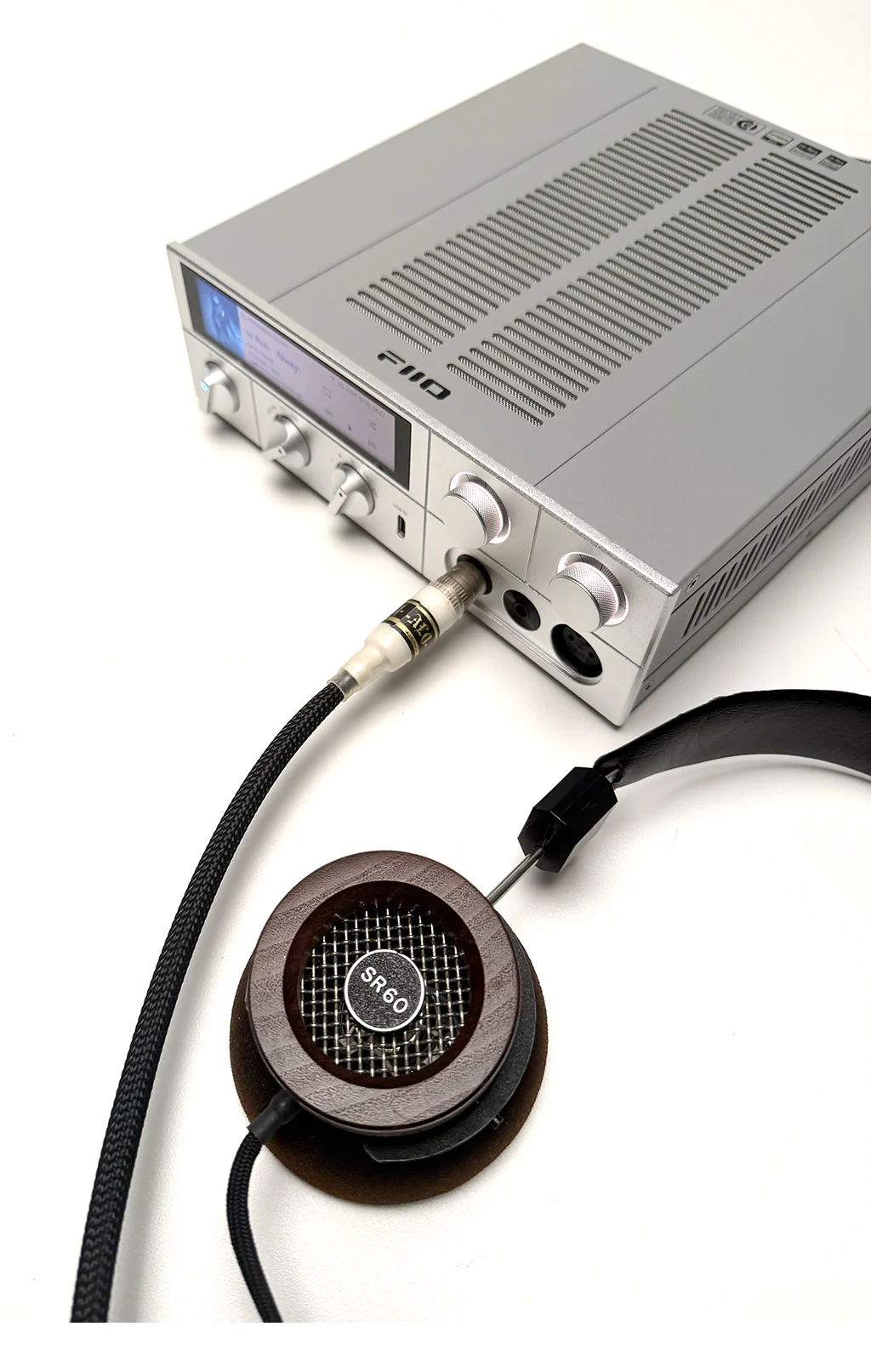
In an audio landscape where five-figure price tags are increasingly normalized and consumer frustration over runaway inflation dominates enthusiast forums, a disruptive new benchmark has arrived. Priced at just $995, the FiiO K17 has stunned the high-end audio community by packing a full-blown streamer, high-resolution DAC, robust preamplifier, and discrete headphone amplifier into an ultra-compact chassis—complete with a 31-band digital parametric EQ.
Earning the first Exceptional Value Award of 2026, the K17 proves that world-class musicality and uncompromising engineering are no longer reserved exclusively for those with deep pockets.
Main Facts: What Is the FiiO K17?
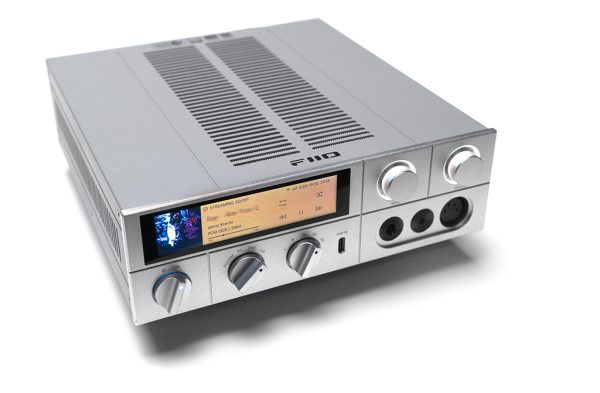
At its core, the FiiO K17 is a multi-functional digital and analog hub designed to anchor everything from a desktop headphone rig to a sophisticated, full-sized living room Hi-Fi system. Measuring roughly 8 inches by 8 inches by 2 inches, it represents a masterclass in miniaturization.
Key hardware and software specifications include:
- Price: $995.00 USD
- Core Functions: Network streamer (RON endpoint, Qobuz, Tidal, Spotify Connect via Bluetooth, MQA decoding), Digital-to-Analog Converter (DAC), Line Preamplifier, and Headphone Amplifier.
- Power Output: 4 watts to the headphone section via discrete output devices, featuring three distinct headphone jack configurations.
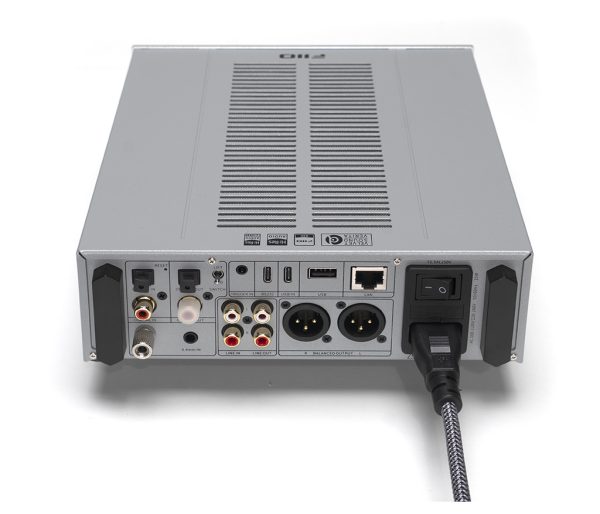
- Connectivity: Coaxial SPDIF, optical, and USB digital inputs; balanced XLR and single-ended RCA analog outputs; one analog line-level input for turntable integration; and a rear-panel ground lift switch.
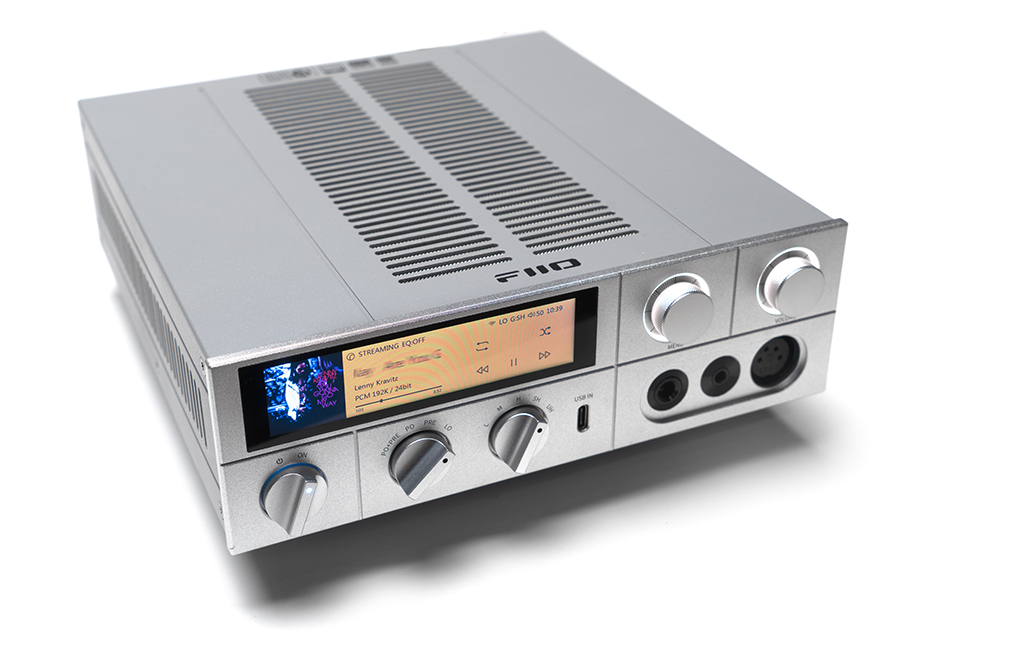
- Control Interface: A brilliant 3.93-inch high-resolution front-panel touchscreen alongside companion app support for smartphones and tablets.
- Acoustic Tools: A built-in 31-band digital parametric equalizer (PEQ) accessible via app or front interface.
Chronology: Putting the K17 Through Its Paces
The evaluation of the FiiO K17 spanned rigorous multi-system testing over several weeks, stretching from ultra-revealing reference studios to acoustically challenging residential spaces.
Phase 1: The Reference Studio Integration
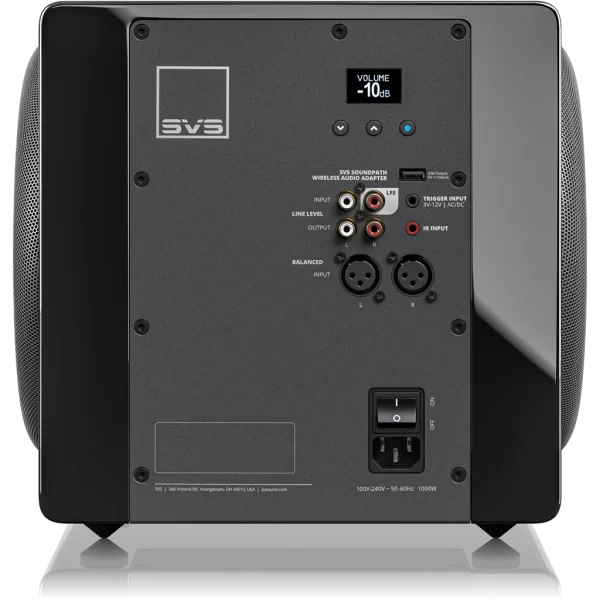
Initially introduced into an elite reference setup featuring towering Klipsch AK7 Klipschorns paired with an SVS 5000 subwoofer, the K17 was fed via RON playing The Art of Noise’s “Paranormal.” Despite sharing floor space with gear worth exponentially more, the tiny unit immediately confounded visiting audiophiles.
Moving through structurally demanding tracks—such as Tom Waits’ “What’s He Building?”, Lou Reed’s “Vanishing Act”, and Allan Taylor’s rendition of “Tennessee Waltz”—the K17 exposed deep layers of midrange texture, dynamic weight, and soundstage depth that typically elude gear at this price point.
Phase 2: Headphone and Room Correction Trials
Swapping speakers for headphones, the K17’s 4-watt discrete amplifier stage drove demanding cans like the Focal Clear MG, original Audeze LCD-2s, and Grado reference models with effortless authority.
When moved to a secondary, acoustically hostile living room environment, the K17’s secret weapon came into play: its 31-band digital parametric EQ. By surgically taming low-end boom and smoothing out upper-midrange cloudiness via the companion app, the unit transformed an unlistenable room into an engaging, highly musical space without degrading signal integrity.
Phase 3: Direct-to-Amplifier Preamplification
To test its mettle as a pure line-stage preamplifier, the K17 drove a Pass Labs XA30.8 power amplifier across a grueling 6-meter run of balanced Ranger XLR interconnects. Alternatively, paired with a vintage Technics SL-1100 turntable, Hagerman Trumpet MC phono stage, Vera-Fi A40 Class-A amplifier, and vintage Acoustat 2+2 speakers, the K17 demonstrated that its volume control implementation preserves micro-details seamlessly even down to whisper-quiet levels.
Supporting Data: Comparative Performance Analysis
To truly contextualize the value proposition of the FiiO K17, reviewers benchmarked it against industry heavyweights across vastly different pricing tiers.
- The Ultra-High-End Benchmark: For perspective, the reviewer maintains a dCS Vivaldi ONE digital player (currently valued near $100k with APEX specifications). While the K17 is understandably not a "dCS killer," its core musicality and refinement stretch far beyond what a sub-$1,000 component has any right to achieve.
- Mid-Tier Competitors: Side-by-side listening comparisons against dedicated digital players and streamers from Advance Paris, Naim, and Marantz—many sporting price tags nearly double the K17’s $995 MSRP—revealed that the FiiO not only holds its own sonically but outright dominates in sheer feature versatility.
- Ergonomics and Build: The retro-industrial aesthetic evokes early Mark Levinson components on a micro-scale. While the silver review sample featured lettering that proved slightly difficult to read under certain lighting conditions (prompting a recommendation for the high-contrast black chassis version), the 3.93-inch touchscreen and comprehensive I/O layout left little room for functional criticism.
Official Perspectives and Industry Reception
Reactions from veteran audio reviewers and manufacturers highlight a shifting paradigm in high-end audio engineering.
"At $995, the FiiO K17 is one of the best values I’ve ever encountered in high-end audio in a long time. It’s more than worth the price asked, even if you were merely using it as a preamplifier, headphone amplifier, DAC, or streamer alone. That you get all four in one neatly executed box is incredible." — Lead Reviewer, TONEAudio
Industry analysts note that companies like FiiO are bridging a dangerous gap in the consumer market. For years, young or budget-conscious music lovers faced a steep financial wall to enter genuine high-end audio. By compressing high-end topology—fully balanced analog stages, robust power supplies, and advanced DSP capabilities—into a $995 footprint, manufacturers are lowering the barrier to entry without asking buyers to sacrifice sonic integrity.
Implications for the Audiophile Market
The arrival of the FiiO K17 carries significant implications for both consumer buying habits and high-end manufacturing strategies:
- A New Anchor for Mid-Fi Systems: Rather than scraping together funds to build a patchwork system of entry-level separates, budding audiophiles can now purchase the K17 as a rock-solid, high-performance digital and control center, pairing it directly with a clean power amp and speakers.
- The Rise of "Space-Saving" High-End: The audiophile market has historically equated physical mass with performance. The K17 challenges this dogma, proving that advanced circuit routing and modern manufacturing tolerances can squeeze reference-grade performance out of an 8-inch chassis.
- The Normalization of Digital Correction: Audiophile purists have traditionally frowned upon digital signal processing (DSP) or EQ. However, products like the K17—which democratize surgical 31-band PEQ via mobile apps—acknowledge the real-world acoustic limitations of living spaces, prioritizing musical enjoyment over dogmatic purism.
Verdict
The FiiO K17 is not merely a gadget; it is a profound achievement in value engineering. Whether deployed as a minimalist desktop headphone rig, a high-end DAC feeding vintage transport decks, or the control heart of a living room speaker system, it punches radically above its weight class. It has earned its place as an essential component to check out—and one that is staying firmly in the reference rotation.