Main Facts: The Acoustic Dilemma of Small Spaces
For decades, live sound engineering has operated under a familiar set of rules: big stages, massive rooms, outdoor festivals, and thousands of audience members demand high-output amplification. In these environments, an acoustic drum kit is not just appropriate; it is a necessity. Drums are inherently designed to be struck hard, generating the kinetic energy and punch required to fill expansive venues.
However, a fundamental acoustic conflict arises when this same high-energy methodology is transposed into intimate settings—such as corporate events, wedding receptions, and modern worship spaces. In these smaller rooms, the band often acts as a supportive element rather than the primary focal point. Yet, because the acoustic drum kit establishes the baseline decibel level of the stage, the rest of the ensemble must inevitably scale up their volume to match it.
The result is the dreaded "loudness wars" on stage. Sound engineers frequently find themselves battling a self-perpetuating cycle of rising decibels, where stage levels easily push past 110 dB (A-weighted) even before the house sound system is turned on. When stage wash reaches these volumes, front-of-house (FOH) engineers are left with no headroom. Vocals fed into stage monitors bounce off back walls so loudly that the main mix must be throttled down to near zero.
To achieve a comfortable, high-impact room mix of 90 to 95 dB without destroying the hearing of the audience, the raw acoustic stage volume must be reigned in to approximately 85 to 90 dB. Accomplishing this requires a paradigm shift in how live percussion is integrated into a performance. This report explores four viable, modern technological solutions for managing drums and percussion on a semi-silent stage, examining their mechanics, applications, and implications for live events.

Chronology: The Evolution of Stage Volume Management
The struggle to control stage volume is as old as amplified music, but the methodologies used to address it have evolved significantly over the past half-century.
- The Era of Open Stages (1970s–1990s): For decades, sound reinforcement relied heavily on natural acoustics combined with increasing PA power. As rock and roll dominated live music culture, loudness was often conflated with excitement. Little attention was paid to stage bleed, and vocalists fought against unchecked stage volume using increasingly hotter monitor wedges.
- The Acrylic Shield Revolution (Late 1990s–2000s): As worship spaces and corporate venues began adopting contemporary band setups, the initial response was the introduction of flat plexiglass drum shields. While these shields offered minor relief for front-line vocalists standing directly in the line of fire, they largely failed to reduce overall room decibel levels due to sound diffraction and reflections bouncing off untreated ceilings and walls.
- The Rise of Electronic and Hybrid Kits (2010s): Manufacturers began experimenting seriously with electronic drum kits utilizing rubber or mesh pads. While electronic kits successfully dropped stage volume, early models suffered from latency, uninspired sample libraries, and a lack of natural physical feedback, leading to resistance from traditional drummers.
- Modern Hybrid Ecosystems (Present Day): Today’s market features advanced mesh-head hybrid shells, DSP-tuned quiet cymbals, smart drum pedals, and responsive toe-tap drum machines. These technologies bridge the gap between traditional tactile performance and strict volume management, allowing sound engineers to achieve low-decibel stages without sacrificing musical integrity.
Supporting Data: Decibels, Physics, and Equipment Metrics
Understanding the mechanics of sound pressure levels (SPL) clarifies why traditional drum kits disrupt smaller venues.
- The Baseline Problem: Sound level meters placed in the front row of typical contemporary worship services often register 105 to 110 dB (A-weighted) even when the house PA system is completely turned off.
- The FOH Paradox: To mix effectively over an untreated stage, the main house system must be driven to 105 to 110 dB just to cut through the stage roar. This creates an uncomfortably loud environment for the audience.
- The Target Ratio: Industry best practices suggest that an 85 to 90 dB acoustic stage volume allows for a powerful, clear, and safe 90 to 95 dB room mix.
- Hardware Efficiency Metrics:
- Plexiglass Iso-Booths: Completely enclose the drummer with front/side glass and absorptive panels on the back wall and ceiling. While effective at total isolation, they require multi-mic setups, dedicated monitor mixes, and auxiliary lighting.
- Hybrid Mesh/Quiet Cymbals: Drilled metal cymbals paired with under-bell pickups and tunable DSP controllers reduce physical cymbal volume by 12 to 15 dB compared to standard metal equivalents while maintaining natural rebound and zero-latency response.
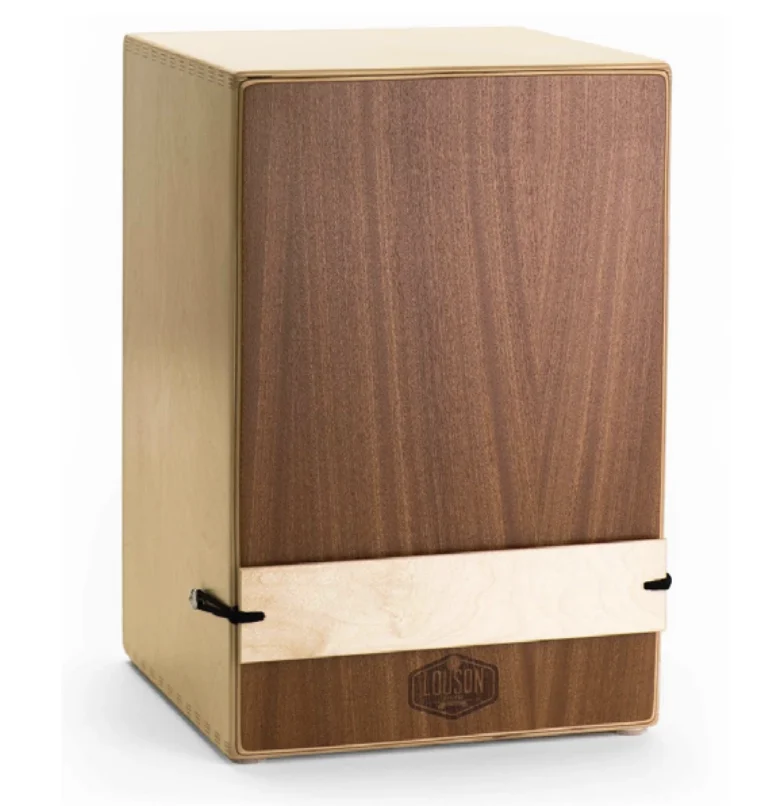
- Dual-Mic Cajon Pickups: Combine a dynamic mic for low-end "boom" and a condenser mic for high-end "snap," overcoming the traditional challenge of miking acoustic alternative percussion on active stages.
Official Perspectives and Industry Insights
Audio professionals and hardware manufacturers have increasingly focused on bridging the gap between acoustic authenticity and volume control.
Experienced live sound engineers who have spent decades miking hundreds of kits point out that drummers are rarely malicious; they are simply playing instruments designed to be struck with force. "Drum kits are designed to be hit hard, which makes them loud on stage," notes veteran audio engineer and industry commentator. The challenge is convincing musicians that a quieter stage does not mean a compromised performance.

Manufacturers have responded directly to these audio engineering pain points. Companies like ClearSonic have refined modular isolation booths, while drum manufacturers such as ddrum and Zildjian have invested heavily in hybrid technology. The introduction of tunable DSP processors for low-volume metal cymbals represents a major leap forward, allowing performers to retain the physical feel of traditional bronze without the overpowering acoustic energy.
Furthermore, technology companies specializing in interactive rhythm tools—such as Singular Sound (creators of the Beat Buddy pedal) and Finhol (creators of the Auto Stomp Laser Bundle)—have shifted the paradigm of automated percussion. Modern smart pedals no longer rely on rigid, uneditable loops; instead, they feature expansive cloud libraries and dynamic tempo-tracking modes that follow the lead of front-line instrumentalists rather than forcing the band to play to a click track.
Implications: Implementing Low-Volume Strategies in Live Production
Transitioning a band to a semi-silent or low-volume stage carries wide-ranging implications for event production, artistic performance, and overall audience satisfaction.
1. Full Drum Isolation: The High-Cost, High-Control Approach
Enclosing a drummer in a complete plexiglass isobooth—complete with sound-absorbing roof panels—remains the ultimate tool for absolute bleed control. However, the implications are significant. Financially, it is expensive to construct properly. Acoustically and socially, it isolates the drummer from the rest of the ensemble, potentially dampening visual interaction and group chemistry. Furthermore, lighting designers must account for the physical roof obstructing standard overhead rig angles.

2. Hybrid Acoustic Kits: The Musician-Friendly Compromise
Using real wooden drum shells fitted with electronic triggers, mesh heads, and drilled low-volume cymbals offers perhaps the smoothest transition for traditional drummers. Because the physical mechanics of playing remain identical to an acoustic kit, the learning curve is virtually flat. The primary implication here is cost of entry and the need for a robust drum module or software platform to translate the triggers into compelling FOH samples.
3. Alternative Percussion: Simplicity for Worship and Corporate Gigs
Implementing instruments like cajons and djembes drastically reduces stage volume while infusing an organic, intimate aesthetic. For corporate events and acoustic worship settings, these instruments invite participation without intimidation. When paired with advanced dual-mic pickup systems, engineers can capture both the low-frequency resonance and high-frequency snap required to sit comfortably in a professional mix.
4. Smart Pedals and Automated Rhythm Units: Interactive Flexibility
The integration of toe-tap drum machines and smart pedals introduces fascinating workflow possibilities. By utilizing manual modes where the pedal tracks the performer’s real-time tempo changes, solo artists and small ensembles can enjoy dynamic, responsive percussion without needing a dedicated physical drummer on the backline.
Conclusion
Solving the "loudness wars" does not require stripping the life and energy out of live music. By adopting strategies that reduce stage output down to the 85 to 90 dB range, sound engineers can protect audience hearing, clean up front-of-house mixes, and deliver an exceptional sonic experience. The technology is readily available; the ultimate challenge lies in guiding musicians and drummers toward embracing the future of low-volume stage design.