Main Facts
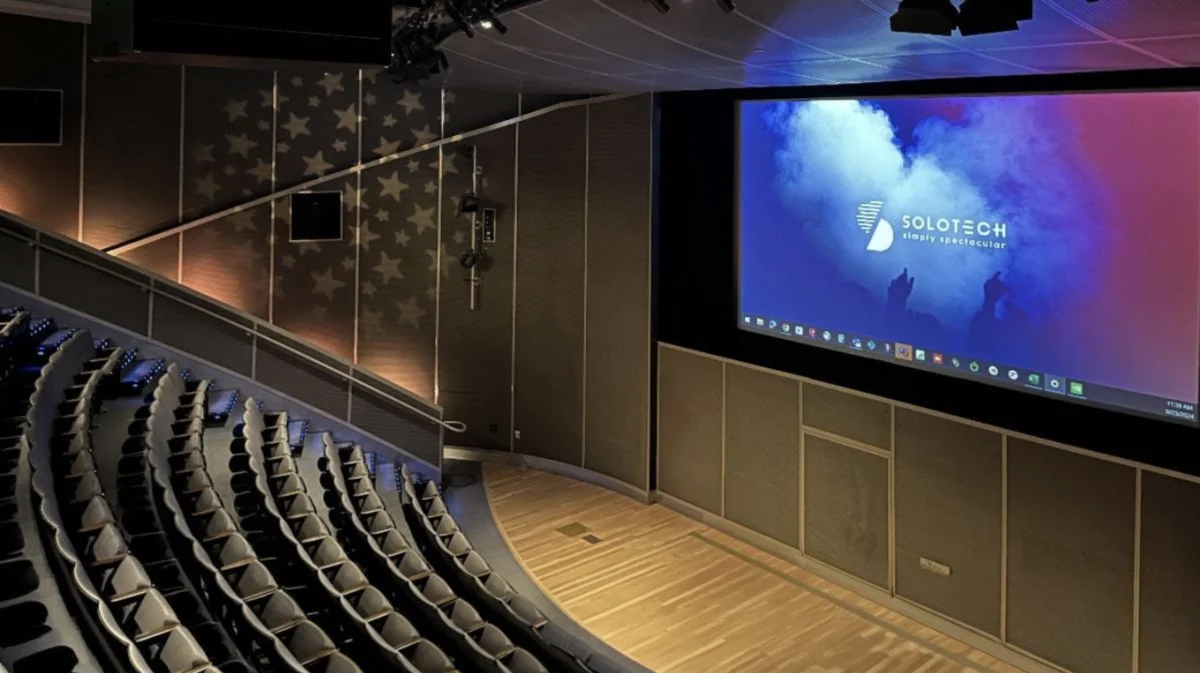
Perched high on the southern slope of Mount Hollywood in Griffith Park, the Griffith Observatory is one of Los Angeles’s most treasured cultural and scientific institutions. Since 1935, it has served as a portal to the cosmos, drawing millions of visitors eager to gaze through telescopes, explore exhibits, and engage with the wonders of astronomy. At the heart of this public engagement mission is the Leonard Nimoy Event Horizon Theater, a state-of-the-art, 190-seat subterranean venue that hosts a wide array of public programs, live science presentations, distinguished lecture series, and panel discussions.
Despite its stellar reputation, the theater recently faced a decidedly terrestrial problem: acoustic degradation. Over time, the venue’s legacy sound reinforcement system struggled to meet the demands of modern multimedia events. Staff and guest speakers encountered persistent issues with microphone feedback, largely driven by troublesome acoustic reflections bouncing off the projection screen and hard, wood-paneled walls. Speech intelligibility—the absolute lifeblood of educational panels and scientific presentations—began to suffer, threatening the immersive experience that visitors to the Griffith Observatory have come to expect.
To resolve these challenges, the Griffith Observatory Foundation partnered with renowned audiovisual integration specialists Solotech and acoustical/theatrical consultants TheatreDNA. Together, the project team designed and executed a comprehensive audio overhaul centered around a single Renkus-Heinz ICONYX IC16-RD digitally steerable line array.
Concealed discreetly behind the theater’s main projection screen—upstage of the primary presenter position—the IC16-RD utilizes advanced beam-steering technology to digitally sculpt sound waves. By directing acoustic energy precisely toward the audience seating plane while actively steering it away from highly reflective architectural surfaces, the system has eliminated feedback loops and dramatically enhanced vocal clarity. Integrated into a broader QSC networked ecosystem that governs audio, video, and control routing, the new setup provides crystal-clear spoken-word performance while remaining simple enough for daily operation by museum staff with minimal technical training.
Chronology of the Audio Transformation
The path from an underperforming legacy audio setup to a cutting-edge, acoustically optimized venue was a methodical journey rooted in careful planning, inter-agency collaboration, and rigorous on-site testing.
Phase 1: Identifying the Acoustic Bottleneck
For years, the Leonard Nimoy Event Horizon Theater relied on an aging sound reinforcement system that could no longer keep pace with the venue’s bustling calendar of events. As public programming shifted toward more dynamic, interactive panel discussions and multimedia-heavy science presentations, the limitations of the old system became glaringly apparent. Microphones were prone to ringing and feedback whenever presenters moved near certain zones on stage, forcing audio levels to be kept artificially low. The room’s architectural geometry—featuring flat, reflective panels and a large projection screen—compounded these issues, scattering uncontrolled sound energy throughout the auditorium.
Phase 2: Assembling the Expert Team
Recognizing that a standard, off-the-shelf loudspeaker replacement would not suffice in a room with such specific acoustic and aesthetic constraints, the Griffith Observatory Foundation engaged two industry heavyweights: Solotech, a global leader in audiovisual technology integration, and TheatreDNA, a specialized theater consulting firm. This coalition was tasked with auditing the existing infrastructure, defining the acoustic requirements, and vetting potential technology manufacturers that could deliver superior coverage and speech intelligibility without compromising the venue’s strict interior design guidelines.
Phase 3: Selection, On-Site Testing, and Evaluation
Following a comprehensive review of acoustic modeling data and potential loudspeaker solutions, the team zeroed in on Renkus-Heinz and its industry-standard ICONYX digitally steerable series. To ensure the hardware would perform as projected in the real world, the Griffith Observatory Foundation participated actively in every stage of the evaluation process. This included meticulous on-site testing and rigorous acoustic tuning sessions inside the theater. Stakeholders from the Observatory, Solotech, and TheatreDNA worked hand in hand to test various coverage angles, ensuring the final design met the exacting standards of the institution before a single permanent screw was driven.
Phase 4: Integration and Deployment
Once the Renkus-Heinz ICONYX IC16-RD was selected, the installation phase moved swiftly. Technicians mounted the slender, column-like array vertically behind the projection screen, directly upstage of the presenter zone. This hidden placement kept the hardware entirely out of the direct line of sight of the audience, preserving the clean, minimalist aesthetic of the theater. Concurrently, the wider AV backbone was updated to a robust QSC network infrastructure, seamlessly uniting audio, video, and control systems into a unified, user-friendly interface.
Phase 5: Commissioning and Public Debut
Following final calibration, equalization, and beam-steering programming, the system went live for daily museum operations and special events. The sonic transformation was immediate and profound. Microphones could finally be driven to appropriate operating levels without the fear of sudden feedback, and speech intelligibility soared. Today, the Leonard Nimoy Event Horizon Theater operates at peak performance, delivering an uncompromised auditory experience that matches the visual grandeur of the cosmos projected above the stage.
Supporting Data and Technical Architecture
Understanding why the acoustic upgrade succeeded requires a closer look at the intersection of architectural acoustics, signal processing, and loudspeaker engineering within the 190-seat Leonard Nimoy Event Horizon Theater.
The Challenge of Room Acoustics
Small- to medium-sized presentation auditoriums like the Event Horizon Theater frequently battle acoustic reflections (often referred to as slap-back or flutter echoes) caused by parallel hard surfaces, projection screens, and architectural paneling. When traditional point-source or standard passive line array loudspeakers project sound into such spaces, acoustic energy radiates spherically or in fixed vertical arcs. This inevitably floods walls, ceilings, and floors with sound energy, which bounces back into open microphones and smears speech articulation for listeners seated in the back rows.
The Renkus-Heinz ICONYX IC16-RD Solution
The Renkus-Heinz IC16-RD deployed at the Griffith Observatory leverages Digitally Steerable Array (DSA) technology, which fundamentally changes how sound is projected in difficult acoustic environments.
- Multiple Transducers, Independent DSP: The IC16-RD features multiple vertically aligned, individually amplified, and DSP-controlled transducer channels (combining high-frequency and low-frequency drivers in a slender column footprint).
- Customizable Acoustic Beams: By applying precise digital delays and gain adjustments to each individual driver channel via software, the system steers the acoustic output into tightly controlled vertical beams.
- Targeted Coverage: The sound can be shaped to bend downward toward the audience seating plane while leaving upper wall boundaries and reflective ceiling zones virtually untouched.
- Consistent SPL: Sound Pressure Level (SPL) remains remarkably consistent from the very front row of the auditorium to the furthest seats in the rear, ensuring an equitable listening experience for every single attendee.
System Integration and Networking
While the IC16-RD handles the complex heavy lifting of acoustic steering for spoken-word events, the theater retained its dedicated playback system specifically configured for high-dynamic-range film screenings. To tie these discrete audio paths together harmoniously, Solotech deployed an overarching QSC network infrastructure. This integrated system handles all audio routing, video distribution, and control logic across the theater.
Crucially, the QSC control interface was custom-programmed for the venue’s operational reality. The Griffith Observatory relies on a diverse staff—ranging from seasoned AV technicians to educators and event coordinators with limited technical training. The new control architecture abstracts away complex DSP programming behind intuitive touch-panel interfaces, enabling staff to power up, configure mics, and run daily programs with absolute confidence and ease.
Official Responses and Stakeholder Perspectives
The success of the Griffith Observatory audio revitalization project has been widely celebrated by all organizations involved, highlighting a shared commitment to educational excellence and visitor immersion.
Marc Nutter, Business Development Representative for Solotech, emphasized the cultural weight of the venue and the necessity of modernizing its technical backbone:
"The Griffith Observatory is such an iconic and recognizable landmark. The existing sound system in the Leonard Nimoy Event Horizon Theater was no longer meeting the expectations of such a prestigious venue. A modern system was required that was capable of delivering high-quality audio performance while ensuring usability for staff with limited technical training."
Patrick So, Theater Programs Managers at Griffith Observatory, shed light on the collaborative nature of the planning process and the delicate balance between cutting-edge technology and historical/architectural preservation:
"From the beginning, we recognized the need for a solution that could address the unwanted reflections and uncontrolled audio challenges, without disrupting the theater’s strict aesthetic values. We worked closely with Solotech and TheatreDNA, who guided us through a range of potential options while assessing coverage, clarity, and visual impact."
So also praised the cooperative spirit that defined the partnership between the Observatory Foundation, the integration team, and the technology manufacturers:
"Everyone involved with this project shared the same goal—to improve the audience experience of the theater. With our values aligned, decision-making was efficient and productive."
Reflecting on the operational reality of the new installation following its debut, So noted the immediate, tangible improvements experienced by both staff and audiences:
"The upgrade from the old system was immediately clear. With the IC16-RD, there’s no more feedback when presenters speak into the microphones and the entire audience can hear even the most subtle details. The immense effort that everyone has put in has led to a far more immersive and engaging experience that fully lives up to the expectations of the Griffith Observatory."
Implications for Public Venues and Science Centers
The successful audio overhaul of the Leonard Nimoy Event Horizon Theater serves as a case study for science museums, planetariums, educational institutions, and public presentation spaces worldwide.
1. The Death of Compromise Between Acoustics and Aesthetics
For decades, venue managers faced a frustrating binary choice: either install intrusive, industrial-looking loudspeaker arrays that ruined the architectural lines of a pristine auditorium, or settle for subpar acoustic performance to keep the technology hidden. The Griffith Observatory project demonstrates that modern beam-steering technologies like Renkus-Heinz ICONYX make this compromise obsolete. By mounting a slim, column-profile array behind an acoustically transparent projection screen, the venue achieved world-class acoustic performance while preserving 100% of its visual interior design.
2. Empowering Non-Technical Staff
In public-facing cultural institutions, technical spaces are frequently operated not by touring audio engineers, but by educational docents, museum administrators, and event coordinators. Complex audio mixing consoles and unoptimized room acoustics create daily friction. By pairing smart loudspeaker technology with simplified, networked control interfaces (such as QSC platforms), institutions can dramatically lower operational stress, reduce training overhead, and ensure consistent presentation quality day in and day out.
3. Elevating Science Communication
Science literacy relies heavily on effective communication. When complex astronomical concepts, data sets, and panel discussions are obscured by muddy audio, room reverberation, or distracting feedback artifacts, the educational impact is blunted. By ensuring that every visitor—whether seated in the front row or the back corner—can hear whispers, detailed explanations, and subtle audio cues with pristine clarity, the Griffith Observatory has reinforced its position as a world-class center for public science engagement.
As visitors continue to pack the Leonard Nimoy Event Horizon Theater to explore the mysteries of the universe, they do so supported by an acoustic infrastructure that is every bit as precise, modern, and reliable as the scientific programming unfolding on stage.