Main Facts: Introducing beyerdynamic’s Newest Pro-Audio Contender
In the fast-paced ecosystem of personal audio, products bearing the "Pro" moniker frequently lean toward marketing hyperbole. Over the course of any given year, the consumer market is flooded with gear targeting casual listeners while donning aggressive, studio-inspired aesthetics. However, true professional-grade hardware—devices engineered strictly to meet the rigorous demands of touring musicians, audio engineers, and field recordists—operates under a completely different set of performance and design criteria.
Enter the beyerdynamic DT 30 IE, a newly launched, entry-level dynamic driver in-ear monitor (IEM) priced competitively at $149.99. Designed from the ground up for the pro-audio market, the DT 30 IE expands beyerdynamic’s established DT series lineup to five distinct models. Its primary selling points include an impressive -39 dB of passive noise isolation, an ultra-slim profile housing, and a rugged, reliable build meant to withstand the daily trials of life on the road.
Far from being a delicate, highly colored consumer earphone, the DT 30 IE aims to deliver uncompromised full-range monitoring, punchy dynamics, and maximum external sound attenuation. While it sits at an accessible price point for budget-conscious creators, it borrows core performance philosophies from its more specialized siblings in the DT family, offering a compelling blend of utility, comfort, and focused musicality.

Chronology: The Evolution of beyerdynamic’s DT Series and the Path to the DT 30 IE
To fully appreciate the significance of the DT 30 IE, one must examine the chronological lineage of beyerdynamic’s DT series of monitoring IEMs. Traditionally, beyerdynamic has meticulously carved out specialized niches within its professional staging catalog:
- DT 70: Engineered primarily as a flat, neutral reference monitor for critical listening.
- DT 71: Tailored specifically to the demanding low-frequency requirements and impact levels needed by drummers.
- DT 72: Tuned to accentuate and isolate vocal frequencies for front-of-house singers and stage performers.
- DT 73: Optimized for the complex frequency ranges demanded by keyboardists monitoring synthesizers and acoustic instruments.
Historically, acquiring a dedicated piece from this lineup required identifying a specific performance role. However, as the touring musician market evolved to demand versatile, multi-purpose gear that could easily transition from a live stage monitor to an everyday commute companion, a gap emerged.
The development of the DT 30 IE represents a shift toward general-purpose, full-range monitoring. Eschewing extreme specialization, beyerdynamic designed the DT 30 IE to act as a Swiss Army knife for musicians and urbanites alike. By integrating custom-engineered 11mm dynamic drivers into an exceptionally thin closed shell, the engineering team successfully packed the substantial -39 dB passive isolation benchmark of its pricier stablemates into a more democratic, entry-level package.

Supporting Data: Specifications, Design Architecture, and Acoustic Performance
Driver Configuration and Specifications
At the heart of the DT 30 IE lies a custom-designed, German-engineered 11mm high-performance moving-coil dynamic driver mounted inside a closed plastic shell. While it bypasses beyerdynamic’s legendary proprietary Tesla driver technology in favor of an outsourced custom design, the acoustic metrics remain formidable on paper:
- Frequency Response: 5 Hz – 20 kHz (indicating deep, authoritative sub-bass reach and extended highs).
- Impedance: 18 Ohms.
- Sensitivity / SPL: 111 dB at 1 mW (1 kHz).
- Passive Noise Attenuation: Up to -39 dB.
Physical Design and Ergonomics
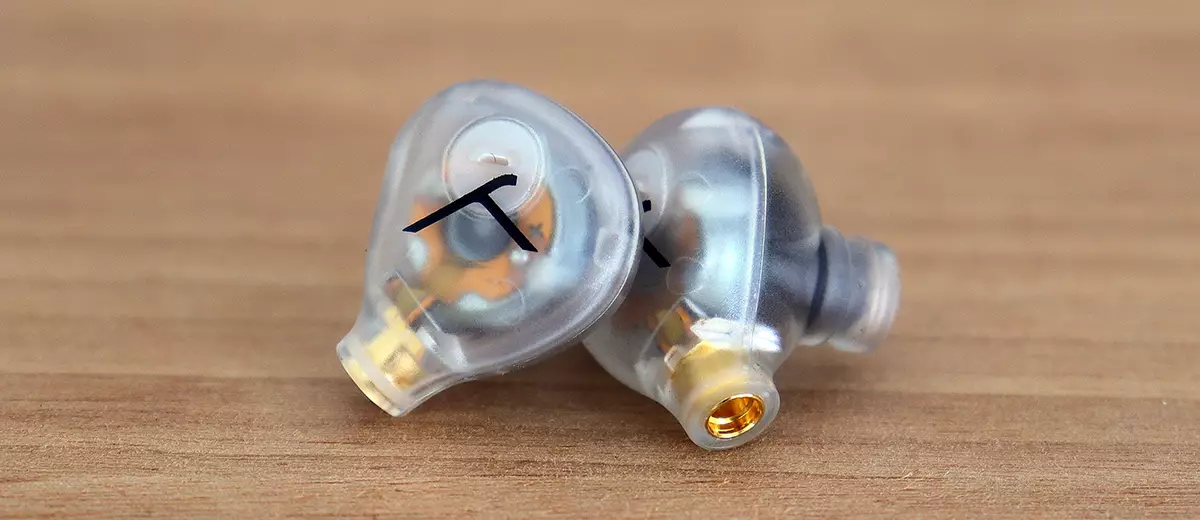
One of the most striking physical attributes of the DT 30 IE is its remarkably slim profile. Traditional dynamic drivers often require bulky, thick housings to accommodate large voice coils and magnets. To achieve a low-profile fit that sits flush within the ear, beyerdynamic engineered an unusually thin driver and corresponding frosted, molded two-piece plastic shell.
The clear-tinted plastic offers a subtle glimpse at the internal components, though the frosted finish slightly obscures deep internal inspection. The output nozzles are notably short and oval-shaped, finished with replaceable foam cerumen (earwax) filters—a thoughtful touch for stage use, with an extra set included in the box. Connection duties are handled reliably via standard MMCX connectors.

Comfort and Isolation Metrics
Passive isolation is arguably the crowning achievement of the DT 30 IE. While many consumer IEMs struggle to attenuate both low-frequency rumbles and high-frequency clatter simultaneously, the DT 30 IE provides full-spectrum passive attenuation reaching up to -39 dB.
Upon insertion, the earphones immediately swallow ambient environment noise, creating a quiet acoustic background ideal for loud stages or chaotic urban transit systems. Achieving this level of isolation does, however, depend heavily on securing a tight seal.
beyerdynamic bundles two distinct sets of ear tips (small, medium, and large)—one comprising color-coded silicone tips and the other high-density foam. Because of the short, oval nozzle geometry, users must exercise caution with third-party "tip rolling." Using longer aftermarket tips can alter the physical distance between the driver and the eardrum, subsequently shifting the frequency response away from the factory tuning and reducing passive attenuation.

Cable and Accessories
The stock cable features a silver-plated conductor shielded by a transparent rubber insulation layer, reinforced with Kevlar. It terminates in a single-ended 3.5mm TRS plug with a robust rubber strain relief.
A notable design inclusion is the integrated memory wire near the ear hooks rather than pre-formed rigid plastic loops. This allows users to custom-shape the cable over their ears for a secure, tailored fit. However, the cable does exhibit some microphonics (cable noise) when tapped, and the hard rubber chinstrap adjuster can occasionally feel stiff or locked in place before initial adjustment.
The retail package is presented in a compact, laminated matte-black box accented with white typography and red branding. Inside, the IEMs rest securely in a custom plastic mold alongside a hard-shell storage case, while the cable, extra tips, and replacement cerumen filters are neatly organized in individual zip-lock baggies.

Official Responses and Sonic Impressions: How Does It Sound?
Following a mandatory 50-hour break-in period and critical evaluations across various desktop and portable sources (including the SMSL SU-X/SH-X stack, iFi audio iDSD GR 2, and Questyle M18i Max), the sonic profile of the DT 30 IE becomes sharply defined.
Sound Signature Overview
The DT 30 IE presents a near U-shaped sound signature with a controlled center focus. It favors intimacy and immediacy over a sprawling, cavernous presentation, mimicking the closed-back headphone experience.
- Bass: The low-end performance stands out prominently. It offers a punchy, thick, and physically impactful bass response that leans toward musical rumble rather than clinical nimbleness. Stretching from 70Hz upward, it provides modern electronic, hip-hop, and rock tracks with an engaging, energetic foundation that avoids becoming muddy.
- Midrange: Vocals are forward, rich, and slightly warm, benefiting from the subtle bleed of the elevated lower frequencies into the midsection. The upper-mids ease off slightly around 1.5 kHz, contributing to the relaxing, fatigue-free nature of the signature while keeping instruments easily distinguishable within the mix.
- Treble: High frequencies are energetic, sharp, and clear, offering reliable tracking for high-hats, cymbals, and upper register instruments. While it is optimized more for live-stage musicality and utility than microscopic detail retrieval, it avoids harsh sibilance or ear-piercing peaks.
- Soundstage and Dynamics: The soundstage is compact, snug, and centered closely around the listener’s head. It trades sprawling width for pinpoint imaging and deep, punchy dynamics. This is an uninhibited, high-contrast, "party-like" presentation designed to keep performers and listeners actively engaged.
Implications: The Market Impact of the beyerdynamic DT 30 IE
The launch of the beyerdynamic DT 30 IE at the $149.99 price point carries several important implications for the pro-audio and consumer headphone markets.

First, it bridges a vital gap between ultra-expensive custom in-ear monitors and disposable consumer earphones. For gigging musicians on a tight budget, the DT 30 IE offers a professional-grade tool equipped with elite passive noise isolation (-39 dB) without requiring a heavy financial investment. It is explicitly built as a "throw-in-the-bag" utility monitor—rugged, reliable, and mechanically repairable thanks to features like swappable cerumen filters and an MMCX detachable cable.
Second, for urban commuters, remote workers, and casual audiophiles navigating high-noise environments, the DT 30 IE provides an accessible alternative to active noise-canceling (ANC) wireless earbuds. By relying on pure, passive physical isolation, it preserves the uncompressed fidelity of wired listening while successfully silencing the chaos of modern city life.
Despite minor drawbacks—such as stock cable microphonics and a compact soundstage—the beyerdynamic DT 30 IE delivers exceptional value. It successfully translates decades of German studio engineering into a portable, punchy, and fiercely isolated package that proves professional monitoring tools do not need to break the bank.