Main Facts
As What Hi-Fi? marks its monumental 50th anniversary, the publication has released a bumper commemorative issue that reflects upon five decades of technological evolution, expert reviews, and iconic audio-visual equipment. Helmed by Magazine Editor Jonathan Evans and Production Editor Chris Burke, alongside a roster of special contributors, the golden jubilee edition serves as both a retrospective look at the golden age of hi-fi and a forward-looking guide to the future of home entertainment.
Founded during an era when vinyl records and massive stereo separates reigned supreme, the publication has grown from a print magazine into a globally trusted authority on consumer electronics. The anniversary issue captures this journey, tracking the industry’s evolution from the earliest days of compact discs and bulky CRT televisions to the modern era of high-resolution streaming, wireless audio, and immersive home cinema systems.
For many, however, What Hi-Fi? is more than just a buyer’s guide—it is a cultural touchstone. The milestone has sparked reflection across the industry and among the publication’s own editorial staff regarding how audio gear shapes personal histories, fuels a passion for music, and bridges generational gaps.
Chronology: A Lifelong Journey Through Music and Print
Growing up in a household steeped in audio enthusiasm, What Hi-Fi? was as ubiquitous on the family coffee table as the morning paper. For the publication’s current Editor-in-Chief, Alastair Stevenson, the magazine was a childhood staple long before he understood the technical nuances of harmonic distortion or frequency response curves.
"There were only so many times you could re-read The Beano; so I often read Dad’s magazine instead, making it a core part of my hi-fi journey," Stevenson recalls.
That foundational exposure to classic rock and progressive vinyl records laid the groundwork for a lifelong appreciation of music. Yet, a specific temporal milestone stands out in the timeline of domestic audio nostalgia: the year 1998.
During an era when the teenage desire to blast Nirvana’s Smells Like Teen Spirit or Pearl Jam’s Even Flow conflicted with the realities of bedroom space and parental patience, the arrival of compact discs presented a new frontier. Traditional separates racks were too large for a teenager’s bedroom, and standalone CD players required significant financial and spatial investment.
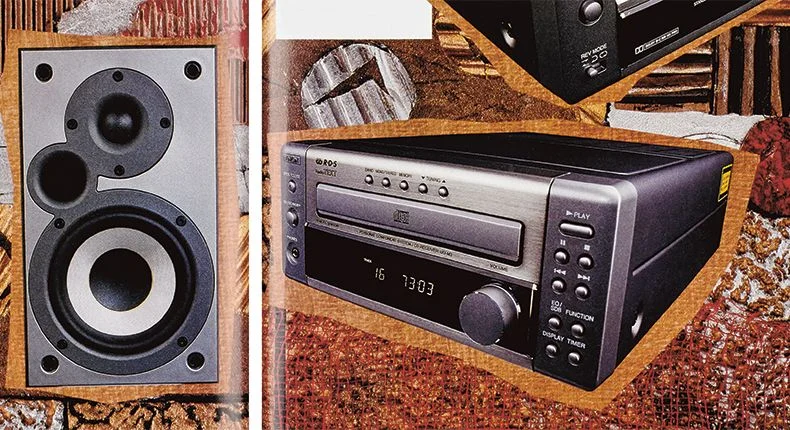
Enter the Denon D-M3 micro system, featured in the pages of What Hi-Fi? in 1998. Described by reviewers as a "great all-rounder, and as comfortable playing hardcore rap as it is a string quartet," the £300 compact unit captured the imagination of a generation of young music lovers. Though school grades, parental negotiations, and competing financial priorities—such as a Sega Mega Drive—temporarily delayed the acquisition of high-end audio gear (ultimately culminating years later in a Panasonic SA-PM37MD micro system), the pursuit of sound quality remained a constant motivator.
Supporting Data: The Evolution of the Consumer Audio Market
The 50-year span covered by What Hi-Fi? mirrors the most volatile and innovative period in consumer electronics history. When the magazine launched in the mid-1970s, the market was defined by analog reproduction: heavy turntables, cassette decks, linear tracking arms, and massive wooden-cased amplifiers.
Key technological inflection points documented by the publication include:
- The Early 1980s: The commercial introduction of the digital compact disc, spearheaded by pioneering units like the Sony CDP-101 and Philips CD100, which fundamentally altered how consumers purchased and interacted with music.
- The 1990s: The rise of mini-systems and micro-components—typified by units like the Denon D-M3—which democratized high-fidelity sound for smaller living spaces and younger demographics.
- The Turn of the Millennium: The shift toward digital compression formats, portable MP3 players, and home theater surround sound systems that brought cinematic audio experiences into domestic living rooms.
- The Modern Era: The resurgence of vinyl records running parallel to the dominance of lossless audio streaming, smart wireless speakers, and advanced multi-room audio ecosystems.
Throughout these sweeping technological shifts, What Hi-Fi?’s testing methodologies have remained rigorous, relying on controlled listening rooms, comparative testing, and transparent scoring systems to separate genuine audio innovations from passing marketing fads.
Official Responses and Industry Reflections
The release of the 50th-anniversary issue has prompted widespread commentary from audio manufacturers, industry veterans, and longtime readers alike. Editorial leadership emphasizes that the publication’s longevity is rooted in its independence and an unwavering commitment to the consumer.
"Jonathan Evans, Chris Burke, and the rest of the team—alongside some very special contributors—have done a particularly magnificent job with this anniversary issue," notes Stevenson. "It is packed with features looking back over 50 years of hi-fi history, but also looking forward at what the coming decades might bring to the worlds of hi-fi and home cinema."
Industry figures have similarly praised the publication for acting as a stabilizing force during turbulent market transitions. As physical media formats waned and digital distribution upended traditional business models, What Hi-Fi? provided a vital bridge between heritage hi-fi manufacturers and a new generation of digital-native music consumers. By championing affordable entry-level equipment alongside ultra-high-end esoteric gear, the magazine helped sustain market interest across all demographics.
Implications for the Future of Hi-Fi and Home Cinema
As What Hi-Fi? looks ahead to the next half-century, the consumer audio landscape stands on the precipice of another major transformation. The integration of artificial intelligence into acoustic room correction, the maturation of spatial audio formats, and the ongoing quest for sustainable, repairable hardware are shaping the next generation of gear.
However, the core emotional driver of the industry remains unchanged. Whether it is a teenager in 1998 lusting after a Denon micro-system or a modern audiophile curating a high-resolution streaming playlist, the fundamental goal of hi-fi equipment is to forge a deeper, more visceral connection with the music.
The 50th-anniversary milestone serves as a timely reminder that technology is merely a vessel. The true value of a great hi-fi system lies in the memories it creates, the comfort it provides, and its ability to turn a simple listening session into an unforgettable experience. As the publication invites its readership to share their own audio and home cinema memories in the comments, it is clear that the human element of sound reproduction will continue to drive the industry forward for decades to come.