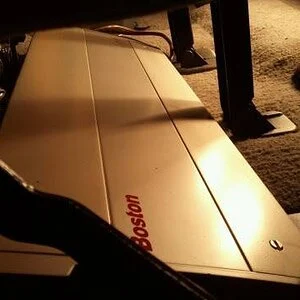
In the specialized world of high-end car audio, the quest for headroom, clarity, and raw power remains a relentless pursuit for enthusiasts. As vehicle electrical systems evolve and digital signal processing (DSP) becomes standard, the hardware required to drive modern sound systems must adapt accordingly. Recent activity within enthusiast marketplaces, such as the CarAudio.com community, highlights a growing trend: the availability of high-output, open-box professional audio gear that offers massive power-to-dollar ratios for serious hobbyists. This article explores the current market landscape for Class D amplification, focusing on high-wattage hardware like the Nemesis Audio NA-BZ500X4D and Stinger MT-4000.1, and the implications of this gear for the broader automotive sound scene.
Main Facts: The Rise of High-Output Class D Amplification
At the heart of the current enthusiast market is a focus on "Class D" amplifier technology. Unlike older, heavier Class A/B amplifiers that prioritize thermal stability at the cost of efficiency, modern Class D amplifiers are highly efficient, compact, and capable of generating immense power without requiring the massive chassis space of their predecessors.
The Nemesis Audio NA-BZ500X4D, a 4-channel full-range powerhouse, serves as a prime example of the hardware currently circulating among hobbyists. Rated for a staggering 2,000 watts, this unit represents a shift toward "all-in-one" power solutions that allow users to drive both high-frequency component sets and mid-bass drivers with a single, highly efficient footprint. The availability of such units in "open-box" condition—often unused or never installed—presents a unique value proposition for enthusiasts who are willing to navigate peer-to-peer marketplaces to avoid the "new retail" price premium.

For the serious builder, the challenge has always been matching electrical infrastructure with amplifier output. The market is currently seeing a surge in demand for components that can handle the 7,000 to 8,000-watt range—a threshold that was once reserved for professional competition vehicles but is now becoming increasingly accessible to the everyday consumer.
Chronology of Market Adjustments (2026)
The recent market activity surrounding these components illustrates the fluidity of private sales. Tracking the trajectory of a specific listing provides insight into how sellers adjust to market saturation and buyer expectations:
- July 7, 2026: The initial listing for the Nemesis Audio NA-BZ500X4D appears. Priced at $300, the seller highlights the unit’s "open box" status and pristine (10/10) condition. The location is set to Boise, Idaho, with strict warnings regarding verification photos to prevent fraud.
- July 14, 2026: Recognizing the competitive nature of the audio hardware market, the seller implements a strategic price drop. The amplifier is reduced to $265, including shipping to the lower 48 states, signaling an urgency to move the equipment.
- August 2026: During this period, the listing remains active, reflecting a common plateau in high-end enthusiast sales where buyers often wait for additional items to bundle or for further price incentives.
- September 1, 2026: The seller reaffirms the offer, emphasizing the "mammoth power" of the unit and maintaining the $265 price point, reinforcing the value proposition of high-wattage Class D amplification.
- September 23–24, 2026: A significant pivot occurs. The seller introduces a second, high-performance component: the Stinger MT-4000.1. By bundling the two units—the Nemesis for high-range and the Stinger for dedicated low-end power—the seller creates a "package deal" capable of producing 8,000+ watts of power for a total of $600. The post is edited, solidifying the new, bundled pricing strategy.
Supporting Data: The 8,000-Watt Threshold
The push for 8,000 watts of total system power represents a significant milestone in modern car audio. To understand why this is a sought-after benchmark, one must consider the physics of sound pressure levels (SPL) and the requirements of modern subwoofers.
The Math of High-Power Systems
When an enthusiast targets an 8,000-watt system, they are essentially looking to move massive volumes of air. This requires not only the amplifiers themselves but also a robust "Big Three" electrical upgrade (upgrading the alternator-to-battery, engine block-to-chassis, and battery-to-chassis cables).
| Component | Function | Power Output (Est.) |
|---|---|---|
| Nemesis Audio NA-BZ500X4D | Highs/Mids | 2,000W |
| Stinger MT-4000.1 | Subwoofer/LFE | 6,000W+ |
| Total System | Full Range | 8,000W+ |
The combination of these two units, as suggested by the seller, creates a system that can handle virtually any consumer-grade driver on the market today. The shift toward such high wattage is often driven by the popularity of "competition-style" audio, where the goal is to achieve maximum clarity even at high decibel levels.
Official Perspectives and Technical Considerations
While professional audio manufacturers often emphasize the "plug-and-play" nature of their equipment, the reality of the secondary market is more complex. Industry experts often caution that purchasing high-power Class D amplifiers from peer-to-peer marketplaces requires due diligence.
"The primary concern with high-output amplification is not just the power, but the heat management and current draw," notes an industry analyst familiar with Class D architecture. "When you move into the 2,000-watt-per-unit range, the internal circuitry—specifically the capacitors and inductors—is under immense stress. A ‘new, open-box’ unit is ideal because it guarantees that the internal components have not been subjected to the fatigue of a thermal cycle."
Furthermore, the "Beware if no photo containing forum username is shown" warning found in these types of listings highlights an important shift in online consumer culture. As high-end audio becomes more expensive, the community has taken on a self-policing role, requiring physical proof of ownership to protect against the rising tide of online marketplace scams. This level of verification has become a standard protocol for the high-end enthusiast community.
Implications for the Future of Car Audio
The availability of high-wattage, professional-grade amplifiers at reduced price points has several long-term implications for the car audio hobby:

1. Democratization of High-SPL Systems
Ten years ago, a 5,000-watt system would have cost several thousand dollars and required a team of professional installers. Today, through platforms that allow enthusiasts to trade hardware directly, that same power level is accessible for under $1,000. This is fueling a boom in DIY audio builds, particularly among younger enthusiasts who are utilizing social media and forums to learn the intricacies of electrical engineering and sound stage design.
2. The Focus on Electrical Infrastructure
As amplifiers become more efficient and powerful, the bottleneck in car audio is shifting from the amplifiers themselves to the vehicles’ charging systems. The rise of high-power Class D usage is forcing enthusiasts to invest in high-output alternators and lithium-based battery banks. The market is moving away from just "buying a bigger sub" toward a holistic view of the vehicle as an integrated electrical grid.
3. Sustainability through Secondary Markets
The "open-box" trend is a win for both the environment and the consumer. By facilitating the reuse of high-quality electronics that would otherwise sit in a warehouse, the car audio community is extending the lifecycle of premium hardware. This "circular economy" within the hobby ensures that gear does not become electronic waste simply because an enthusiast decided to upgrade their setup or change their build direction.
Conclusion
The market for high-performance car audio is in a state of rapid expansion, fueled by efficient technology and a robust, self-regulating secondary marketplace. Whether it is the 2,000-watt versatility of the Nemesis Audio NA-BZ500X4D or the raw, dedicated power of a Stinger monoblock, enthusiasts are finding that the dream of a competition-grade system is more attainable than ever.
As we look toward the future, the integration of these high-output systems into modern vehicles—which are increasingly sensitive to electrical loads—will be the next major hurdle. However, for those who value the intersection of engineering and performance, the path forward is clear: it’s all about the power, the precision, and the willingness to source the right gear from those who understand the value of a high-performance build. As these listings continue to show, the community remains the best source for those looking to turn their daily drivers into concert-level audio environments.