Main Facts
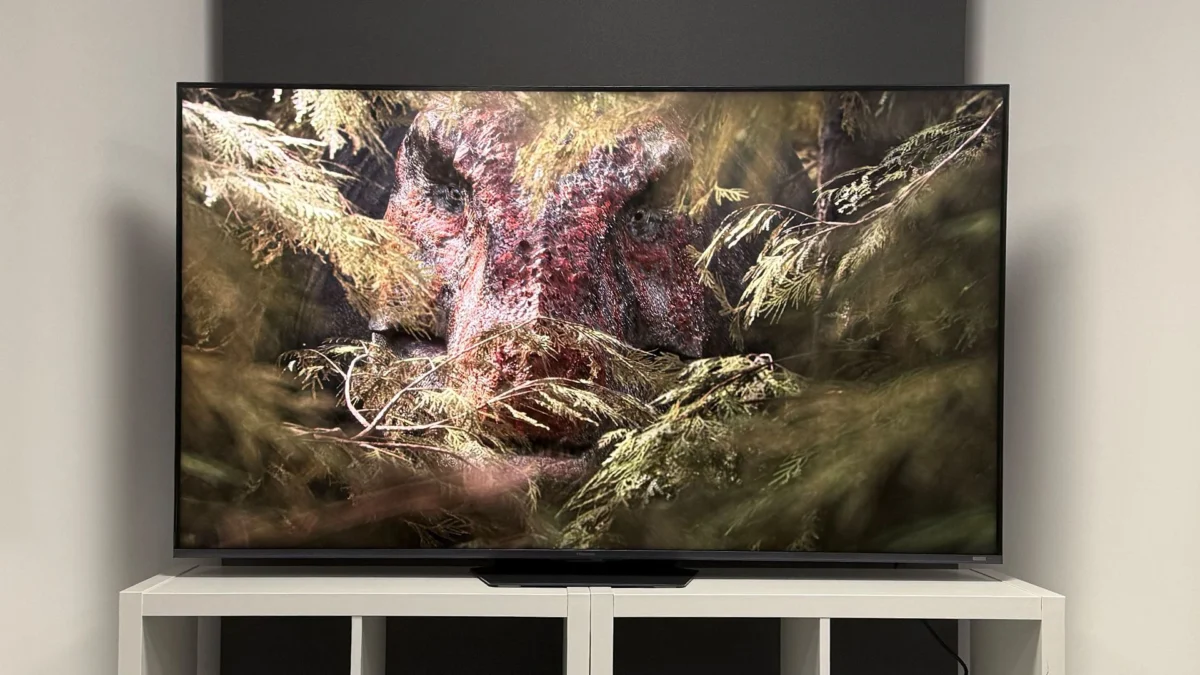
The consumer electronics landscape of 2026 has been defined by a fierce battle for display supremacy, with RGB Mini-LED emerging as one of the most significant panel technology milestones of the year. At the vanguard of this movement is the Hisense UR9 65-inch 4K TV, a model that initially entered the market with a hefty £3,000 price tag. Earning a respected four-star rating in rigorous test rooms, the UR9 was lauded for its exceptional backlight control, deep black levels, and vibrant cinematic High Dynamic Range (HDR) presentation.
However, its launch pricing directly pitted it against top-tier, flagship OLED televisions, causing some hesitation among budget-conscious home cinema enthusiasts. That pricing barrier has effectively crumbled. Through a combination of promotional discounting via code GDTV300 and a £200 manufacturer cashback scheme from Hisense, UK buyers can now acquire the 65-inch UR9 at Sevenoaks Sound and Vision for an astonishing £1,499—effectively slashing its cost in half.
Beyond the hardware price cut, the deal sweetens considerably for gamers. Purchasers are eligible for a complimentary custom Xbox Design Lab controller alongside a one-month Xbox Game Pass subscription. Crucially, the TV’s built-in app ecosystem allows users to stream games directly through the cloud without even owning a physical console.
Chronology of the RGB Mini-LED Revolution
The path to the Hisense UR9’s current market disruption spans several years of iterative advancements in liquid crystal display (LCD) architecture.
- Late 2024 to 2025: Traditional Mini-LED displays gained widespread adoption, utilizing thousands of tiny white LEDs behind an LCD panel to improve local dimming and peak brightness over standard LED backlights. However, color filtering limitations meant they often struggled with color purity at high luminance levels.
- Early 2026: Panel manufacturers made breakthroughs in micro-optics and semiconductor fabrication, leading to the commercial viability of RGB Mini-LED arrays. By replacing standard white LEDs with discrete red, green, and blue diodes in the backlight layer, manufacturers unlocked unprecedented color saturation and luminance control.
- Mid-2026: Hisense introduced the UR9 series to international markets. It arrived as a high-end flagship statement piece, carrying a £3,000 MSRP in the UK and targeting early adopters willing to pay a premium for cutting-edge panel technology.
- Late 2026: Reviewers thoroughly tested the television, praising its backlight stability while critiquing its initial high price relative to entrenched OLED competitors. Recognizing the need to drive volume for new display tech, retailers and Hisense launched aggressive autumn promotional bundles, reducing the price to £1,499 and introducing the gaming-focused Xbox perks.
Supporting Data and Technical Specifications
To understand why the Hisense UR9 represents a major technological step forward—and why its current half-price status is notable—we must examine its underlying engineering and performance metrics.
Display Architecture: RGB Mini-LED
Unlike conventional Mini-LED sets that use a blue LED coated in yellow phosphor (or white LEDs), the UR9 utilizes separate red, green, and blue Mini-LED chips in its backlight matrix. This trichromatic approach bypasses the traditional color filter degradation found in standard LCDs, yielding a wider color volume and purer spectral outputs.
HDR Format Compatibility
The UR9 is among the very first televisions on the market to feature hardware-level support for next-generation HDR standards, specifically Dolby Vision 2 Max. While current content partnerships for Dolby Vision 2 remain nascent—notably driven by platforms like iQIYI in international markets—the set retains comprehensive backward compatibility. It fully supports:
- HDR10
- HDR10+
- Standard Dolby Vision
- HLG (Hybrid Log-Gamma)
Backlight Performance and Cinematic Testing
In benchmark evaluations—such as playing the 4K Blu-ray of Sam Mendes’ 1917—the UR9 demonstrated extraordinary local-dimming capabilities. Testers noted that bright white title cards generated minimal "blooming" against pitch-black letterbox bars. More impressively, unlike many aggressive local-dimming algorithms that suffer from visible brightness pumping, flickering, or jarring zone-switching artifacts, Hisense’s processing maintains a stable, cinematic composure.

Gaming Capabilities
Gamers are exceptionally well-catered for via three dedicated HDMI 2.1 ports capable of handling:
- 4K/170Hz PC gaming throughput
- 4K/120Hz console gaming support
- VRR (Variable Refresh Rate) to eliminate screen tearing
- ALLM (Auto Low Latency Mode) for instant input response
Audio and Smart Platform
The television features a built-in 4.1.2-channel speaker system tuned by high-end audio specialist Devialet. It delivers a remarkably wide soundstage and distinct height effects that outperform the vast majority of flat-screen integrated audio systems, though a dedicated soundbar remains recommended for true audiophile setups.
Running on Hisense’s proprietary VIDAA smart platform, the UI is fast and responsive, housing major global streaming apps and local UK catch-up services, though notable omissions include the native Apple TV Store app.
Official Responses and Industry Reception
Industry analysts and reviewers have responded to the Hisense UR9’s price drop with a mixture of excitement and cautious optimism. When the TV debuted at £3,000, critics argued it occupied an uncomfortable middle ground: while its RGB Mini-LED technology bested standard LED screens, it could not entirely dethrone mature, self-emissive OLED panels in absolute black-level precision and off-angle viewing.
However, at the new £1,499 price point, the narrative has shifted dramatically. A representative from major retail partner Sevenoaks Sound and Vision noted an immediate surge in consumer inquiries following the activation of the GDTV300 voucher code and Hisense’s autumn cashback scheme.
Hisense’s corporate strategy appears aimed at accelerating consumer adoption of RGB Mini-LED technology. By aggressively subsidizing the hardware cost through retail partnerships and bundling high-value ecosystem incentives—like the Xbox Design Lab controller and cloud-gaming access—the brand is positioning itself as a disruptive market leader against entrenched competitors like Samsung, LG, and Sony.
Implications for the Consumer Market
The drastic price correction of the Hisense UR9 carries several broad implications for the home entertainment and television manufacturing sectors:
- Accelerated Commoditization of RGB Mini-LED: By bringing an RGB Mini-LED television down to the £1,500 psychological threshold for a 65-inch screen, Hisense has forced competing brands to re-evaluate their pricing strategies. Consumers no longer have to pay a multi-thousand-pound luxury tax to experience advanced multi-primary backlight systems.
- The OLED vs. Mini-LED Convergence: While OLED remains the gold standard for dark-room viewing due to pixel-level illumination, RGB Mini-LEDs close the brightness and color-volume gap significantly. At half-price, the UR9 offers peak luminance levels that typical OLEDs at a similar price point simply cannot match, making it a superior choice for bright, sunlit living rooms.
- Cloud Gaming Integration as a Standard Feature: By leaning into native Xbox cloud gaming compatibility alongside high refresh-rate HDMI 2.1 ports, manufacturers are acknowledging that modern TVs are dual-purpose entertainment hubs. The exclusion of a physical console requirement lowers the barrier to entry for casual gamers.
Ultimately, the Hisense UR9’s transition from an overpriced novelty to a half-price bargain transforms it from a niche tech enthusiast purchase into one of the most compelling high-end TV recommendations of 2026.