Introduction: The "Ultra" Era in Consumer Audio
If you feel like every major technology brand has recently adopted the moniker "Ultra" to denote its flagship products, you are not imagining things. Apple has its Watch Ultra, Samsung continues to push boundaries with its Galaxy S series "Ultra" smartphones, and now, Sonos has thoroughly embraced the suffix. Following the triumphant launch of the high-end Arc Ultra soundbar and the companion Ace Ultra headphones, the audio giant has expanded the branding downward into its mid-tier ecosystem with the newly minted Sonos Beam Ultra.
For consumers navigating the home cinema market, this naming convention can be misleading. Traditionally, "Ultra" implies an uncompromised, top-of-the-range device. By applying the title to both its flagship soundbar and its more compact, mid-range offering, Sonos has created a tiered hierarchy of premium hardware.
The question facing home entertainment enthusiasts is simple yet complex: Which of these five-star soundbars deserves a spot beneath your television? To find out, we put the Sonos Beam Ultra and the Sonos Arc Ultra through a rigorous, side-by-side evaluation, examining their design, feature sets, technical specifications, and acoustic performance.
Technical Specifications at a Glance
Before diving deep into design aesthetics and real-world audio tests, it is helpful to look at how these two soundbars stack up on paper.
| Feature / Metric | Sonos Beam Ultra | Sonos Arc Ultra |
|---|---|---|
| Physical Connections | HDMI out (eARC), USB-C | HDMI out (eARC) |
| Wireless Connectivity | Wi-Fi 6, Bluetooth 5.3, AirPlay 2 | Wi-Fi 6, Bluetooth 5.3, AirPlay 2 |
| Sound Format Support | Dolby Atmos (Digital Plus / TrueHD), Dolby Digital, Multichannel PCM, Stereo PCM | Dolby Atmos (Digital Plus / TrueHD), Dolby Digital, Multichannel PCM, Stereo PCM |
| Voice Control | Sonos Voice Control (Alexa via future update) | Sonos Voice Control, Amazon Alexa |
| Available Finishes | Matte Black, Matte White | Matte Black, Matte White |
| Dimensions (H x W x D) | 6.5 x 75 x 10.5 cm | 7.5 x 118 x 11 cm |
| Weight | 2.88 kg | 5.9 kg |
| Recommended TV Size | Up to 65 inches | 50 inches and above |
Pricing and Market Positioning
The Cost of Premium Sound
Price is often the primary dividing line for audio equipment, and these two devices occupy distinctly different pricing tiers. The Sonos Arc Ultra serves as the company’s undisputed flagship soundbar, carrying a retail price of £999 / $999 / AU$1,799.
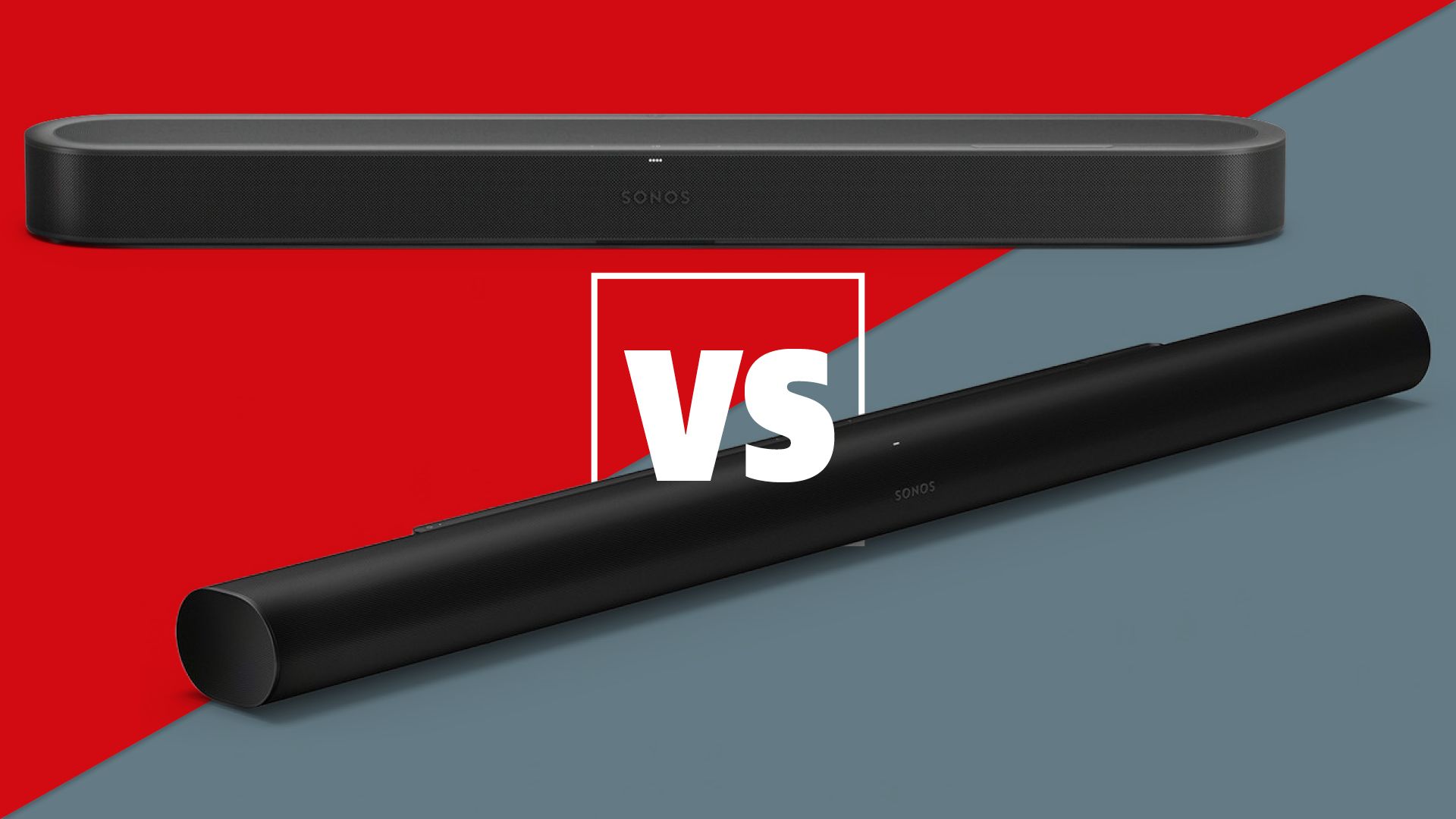
On the other hand, the Sonos Beam Ultra is strategically positioned as a bridge between the classic second-generation Beam (which Sonos has commendably kept on the market) and the elite Arc range. It retails for a more accessible £699 / $699 / AU$1,099.
The Discount Factor
When considering value, retail trends play an important role. While brand-new releases like the Beam Ultra rarely see steep initial price cuts, the Arc Ultra has historically proven more vulnerable to promotional discounting—dropping as low as £719 during major shopping events. If the Arc Ultra falls near that price point again, the price gap between the two bars shrinks to a negligible margin, turning the flagship into an intensely tempting proposition for budget-conscious buyers willing to wait for a sale.
Design and Build Quality: Form Follows Function
Footprint and Physical Scale
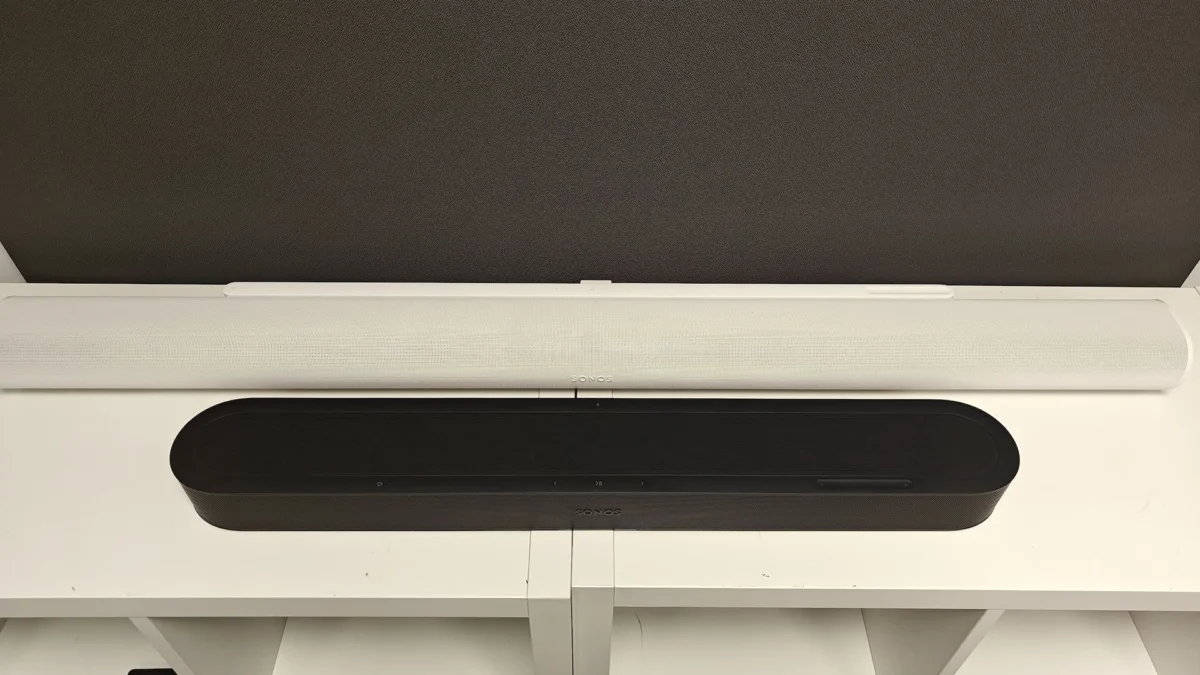
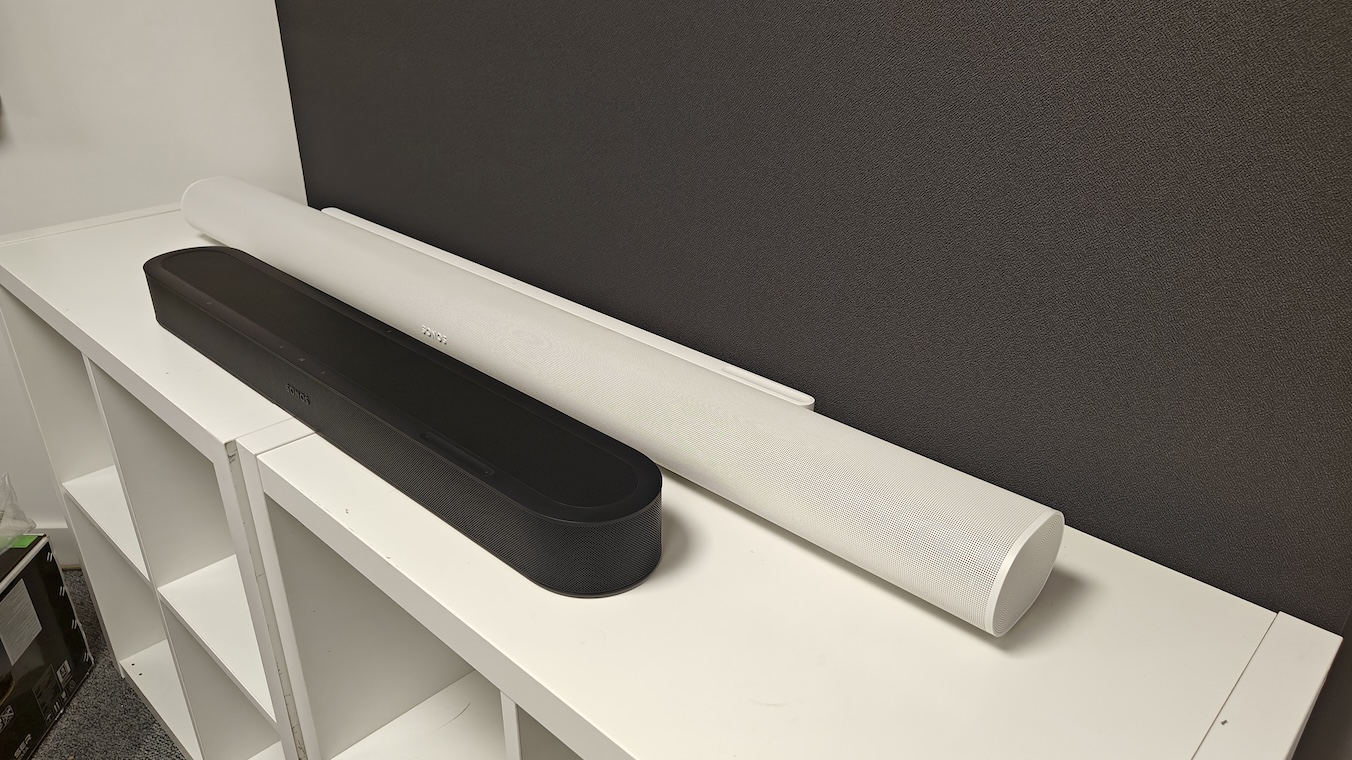
A quick glance at the two devices reveals an unmistakable difference in scale. The Arc Ultra is a massive, heavy-duty piece of engineering designed to anchor large-scale home cinemas. Weighing nearly 6 kilograms and stretching 118 cm across, it requires substantial furniture space and a large television to look proportional—ideally paired with displays measuring 50 inches and above.
Conversely, the Beam Ultra is considerably more compact. Standing at 6.5 cm tall and 75 cm wide, it is tailor-made for mid-sized living spaces and TVs up to 65 inches. Both units share a relatively shallow depth of roughly 11 cm, meaning they won’t jut out awkwardly from standard media consoles.
Ergonomics and Control Layouts
Design philosophies also diverge when it comes to user controls. The Arc Ultra opts for a sleek, minimalist aesthetic, tucking its physical controls discreetly around the back panel. While this creates a clean, uninterrupted look on a TV cabinet, it sacrifices a degree of everyday convenience.

Sonos took a more practical approach with the Beam Ultra, positioning its control panel on the front lip of the device for effortless tactile access. The only exception on the Arc Ultra is the Bluetooth pairing button, which remains awkwardly placed around the rear chassis—a minor annoyance when attempting to quickly pair a smartphone or tablet.
Note for placement: Because both soundbars incorporate upwards-firing drivers to bounce height effects off your ceiling, neither should be tucked away inside a closed media shelf. Doing so will obstruct the height channels, drastically reducing the immersion of Dolby Atmos content.
Feature Set: Modern Connectivity and Smart Integration
Audio Formats and Driver Architecture
Both soundbars embrace the modern era of spatial audio by featuring dedicated upwards-firing drivers, delivering true Dolby Atmos performances rather than purely virtualized surround sound.
- Sonos Arc Ultra: Features an impressive 14-driver array arranged in a 9.1.4-channel configuration. Crucially, it introduces a proprietary SoundMotion woofer, engineered to move more air and generate deeper, cleaner bass than traditional soundbar drivers.
- Sonos Beam Ultra: Utilizes a more modest nine-driver setup configured in 7.1.2 channels. It also features a comprehensively redesigned center channel that embeds a tweeter directly inside the woofer, boosting vocal clarity and expanding the soundstage width.
Connectivity and Smart Features
Both soundbars share a streamlined physical connection layout centered around a single HDMI eARC port. Neither device includes HDMI passthrough (meaning you cannot plug external video sources directly into the soundbar), and neither supports DTS:X decoding—a minor omission for cinephiles heavily invested in physical media.
However, the Beam Ultra holds a surprise hardware advantage: it includes a USB-C port. With the appropriate line-in adapter, this port allows users to hook up external analog sources like a turntable or a CD player.

On the wireless front, both bars are fully modern, featuring Wi-Fi 6 and Bluetooth 5.3 connectivity alongside Apple AirPlay 2 support. Smart software features are shared across the board, including:
- Trueplay: Sonos’ proprietary room calibration software that tailors acoustic output to your specific living space.
- Loudness Control: Automatically boosts bass and treble frequencies when listening at lower volumes.
- AI Speech Enhancement & Night Sound: Designed to keep dialogue intelligible during chaotic movie sequences without waking neighbors at night.
Voice control implementation differs slightly: while the Arc Ultra natively supports both Sonos Voice Control and Amazon Alexa out of the box, the Beam Ultra currently relies exclusively on Sonos Voice Control, with Alexa integration expected via a future firmware update.
Sound Quality: The Crucial Test
The Sonos Beam Ultra Acoustic Experience
Despite its diminutive proportions, the Beam Ultra punches well above its weight class. The newly implemented upwards-firing drivers deliver precise object placement in Dolby Atmos mixes.
During demanding sequences—such as the helicopter pursuits in No Time To Die—the height effects elevate cleanly above the physical frame of the television. When ground vehicles race across open fields, the audio expands effectively to the corners of the test environment, creating an enveloping bubble of sound.
Dialogue remains tonally accurate and expressive, holding its clarity even during explosive, chaotic sequences. Bass output is surprisingly meaty for a chassis of this size. However, the Beam Ultra does have physical limits: it is explicitly engineered for mid-sized rooms ranging from 23 to 32.5 square meters. In larger, open-plan living spaces, it can occasionally struggle to project outward with absolute authority.
The Sonos Arc Ultra Acoustic Experience
Place the Arc Ultra side-by-side with its smaller sibling, however, and the justification for the flagship price tag becomes immediately apparent. The Arc Ultra’s presentation is vastly more authoritative, sophisticated, and spatially organized.
Thanks to the revolutionary SoundMotion woofer, bass is deeper, tighter, and remarkably tuneful, entirely devoid of the "chuffing" distortion that plagues lesser soundbars. Listening to complex music tracks or watching dialogue-heavy films reveals a layer of micro-detail that the Beam Ultra simply cannot match.
In Blade Runner 2049, incidental noises—such as soft footsteps, the gentle placement of a tooth on a glass table, or the subtle squeak of a rubber surgical gown—are delivered with crystalline clarity. Low-level dynamics are handled with delicate subtlety, ensuring that sudden jump-scares and massive volume shifts are managed clinically and cleanly. Most importantly, the Arc Ultra projects sound far further into the room, filling expansive spaces with ease.
Implications for Buyers: Which Should You Choose?
When deciding between these two exceptional audio products, your choice ultimately boils down to three primary factors: room dimensions, budget, and listening expectations.
- Choose the Sonos Beam Ultra if: You live in a flat, apartment, or home with medium-sized living spaces (up to 32 square meters), your television measures 65 inches or smaller, and you want to keep your expenditure below the psychological £700 / $700 barrier. You will be rewarded with a punchy, highly detailed Dolby Atmos experience that dramatically outperforms standard TV speakers, alongside the bonus utility of a USB-C line-in port.
- Choose the Sonos Arc Ultra if: You possess a larger living room, own a TV sized 50 inches or above, and demand absolute uncompromised performance. If your budget allows for it, the Arc Ultra delivers superior bass depth, broader spatial projection, and an authoritative sonic scale that turns your living room into a genuine commercial cinema. Furthermore, if historical retail discounts repeat themselves, savvy shoppers may find the flagship marked down close to the price of the mid-tier model, making the Arc Ultra an irresistible investment.
Ultimately, both products earn their five-star ratings, but the Sonos Arc Ultra retains the crown as the definitive overall winner for discerning home cinema enthusiasts.