Neumann Bridges Studio Quality and Stage Mobility with the Launch of KK 104 A and KK 105 A Wireless Microphone Capsules
014 mins
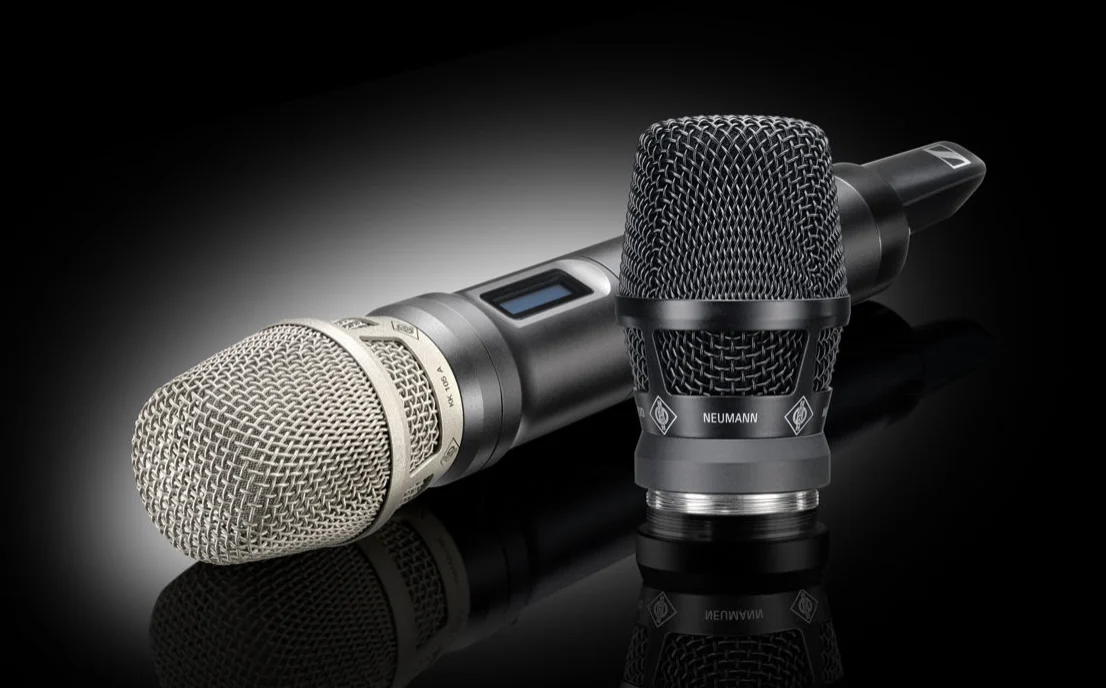
September 2026 — In a major development for live sound engineers and touring artists alike, Neumann has officially announced the release of its new KK 104 A and KK 105 A microphone capsules. Building directly upon the acclaimed legacy of the KK 204 and KK 205, these new capsules bridge the gap between studio-grade condenser technology and the rigorous demands of modern wireless workflows.
Designed to integrate seamlessly with a wide range of industry-standard Sennheiser wireless ecosystems—including the advanced Spectera, EW-D, EW-DX, and the high-end Digital 6000 and 9000 handheld transmitters—the new releases promise to deliver the unmistakable sonic signature of Neumann directly to the stage while offering improved handling, durability, and flexibility.
Main Facts: What You Need to Know
The introduction of the KK 104 A and KK 105 A marks a strategic evolution in Neumann’s live-performance lineup. At their core, both capsules are engineered to bring true condenser microphone fidelity into live environments, where high sound pressure levels (SPL) and potential feedback traditionally favor dynamic capsules.
Advanced Condenser Technology: Both models incorporate Neumann’s renowned condenser capsule designs, optimized to capture subtle vocal nuances, rich harmonic detail, and pristine high frequencies without coloration.
Broad Transmitter Compatibility: Unlike older iterations that were limited to specific ecosystems, the new "A" series capsules are engineered for cross-compatibility with Sennheiser’s most prominent wireless families, including Spectera, EW-D, EW-DX, and Digital 6000/9000 series transmitters.
Acoustic and Mechanical Refinements: The units feature built-in pop protection, high SPL handling capabilities, and exceptional gain-before-feedback performance. A fixed low-cut filter effectively manages the proximity effect, while a redesigned hardened steel grille and integrated pop screen defend against moisture, harsh plosives, and sibilance.
Divergent Polar Patterns: The KK 104 A utilizes a cardioid polar pattern for natural off-axis response and stage freedom, whereas the KK 105 A features a supercardioid pattern geared toward maximum source isolation and off-axis rejection in loud stage environments.
Chronology: The Evolution of Neumann Stage Sound
To understand the significance of the KK 104 A and KK 105 A, it is helpful to look back at the technological progression that brought Neumann to this point in the pro audio landscape.
The Foundation: Bringing the Studio to the Stage
For decades, Neumann condenser microphones—such as the legendary U 87 and KM 184—have served as the gold standard in recording studios worldwide. However, translating that delicate, highly detailed studio sound to chaotic live stages historically presented massive challenges, primarily due to feedback susceptibility and handling noise.
When Neumann introduced the KK 204 and KK 205 capsules, they shifted the paradigm. These earlier models proved that a true condenser capsule could survive the road if paired with robust internal shock-mounting and carefully tuned frequency responses. They quickly became the go-to choice for A-list touring artists who refused to compromise on vocal fidelity.
The Wireless Revolution and Ecosystem Integration
As the pro audio industry shifted rapidly toward digital wireless transmission—driven by radio frequency (RF) spectrum crowding and the need for rock-solid multi-channel reliability—hardware manufacturers faced a new mandate. Sennheiser (which acquired Neumann in 1991) began rolling out advanced digital platforms like the Digital 6000, EW-DX, and the revolutionary wideband Spectera system.
Recognizing that touring engineers and rental houses required unified solutions that could adapt across different tiers of Sennheiser hardware, Neumann’s engineering teams initiated development on an updated capsule architecture. The result is the KK 104 A and KK 105 A series: modern capsules tailored specifically to interface flawlessly with today’s advanced digital workflows while maintaining the acoustic DNA of their predecessors.
Supporting Data & Technical Breakdown
A closer inspection of the technical specifications reveals why the KK 104 A and KK 105 A represent a notable step forward for live vocal production.
Handling Noise and Mechanical Durability
Live performers move dynamically, and stage environments are rife with mechanical vibrations traveling up the mic stand or from the artist’s hands. Neumann addressed this by refining the internal decoupling mechanisms of the new capsules, significantly reducing handling noise compared to previous generations.
Furthermore, the physical construction has been reinforced. The hardened steel grille is designed to withstand the physical abuse of heavy touring. More importantly, the integrated multi-stage pop screen acts as the first line of defense against moisture (saliva and sweat) and wind turbulence, protecting the sensitive condenser capsule underneath without dampening high-end air.
The Polar Patterns: Cardioid vs. Supercardioid
The primary engineering differentiator between the two models lies in their directional characteristics:
KK 104 A (Cardioid):
Offers a wider pickup angle.
Ideal for performers who move across the stage or frequently shift their head position relative to the microphone grille.
Provides a smooth, natural off-axis roll-off, ensuring that even when the voice moves off-center, the tonal character remains consistent and musical.
KK 105 A (Supercardioid):
Features a tighter, more focused pickup pattern with a rejection null at roughly 125 degrees off-axis.
Exceptional for high-volume stages featuring loud drum kits, aggressive guitar amplifiers, and multiple wedge monitors or side-fills.
Delivers superior gain-before-feedback margins and tighter isolation, minimizing bleed from surrounding instruments into the vocal channel.
Frequency Response and Proximity Control
Both capsules feature a carefully calibrated fixed low-cut filter. Proximity effect—the unnatural boost in low frequencies that occurs when a vocalist sings extremely close to a directional microphone—can quickly turn a mix muddy. The internal filtering on the KK 104 A and KK 105 A tames this phenomenon, ensuring intelligible, articulate vocal delivery even when "lip-stopping" the microphone.
Official Perspectives from Neumann Leadership
The development of the new capsules was guided by a desire to honor Neumann’s heritage while aggressively adapting to contemporary technical demands.
Stephan Mauer, Director of Product Management at Neumann, emphasized the cultural and technical weight of the release:
"The KK 204 and KK 205 set a new standard for wireless vocal performance by bringing true condenser sound to the stage. With the KK 104 A and KK 105 A, we’ve pushed that concept even further. These new capsule heads are optimized for today’s wireless workflows while preserving the unmistakable Neumann character that artists and engineers trust to deliver their best performances."
Choosing the correct tool for a specific artist requires careful consideration of both the performer’s technique and the acoustic environment of the venue. Jorma Marquardt, Product Manager for Recording & Audio Production at Neumann, elaborated on this decision-making process:
"Choosing between the KK 104 A and KK 105 A is about matching the microphone to the performer and the stage. Both capsule heads deliver the unmistakable detail and musicality of a Neumann condenser microphone, giving artists the confidence to perform at their highest level."
Industry Implications: What This Means for Live Sound Professionals
The launch of the KK 104 A and KK 105 A has several immediate ramifications for rental houses, FOH (Front of House) engineers, and touring artists.
1. Enhanced Inventory Flexibility for Production Companies
Previously, audio production and rental companies had to invest in capsule inventories tied strictly to specific transmitter ecosystems. Because the new "A" series capsules are compatible across Sennheiser’s diverse lineup—ranging from the mid-tier EW-D and professional EW-DX to the high-end Digital 6000/9000 and cutting-edge Spectera systems—inventory management becomes vastly simplified. A single capsule type can now be deployed across different tiers of an artist’s tour rider depending on the venue and budget scale.
2. Elevating the Standard for Wireless Vocal Clarity
As audiences increasingly expect studio-level fidelity from live concert streams, in-ear monitor (IEM) mixes, and high-end festival productions, the margin for error on vocal microphones has shrunk. Dynamic microphones, while rugged, often lack the transient speed and high-frequency "air" of a true condenser. By lowering handling noise and optimizing gain-before-feedback, Neumann is making it safer and more practical for engineers to put condenser capsules on aggressive, high-energy stages.
3. Future-Proofing Touring Riders
With compatibility spanning Sennheiser’s newest wireless paradigm (Spectera) alongside established industry workhorses (Digital 6000), these capsules ensure that artists adopting next-generation RF technology will not have to sacrifice their preferred vocal capsule sound. This makes the KK 104 A and KK 105 A robust, future-proof investments for working professionals.
Conclusion
With the release of the KK 104 A and KK 105 A, Neumann has successfully modernized its live vocal offerings. By pairing legendary condenser audio quality with robust mechanical updates and cross-platform Sennheiser wireless compatibility, Neumann provides the live sound community with versatile, high-performance tools designed to excel under the intense pressures of the modern stage.