In the hyper-kinetic world of venture capital, where "thought leadership" is often measured in X (formerly Twitter) follower counts and podcast appearances, Deven Parekh remains an outlier. As a managing director at Insight Partners, one of the world’s most formidable investment firms, Parekh has spent 26 years cultivating a reputation for results rather than rhetoric. With $90 billion in assets under management (AUM), Insight Partners operates at a scale that dwarfs many of its peers, yet the firm maintains a conspicuously low profile.
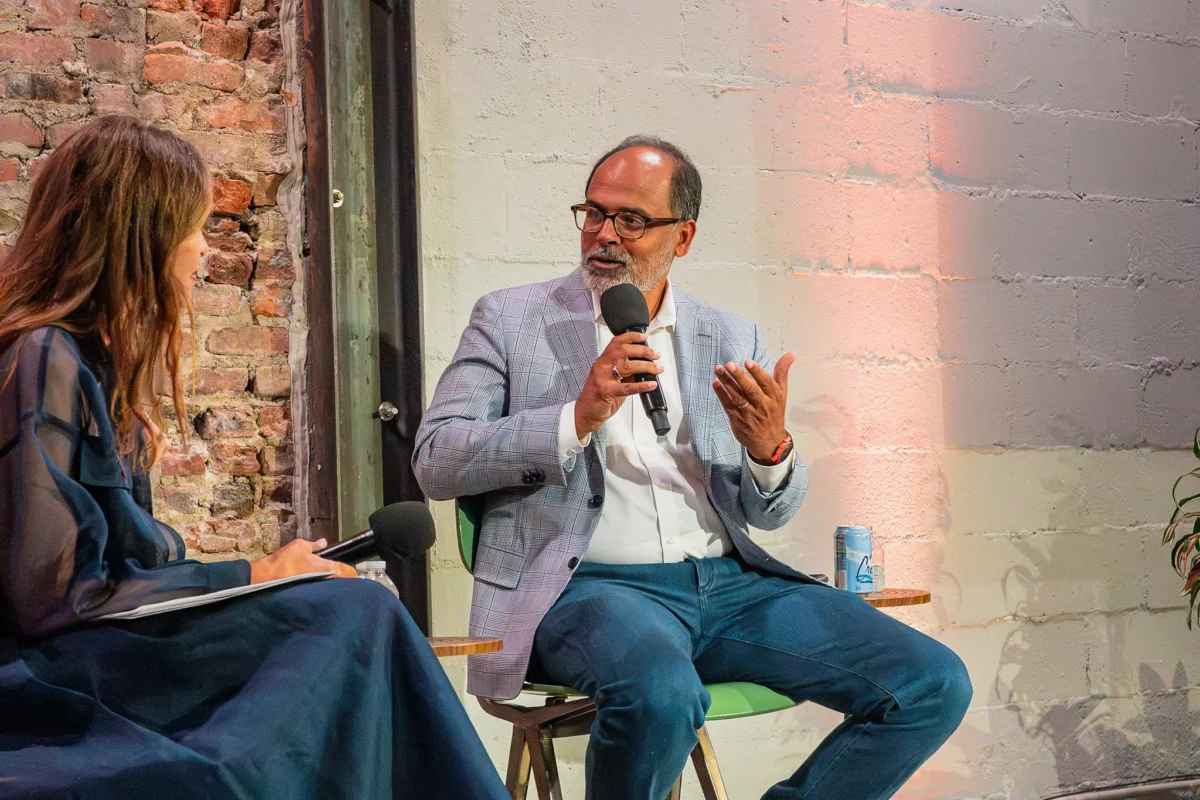
During a recent, candid sit-down at TechCrunch’s StrictlyVC event in New York, Parekh broke his characteristic silence to offer a masterclass on the current state of the industry. From the risks of frontier AI to the necessity of returning capital to Limited Partners (LPs), Parekh provided a sobering, data-driven perspective on a market currently intoxicated by artificial intelligence.
The AI Debate: Risk vs. Reality
The venture capital community has been roiled recently by internal debates regarding the safety of self-improving AI, spurred by the departure of high-profile researchers from major labs like Anthropic. When asked whether these concerns represent existential hysteria or legitimate warning signs, Parekh offered a pragmatic, albeit calculated, outlook.
"There is a risk that a non-state actor gets access to an open-source model and creates a biological weapon," Parekh admitted. "But there is an even higher probability that we see a massive decrease in the time it takes to develop new drugs and cure diseases. I’ll take that bet."
Parekh draws heavily from his experience on the board of NYU Langone, where he observes the practical application of AI in clinical settings. He notes that AI’s ability to parse 50 million patient records to predict health events—such as a 25% increased risk of a heart attack—demonstrates a utility that outweighs the speculative "doomer" narratives. For Parekh, AI is not just a technological toy; it is a structural necessity for an aging global population facing a chronic shortage of medical professionals.
Strategic Discipline: The Insight Partners Playbook
Insight Partners has maintained its dominant position by eschewing the "everything-to-everyone" mentality that plagues many modern VCs. While many firms have pivoted to become experts on every geopolitical and epidemiological crisis of the day, Insight focuses on the portfolio.
"Every venture capitalist thinks they’re an expert on everything now," Parekh quipped. "Our attitude has been: Let the portfolio do the talking. We’re investing in founders and companies. We have to communicate enough that people know who we are, but our performance should speak for itself."
Navigating the Capital Allocation Maze
The firm’s strategy regarding asset classes—early-stage, growth, buyouts, and secondaries—is fluid rather than fixed. Parekh notes that the firm’s geographic and strategic allocation changes with every fund. Currently, the buyout market is cooling; with high interest rates and debt markets unreceptive to software, Insight has avoided major buyouts since 2024.
Instead, the firm has shifted its gaze toward early-stage opportunities. Parekh observes that follow-on rounds in the current market are moving too fast, often resulting in investors paying higher prices for what is effectively the same amount of risk. By writing smaller, early-stage checks—$20 million to $25 million compared to the massive $500 million tickets seen in late-stage growth—Insight maintains the agility to double down on winners. He cites the firm’s investment in Wiz as a quintessential example: by participating in the Series A and consistently adding capital, Insight’s gains were far superior to what they would have been had they exited early.
The Global Talent Landscape
Despite the increasing globalization of tech talent, Parekh acknowledges that geography still matters, particularly for infrastructure-heavy sectors. While he notes that talent density is relatively flat globally—mentioning a lost bid for the Stockholm-based firm Legora—he concedes that San Francisco remains the undisputed epicenter for AI infrastructure.
"My 23-year-old son, also a VC, is moving to the Bay Area because he says you can’t invest in AI without being there," Parekh said. However, he distinguishes this from vertical AI, such as financial services, where talent clusters like New York City remain more relevant.
The Taboo of Competing Interests
For years, investing in direct competitors was considered a cardinal sin in the VC world. Insight Partners’ simultaneous stake in OpenAI and Anthropic highlights a shift in industry norms. According to Parekh, the internal debate at Insight wasn’t about the ethics of dual-investment, but rather the timing of the entry.
"Once you’re at a later stage, off the board, not driving governance, you’re just buying a great stock," Parekh explained. He views OpenAI as the dominant consumer play and Anthropic as the superior enterprise strategist. As these companies reach valuations in the tens of billions, they have outgrown the ability to dictate exclusivity to their investors. While Insight maintains strict information-sharing firewalls at the early stages, the scale of current AI funding has effectively forced the industry to evolve past the "one-company-per-vertical" rule.
Liquidity: The Metric That Matters
Perhaps the most biting commentary Parekh offered concerned the "liquidity crisis" facing many firms that raised significant capital in the 2021–2023 cycle. He expressed concern that many funds have failed to return capital to their LPs, prioritizing vanity metrics over the fundamental job of a venture firm: providing returns.
"LPs want to know you can turn positions into cash; that’s the job," Parekh stated. "We were guilty of this early on, too. We’d think, ‘Why sell if it could double again?’ But LPs don’t get paid that way."
In the last two years, Insight has returned over $20 billion to LPs through strategic sales and IPOs. For Parekh, the focus on DPI (Distributed to Paid-In capital) is paramount. He warns that firms which fail to secure liquidity will find themselves unable to raise future funds, as LPs are becoming increasingly sophisticated about distinguishing between paper wealth and realized returns.
The Future of AI and Public Markets
As major players like Anthropic and OpenAI move closer to potential IPOs, the industry faces a new reality. Parekh believes the market will easily absorb these offerings, comparing them to the SpaceX IPO trajectory. However, he warns that these massive exits will set an impossibly high bar for the next tier of companies.
"Eventually even these companies become normal-growth companies," he noted. "If you’re a public-market investor watching something go from zero to $65 billion in four years, ‘double, double, triple, triple’ no longer looks that exciting by comparison."
Conclusion: The Long Horizon
For Insight Partners, the current frenzy is a reminder of the cyclical nature of the industry. Parekh remains skeptical of the "boom-bust" mentality where LPs and VCs pile into the same trends simultaneously. By maintaining a focus on diversification over a long-term horizon—across 13 funds and hundreds of portfolio companies—Insight aims to avoid the concentration risk that threatens younger or more aggressive funds.
When asked how he evaluates whether to continue supporting a company with a shaky cap structure, Parekh emphasized the importance of rigorous, consistent portfolio reviews. Whether it is a quick $5 billion success like Wonderful or a multi-year turnaround story like Armis, the goal remains constant: identifying the best founders and being prepared to scale, exit, or pivot when the data dictates. In a market defined by noise, Parekh’s commitment to the long game serves as a vital anchor for the venture capital ecosystem.